At some point in this course, we must expose ourselves to external critical peer review. I will ask my Tutor to allow me to do so in Part Four since I don’t feel ready now for Part Three. Also, I didn’t see any peer review opportunities over the summer, so I hope these opportunities will emerge this fall.
As I continue working on my project for this course, I am further engaged in my research on elements and compositional structure, trying out new ideas in actual painting and drawing and harnessing my understanding of how to make the most of this project.
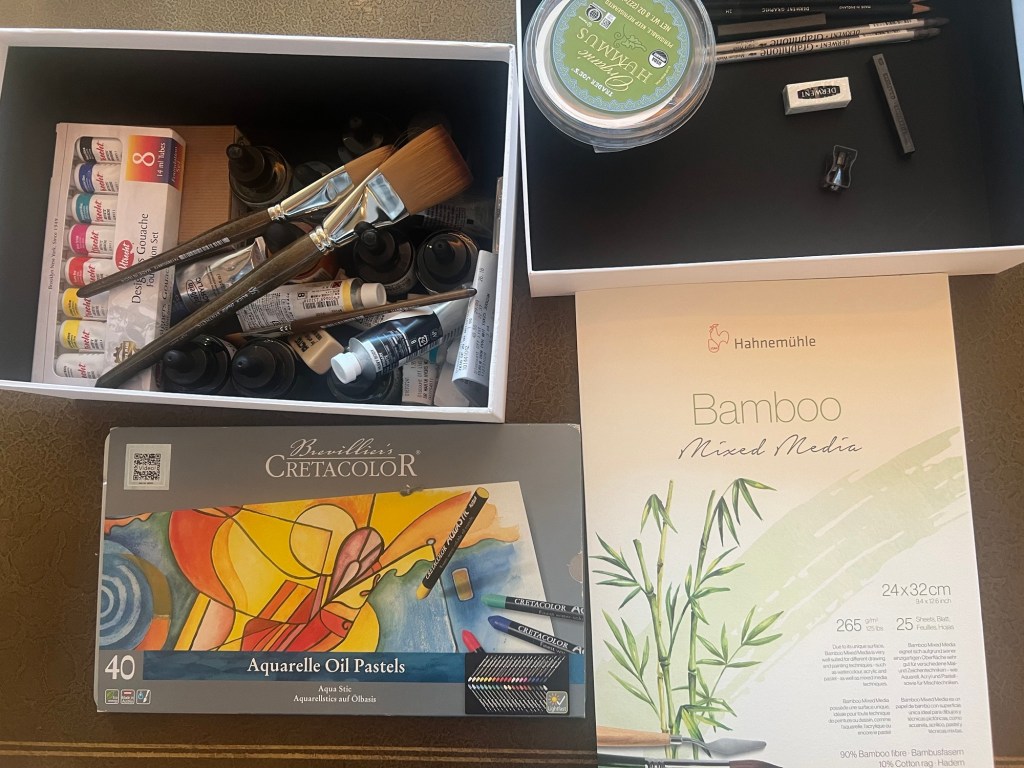
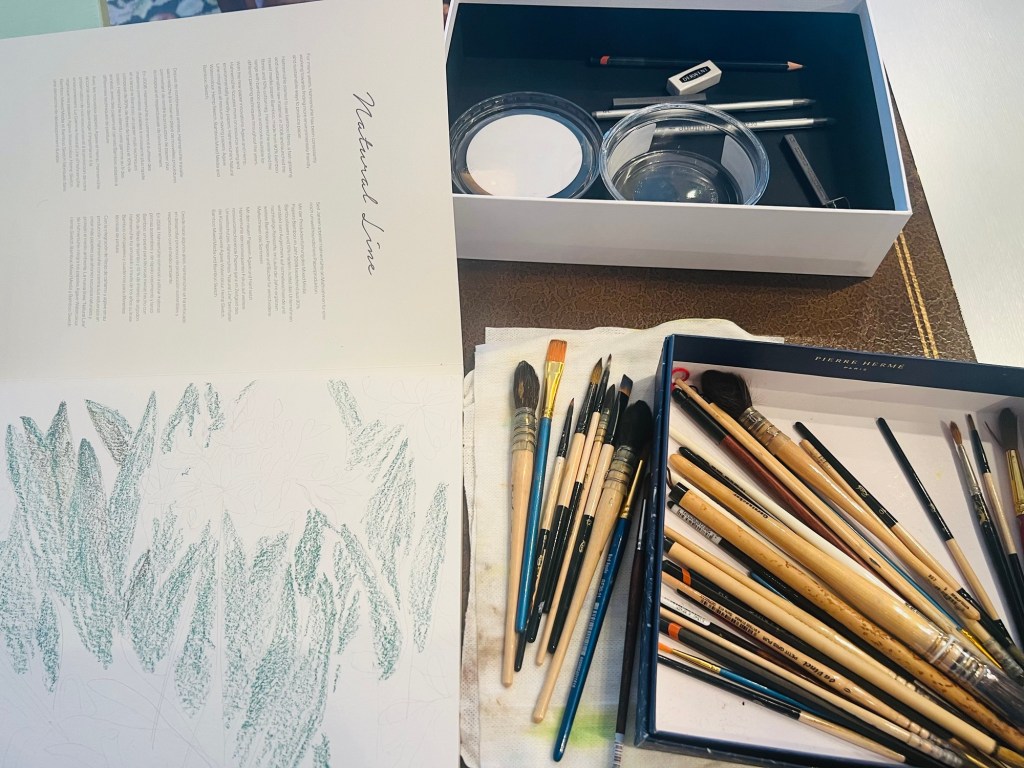
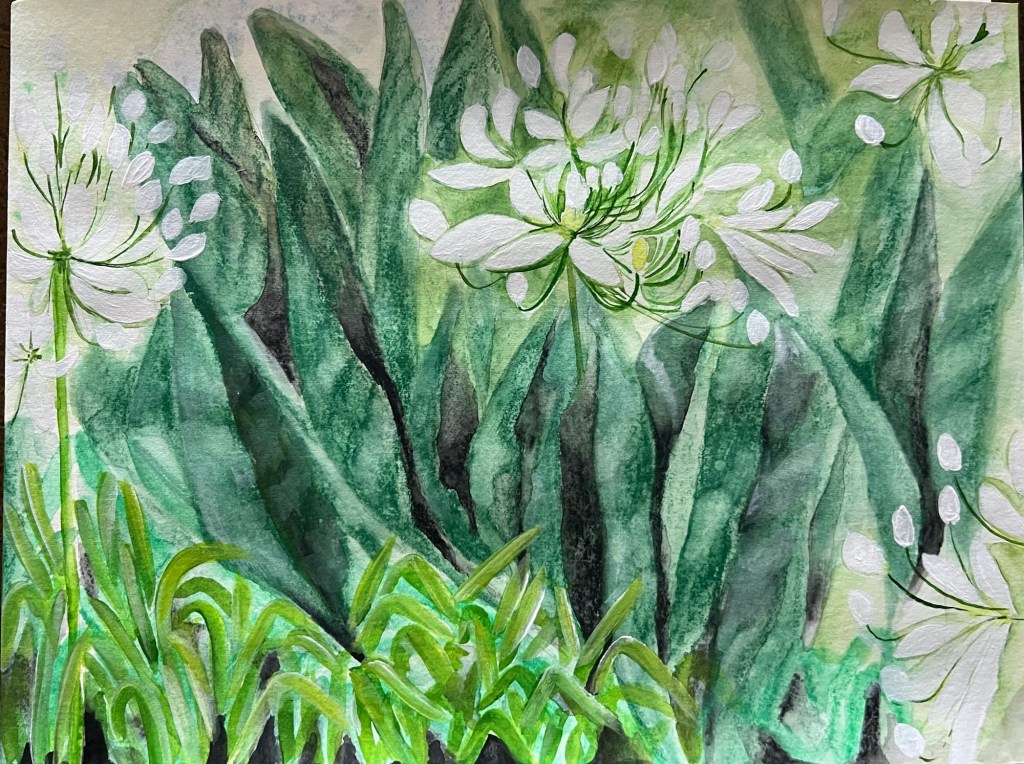
I keep working on different flowers. Below is a trial for a new flower, which is a good candidate to be included in the painting.
Below is a turning point in my project development. I tried to focus on the landscape look of the painting and include a landscape element, which is about trees. Before I was working on individual different flowers, thinking about how I would unite them in the painting, the composition decisions seemed to be difficult to make. I researched in my earlier post, which helped; however, the decision was not close to me. Painting landscapes pushed me forward in my understanding of what direction to pursue and brought more clarity in overall style, mood and details.
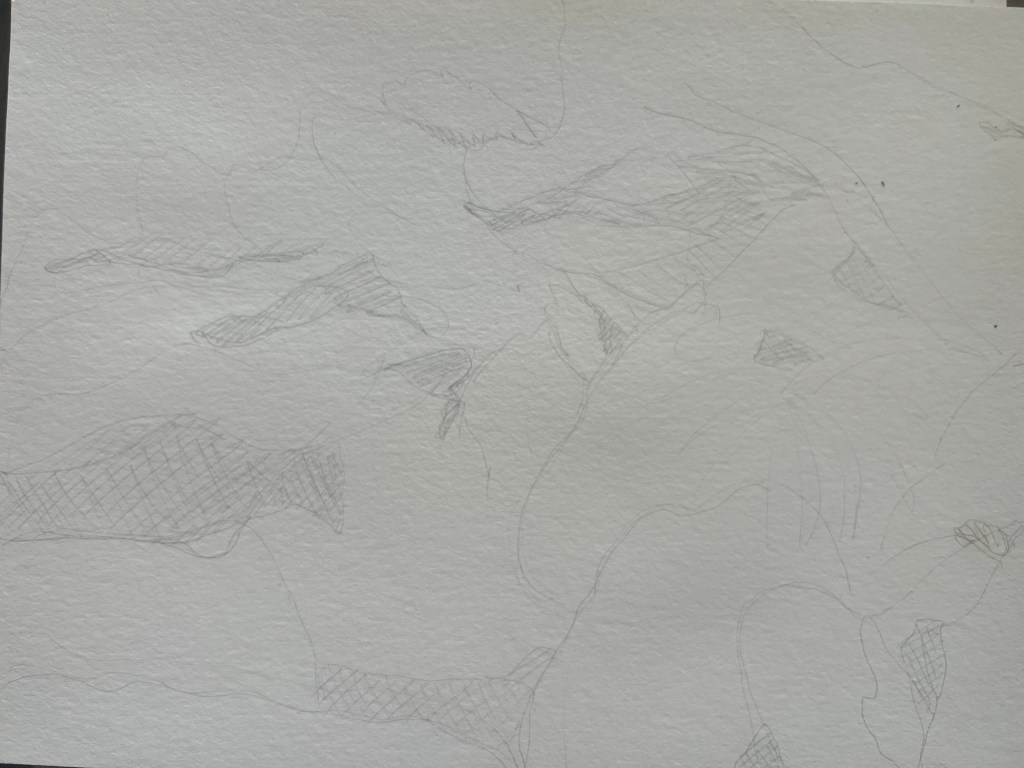
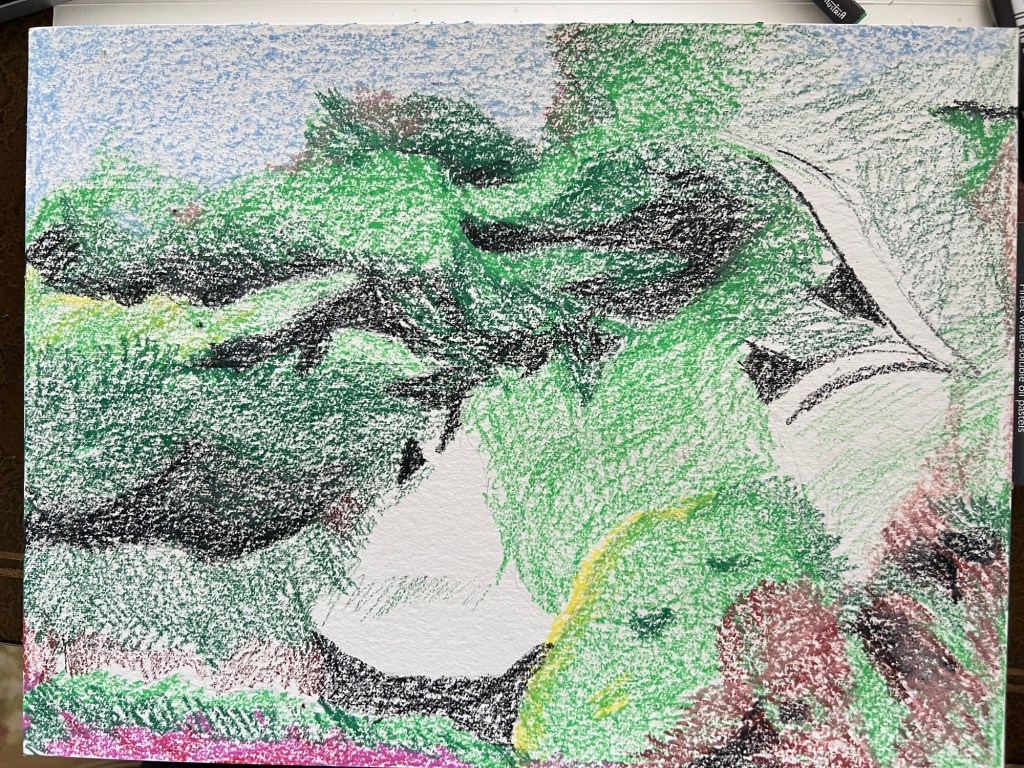
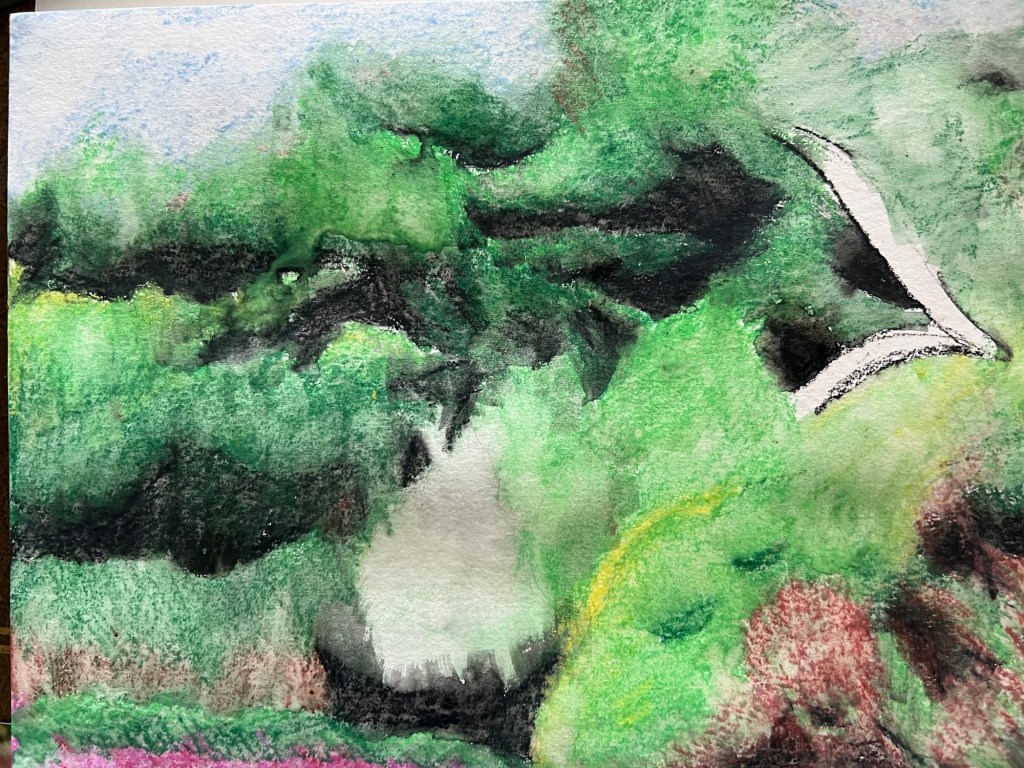
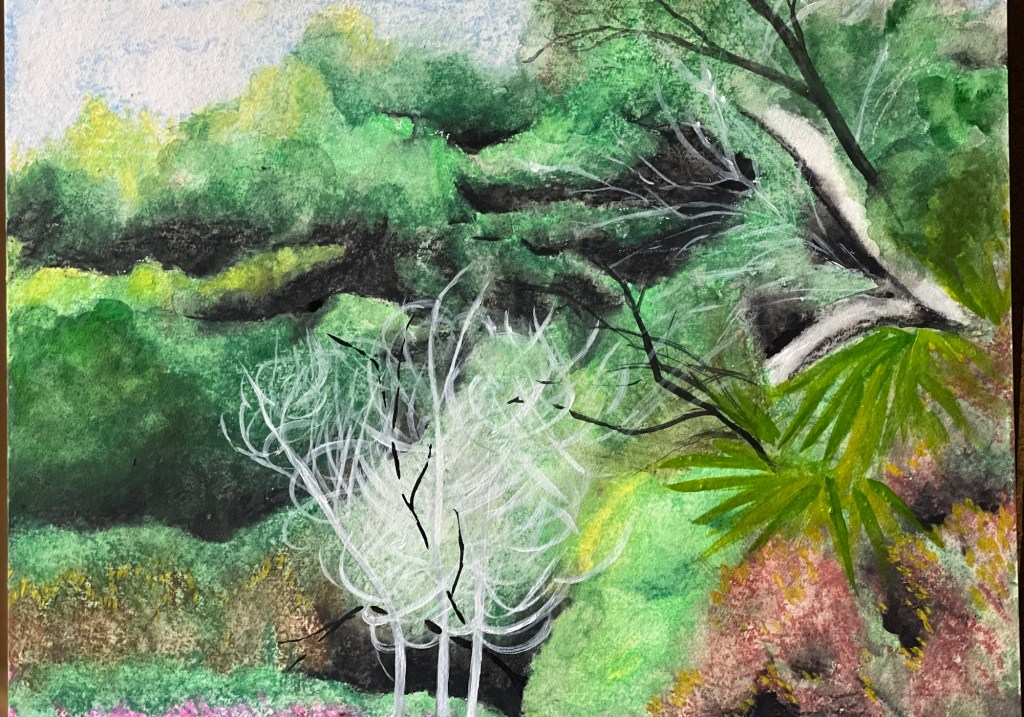
Reflecting on the outcome above, I decided to enhance the enigmatic forest atmosphere by changing the colour of the shades. I made another drawing of trees and made the shadows between the masses of foliage dark purple ( below).
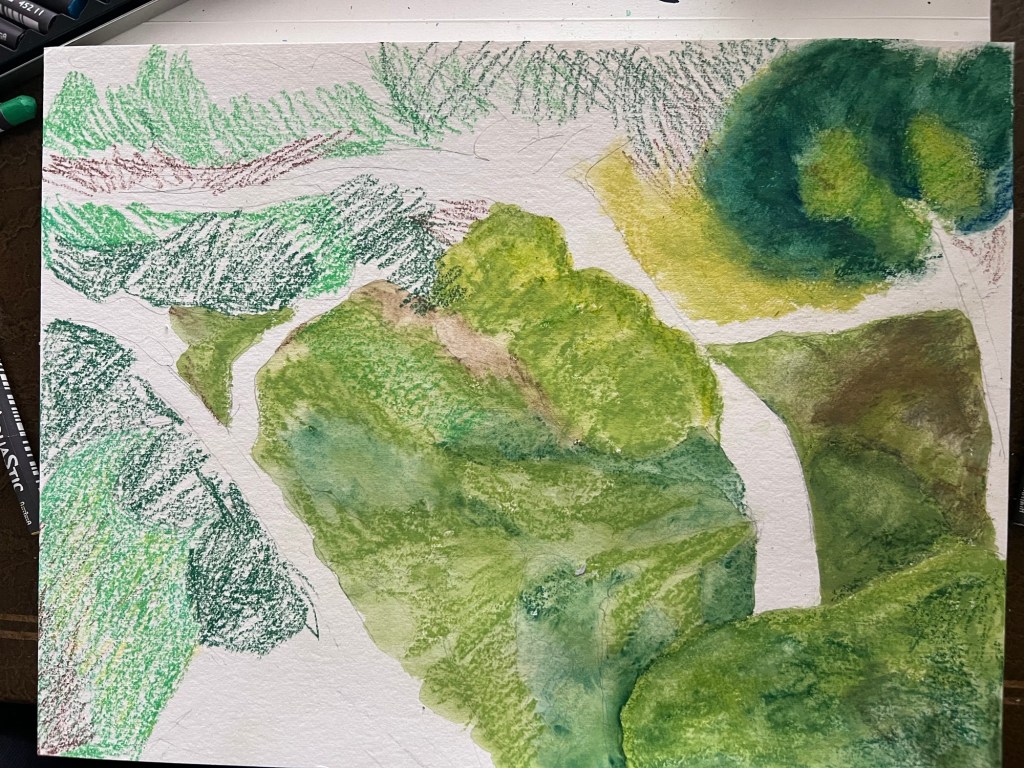
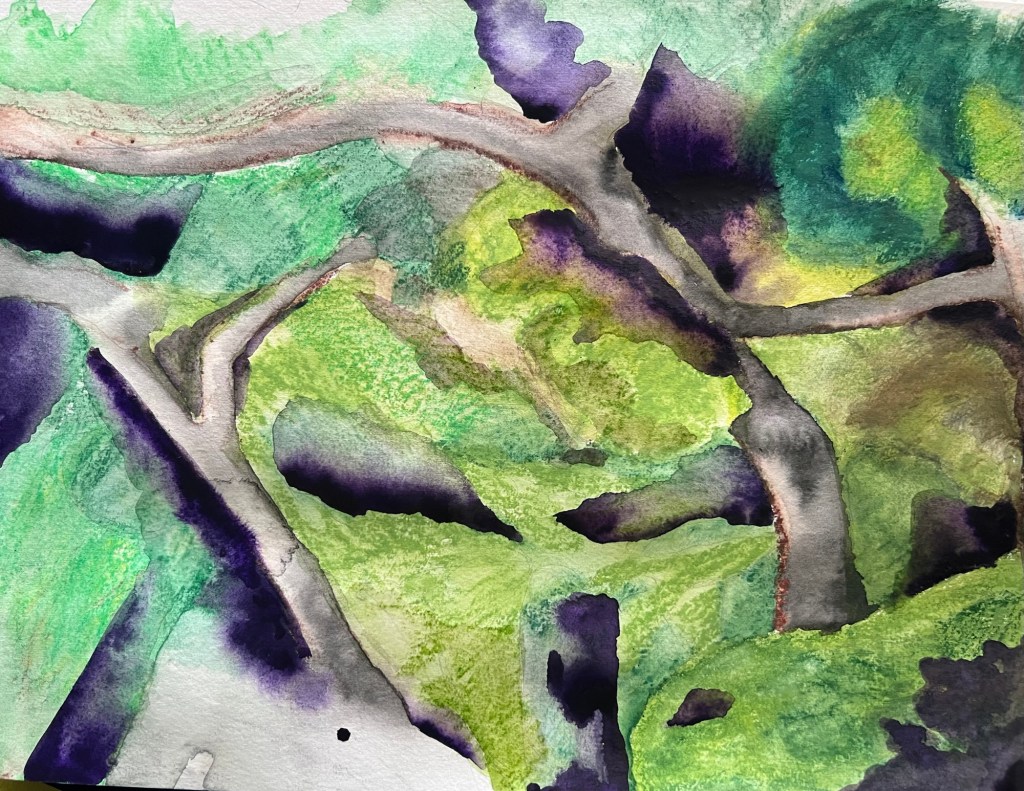
I wanted to see how this new effect would look on a larger scale, so I produced another drawing below.
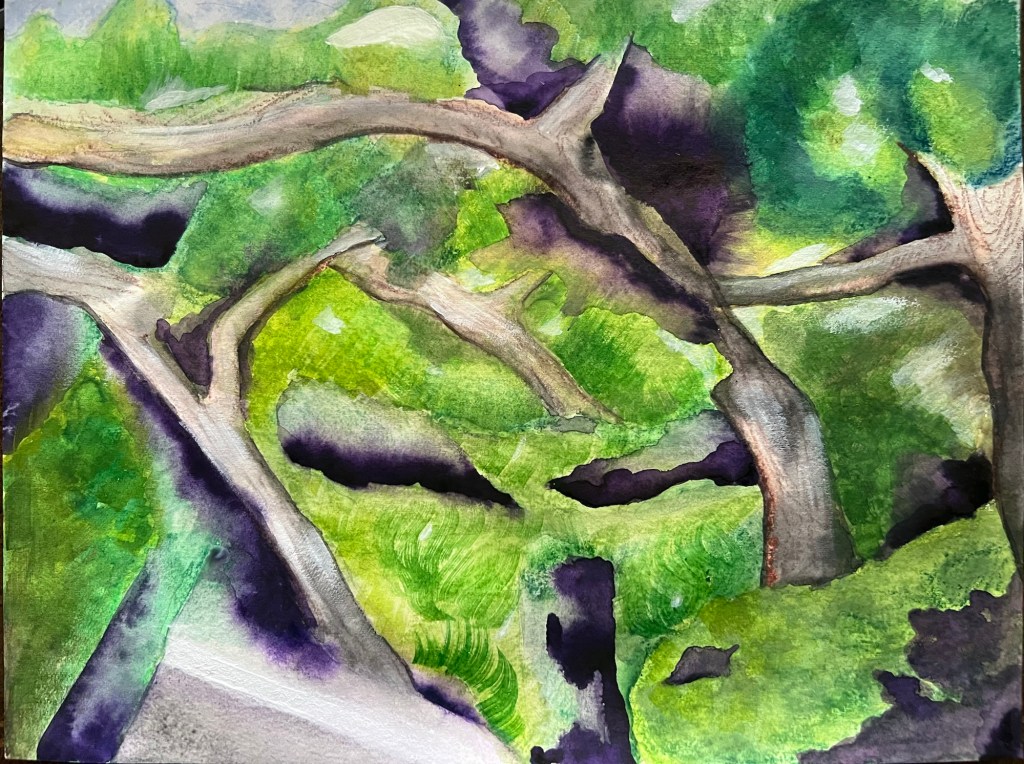
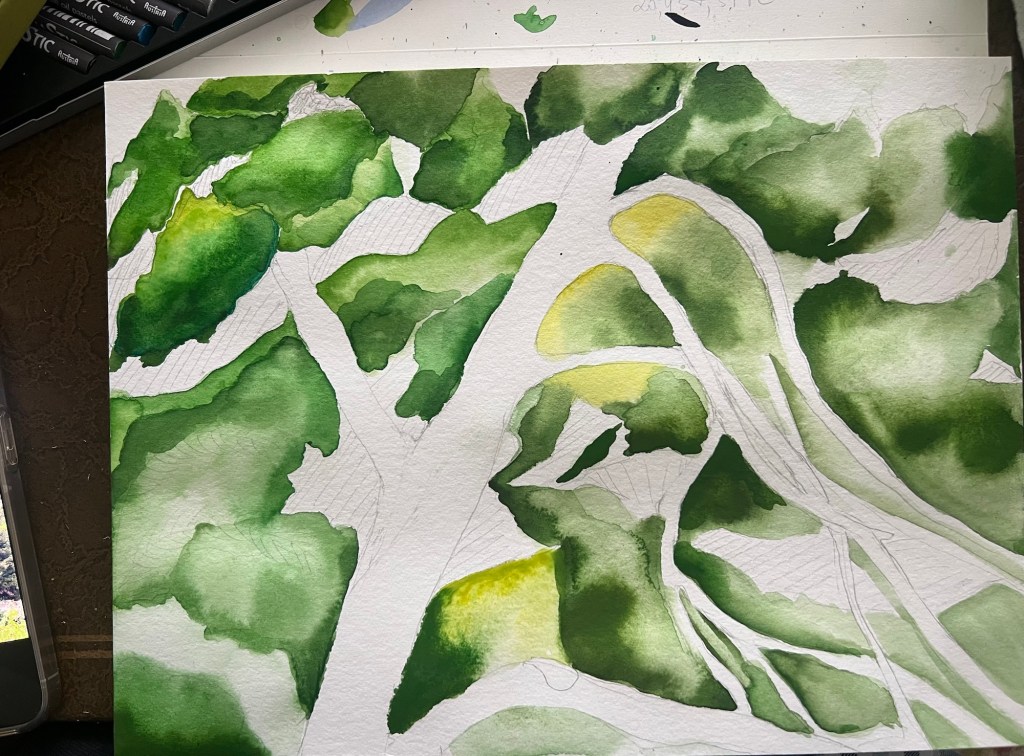
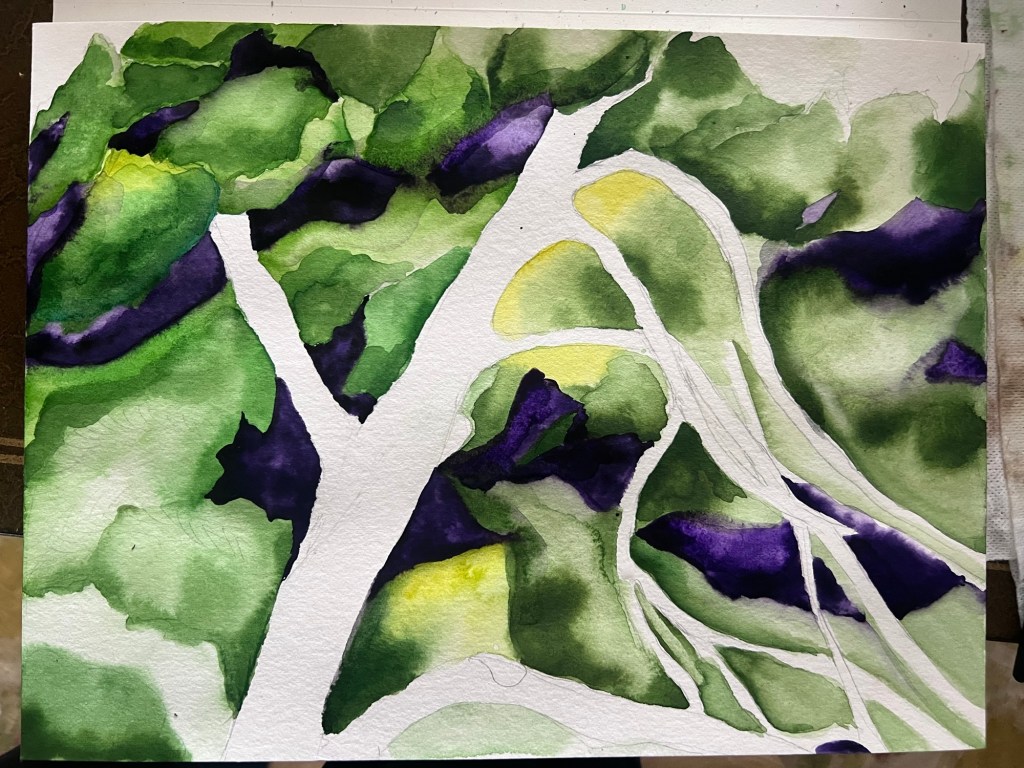
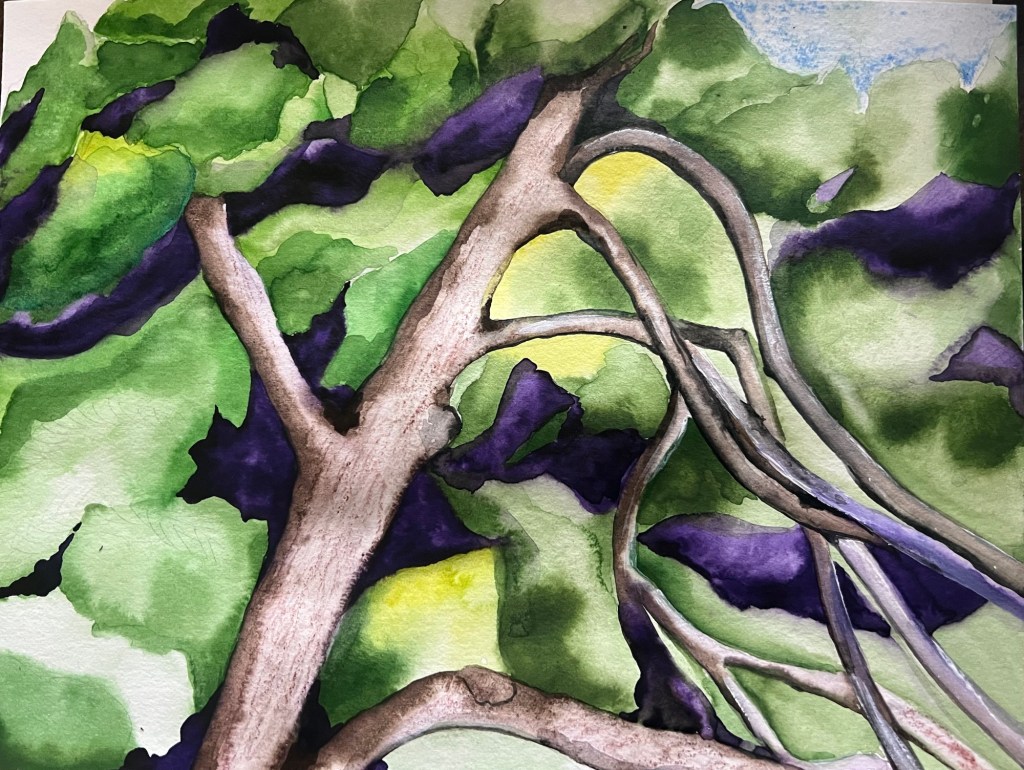
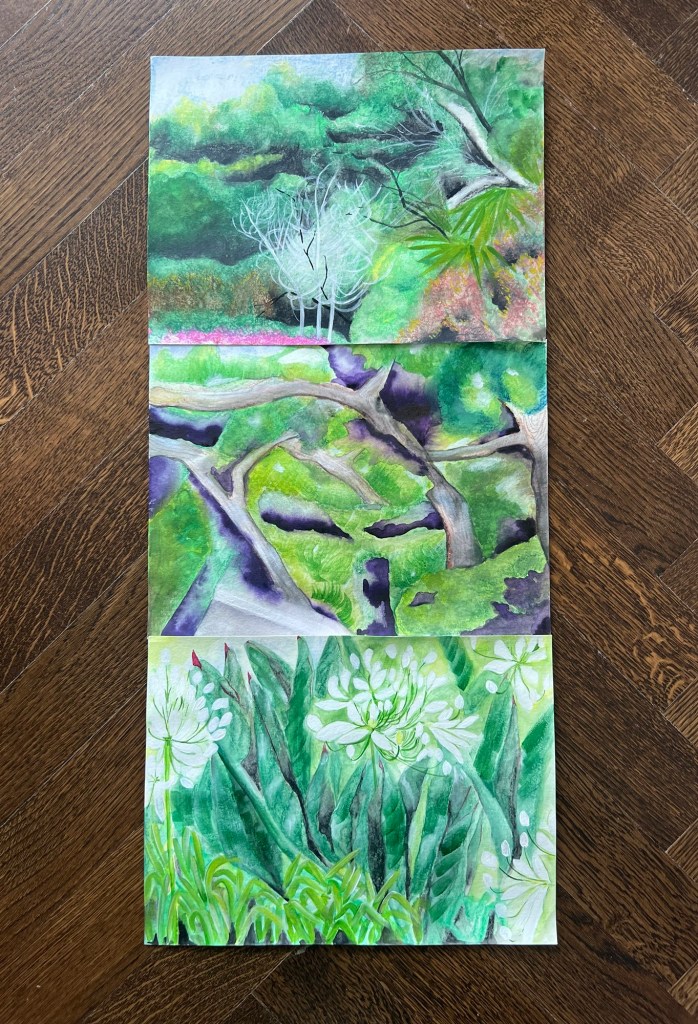
Then, I started assembling my latest developments in one “painting” to see how everything looked together. That helped me understand where I am heading, what works well together, and what doesn’t.
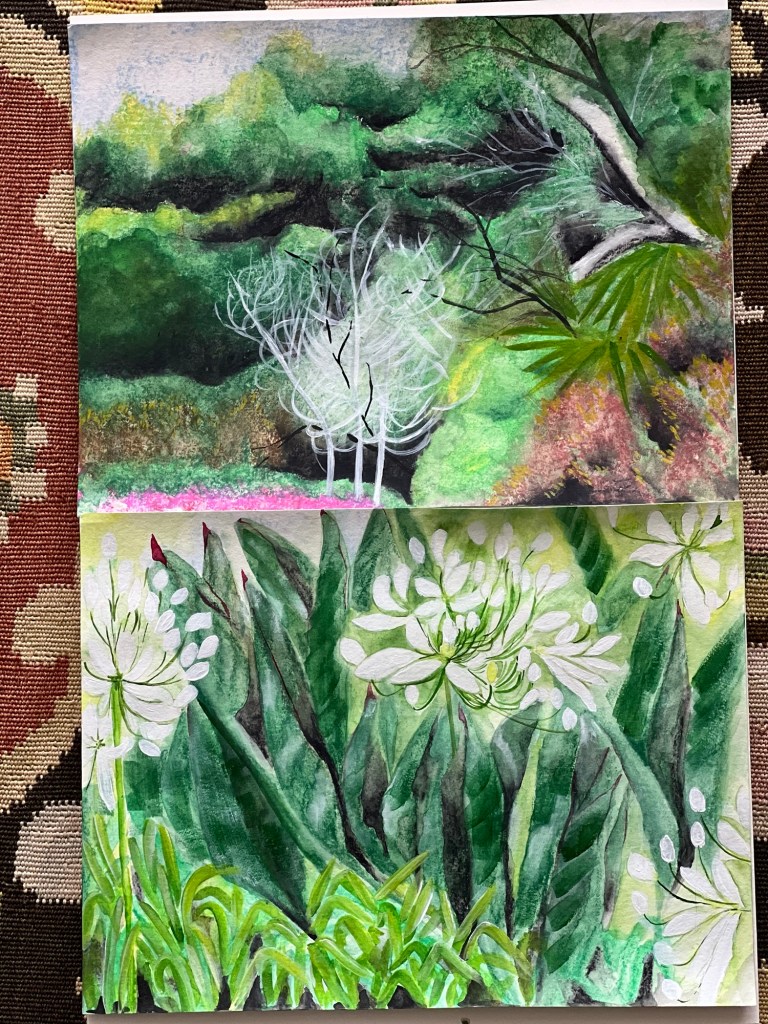
In July, as part of my research course assignments, I visited a “Floral Abundance Part II” exhibition at the Hunter III Dunbar Art Gallery in NYC. I saw many amazing, high-quality artworks. One was by Elisabeth Condon (b. 1959), “Two Sisters”, made with ink on a 300 lb. paper roll.
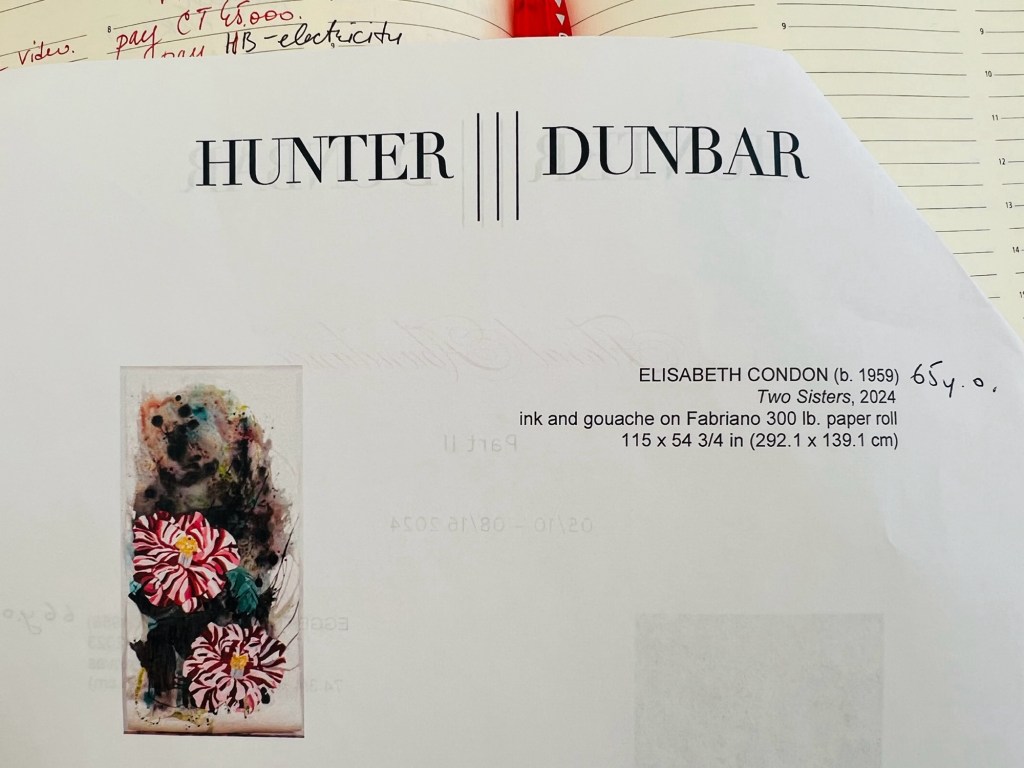
So, I vertically arranged my developments. Elisabeth Condon’s work on the paper roll opened up another option for compositional decision-makings.
I continued to check how the landscape element looks on a larger scale, multiplying the initial image in collage.
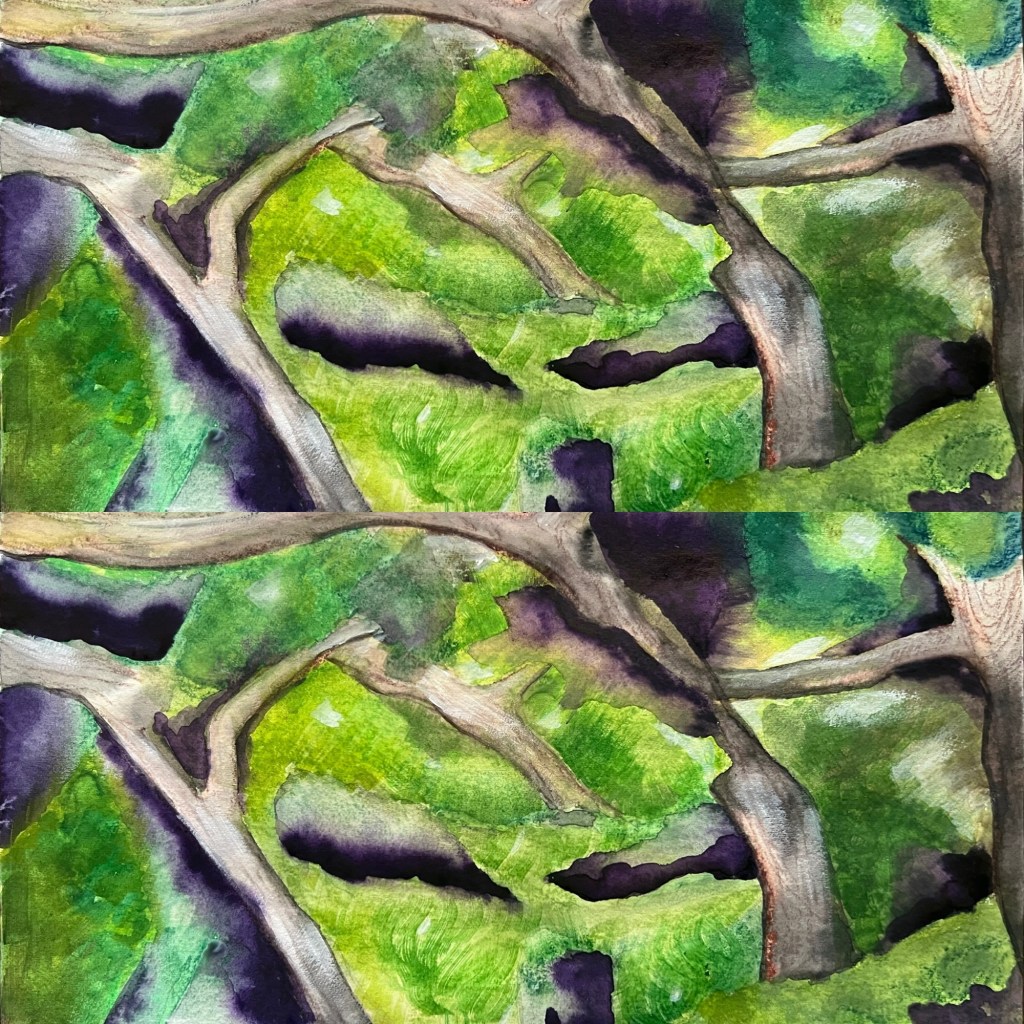
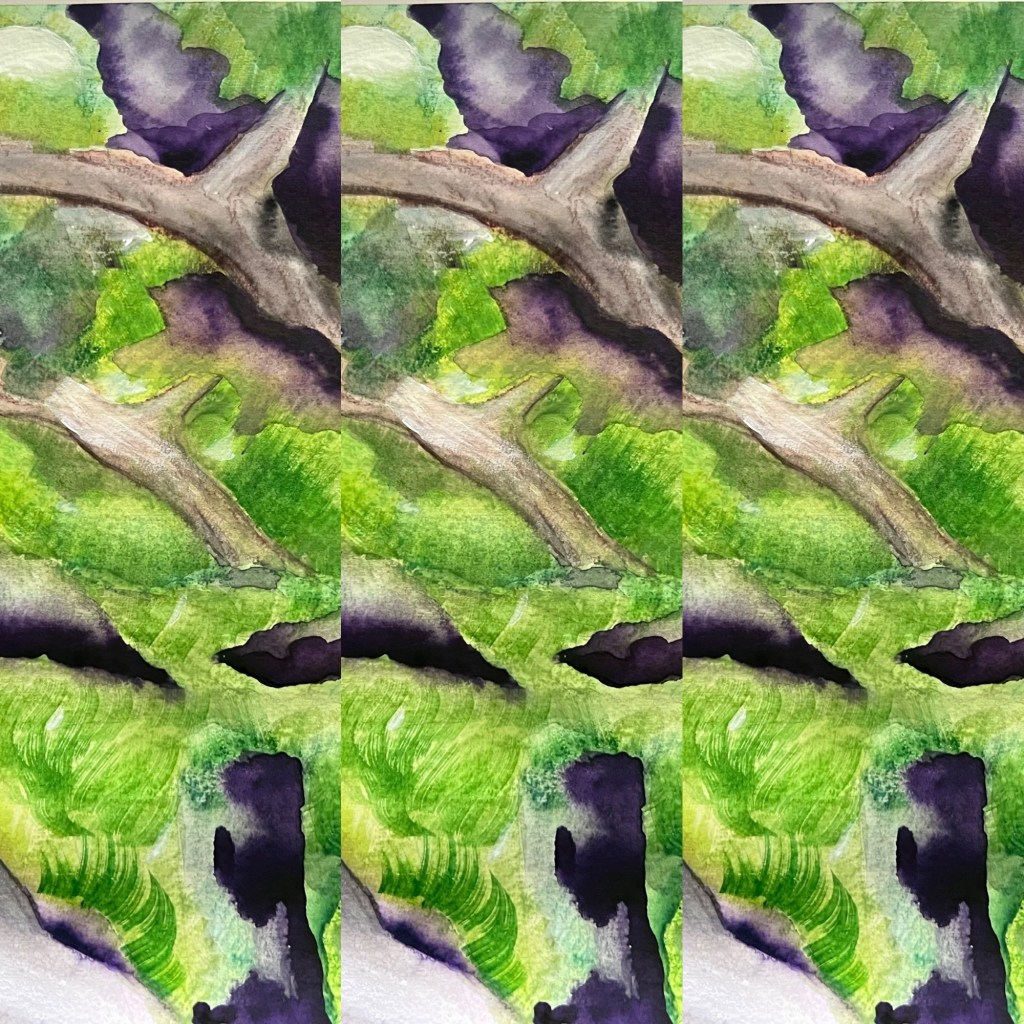
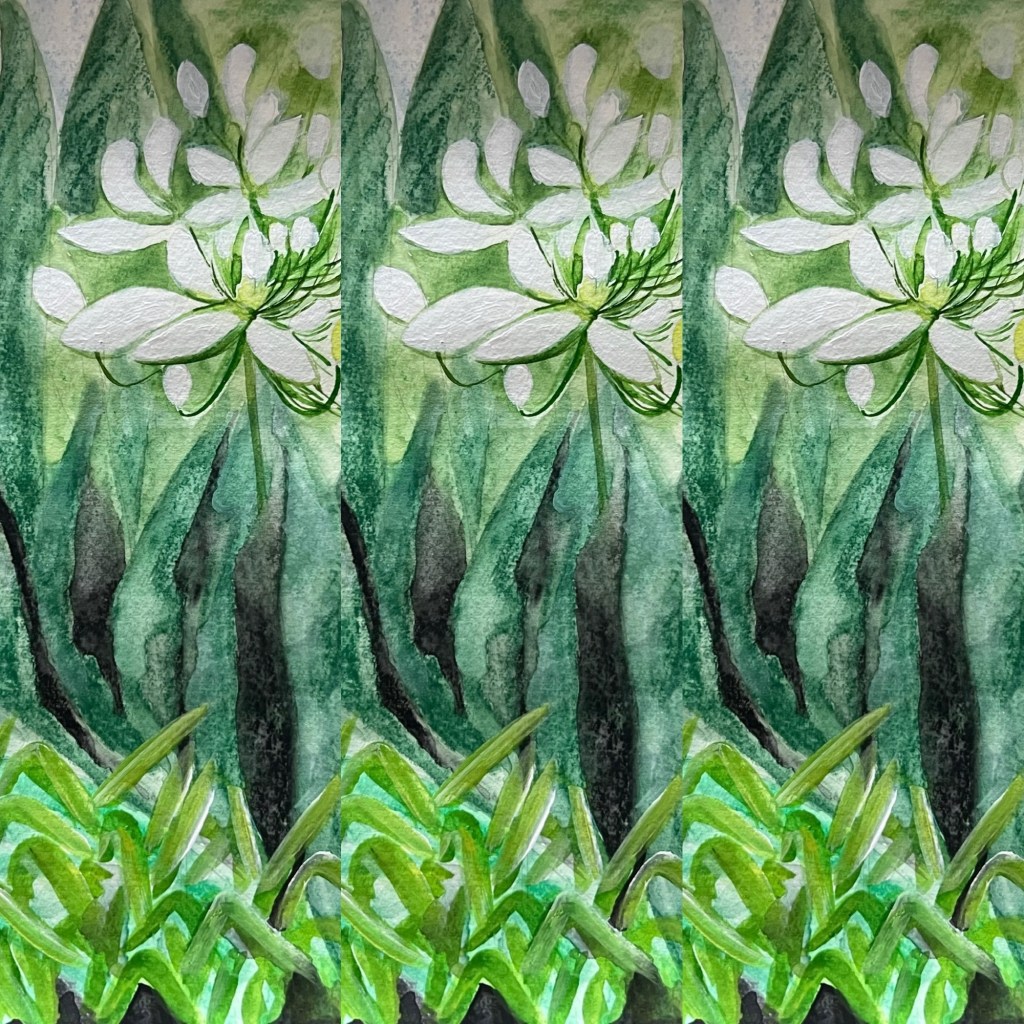
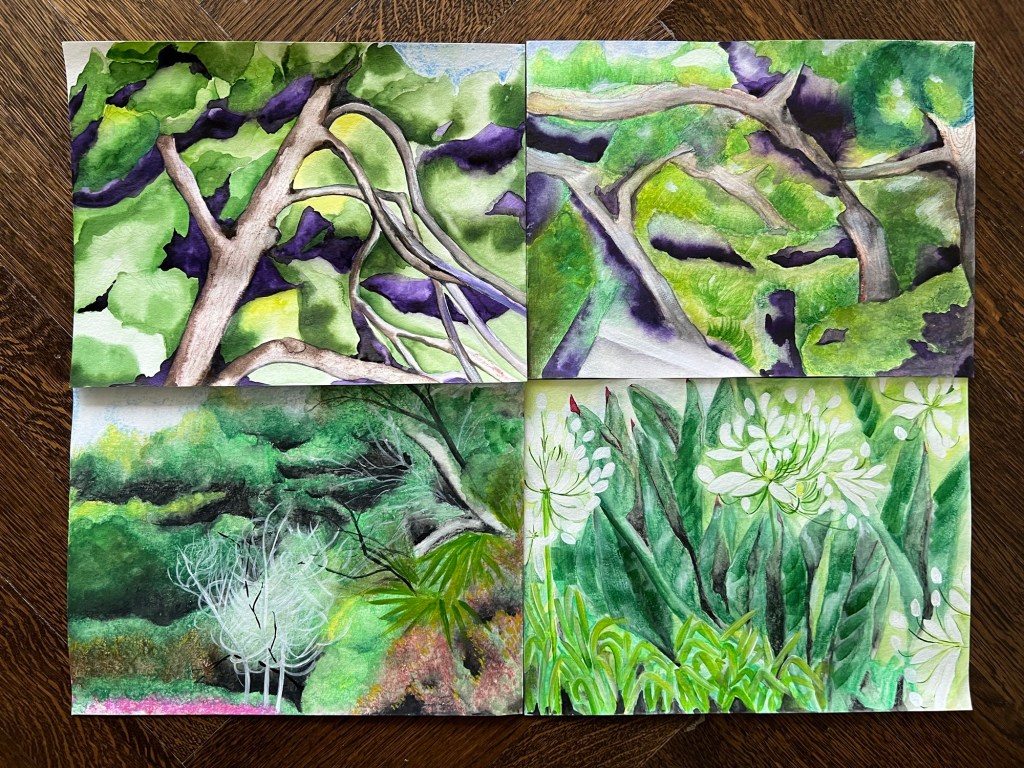
Then, I arranged the developments in different formats below. I felt satisfied since the four developments allowed me to play with them and really stimulated my thinking, giving me great insights on how I can work further on my project. In the setting below, I liked the upper part. At this point, I realised I should include trees and their crowns in the project. I also really like the piece with smaller white trees, but I am not sure how I can incorporate it into my Riviera Flowers painting. The white round flowers in blossoms with little bulbs will be a part of the painting. However, I think I should exclude the bright green leaves – the lower left corner of that piece.