Exercise 1.4. Collect, Combine, Construct
In this exercise we are asked to ( below I put quotes from OCA Painting 2 Course book, page 42):
- ‘explore working on a horizontal surface;’
- ‘work out’ the object table we have developed in Exercise 1.1. ‘This means that rather than represent what you see, you are going to work intuitively and use the visual, material and formal elements of the table to inspire the work you create in this exercise”
- ‘to consider the encounter with a painting as it takes on some of the formal and material language of sculpture. This may be your encounter with your own work as its develops, and/or the viewer’s encounter with a painting.’
We are advised to look up at Robert Rauschenberg’s works prior creating our own work and reflect on: 1) ‘How do you feel these works ask to be read, viewed or experienced?’ 2)Does this work invite you to spend time with it or to move quickly? How?”
I have never tried assemblage, installations and sculptures, and this exercise encouraged me to try very new things as an artist. However, I do like sculptures. Therefore, to warm me up for the practice in the exercise, I tried to look at the works of other artists, as well as on Robert Rauschenberg’s works following the link in the course book on page 42. Reflecting on these artworks as I was asked in the exercise: how do I feel these works have to be read, viewed or experienced? I must confess that at the very beginning I didn’t find Rauschenberg’s artworks as impressive. I found them messy and unattractive. Probably, this happened because I was not a fan of such visual style and aesthetics. Also some reading was required to expand and upgrade my understanding. But I am in the process of learning, so I put my thoughts as they are honestly in my learning log.
Rauschenberg’s artworks are a great illustration of how random two-dimensional materials can be combined in one space, creating an artwork that combines painting and sculpture. It is interesting how John Perreault, an art critic and art curator, describes Rauschenberg’s combined artworks: “Rauschenberg’s prime Combines stick in mind; they surprise and keep surprising.” (www.artsjournal.com). I assume that many people are attracted to Rauschenberg’s installations because they find them ‘wild’ or strange and frightening, intense. They have been innovative, combining ordinary life random objects into artworks and the term ‘combine’ itself. That is why they were surprised by them.
However, I see that a certain degree of subjectivity exists in every professional art criticism. Because, in the end, most of them talk about their feelings and emotional reactions = perception, provoked or stimulated by the artwork. In his article in his art blog on http://www.artsjournal.com, John Perreault says: “There is no bowl of apples, no face, no cafe, wine bottle, no pipe you need to decipher. It is perception itself (and its intermediaries) you need to read.” It is how a professional famous art critic recommends us to gaze at Rauschenberg’s artworks: think about your perception. I do share Laura Cumming’s view on Rauschenberg’s artworks, which she described in her article for Guardian (4 December 2016): “ Rauschenberg asks, first to last, what is it like to be here and alive?‘ Because of his emotionally intense collages and combined artworks, and his extensive use of physical objects, she also says further: “It would be hard to think of another artist who takes you so far from this world while remaining completely within it”. However, to me, the most precise and valuable evaluation of Rauschenberg’s input into Art history is articulated by Leo Steinberg in his “The Flatbed Picture Plane”.
Leo Steinberg explains Rauschenberg’s artworks innovative artistic approach in his ‘The Flatbed Picture Plane” as : ‘But something happened in painting around 1950-most conspicuously (at least within my experience) in the work of Robert Rauschenberg and Dubuffet. We can still hang their pictures-just as we tack up maps and architectural plans or nail a horseshoe to the wall for good luck. Yet these pictures no longer simulate vertical fields but opaque flatbed horizontal. They no more depend on a head-to-toe correspondence with human posture than a newspaper does.‘
Another essential comment of L. Steinberg is:” The pictures of the last fifteen to twenty years insist on a radically new orientation, in which the painted surface is no longer the analogue of a visual experience of nature but of operational processes.”
Steinberg’s appreciation of Rauschenberg really helped me to understand his innovation in the Combines. It is really a good angle to look at them, perceiving them as not vertical snapshot of reality, but more as a process undetachable from life itself. This indeed opens up a new artistic direction and space. I have never thought before this project about my art as a possibility which spreads beyond the vertical, human posture parading of perception.
John Cage makes another valuable comment about Rauschenberg’s Combines (p.375, “Art and Modern Life): “There is no more subject in a combine that there is in a page from a newspaper. Each thing that is there is a subject. It is a situation involving multiplicity.“
It is hard to reflect on Rauschnegerg’s Combines. They are not apparent objects to decode or gaze at. John Cage makes another very discerning comment: “If you do not change your mind about something when you confront a picture you are not seen before, you are either a stubborn fool or the painting is not very good.” (p.737) Rauschenberg’s Combines don’t bring an easy and quick aesthetic pleasure. They are complex and often do not stimulate conventional emotions we are used to having gazed at art objects. I find many of them disturbing. I almost physically feel some kind of a barrier between them and me, like they don’t want to open up their value=meaning for me. I think that my struggle is related to what John cage describes as: ” I am trying to check my habits of seeing, to counter them for the sake of greater freshness. I am trying to be unfamiliar with what I am doing.’ (p.737).
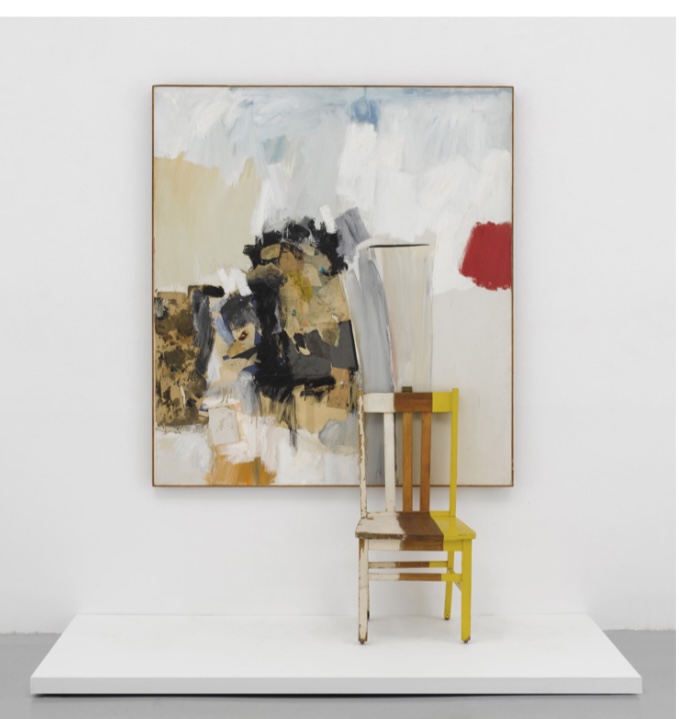
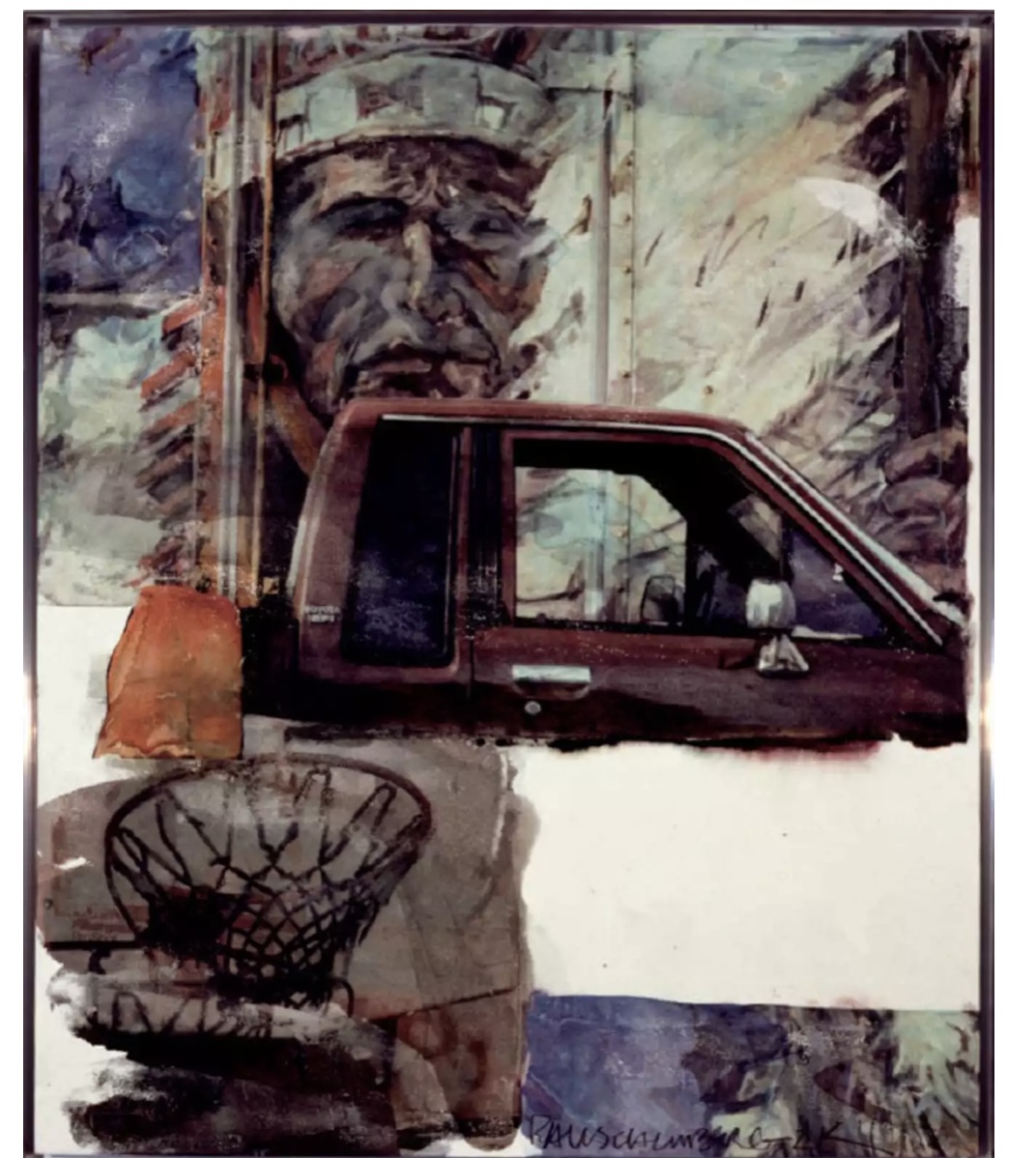
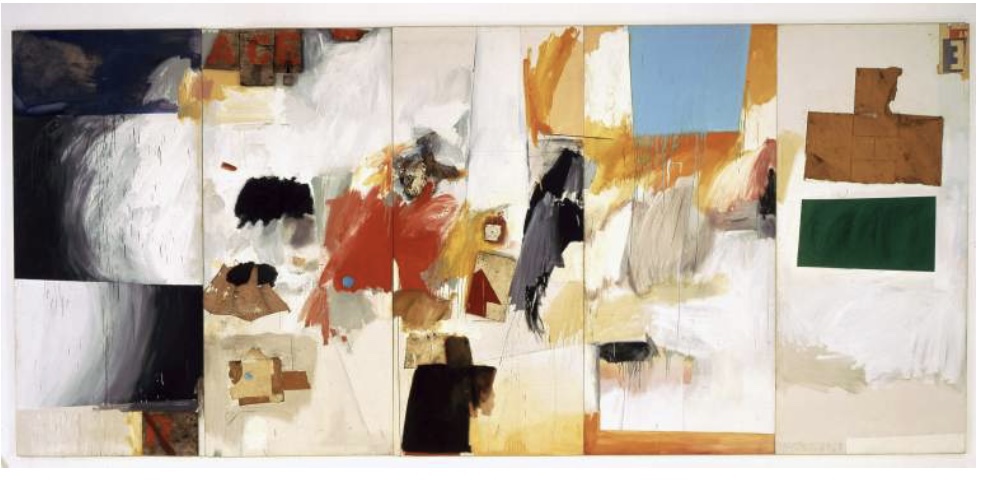
Below I put some of his Combines I found as engaging for me. I must confess that looking at them from the screen does not help to appreciate them in full extend because they remain as vertical flat paintings. So some effort to imagine them was necessary.
Pilgrim, Robert Rauschenberg,1960, oil, graphite, paper, printed paper, and fabric on canvas with painted wood chair; image via http://www.moma.org;
Untitled (Native American with a Truck), Robert Rauschenberg, 2000, color pigment print on wove rag paper; image via http://www.artsy.net;
Ace, Robert Rauschenberg, 1962, oil, paper, cardboard, fabric, wood, and metal on canvas; image via http://www.rauschenbergfoundations.org;
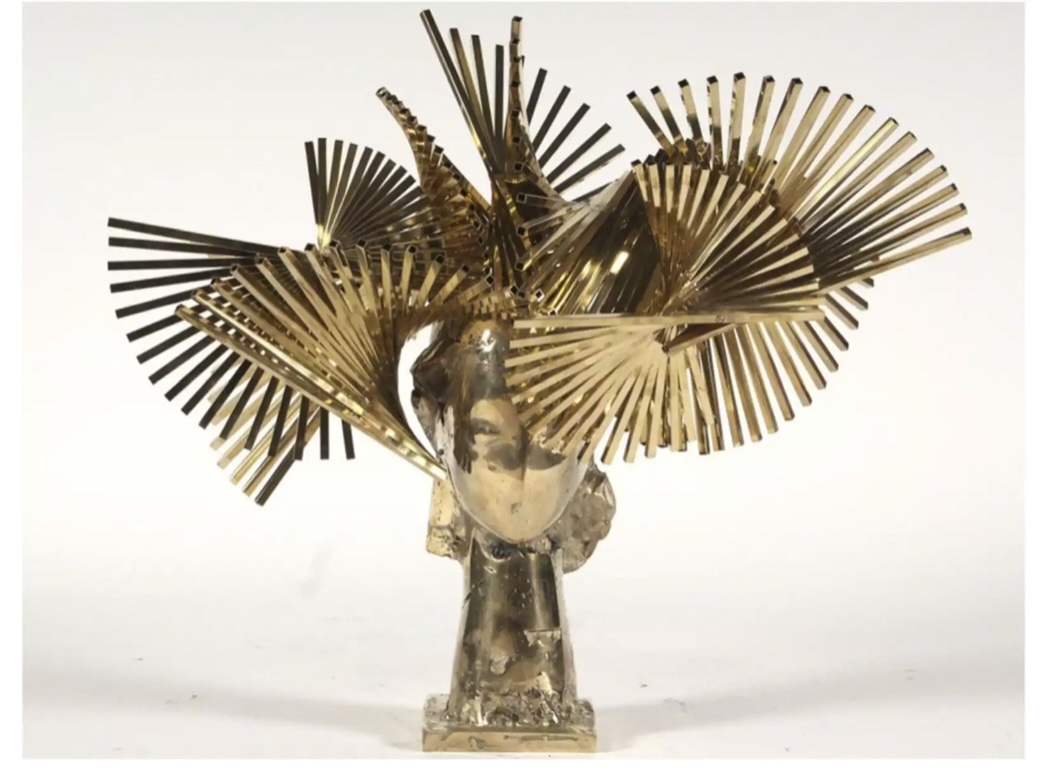
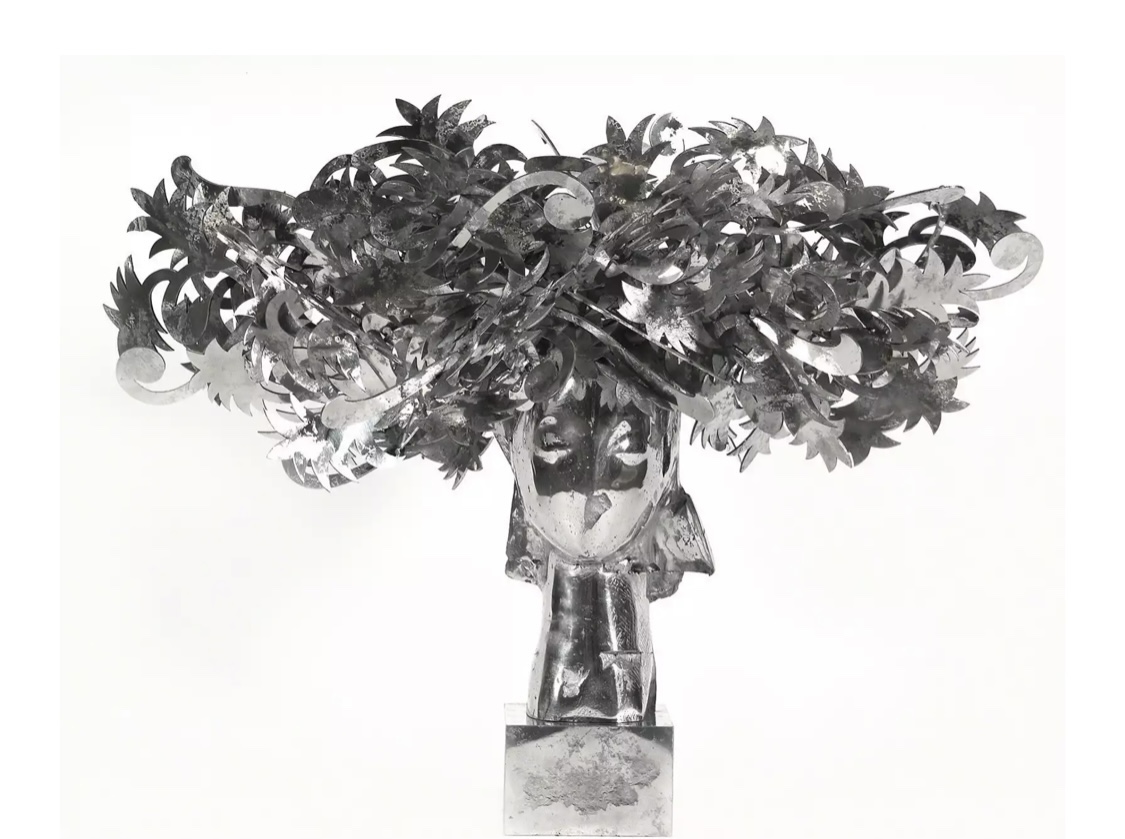
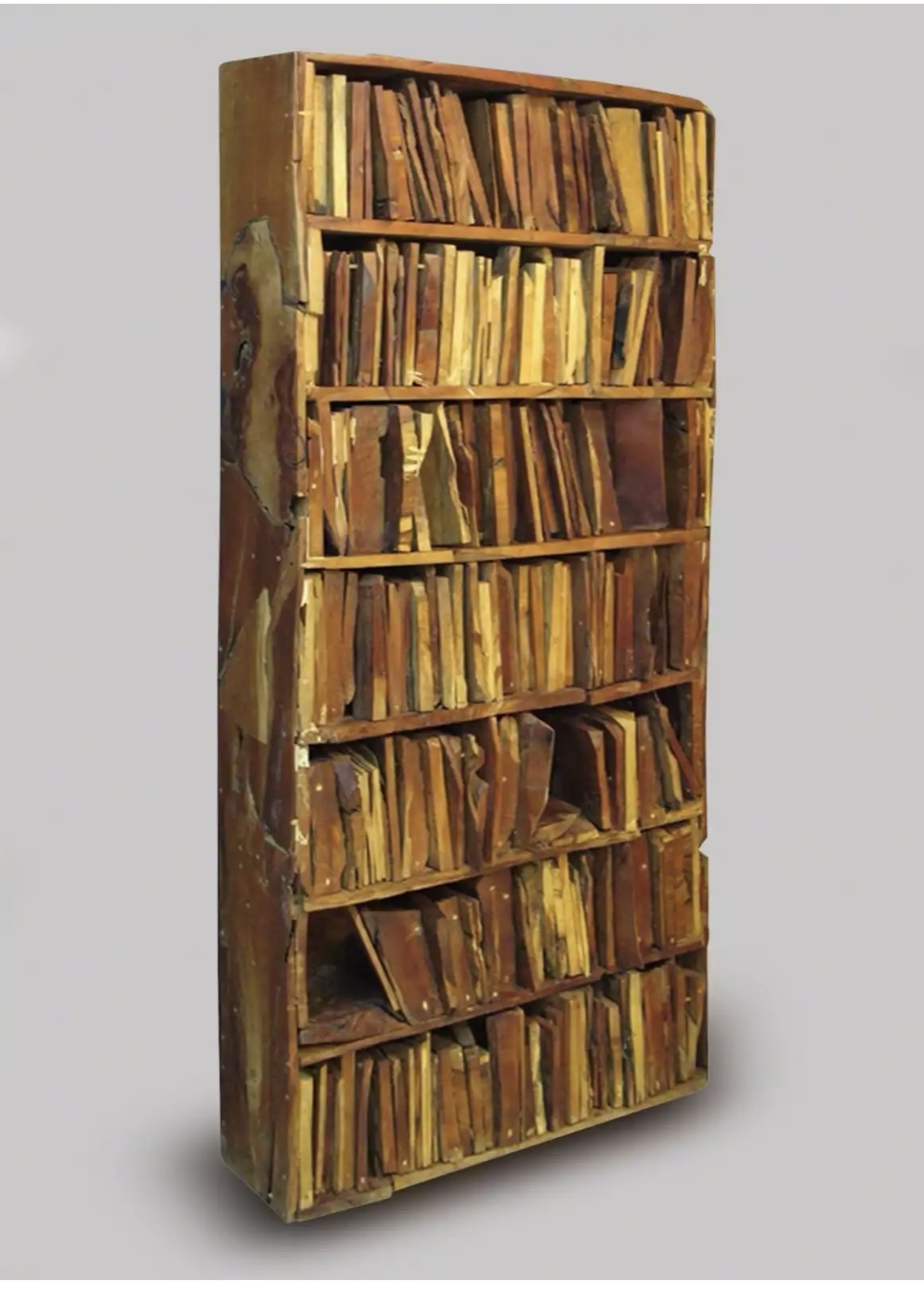
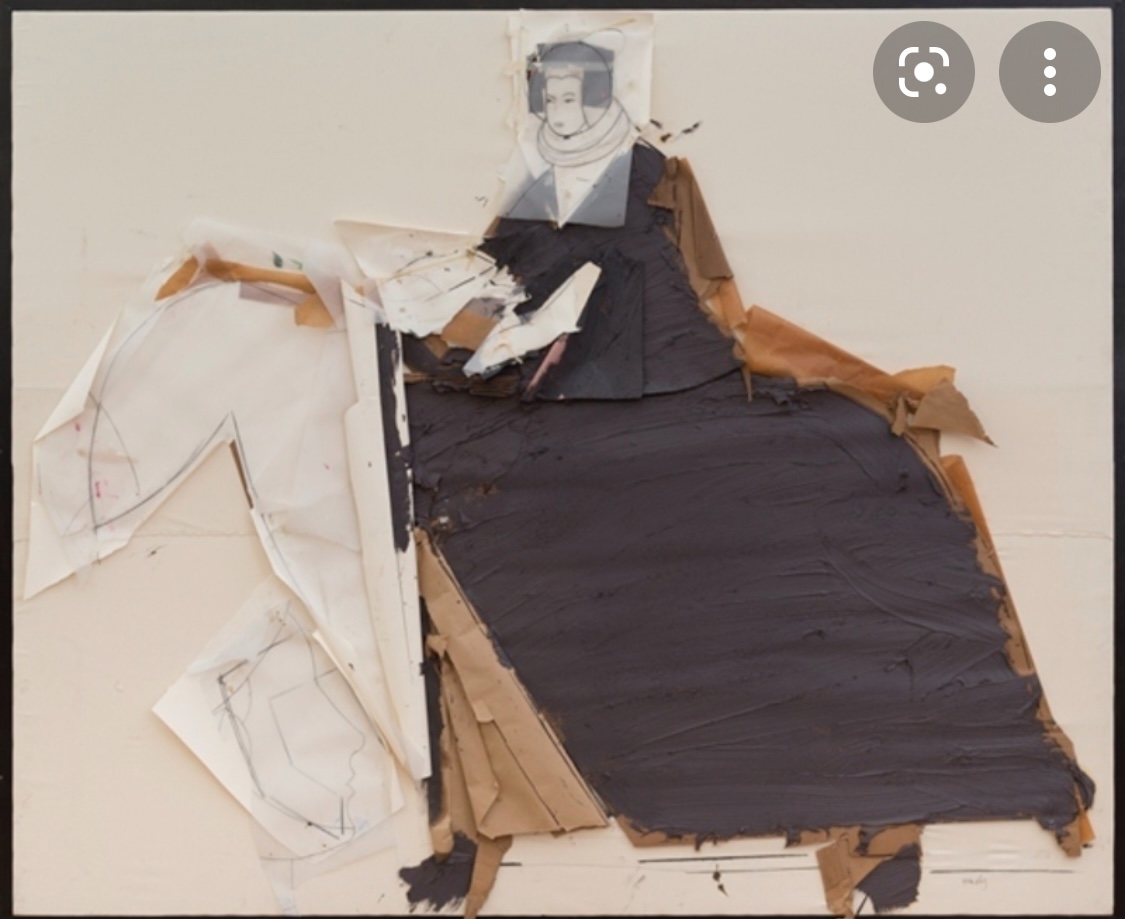
Below I put some artworks, which are sculptures and combined artworks I really love to look at too. From left to right.
Ivy Cabeza de Biarritz Dorada, Manolo Valdes, 2010, golden aluminium; image via http://www.artprice.com;
Ada Cabeza Con Flores Plateads, Manolo Valdes, 2010, aluminum; image via http://www.artprice.com;
Bookcase, Manolo Valdes, 2002, wood; image via http://www.artsy.net;
Dama a Caballo,Manolo Valdes, image via http://www.artpress.com;
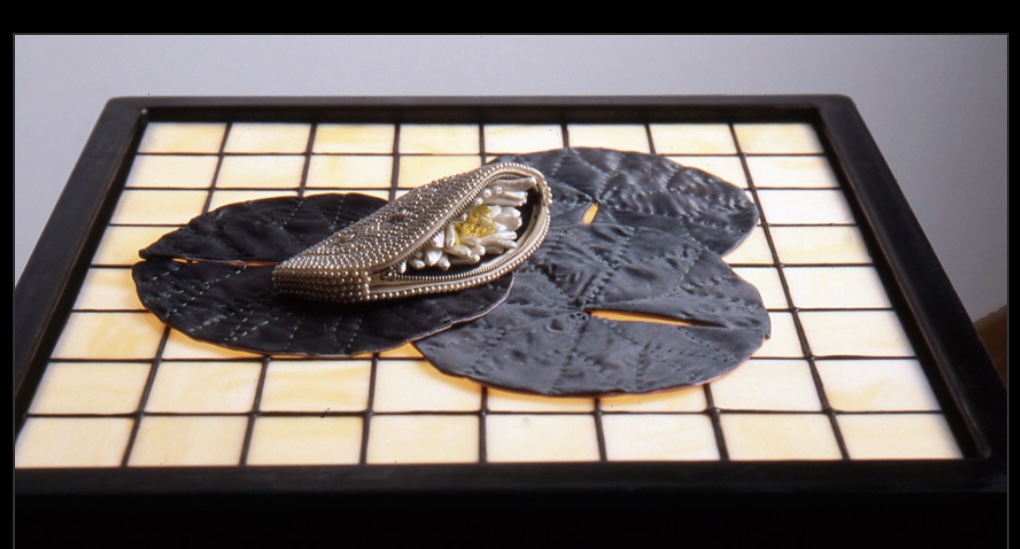
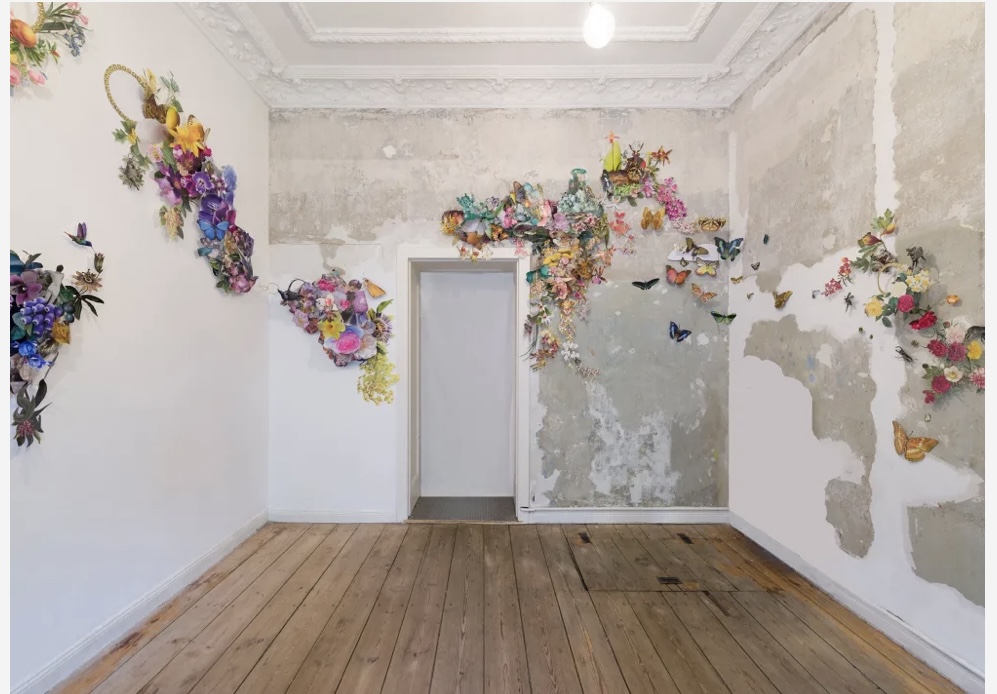
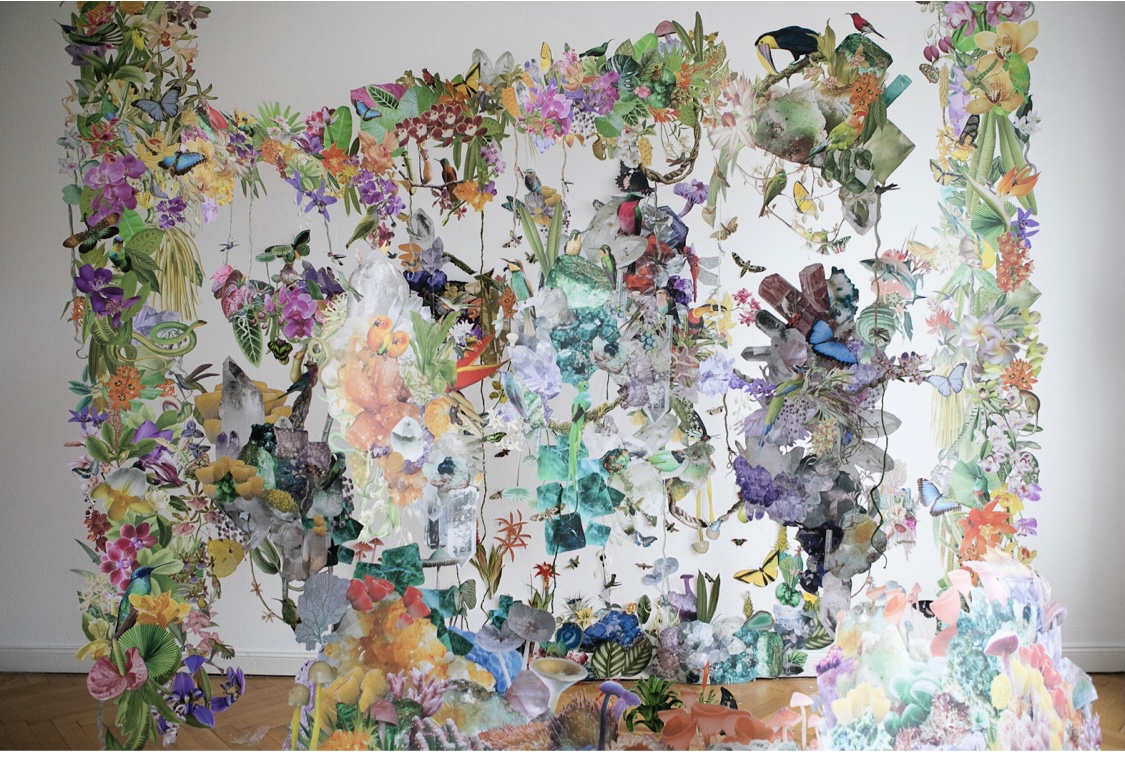
Below from left to right:
Water lily, beaded purse & flower, Gale Jamieson, 2003, image via ww.galejamieson.com;
Immersive Colage installations, Clare Celeste Borsch, image via http://www.medium.com;
RESEARCH POINT 5. Rauschenberg’s collaborations with musicians and dancers.
Rouchenberg’s collaboration with Paul Taylor began in 1954 with Jack and Beanstalk performance, Taylor’s choreographic debut. Rauschenberg made the set and costumes. He represented the beanstalk with a balloon on a string. Rauschenberg and Taylor used to be a great partners for each other in their creative pursuits. Taylor experimented with non conventional choreography and spaces for his choreographic performance, challenging Rauschenberg with sets and costumes, both of them ‘presented a united from against prevailing modern dance”(Jennifer Harris). For another Taylor’s performance, which was Three Epitaphs (1956) Rauschenberg created an outfit for dancers: hooded black bodysuits, with small mirrors attached to artists’ heads and palms, so they could reflect light throughout the space as they moved.
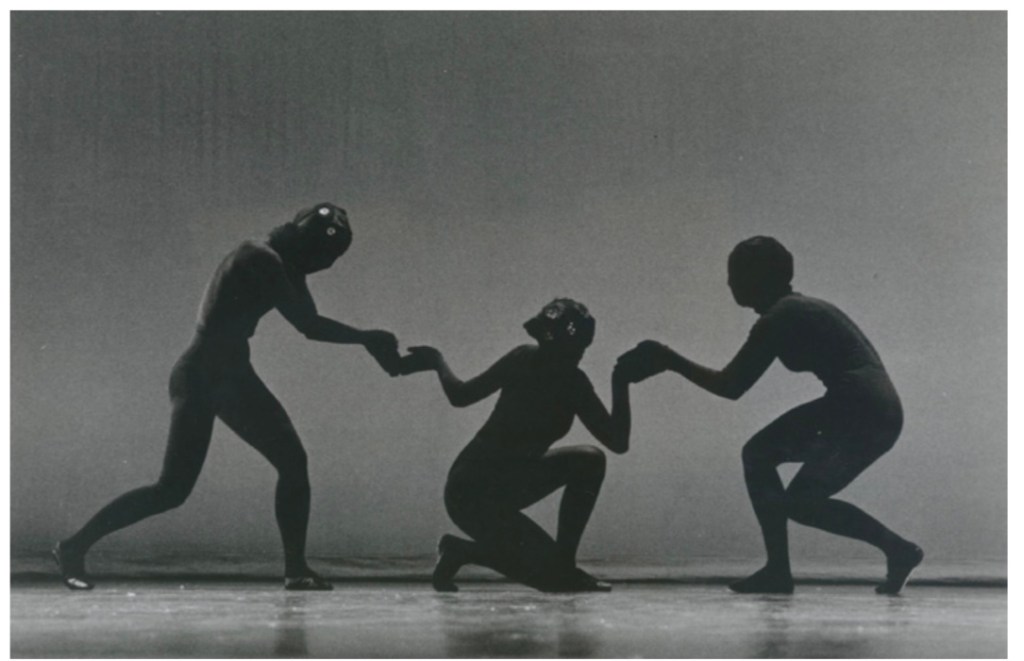
They collaborated over eight years and created 17 dances. Taylor was very unconventional in his approach to modern dance and choreography, incorporating ordinary moves, such as standing, squatting, stepping sideways, resting one foot on the opposite knee. Rauschenberg challenged the traditional idea of creating and designing stage costumes, incorporating street cloth and ordinary objects into the stage and performance. According to Jennifer Harris (p.3, ‘Dance among Friends”): “Through the austerity of everyday elements was employed to counter the drama and emotion of Graham’s modern dance, for Taylor, quotidian gestures also came with unexpected dramatic potential.”
Another famous Rauschenberg’s collaboration was with Merce Cunningham. The core idea of Cunningham’s approach was about eliminating his artistic, creative pattern and habit but introducing a factor chance in designing of his performances, like tossing a coin to determine the next move in his choreography. Rauschenberg aimed to ‘remove himself-his ego and taste- from the creative process” (J.Harris, p.5, “Dance among Friends’) in his part of developing costumes. Cunningham’s choreography was different, full of complex and ‘jarring’ (J.Harris, p.5) movements. The choreography determined Rauschenberg’s costumes was to support it and not be obstructive for the movements.
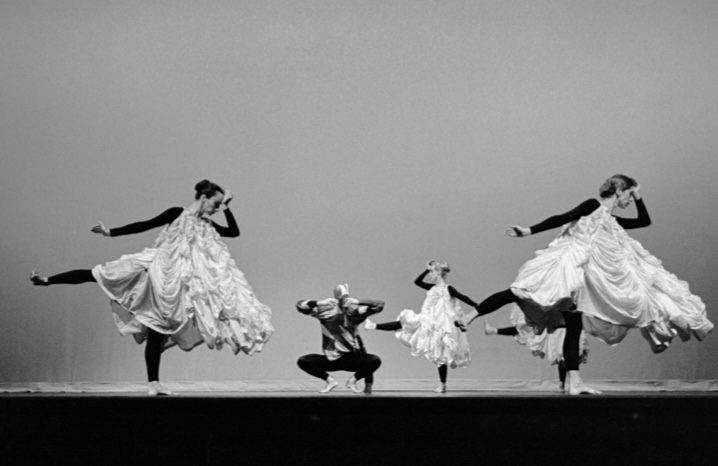
Rauschenberg’s collaboration with Trisha Brown took him to develop his creative concepts of the traditional theatre stage with all its restrictions and limitations. Brown was aspired to democratise the art of choreography and choreographic performance. However, because any version required a substantial amount of funds and at least six weeks to make a dance, as J.Harris says in her article “Dance among Friends”,: “in the tight little world of modern dance, most people have no chance to develop their own ideas.‘ Brown used untraditional spaces, an alternative to conventional theatre stage venues- outdoor space, as abandoned roller skating rings, museums, the gymnasium in the basement of the Judson Church, taking apart an existing hierarchy between the theatre, dancers and the audience.
All collaborations with these prominent choreographers influenced Rauschenberg’s Combines. He was a strong believer of enriching artwork through adding additional artistic vision to art object, that is why he was very willing to collaborate with other artists and did want to limit himself with the canvas and paints and including lot of other mediums and unusual for art objects as mediums for his artworks.
Bibliography: ‘Robert Rauschenberg review- the combine master, uncut’ by Laura Cumming, December 4, 2016, The Guardian, online on http://www.theguardian.com; [accessed on December 7, 2021]; “On Robert Rauschenberg, Artist and his Work”, John Cage, Art in Theory 1900-2000, An Anthology of Changing Ideas, Charles Harrison and Paul Wood (ed), (2003), New Edition USA: Blackwell Publishing, p.734, online on http://www.oca.learn.ac.uk; {accessed on December 8th, 2021]; ‘Dance among friends. Robert Rauschenberg collaborations with Paul Taylor, Meece Cunningham, and Trisha Brown’, by Jennifer Harris, online on http://www.moma.com; [accessed on December 8, 2021]; ‘The rules of art according to Rauschenberg’, editors of Tate Museum; online on http://www.tate.org.uk, [accessed on December 7th, 2021]; ‘Rauschenberg’s combines’, John Perreault, January 6, 2006, online on http://www.artsjournal.com; [accessed on December 7th, 2021]; ‘Lets do it together’, Vincent Katz, Tate, June 29th, 2019, online on http://www.tate.org.uk; [accessed on December 8, 2021]; The Flatbed Picture Plane, excerpt from Other Criteria, Leo Steinberg, online on http://www.web.mit.edu, via OCA learning resources link [accessed on December 23d,2021];
My trial in assemblage.
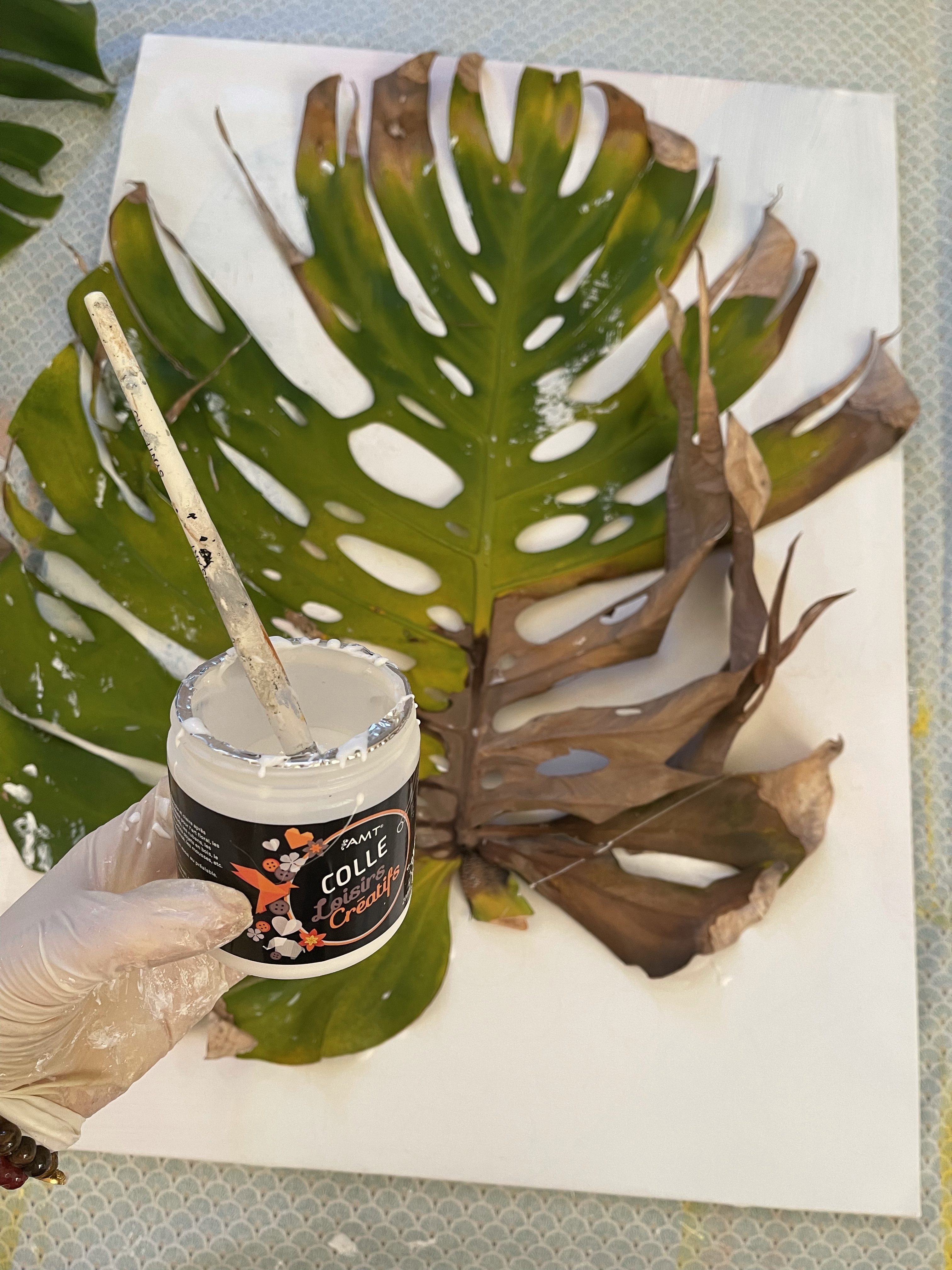
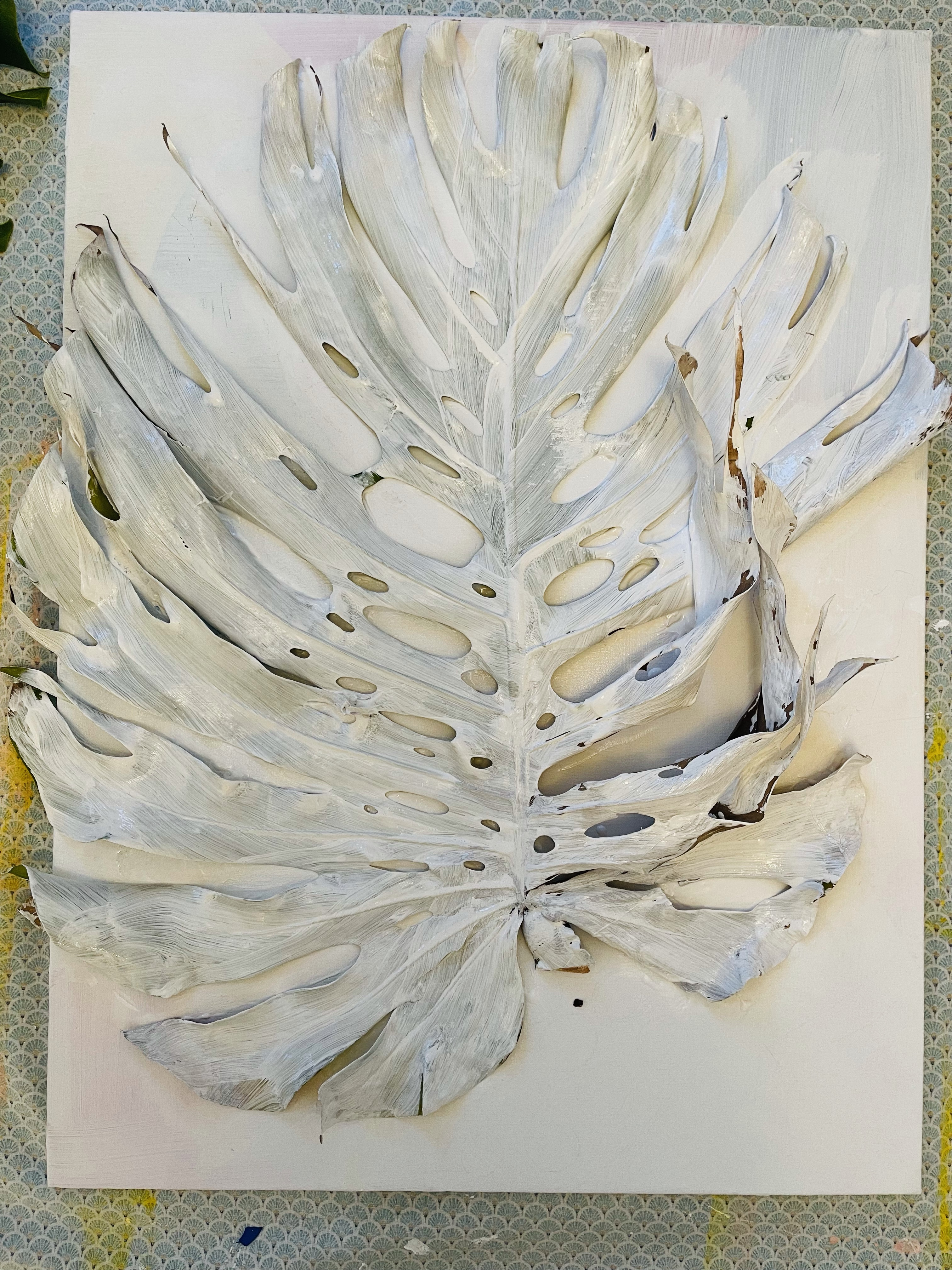
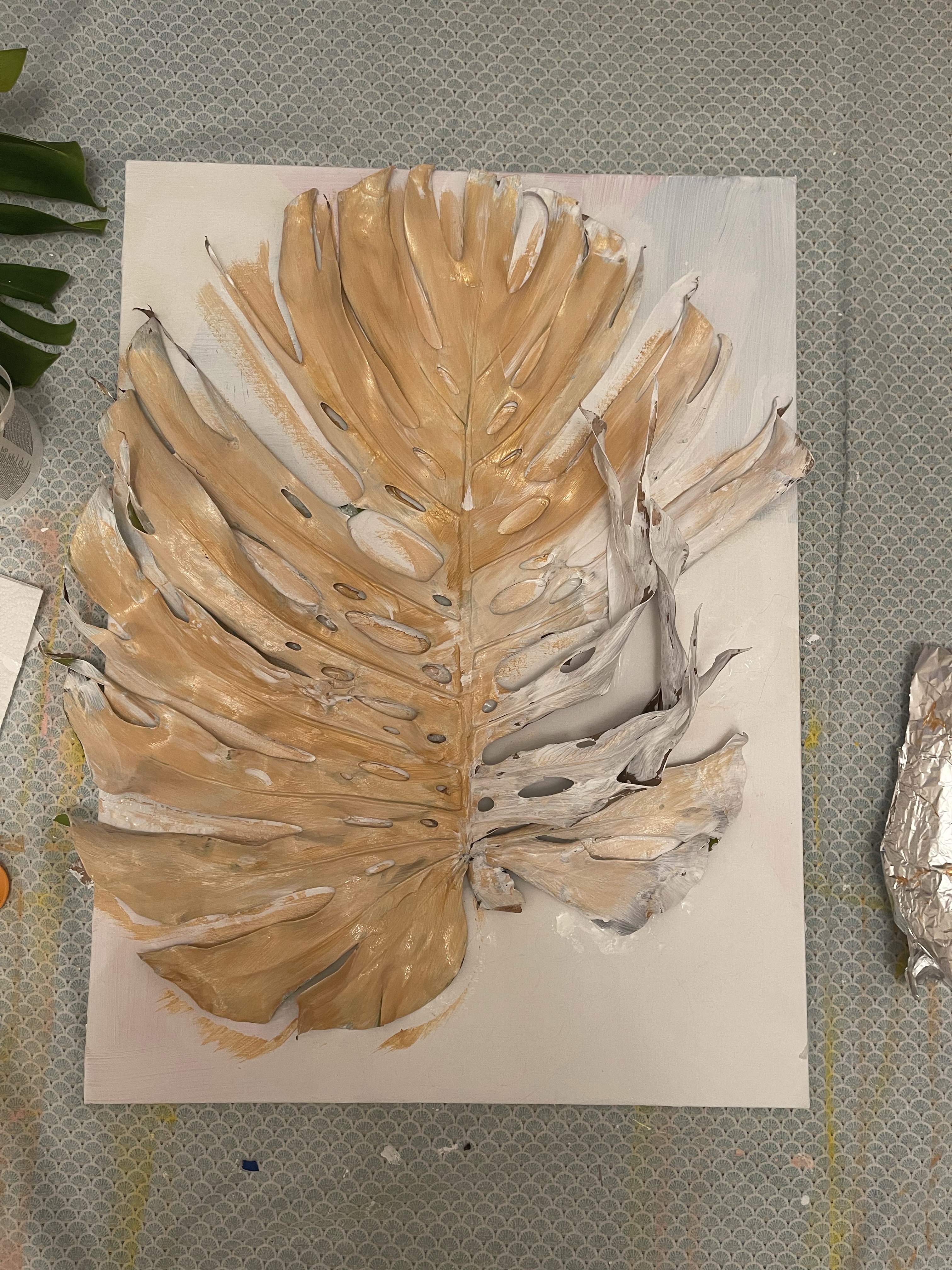
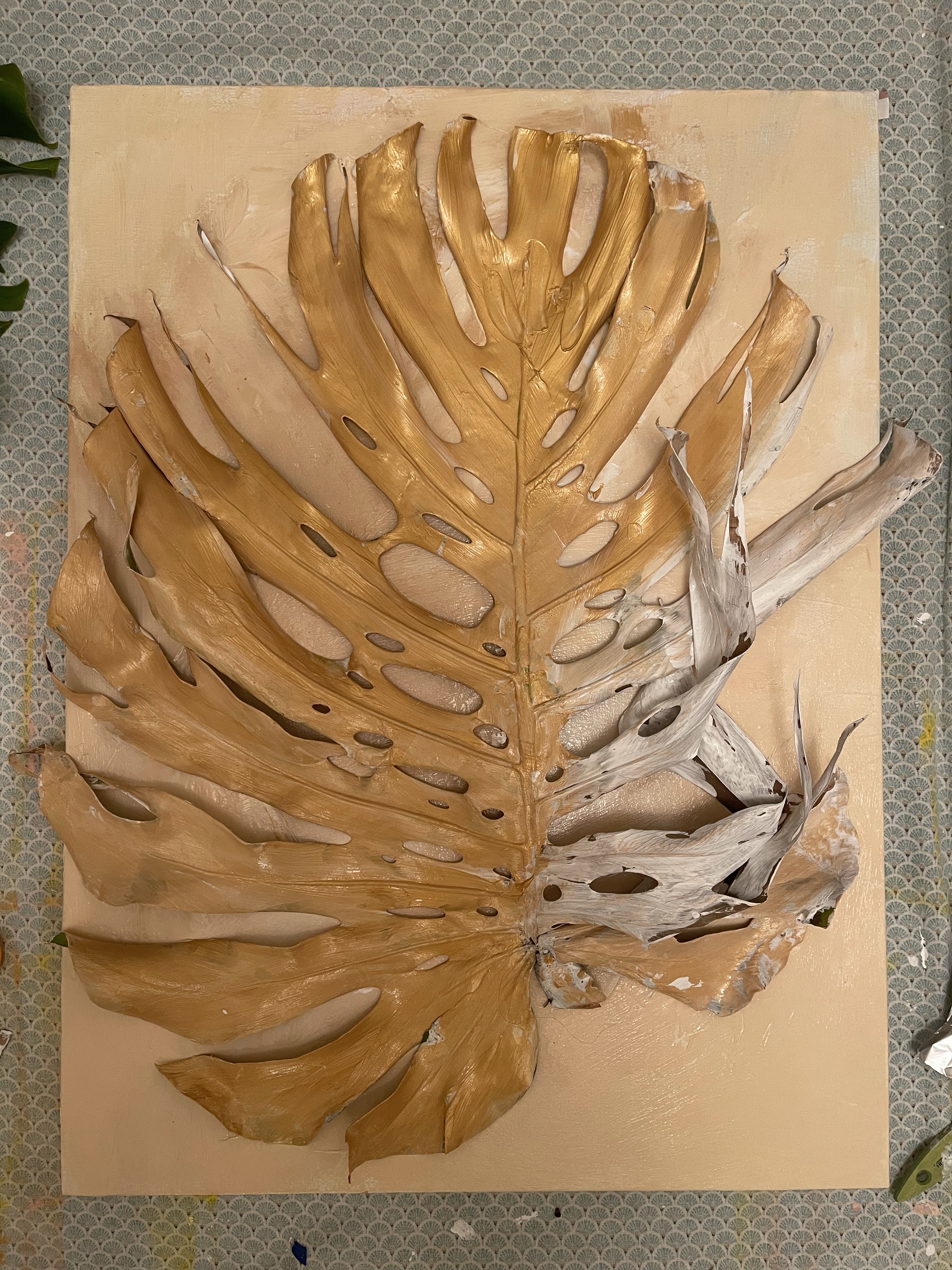
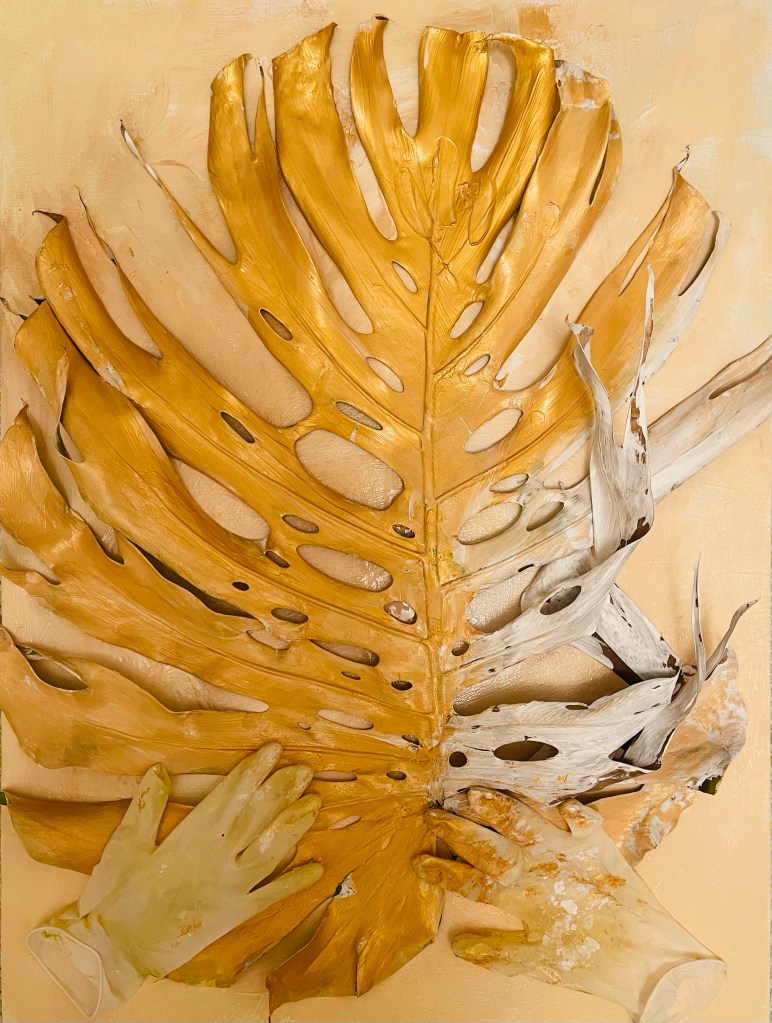
Below is my work, where I combined painting, a natural object – a plant leaf and man made object – rubber gloves;
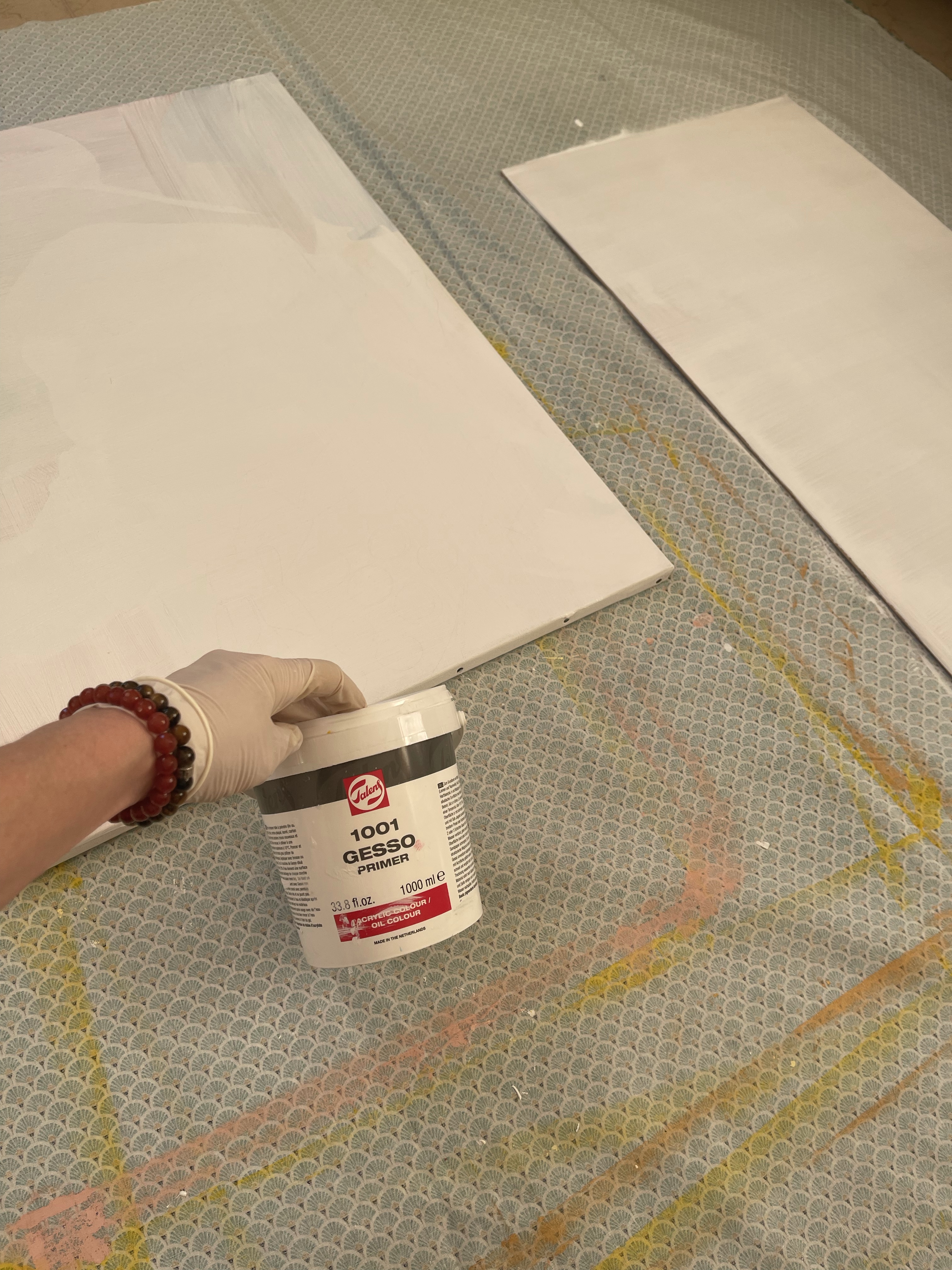
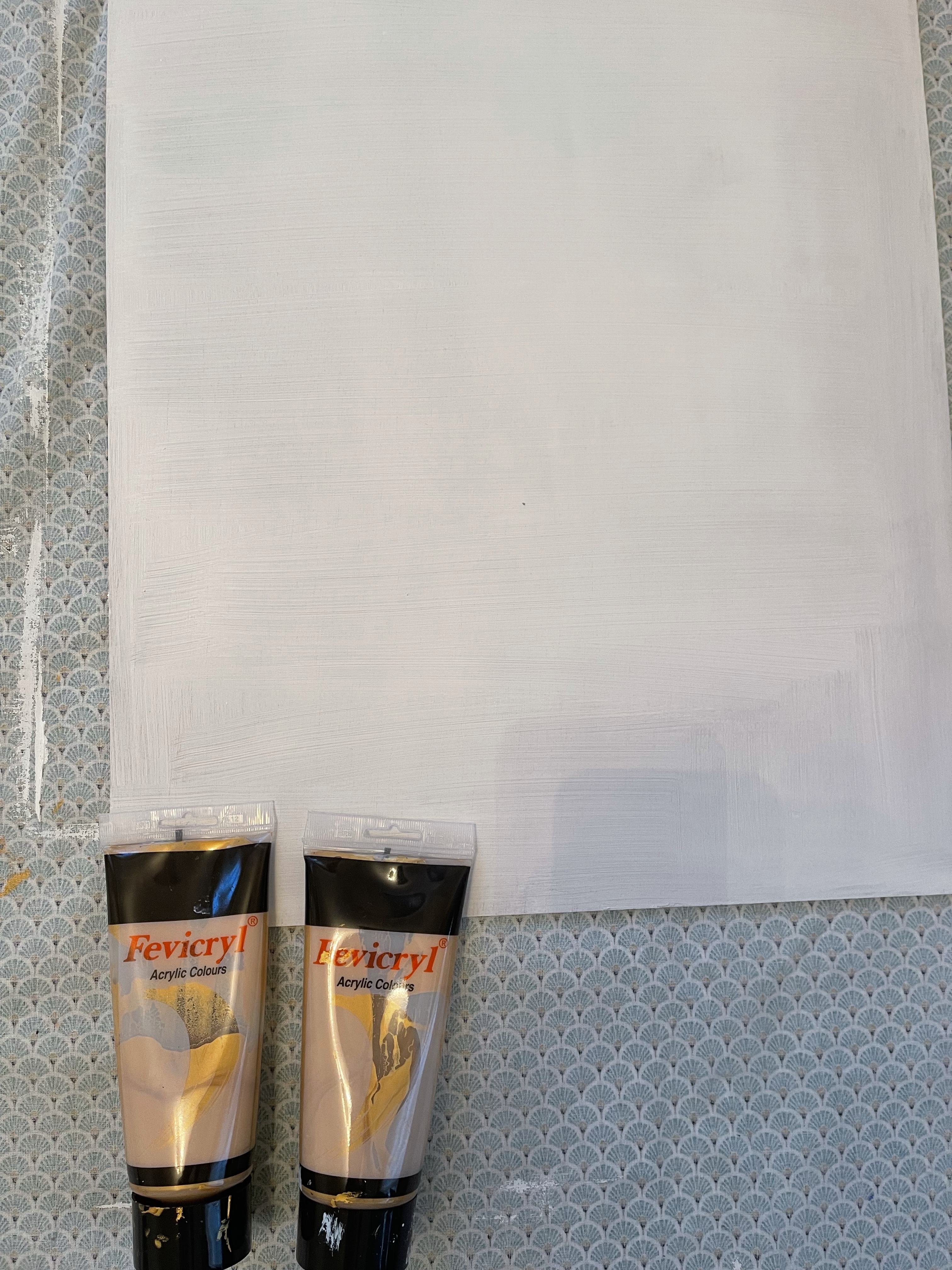
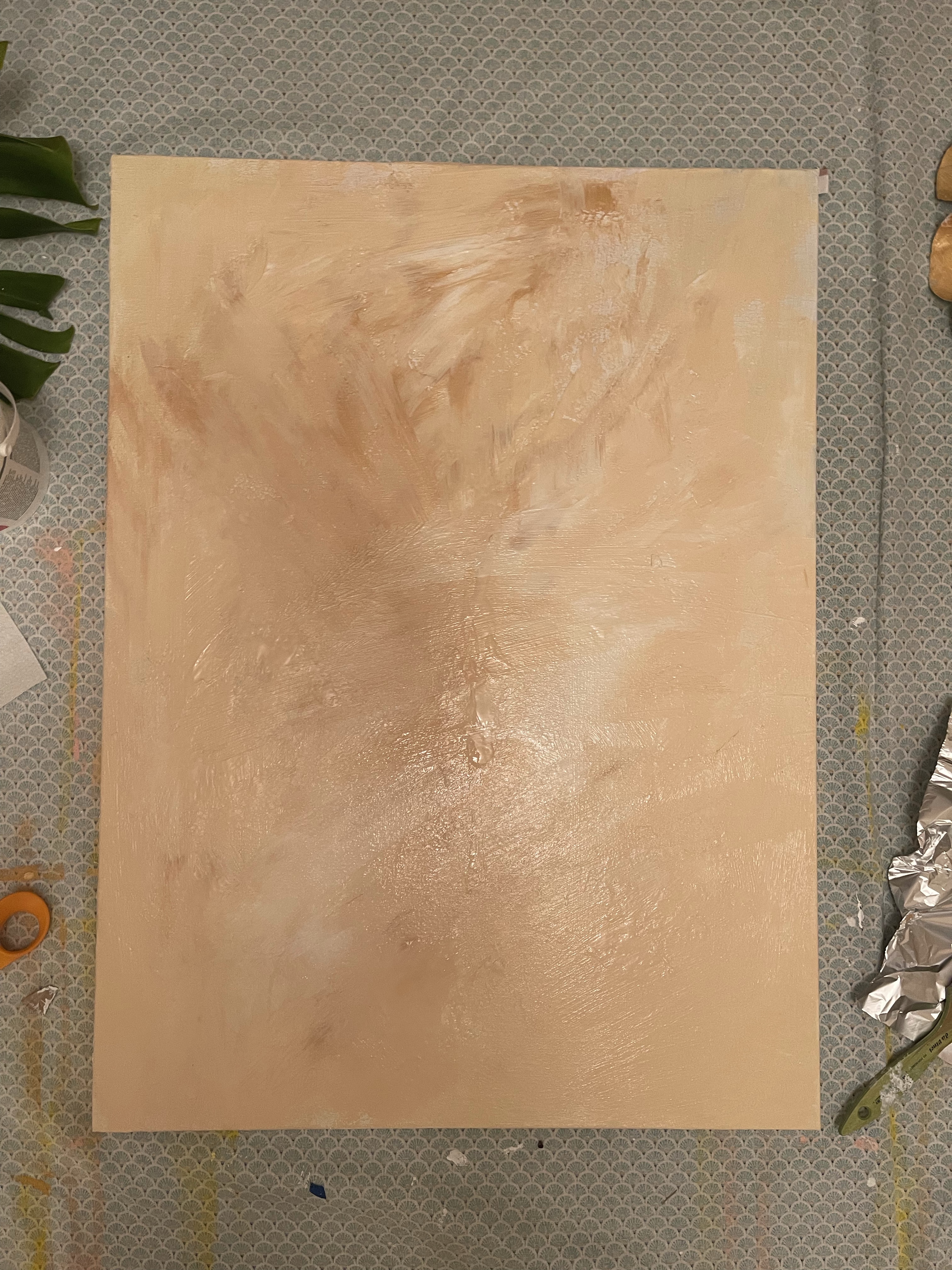
I took a canvas and treated it with gesso. When it was dry, I used my acrylic paints from Fevicryl in a light pink shade to create a background.
I also covered the leaf with gesso and then painted it with acrylic paint in golden shade. My whole work in this process was very meditative and totally intuitive, as it was required in the exercise. I developed itself. I didn’t have any planned result in my mind. My only task was to do the exercise, collecting objects and combining them into my artwork with painting. I was very much attracted to that semidry Monstera leaf, so I just made myself loose and just worked with it. When I attached the treated leaf to the canvas, I suddenly placed my gloves on it, which I sued for the work. My gloves took the form of my hands, and I almost automatically put them on my leaf. The gesture of my hands via these gloves came out as very sad. I suddenly realised that this hands-on Monstera leaf is my suppressed emotion, the pain I have lived with every day since my father passed away in July 2020. Monstera leaf is just like my father: he used to be very strong, independent and in some sense ‘monstrous’ because his emotions, my Dad’s anger and joy, were very thick, overwhelming and intense. My gloves=hands just had a very childish look on this leaf. I intuitively left one part of the leaf in white because my Dad had one part in his mind, which was very fragile.