
We were required to conduct a research about artists whose works exemplifies chiaroscuro effects such as Tintoretto, Caravaggio, Rubens and some more.
As it is defined on the website of Encyclopaedia Britannica, “chiaroscuro” is : “Chiaroscuro, (from Italian: chiaro, “light,” and scuro, “dark”) technique employed in the visual arts to represent light and shadow as they define three-dimensional objects”. This is a classic technique which is used to create a three dimension as well as to bring more drama into the painting and enhance the impact of the object. Leonardo da Vinci (1452-1519) is recognised as an artist who brought true Chiaroscuro technique to its full extend in XV century. However first three -dimensional shading even in its primitive term is dated as early as c.400-1400) in Byzantine art which was further refined in the West during the late Middle Ages. Also a Greek notion “skiagraphia” or “shadow painting” is known since 5th century with a name of Apollodoros, the noted painter of city of Athens of that time. As it was mentioned above, the Chiaroscuro technique evolved fully at the Renaissance period, it is should be noted – this is a period of time when oil paints had been developed. Before oil paints emerged artists used tempera paints which were based on egg yolks. Tempera paints used to significantly limit artists` ability because it dried very quickly and was opaque. Oil paints dry much slower, allowing artists to build volume, using more tones and shades. Chiaroscuro technique had become essential for all Renaissance religious paintings because it allowed to create a “divine” holy light as a primary source of light in all of them which were about nativity and other Jesus related stories. Most prominent artists of that time who used the technique were Leonardo da Vinci, Tintoretto (1518-1594), Hugo van der Goes (1440-1482). In Baroque painting era (1600-1750) chiaroscuro was used mostly for creating more dramatic effect and evolved into “tenebrism” – a technique which has to be studied along with chiaroscuro. “Tenebrism” or “caravagissm” is named owning to Italian artist Caravaggio – Michelangelo Merisi da Caravaggio who tool Chairoscuro technique to a new height in 17th century. “Tenebrism” comes from Italian word “tenebroso” meaning “murky”. It takes some experience and knowledge to distinguish between the chiaroscuro and tenebrist paintings, since they might look quite similar at a first glance. As it is explained in the article “Oil Painting Technique: Definition, Caravaggism and Tenebrism” at visual-arts-cork.com: “However, there is a clear theoretical difference between the two terms. As described above, chiaroscuro is a painterly shading technique used specifically to give 2-D objects a sense of volume: that is, to make them look like three-dimensional solids. Whereas tenebrism is a dark-light compositional technique by which some areas of the painting are kept dark (that is, totally black), allowing one or two areas to be strongly illuminated by comparison. Tenebrism is used for purely dramatic effect (it is sometimes called “dramatic illumination”). There is no modelling involved: no attempt to give figures a sense of three-dimensionality. In effect, tenebrist darkness is purely negative, while chiaroscuro shadow contributes positive form”.
The Chiaroscuro tradition was maintained during Rococo period in 18th and early 19th century by painters like Fragonard (1732-1806) in works such as The Swing (1767) and The Bolt (1777), by Watteu (1684-1721), Fuseli in the UK (1741-1825) in Lady MacBeth Sleepwalking and Goya in Spain in Christ on the Cross (1780); Nude Maja (1800), Saturn Devouring His Son (1821).
I did my a research on artists who implemented the chiaroscuro technique in different periods of art history time- Renaissance, Baroque and Rococo Period.
Renaissance: Leonardo da Vinci (1452-1519)
Leonardo Da Vinci is one of the greatest minds not only Italian Renaissance but in our world`s history. His artistic and and scientific legacy is enormous, and includes his painting masterpieces as well as his research in humans anatomy, geology, flight, gravity, optics and inventions of bicycle, airplane, helicopter and parachute 500 years ahead of their time. Even though he is primarily recognised as an artist, many call him as an “artist-engineer” because his artworks and paintings were were very scientific based on his accurate understanding of human anatomy, physics of light and shadow. Leonardo Da Vinci was born on 15 April 1452 near the Tuscan town Da Vinci, he was a illegitimate son of a local lawyer. He was a student of a sculptor and painter Andrea del Verrocchio in Florence and in 1478 he became an independent artist. During his life time he worked as an artist with ruling falaise such as Sforza and later with French King Francis I. he died on 2 may, 1519 near Amboise (France).
Mona Lisa. The Mona Lisa painting is one of the first paintings which realised a full potential of oil paints as a new medium. A usual technique with tempera was to proceed from outlined figures, but in Mona Lisa Leonardo da Vinci used the chiaroscuro technique, working on features through light and shadow. As it is written by Carol Strickland in her book “The annotated Mona Lisa. A crash course in Art History from prehistoric to post modern”: “ starting with dark undertones, he built the illusion of three dimensional features through layers and layers of thin, semi transparent glazes. That technique is called “sfumato”: an application of “subtly colored glazes, to convey atmosphere and the subtle shifts of feeling across a human face”. Even the Mona Lisa`s pupils were composed of successive gauzy washes of paint”. Because of sfumato technique which also was implemented by Leonardo in Mona Lisa painting “…. the formals seemed to emerge from and melt into shadows”. Leonardo’s contribution to the aesthetic and techniques in world art history and evolution is impossible overestimate. He has upgraded and brought new heights of High Renaissance art with such as linear perspective, chiaroscuro, naturalism, and emotional expressionism, also he is very well recognised with his particular meticulous precision.
“Mona Lisa” (1503-1506), oil on wood;

Another Leonardo Da Vinci`s artwork which is a great example of his unique “light and shadow crossing” chiaroscuro technique is a “Lady with an Ermine” painted by him around 1489-1490

Baroque: Michelangelo Merisi da Caravaggio (1571-1610)
Caravaggio was born in Milan in the middle class family, he lost his parents early, after his mother`s death in 1584 he was apprenticed for four years to the Lombard painter Simone Peterzano. Probably he stayed in Milan- Caravaggio area till the end of his spprenticesship but visited Venice and saw the works of Giorgione and Titan. He left Milan in mid 1592 and headed to Rome where he spent almost 8 years till 1600. In Rome he worked for Giuseppe Cezare, the highly successful painter of that time whip did his works for Pope Clement VIII. In 1599 he started his own projects in Rome where he contracted to decorate the Contarelli Chapel in the church of sin Luigi Dei Francese. His 2 works – the “Martyrdom of saint Matthew” and “ Calling of saint Matthew” – delivered under this contract in 1600 were an immediate success and sensation. He became a most famous painter in Rome of that time. His personal life was full of turmoil, he was known as a rebel and many times was involved in sword fights, brawls and he even committed a murder. At last part of his life he had to flee from Rome to Naples and further to Malta because of his crime, dying very early at age 37.
Caravaggio is known as one of the most original painter of Italian Baroque times. There are several characteristics of his artworks and life which can be summed up as the following:
1) he took the chiaroscuro technique to a new level when lights and shadows are much more intense, bringing much more contrast and drama into his paintings, which contain a lot of dark tonality and dramatic lighting. This technique is called “teneberism” or “Caravaggism” and its`followers were called as “i tenebrosi” or “the Caravaggisti”.
2) he developed a realism to a new level, painting bodies in a strong, “down and dirty” style as it was not a case of Mannerism, which is characterised by “sterile artificality” with pale, “phantom like” bodies.
3) Caravaggio is considered as a first bohemian artist who intentionally challenged traditions in art and society and very much succeeded to do so. He had numerous police records, including allegation murder and was a very voice full opponent to tradition in art education and standards in art of his times.
Caravaggio, “The Taking of Christ” (1602) ; image via Caravaggio,org

Caravaggio, “Sacrifice of Isaac” (1598); image via Caravaggio,org

Caravaggio, “The conversion of St.Paul” (1600-1601); image via Caravaggio,org

Francisco de Goya (1746-1828)
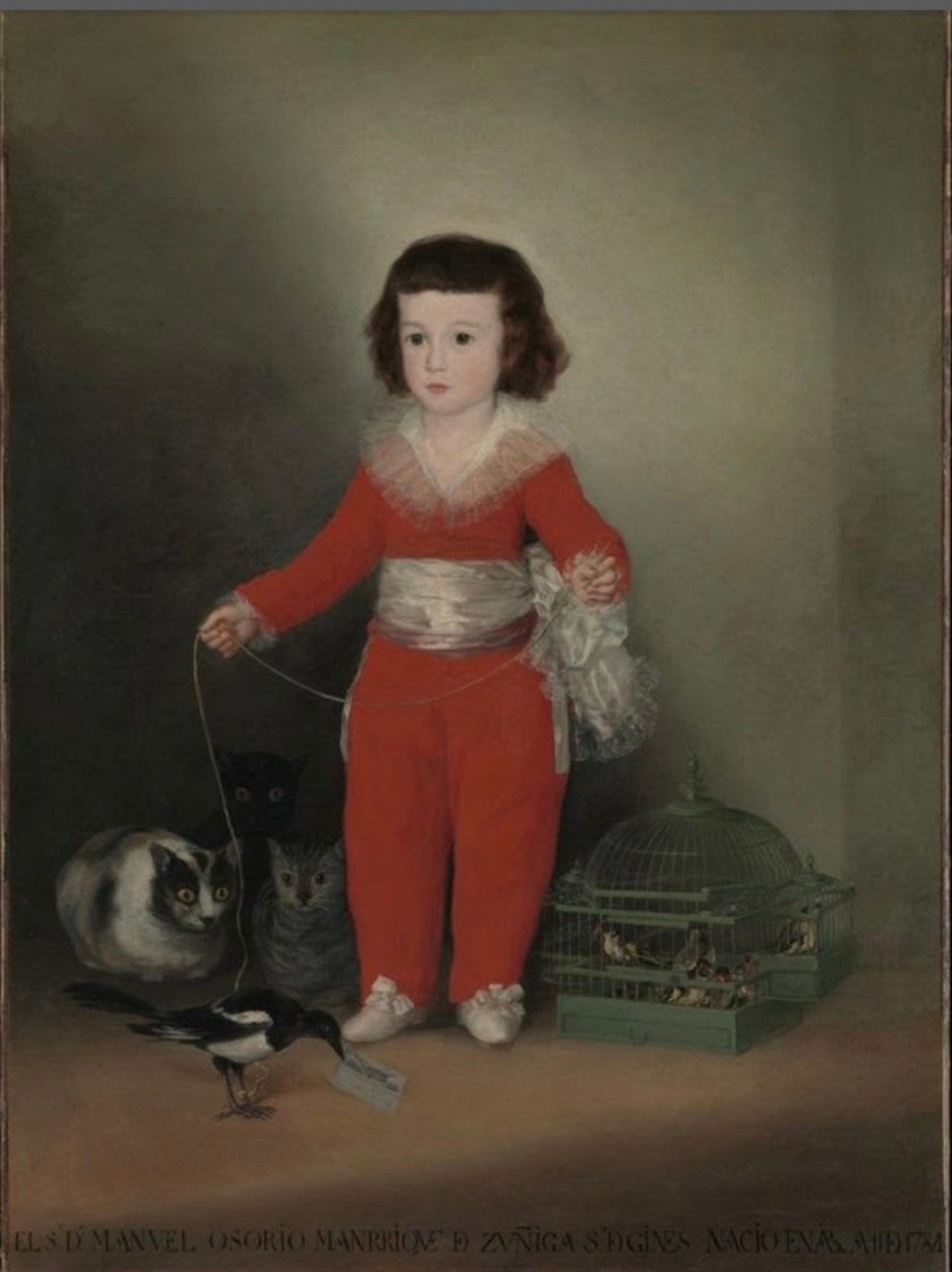
Francisco de Goya was born on March 30, 1746 in Fuendetodos, Spain. he Balen his art education at his teen age, around the age of 14, spending some time at Rome, Italy to upgrade and develop his skills. From 1770 he began to create works for Spanish Royal family. During his lifetime he established a reputation as a port artist artist, winning commissions from many in royal circles. At age of 57 he became a “Primer Pintor de Camara” what was the most prestigious position for a Spanish court painter (“Charles IV of Spain and His Family”; 1800-1801). He is also known for his “critical eye”on his subjects and his radical political views which were reflected and revealed in his paintings (“the Third of May 1808”, 1814). He spent his later life in exile outside of Spain and died in Boudreaux, France; Today Francisco de Goya is considered as one of the most influential artists in art history. He is celebrated as one of the last Old Masters and a “forefather of modern art”. His artistic painting style is called as “pessimistic” especially because of his famous 14 “Black paintings” which probably reflected his deafness and rapidly deteriorating health but also his style was vivid and joyful such it is in “Parasol” painting he created in1777 or a child`s Portrait “Manuel Osorio Manrique de Zuniga” 1784-1792, often called “Red Boy”. Some art historians consider the “Red Boy” Painting as a beginning of modern art, as they say “…. Modernity kicked off in 1788 in the form of three cats lurking in the lower left quadrant of Goya’s Manuel Osorio Manrique de Zuniga…”.
Francisco de Goya, “Parasol”, 1777, photo via artsy.net

Francisco de Goya, “Manuel Osorio Manrique de Zuniga” 1784-1792, image via artsy.net
Francisco de Goya “Saturn devouring His Son” (1819-1823), image via artsy.net

Reference list:
1) Britannica.com/chiaroscuro;
2) study.com; Chiaroscuro in Art: Definition, Technique, Artists & Examples;
3) visual-arts-cork.com/chiaroscuro;
4) drawpaintacademy.com/ “Chiaroscuro – what it means, how to use it and Master painting examples” by Dan Scott, March 30, 2019;
5) art ful videos; Four canonical painting modes of Renaissance;
6) artstory.org; “Leonardo da Vinci: Italian painter, designer, Sculptor, Inventor, Scientist, Architect and Engineer”;
7) “The annotated Mona Lisa. A crash course in Art History from prehistoric to postmodern” by Carol Strickland Ph.D. and John Boswell, 2007;
8) “Painting of the Week: Leonardo da Vinci, the Lady with an Ermine”, by Zuzana Stanska dailyartmagazinz.com, art history stories;
9) “The Mona Lisa-by Leonardo Da Vinci”, leonardodavinci.net;
10) History, Leonardo Da Vinci, bbc.co.uk
11) “Francisco de Goya (1746-1828) and the Spanish Enlightenment”, October 2003, by James Voorhies, Department of European Paintings, The Metropolitan Museum of Art; metmuseum.org
12) “6 of Francisco Goya`s Most famous Masterpieces” by Kelly Richman-Abdou on August 11, 2019 at mymodernmet.com
13) “Understanding Francisco de Goya through 6 Pivotal Artworks”, artsy editorial by Jackson Arn, April 17th, 2018, artsy.net
14) Biography of Caravaggio at Caravaggio-foundation.org
15) “10 Artworks by Caravaggio You Should Know”, by Jonathan Stern, 30 October, 2016 at theculturetrip.com
 JeanArt
[…] (2019) Research point: Chiaroscuro, Il Tenebroso, Sfumato, JeanArt. Available at: https://zhan-art.com/2019/05/30/new-exercise/ (Accessed: 29 July […]
LikeLike
[…] (2019) Research point: Chiaroscuro, Il Tenebroso, Sfumato, JeanArt. Available at: https://zhan-art.com/2019/05/30/new-exercise/ (Accessed: 29 July […]
LikeLike