Research Task: Ten Practitioners
Assignment instructions from the workbook: “Throughout your studies, you’ll have discovered a large number of practitioners working in various ways, and your knowledge of your chosen subject will be as diverse as you are individual. Whether you already have a clear idea about the way you want to work or whether you still have questions you’re looking to answer, you will probably have a sense of how your work fits in context with the practitioners you relate to.
Make a list of 10 practitioners who you feel can support your ideas and practice. They may be artists you admire and who work in media or with subject matter in a similar way to you. However, they may also be artists who make work that challenges your ideas and that you use as a foil or sounding board against which to analyse your work. They may broadly work in similar ways to you, overlap with some of your ideas, approaches and processes, or have opposing practices. Once your list of artists is complete, ask the following questions of the practices of each one.“
Questions to address:
- What is the subject matter of your practitioner’s work?
- What are they responding to in their work – industry, advances in technology, public debate, social concerns, political argument, creative research, a particular audience, or something else?
- What makes their ideas contemporary and have criticality?
- How could you start a conversation with them?
- Write this up in your learning log along with images of your chosen practitioners’ work.
“To conclude this research, draw out three or four key points from your answers to the above questions that offer useful knowledge which you can keep at the forefront of your making.”
My list of Ten Practitioners.
I was very engaged with this task since it was indeed very stimulating to take a moment and think about those living professionals in the visual art world with whom I resinate, whom I admire and learn from, and maybe even with whom I disagree from a subject, visual language and aesthetics standpoint; the ones who’s’ works make be feel unsettled and dont give any answers yet.
David Hockney (b.1937-), United Kingdom
David Hockney is at the top of my list. I must say that I was not enchanted with his works straight from the first glance, as I was with traditional Japanese paintings from the Kano (15th-19th centuries) school, Ogata Kōrin’s “Irises” ( circa 1701-1705), or Gustav Klimt‘s “The Kiss” (1907-1908).
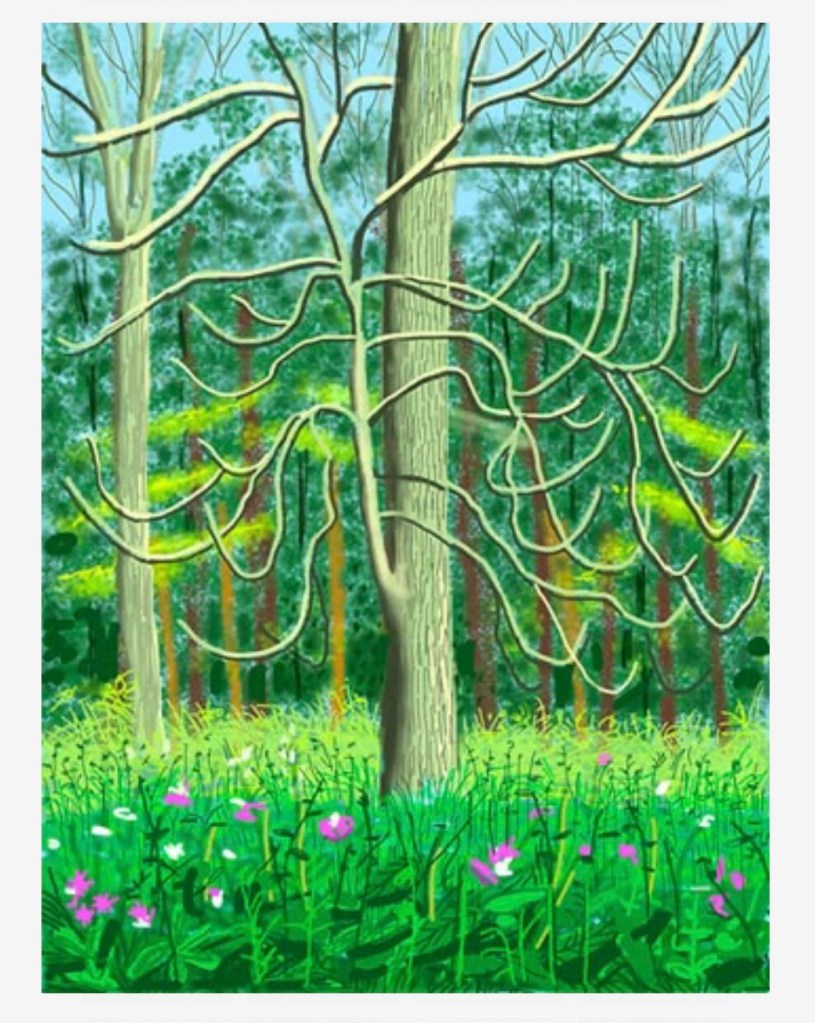
His works didn’t strike me initially, but my Garden project decoded for me David Hockney’s magical moments in his paintings. I understand that he is very much inspired by nature and by the change of seasons, greenery, skies, trees and spring air. It means that he and I share the same life and artistic vibration. We both like to reflect on nature and our human connection with it. Like any fantastic and immense calibre talent, David Hockney paints not just one type of subject; his works are decidedly versatile: he is well known for his swimming pool series works, portraits, figurative drawing, prints, and stage designs. Because he is a long-living artist and thanks to his well-organised website, http://www.hockney.com, I traced a creative path he followed in different decades of his life. The landscapes, the intense green colour palette, and the trees start to appear in the section devoted to works produced in 2000 onward, when he turned 63. What is striking about him is his unstoppable, versatile creativity and productivity; it seems he was drawing and painting every single day. He studied trees, the arrival of Spring in charcoal (!) and in a digital way, drawing on an iPad and then printing the images on paper.
Another important discovery I made studying his artworks and creative legacy is his approach to paint large paintings using separate canvases. For example his famous large size painting ‘A Bigger Grand Canyon” (1998) consists of 60 canvases in a 12*5 arrangement.
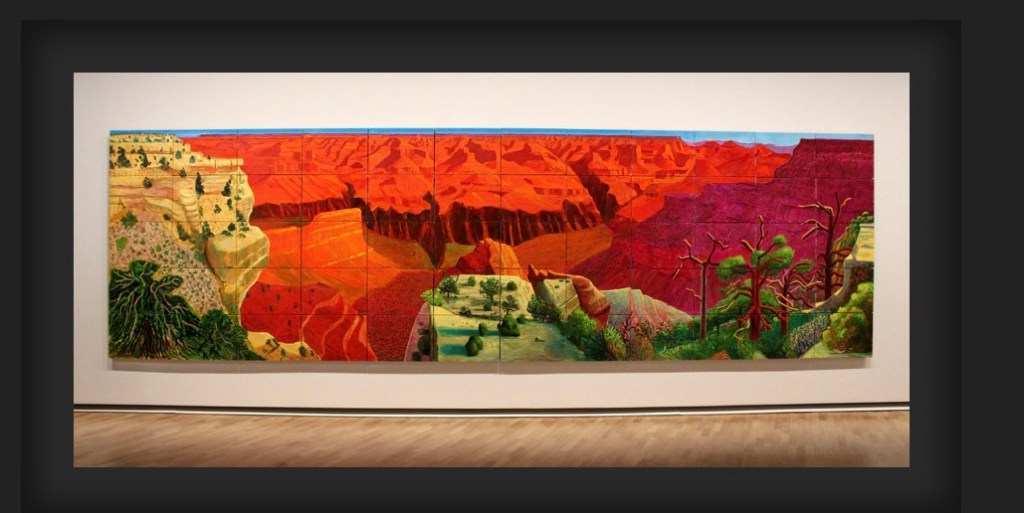
In his video on YouTube “I am a Space Freak”
he makes a confessions that he came to this idea because of logistics reason: it is much easier to transport the separated smaller canvases. I borrowed this technical and creative approach and incorporated in my practice, starting to develop paintings on multiple separate wooden boards which also allows me to create several compositional options since I am always quite hesitant about the final compositional solution. This approach gives me creative freedom.
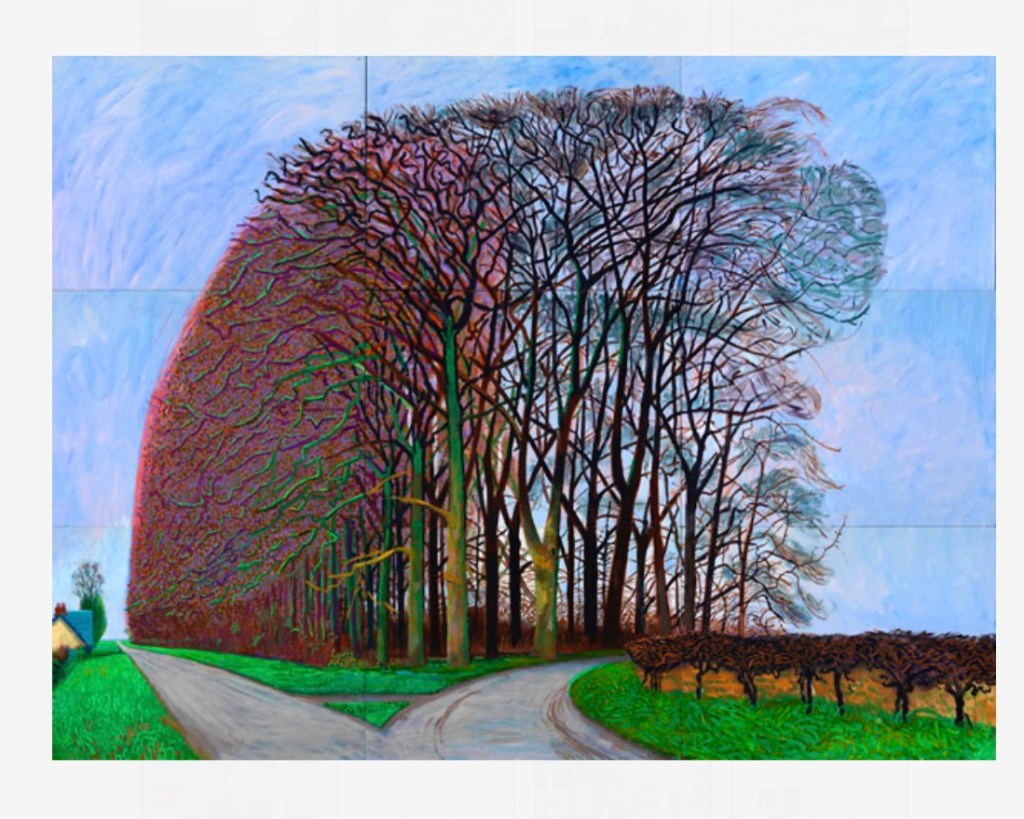
Below: David Hockney, Bigger Trees Nearer Water, Winter, 2007, oil on canvas, six panels 108*144 inches; image via http://www.hockney.com [accessed May 3, 2025];
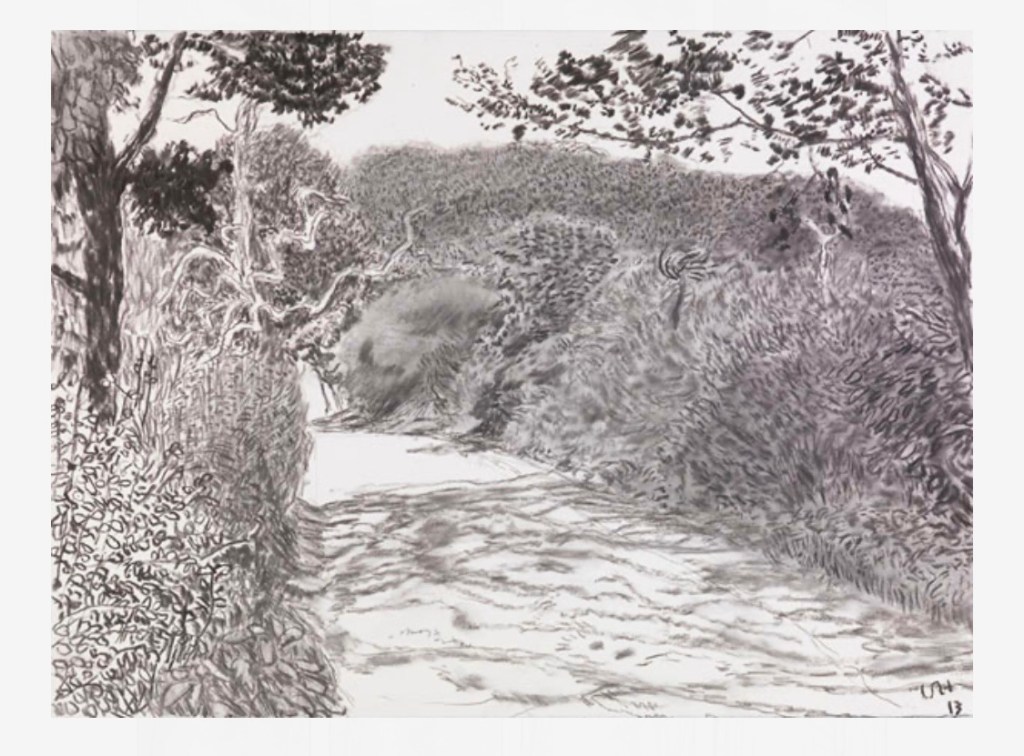
Below: David Hockney, Colgate, 16 May from The Arrival of Spring 2013 ( twenty thirteen), charcoal on paper (one of a 25-part work) 22 5/8* 30 1/4 in; image via http://www.hockney.com [accessed May 3, 2025];
Below: David Hockney, The Arrival of Spring in Colgate, East Yorkshire in 2011 ( twenty eleven)-4 May, 2011 -IPad drawing printed on paper 55*41 1/2 inches; image via http://www.hockney.com [accessed May 3, 2025];
Anjolie Ela Menon ( b.1940-), India
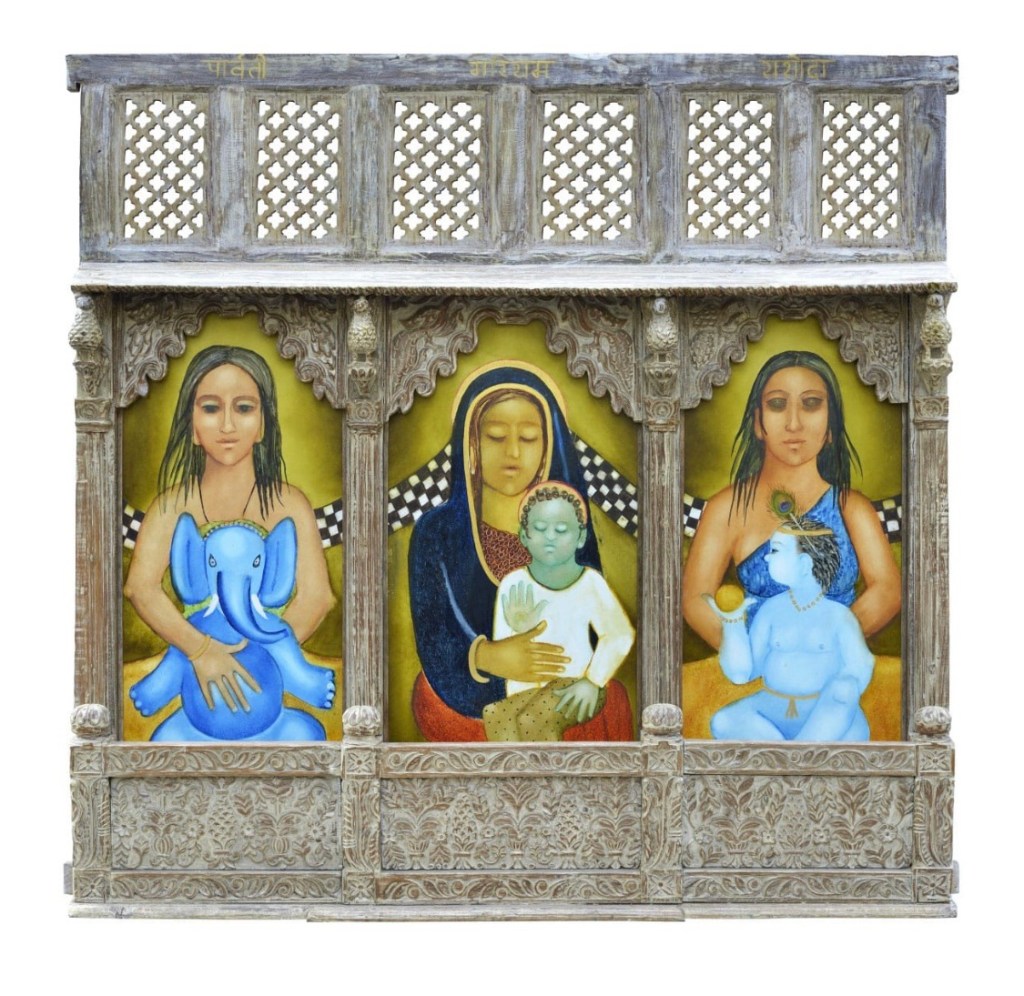
Above: Anjolie Ela Menon, Nostalgia 2022, Divine Mothers-Parvati, Mariam, Yashoda, 2014, triptych https://www.vadehraart.com/exhibitions/188-anjolie-ela-menon-nostalgia-2022-d-40-defence-colony-new-delhi/overview/ image via http://www.vadehraart.com [accessed on May 5th , 2025]
The artist is at the top of my list because her works manifest fine art skills engaged in channelling spiritual ideas I comprehend and deeply resonate with. I placed three works depicting female Hindu mythological mothers. Interestingly, the artist placed Mariam, mother of Jesus, among Parvati and Yashoda, merging different religious traditions and centring them around motherly figures. I am attracted to the creativity of these artist because we share an interest in the subject as well as overall emotional aesthetics. In my previous course in the relevant assignment, I mentioned several times that I was interested in iconography and planned to work in this genre. This artist is an excellent example of modern iconography interpreting and blending Christian and Hindu spiritual traditions and visual language in a unique, unforgettable way. I would love to have a conversation with her about traditional Indian visual art, such as Pichwai, and what she thinks about the mutual influence between Western and Eastern visual arts.
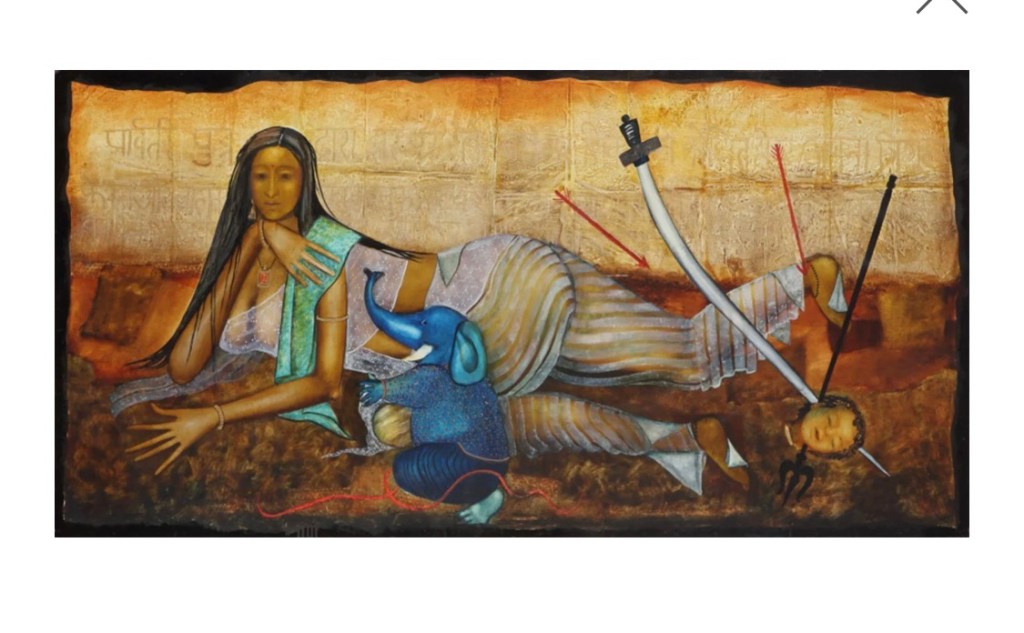
Above: Anjolie Ela Menon, Divine Mothers series-I (Parvati), 2014, oil on mason, 48.5*96.5 in, image via http://www.vadehraart.com [accessed on May 8th, 2025]
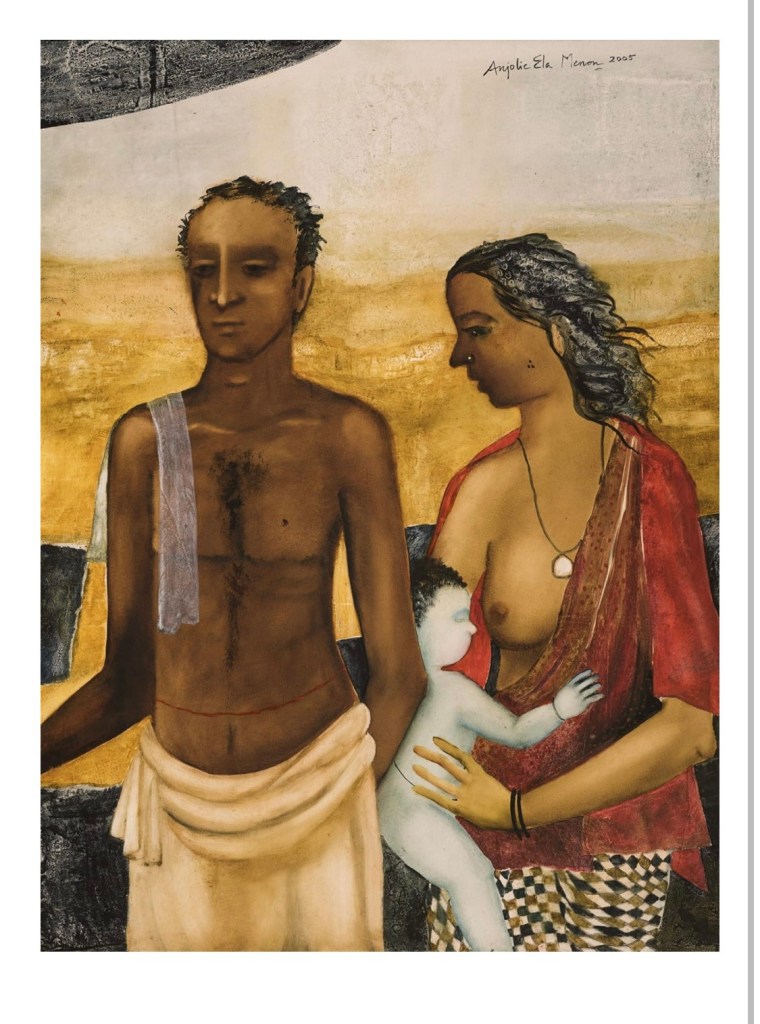
Anjolie Ela Menon, Untitled, 2005, oil on masonite, 48.5*36 in, image via http://www.vadehraart.com [accessed on May 8th, 2025]
Daisuke Nakano (b.1974-), Japan
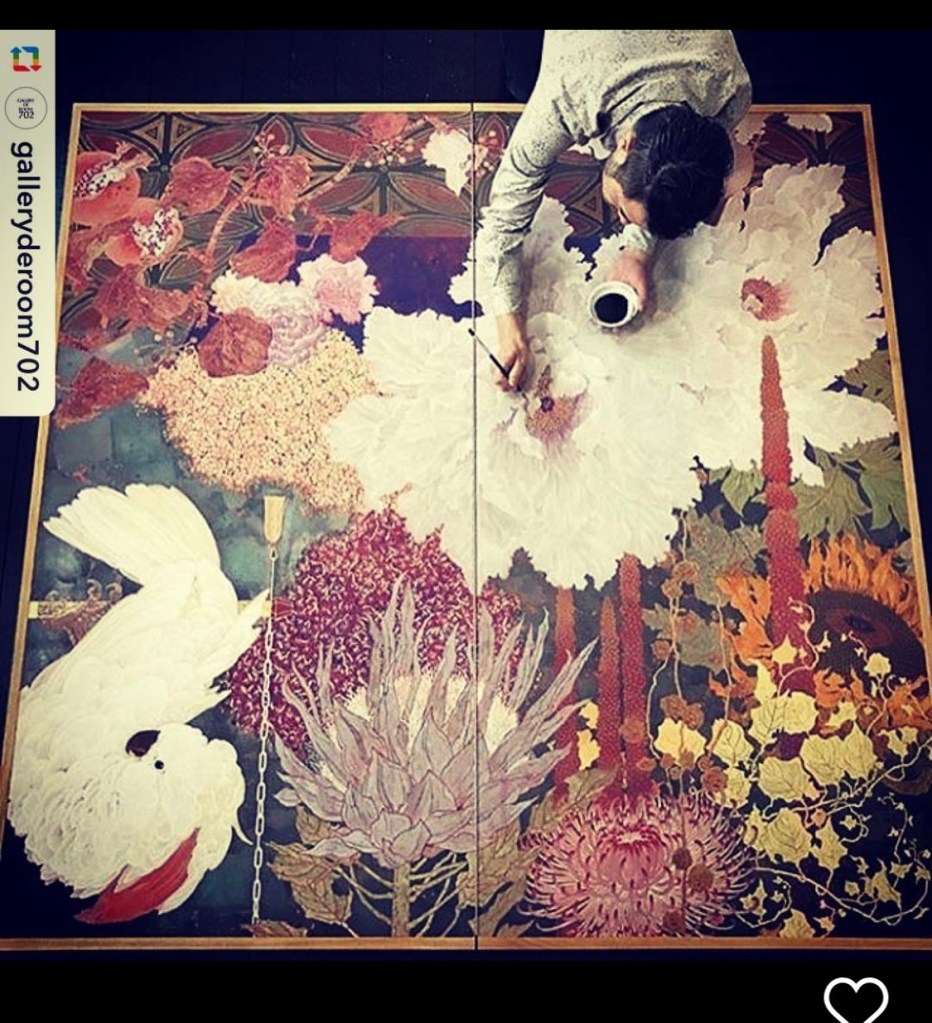
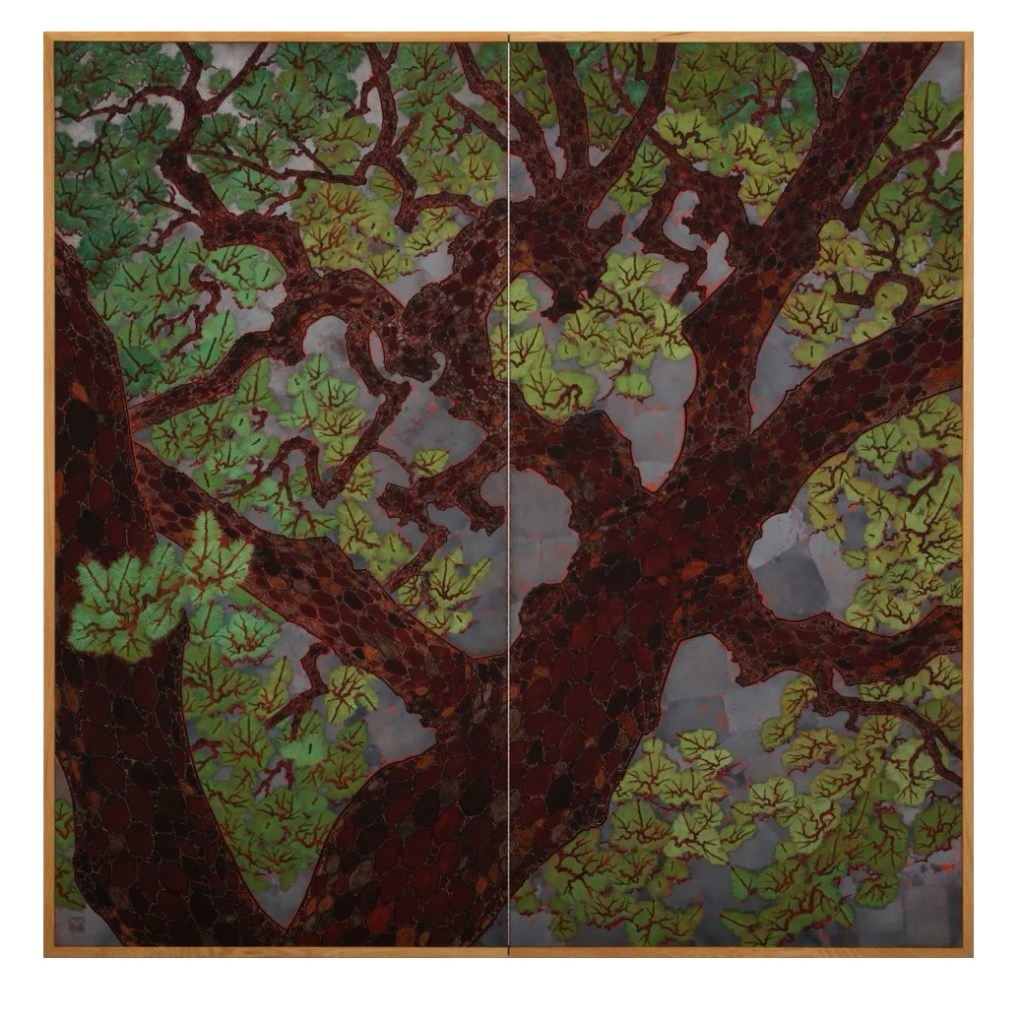
Above: Daisuke Nakano, Red Pine,’Embrace’, 2017; image via online http://www.ippodogallery.com [accessed on May 8th, 2025];
Daisuke Nakano is one of the best representatives of the Nihonga art movement, a heir to traditional Japanese visual arts. I have been heavily influenced by traditional Japanese visual arts, and my works are very much inclined toward their visual language and overall mood and aesthetics. I placed the painting above because it illustrates our common interest in the subject: I also paint trees’ stems and foliage. As a main character in the story unfolding on the canvas, the tree’s stem is dear to my heart. The tree’s stem has been one of the key elements of the Japanese visual art tradition, including the Kano, the Rinpa school, the byōbu, and yamato-e.
The artwork below, depicting a lavish garden under the snow, helps the viewer to feel and focus on the moment. The artwork below is unique in terms of how the artists used the negative white space: it is used as a snow and at the same time, the central part is totally left blank, creating a complex optical effect of cold white snowy skies. The touch of dark blue colour at the bottom brings a sharp feeling of deep coldness, contrasting with the soft snow on the tree and foliage. In my view, this artwork is complex from a sensory stimulating standpoint.
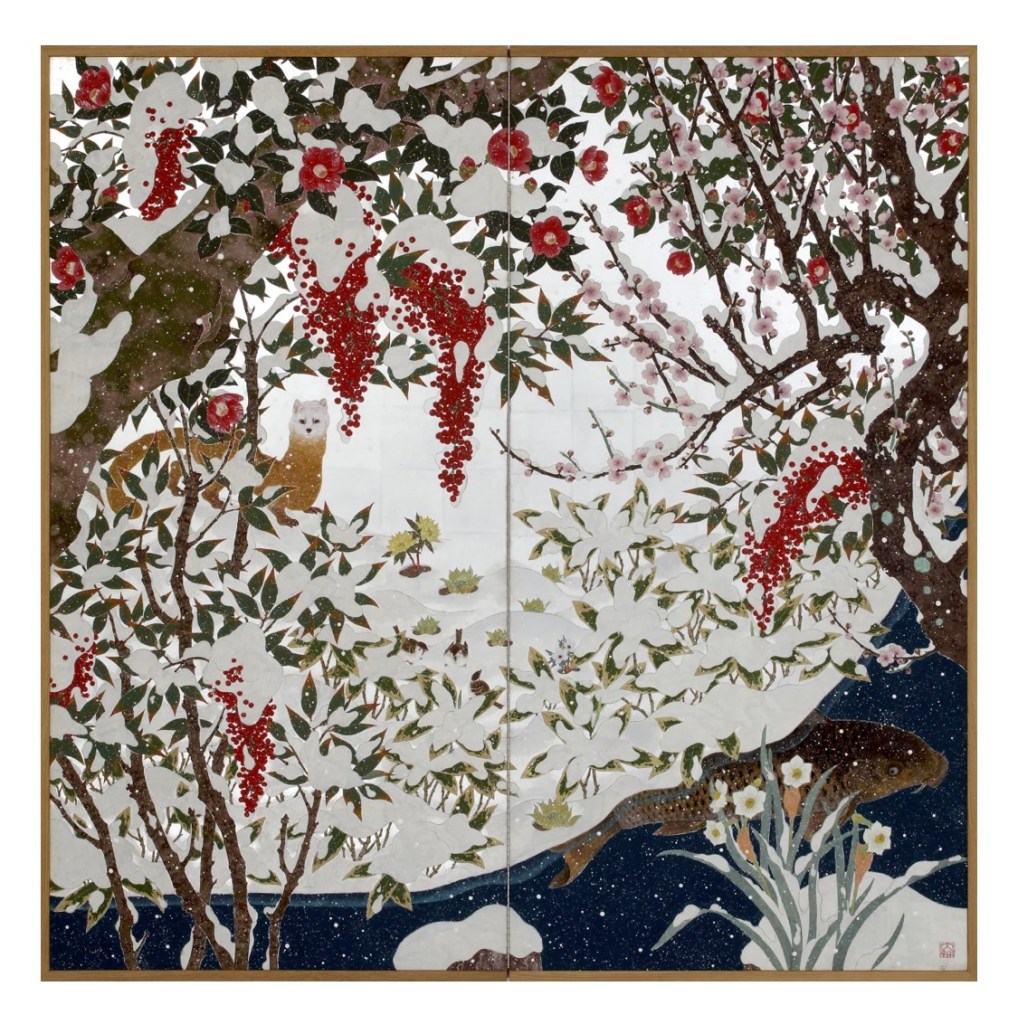
Above: Daisuke Nakano, Snowy World, 2016; image via http://www.ippodogallery.com [accessed on May 8th, 2025];
Someya Kaori ( b.1977-), Japan
Someya Kaori is another Nihonga tradition artist. As it is mentioned on her website: ” She researches books on classical painting techniques published in the 17th- 19th centuries in order to practice what traditions should be continued in the modernisation of Japanese painting.” ( “Biography”, http://www.someyakaori.com)
Below: Someya Kaori, Yoruhiru Sakura-zu, 2020, image via http://www.someyakaori.com [accessed on May 8th, 2025];
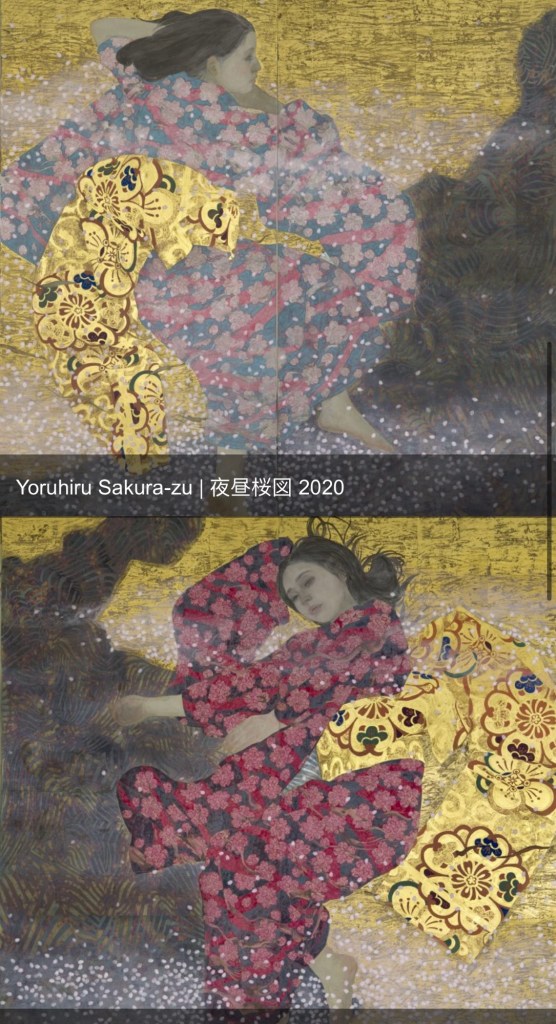
Below: Someya Kaori, Accidental Interaction, 2023, Kumohodamashi Japanese paper, Mineral Pigments, Platinum leaves; 68.9*86.6 in; image via http://www.someyakaori.com [accessed on May 8th, 2025];

This artist’s paintings resonate with me through their highly skilled, meticulous, detailed, full of craftsmanship, work on rich details and patterns and the emotional vibe of personal narrative. The overall style is about sensuality, vulnerable emotional exposure, gold and silver, female portraits—all of which are in the style of Gustav Klimt, also one of my favourite artists.
Faiza Butt (b.1973-), Pakistan
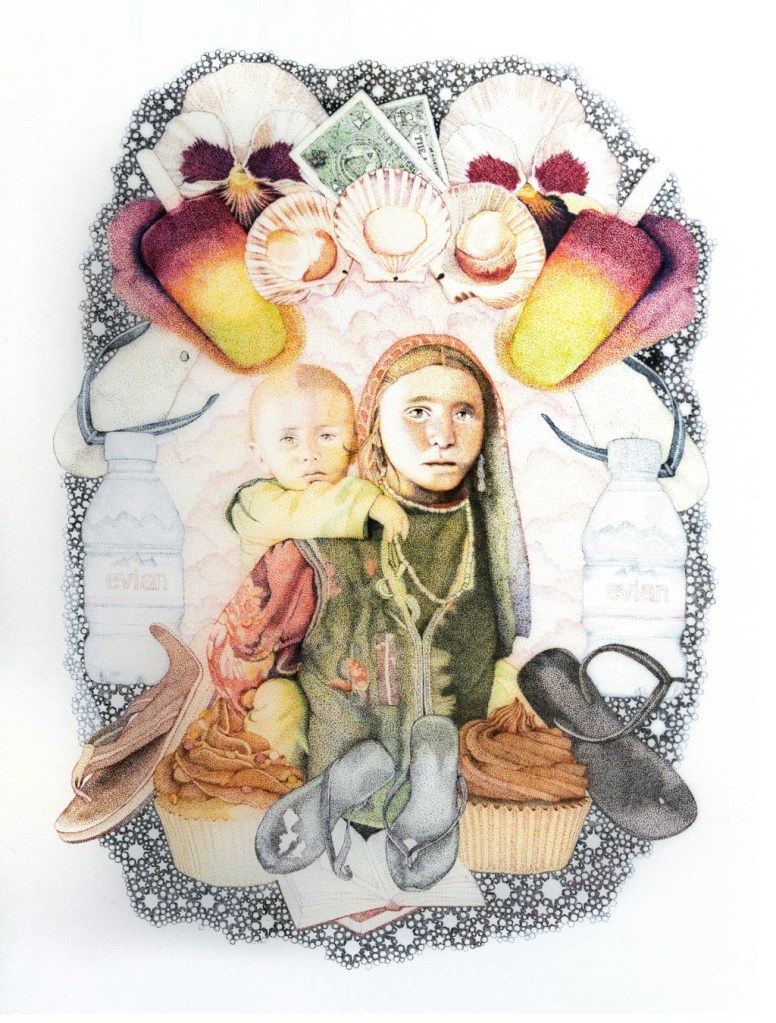
Above: Faiza Butt, Impermanence, 2021 (ink on polyester film), 29*21 in; image via http://www.vadehraart.com [accessed on May 8th, 2025]
This artist paints on different materials and surfaces. I appreciate her high technical skills and the way she brings the modern theme narrative. Her paintings make me gaze and wonder about the idea behind them. I support and practice the rich narrative behind the artwork, and I have created some works where a viewer can see a complex story. One of those was my Qazaq Madonna sketch: I incorporated different details around a mother with a child, such as a short-bladed knife, a particular type of grass, the national ornaments and apple tree blossom flowers. The painting above reminds me of my work, and I feel good that this approach is shared by other well-established artists.
The work below is also thought-provoking: is the young man in a state of dream, and is the lion the self-image in his dream, or are they friends? This process of wondering and guessing makes this artwork enjoyable and memorable; this admiration is enhanced by the excellent linework and colour.
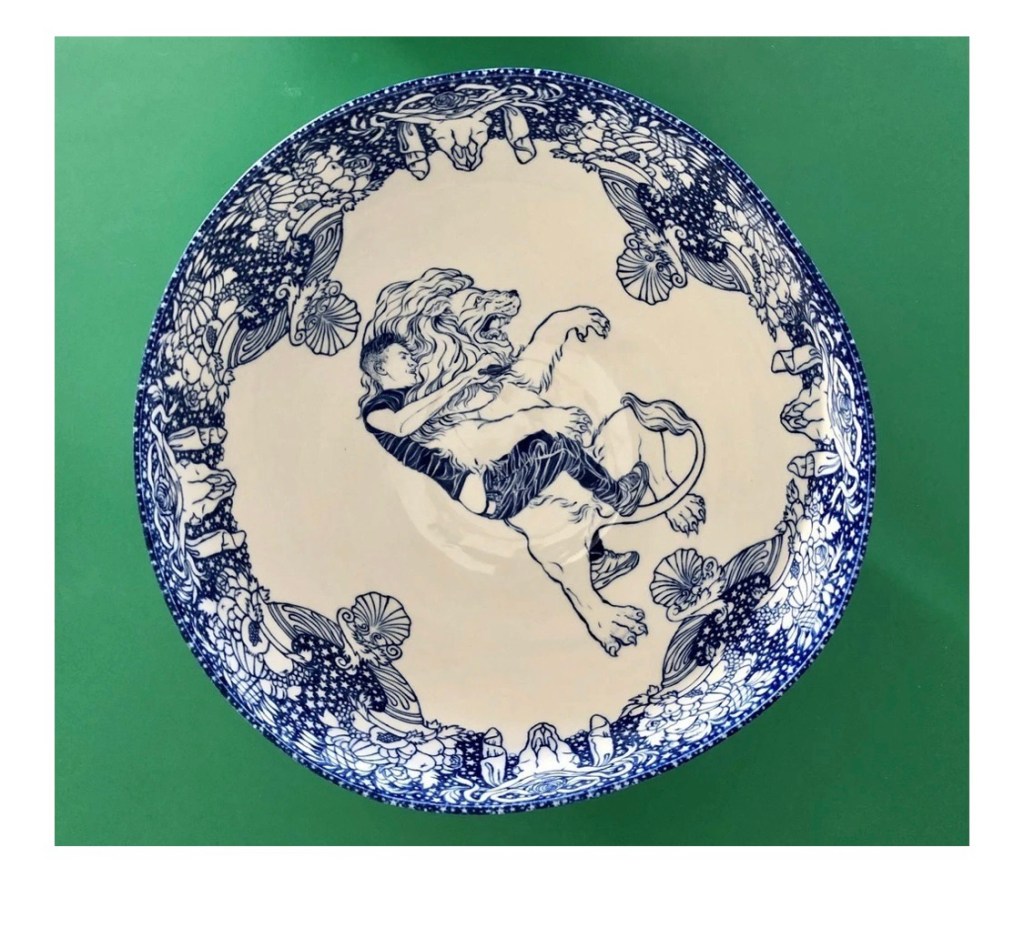
Above: Faiza Butt, Untitled, 2019, Underglaze Painted on Porcelain, 7.5*13.25*13.25 in;image via http://www.vadehraart.com [accessed on May 8th, 2025]
Anju Dodiya (b.1964-) India
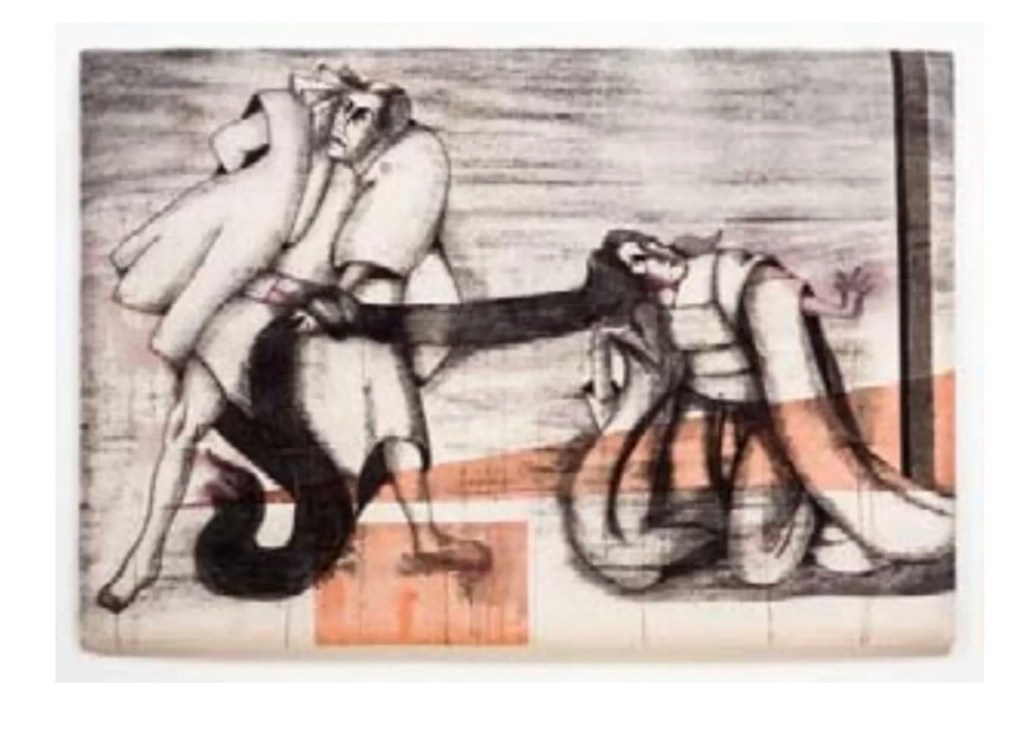
Anju Dodiya, Draupadi (After Kuniyoshi), 2014, watercolours and charcoal on cotton fabric stretched on padded board; image via http://www.vadehraart.com [accessed on May 8th, 2025]
I have always been attracted to mythology illustration artworks. The artwork above is devoted to the Hindu Goddess Draupadi, “a lady of utmost courage, intelligence and patience”(www.darupadiparashakti.com, [accessed on May 8th 2025]); I also appreciate the charcoal as a medium, though I don’t practice it much yet. This painting is an excellent example of the artist picking a great medium to channel the story’s narrative. I believe the image is a scene from the Mahabharata when Draupadi was brutally insulted by an evil character named Dushasana: “Dhuryodhana, wanting revenge, tells Dushasana to bring Draupadi to the court. Draupadi declines, but Dushasana drags her to the court with her hair.” (www.darupadiparashakti.com, [accessed on May 8th 2025]. The charcoal serves to show the anger of a male and the tension of the scene, as well as the strong black hair of Draupadi, which, here I think, symbolises her strength.
Njideka Akunyili Crosby ( b.1983-) (Nigeria/USA)
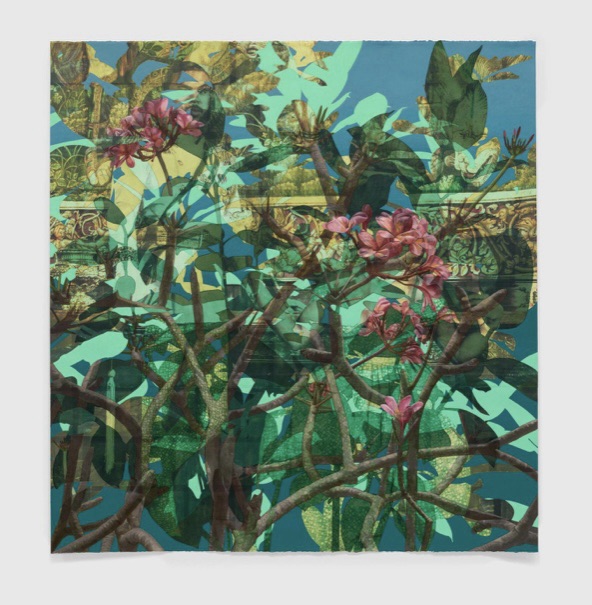
Njideka Akunyili Crosby, Dwellers: Cosmopolitan Ones, 2022 ( acrylic, coloured pencils and transfers on paper), 159,8*151.8 cm. image via online on http://www.davidzwiner.com [accessed on May 7th, 2025];
This visual artist’s works are notable for her collage technique. Among her figurative drawings with personal, political, and ethnic narratives, I picked up a floral one since it is a subject I resonate with most. I am interested in her collage technique because I haven’t produced any good collage artwork yet. Still, working on my current projects, I see the potential for collage making for the garden as a subject.
Oscar Murillo (b.1986) Columbia/UK
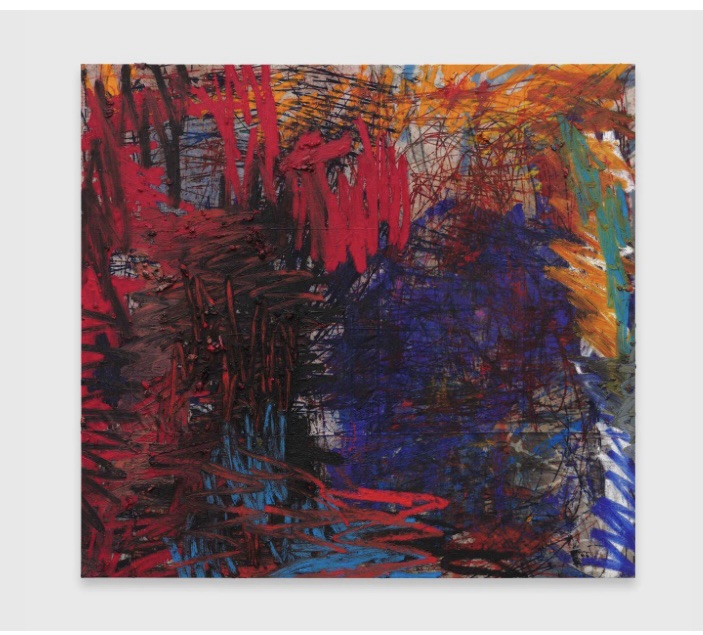
Above: Oscar Murillo, Manifestation, 2020-2023, (oil, oil stick, spray, dirt and graphite on canvas and linen), 250*270 cm, image via online on http://www.davidzwirner.com; [accessed on May 9th 2025]
Below: Oscar Murillo, Untitled (Drawing Off The Wall), 2011, 63*47.2 in; image via http://www.singulart.com [accessed on May 9th 2025]
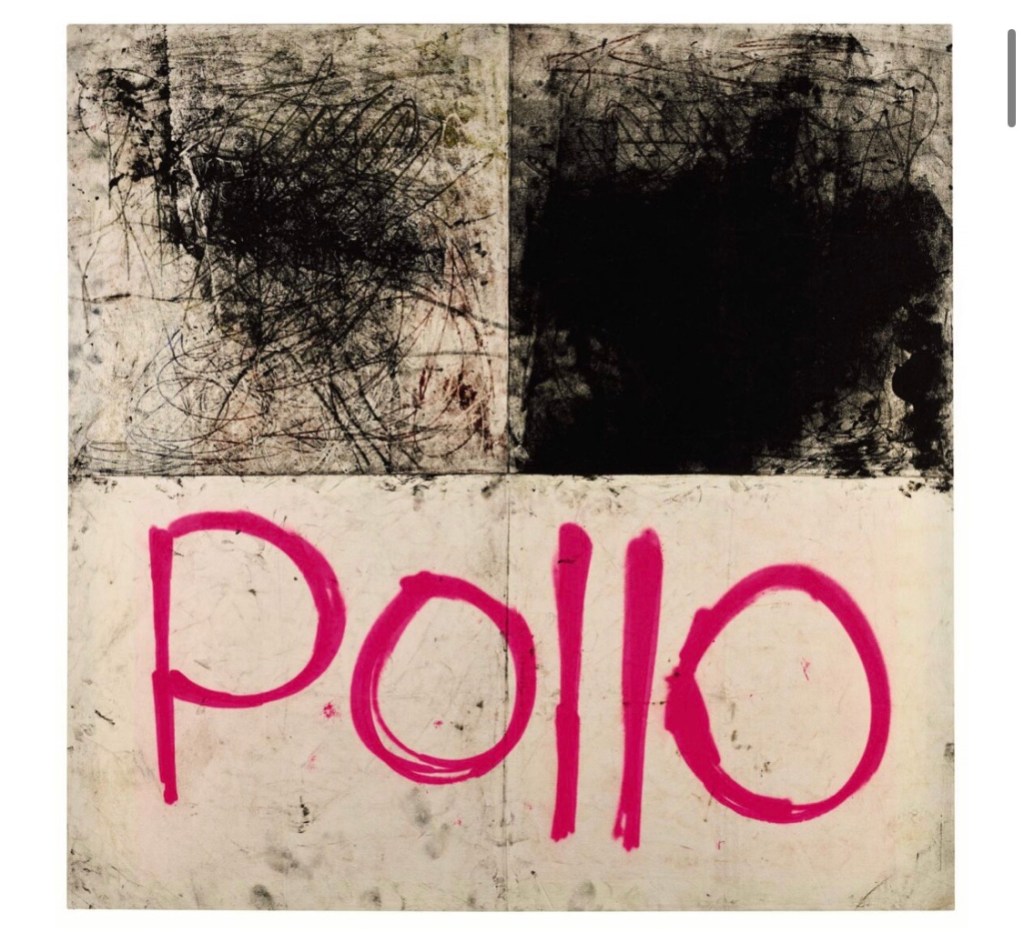
This is an abstract visual artist who creates large-scale artworks. While doing my research on him, I encountered an example of quite incomprehensible art writing in the article about Oscar Murillo on the David Zwirner website: “Taken as a whole, his body of work demonstrates a sustained emphasis on the notion of cultural exchange and the multiple ways in which ideas, languages, and even everyday items are displaced, circulated, and increasingly intermingled.” (online on http://www.davidzwirner.com [accessed on May 8th 2025]).
In my view, this phrase says nothing about this artist’s art and can apply to many art activities and their results, while a better phrasing of the art critic’s thought is very much needed anyway. I have included this artist into my list as a successful and critically acclaimed example when the artist uses “..material transgression against the adequateness of the canvas support, which is in turn exposed to the dust and dirt collected from everyday life in the studio.” ( Oscar Morillo, Saatchi Gallery online on http://www.saatchigallery.com [accessed May 9th 2025]). He uses recycled materials and a wide array of unusual ready-mades and other media.
Oscar Morillo’s artworks challenge my sense of aesthetics. His bold, “not trying to please your eye,” visual language represented in world-class museums makes me wonder whether I am on the right path. I still have to learn why this style is much praised and even more praised than many other artworks, which require high technical skills and hours of work. I haven’t found a good article explaining such artworks’ ” chic “. For example, it is said in the art crit article on the http://www.singulart.com ( author unknown): ” Murillo invites you to not just see but to feel and reflect. His art transcends the canvas, creating a symphony that resonates with a soul.” I find this statement as a one which actually too general and again it can apply to so mamy artworks! The author didn’t manage to explain Morillo’s uniqueness. So I wonder how to read and understand his complex paintings.
Dana Shutz (b.1976), USA
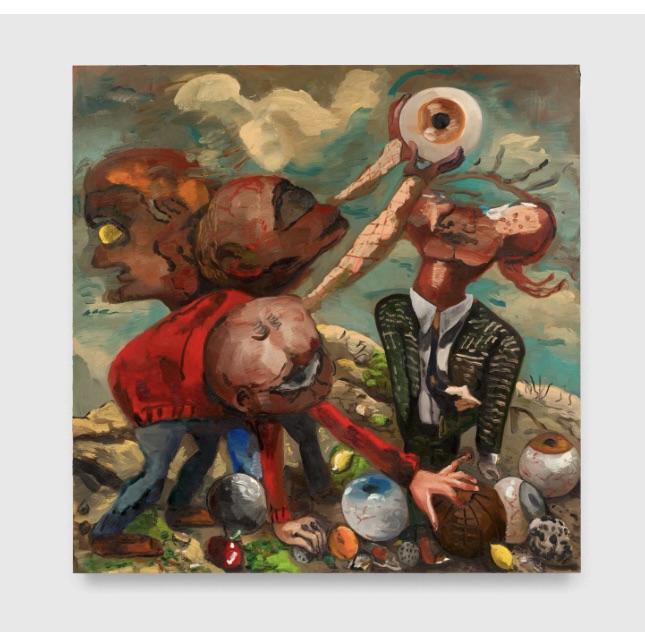
Above: Dana Shutz, The Optometrists, 2024, oil on canvas, 213.4 cm*213.4 cm; image via online on http://www.davidzwirner.com [accessed on May 8th, 2025];
Below: Dana Shutz, The Neighbour, 2024, oil on canvas, 83*73 inches, image via online on http://www.davidzwirner.com [accessed on May 8th, 2025];
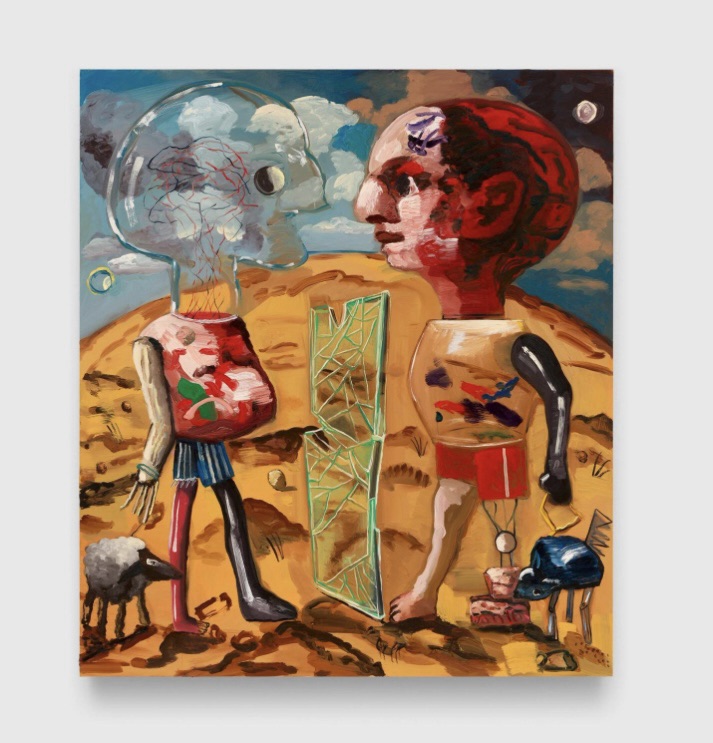
I picked up this artist as a good example of a dramatically different vibe from what I prefer to find and enjoy in artworks. As it is said about her on David Zwirner’s website ( author unknown, http://www.davidzwirner.com [accessed on May 9th, 2025]): “Dana Shutz… painter and sculptor who constructs complex visual narratives that engage the capacity of art to represent subjective experience. Often depicting seemingly impossible, enigmatic, or invented situations, her works reveal the deeper complications, tensions, and ambiguities of contemporary life.” I think the second part of the phrase about tensions and deep complications does describe the specificity of this artist’s paintings, and I wish the author would extend this passage and bring more depth to his analysis. The first part, again, ( it seems that I have problems with many art critic writings on some galleries’ websites): “Dana Shutz… painter and sculptor who constructs complex visual narratives that engage the capacity of art to represent subjective experience.” can apply to ANY artwork. Any artwork “has a”capacity to engage the capacity of art to represent the subjective experience.” Subjectivity of experience is an objective intrinsic value of any artwork. No one can strip it off.
Back to the artist. Reflecting on her artworks, I see that the artist channels her preoccupation with the complexity of phenomena, which we call life on Earth. I find her interpretations of different social human experiences intriguing. Her paintings are about different situations resulting from human interactions and their consequences. They are hard to decipher, and exactly this complexity of her viewpoint and perspective of her narrative makes her art unique and unconventional.
William Dalrymple (b.1965-)
I picked William Dalrymple for my list of 10 practitioners I am interested in because he is a great example of a talented human with multidisciplinary works: a renowned historian, art historian, and visual artist-photographer. As his website (www.wiliamdalrympole.com) says, “Multi-award-winning bestselling historian.” I follow him on Instagram and enjoy his posts, which include photographs of landscapes, historical monuments, and art objects from Southeast Asia. I appreciate his photographs because they are made by a historian, so they have this “historian’s eye” effect.
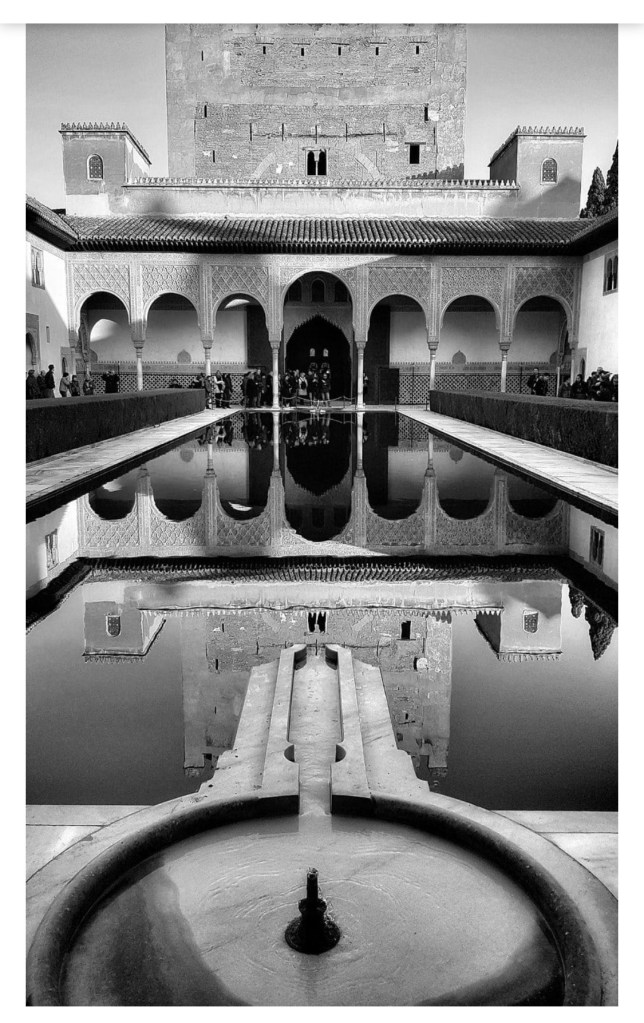
Above: William Dalrymple, The Court of The Myrtles, the Alhambra, Granada; Image via http://www.vadehraart.com [accessed on May 7th, 2025]
 JeanArt