Level 3. Research. Part Four. Update your research.
In this blog post, I put my notes on the updated final illustrations review I will use for my paper.
Below are the Pichwai and Byōbu artworks I chose as illustrations for my contextual study of garden representation in traditional Indian and Japanese visual arts
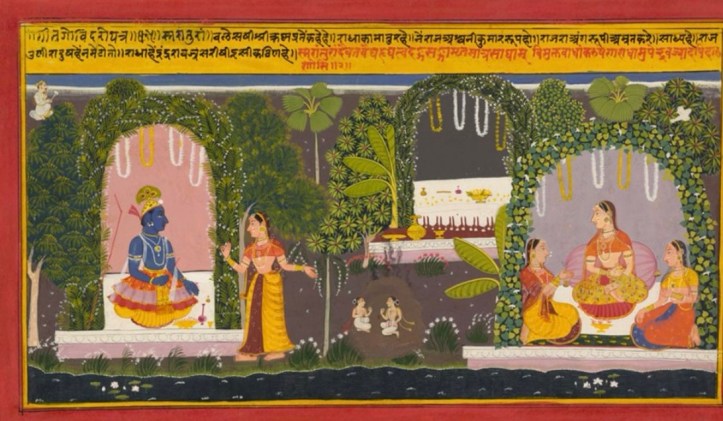
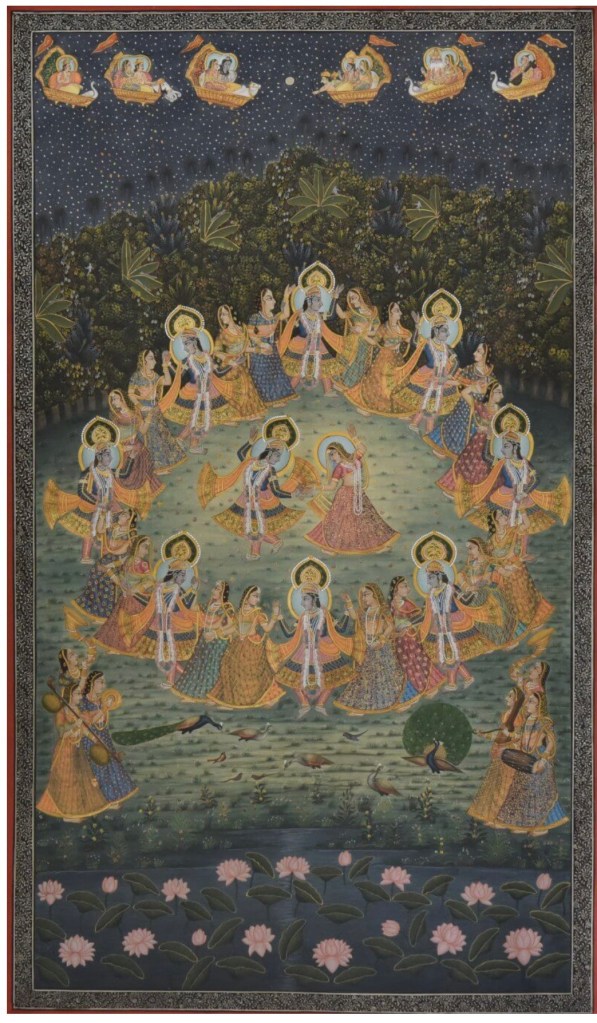
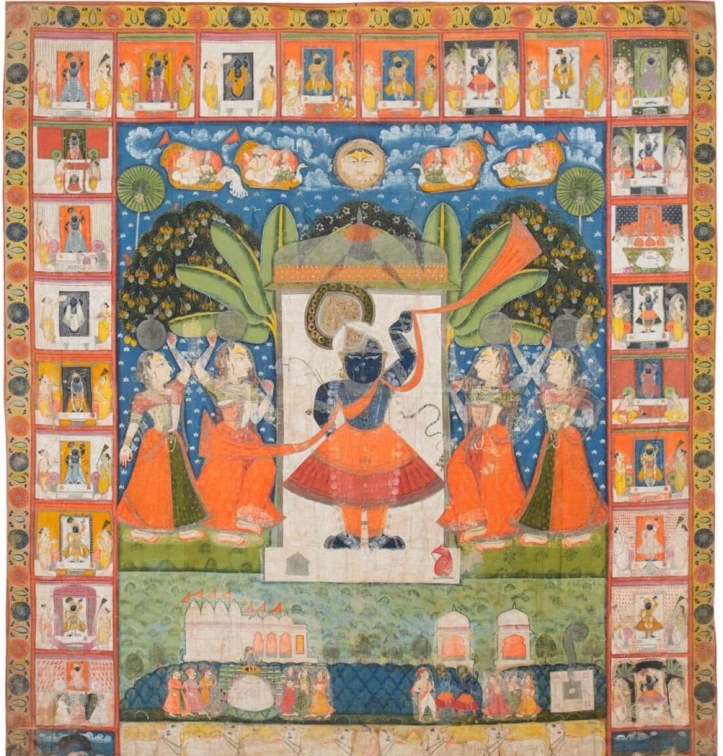
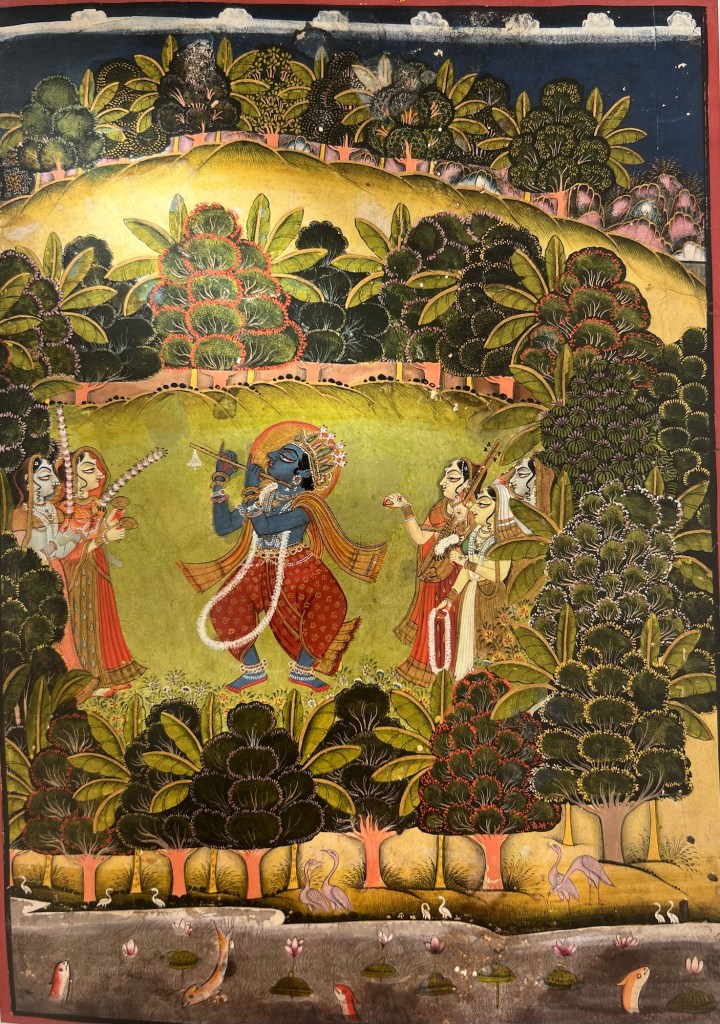
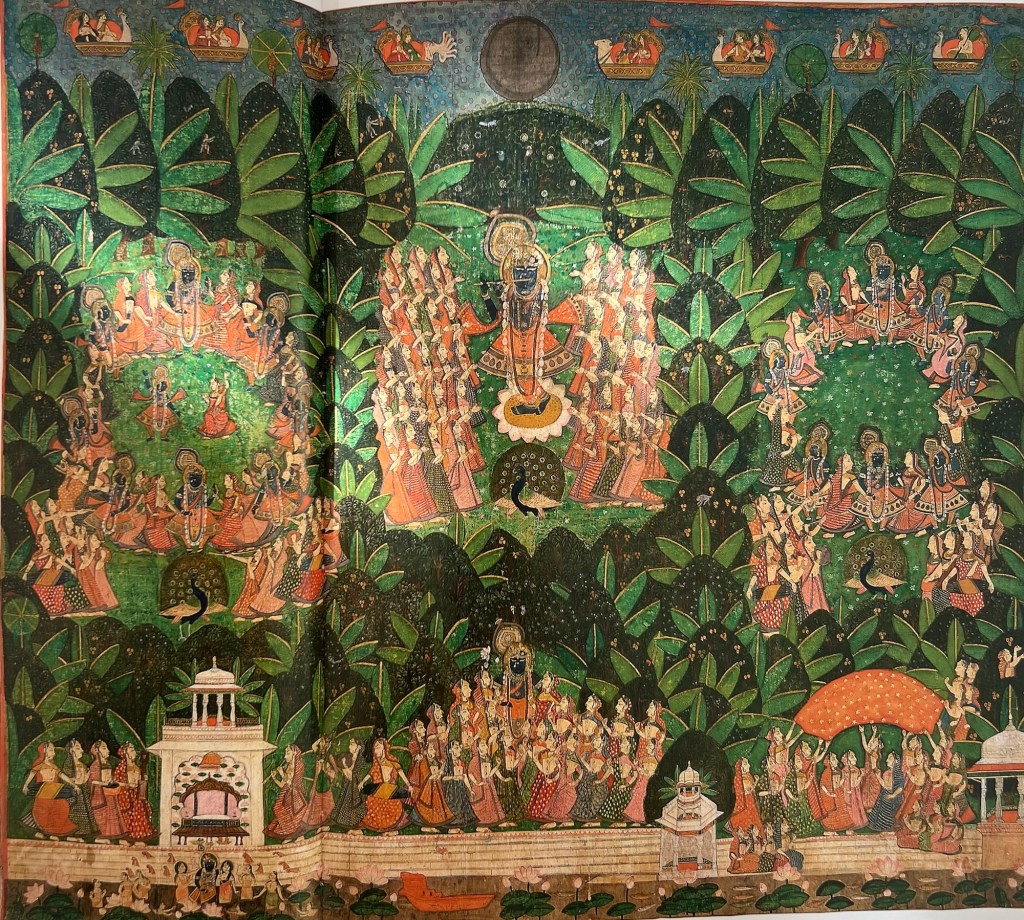
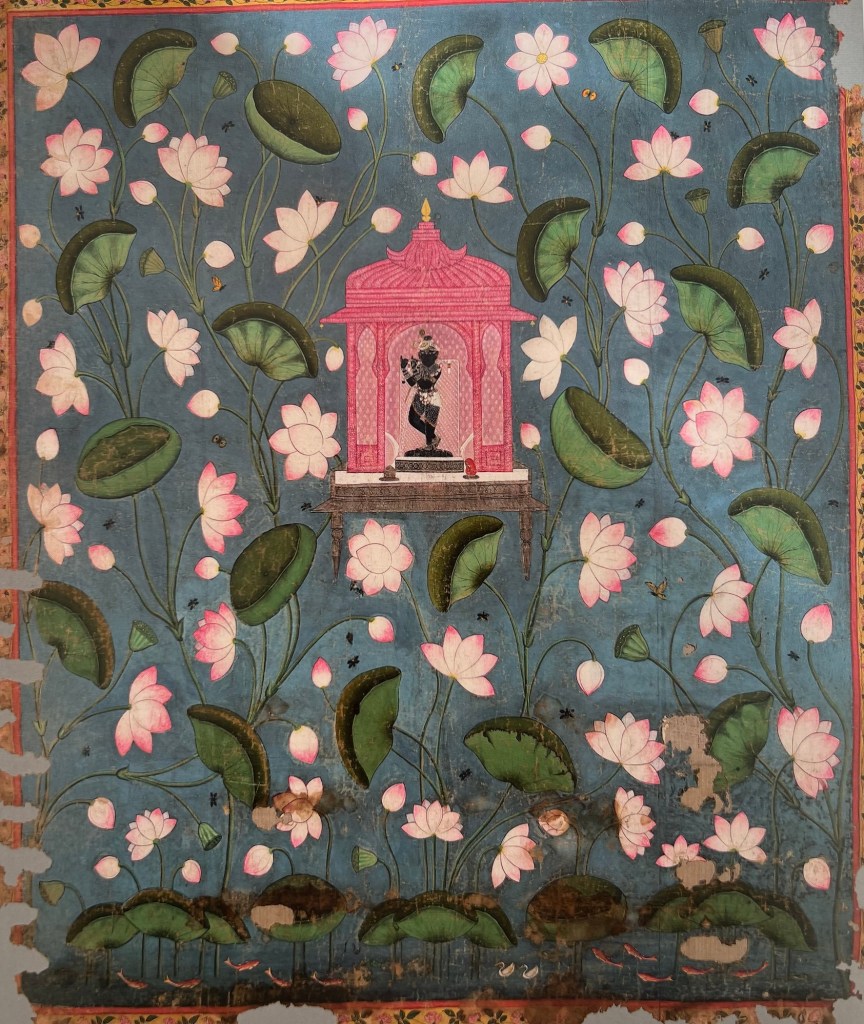
Illustration 1. The Union and Separation of the Hindu God Krishna and Radha, from a Song of Govind (Gita Govinda) manuscript, Artist unknown, opaque watercolour, and gold on paper, 21.4*38.5 cm, period: Mughal dynasty (1526-1857), image via Asian Art Collection, Yale University Art Gallery, online on https://lux.collections.yale.edu/view/object/1882fa52-5035-4939-beac-bc751cb89d58 [accessed on July 30th 2024];Illustration 6. Pichwai of Rasleela for Sharad Purnima, Artist unknown, c.1900, from the collection of Museum of Art & Photography, image via online on https://umaid.art/2022/08/06/pichwai-paintings-of-rajasthan/ [accessed on July 30th 2024];Illustration 7.Pichwai of Daan Leela, Unknown Artist, c.1900, from the collection of Museum of Art & Photography online on https://umaid.art/2022/08/06/pichwai-paintings-of-rajasthan/ [accessed on July 30th 2024];Illustration 2. Krishna Fluting for the Gopies, Artist unknown, Jodhpur, India, late 18th century or early 19th century, opaque watercolour, gold and tin alloy on paper; 65*49.2 cm, the Art Institute of Chicago; image from “Gates of the Lord. The Traditions of Krishna Paintings” 2015, p.70Illustration 8. Raas Lila, Artist unknown, Nathdwara, Rajasthan, India, Late 19th century; opaque watercolour on cotton 243*286.5 cm. Arthur M. Sackler Gallery; image from “Gates of the Lord. The Traditions of Krishna Paintings” 2015, p.118Illustration 3. Lila on the Ghats, Artist unknown, Nathdwara, Rajasthan, India, mid-18th century; opaque watercolour heightened with gold paper, 25.7*35 cm, Amit Amabal Collection, image from “Gates of the Lord. The Traditions of Krishna Paintings” 2015, p.99Illustration 4. Vrikshachari Pichvai, Artist unknown, Hyderabad, Telangana, India, late 18th century; opaque watercolour and gold on cotton 70.2*161.1 cm Collection of Thomas and Margot Pritzker, Chicago, IL; image from “Gates of the Lord. The Traditions of Krishna Paintings” 2015, p.107Illustration 5. Kamalan Ki Pichvai, Nathdwara, Rajasthan, India, artist unknown, early 20th century, cotton painted with pigments 178*154.4 cm; image from image from “Gates of the Lord. The Traditions of Krishna Paintings”*, 2015, p.98
Byōbu screens.
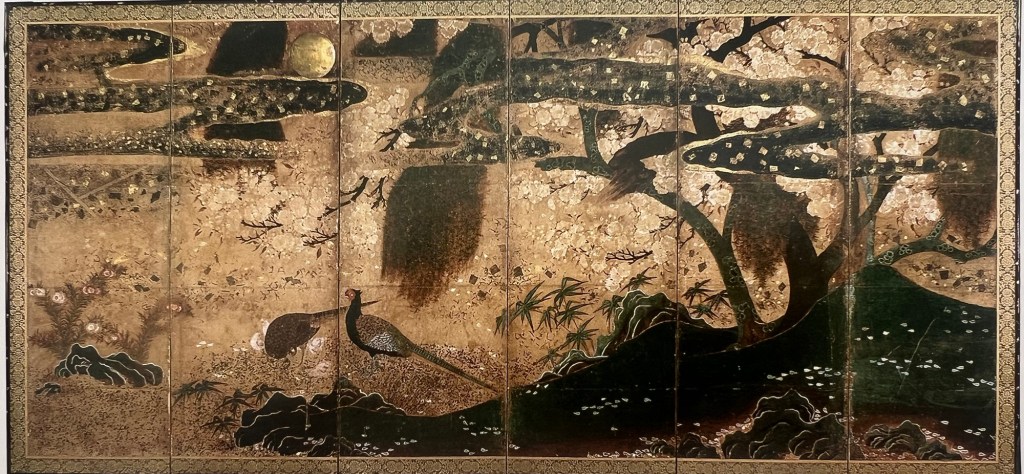
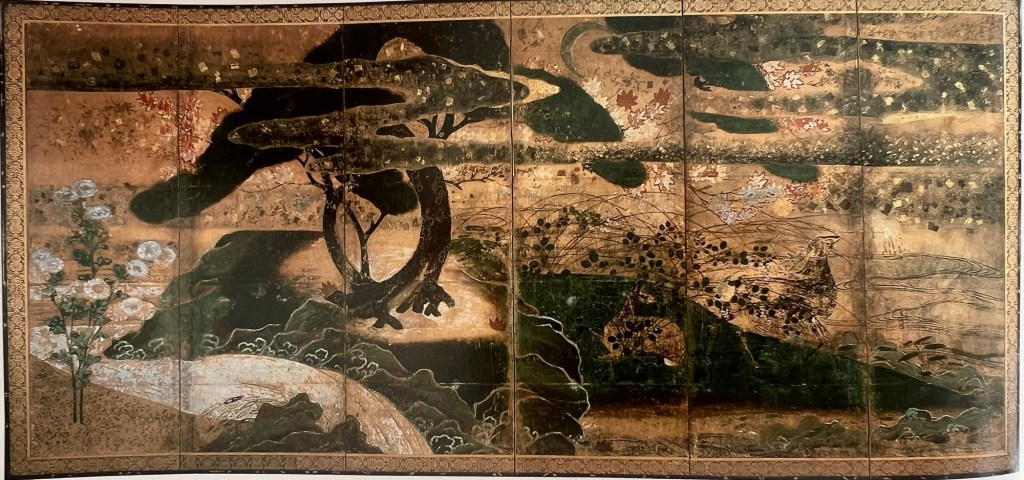
Illustration 9. Above and below: Flowers and Birds of the Four Seasons with the Sun and Moon, Artist unknown, first half of 15th century, pair of six-panel screens; metal, gold, silver and colour on paper; each 154.8*323.6 cm. Idemitsu Museum of Arts, Tokyo; image from “Beyond Golden Clouds. Japanese Screens from The Art Institute of Chicago and the Saint Louis Art Museum”, 2009, p. 16-17
Illustration 10. Folding Screen with Design of Grape Arbor, Kano School, Momoyama Period (16th c.), colour on gold-leaf paper, 152.5*350.9 cv (each), image via Tokyo Fuji Art Museum online on https://www.fujibi.or.jp/en/collection/artwork/03823/ [accessed on 29th July 2024];
Illustration 11.Below and above: Scenes of Yoshino and the Tatsuta River, Artist unknown, seventeenth century. Pair six-panel screens; ink, colour, and gold on paper; each 177.3*418.5 cm, Nezu Museum, Tokyo; image from “Beyond Golden Clouds. Japanese Screens from The Art Institute of Chicago and the Saint Louis Art Museum”, 2009, p. 40
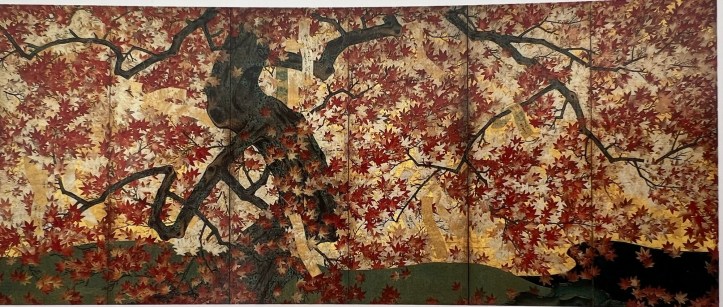
Illustration 13. Below and above: Birds and Flowers of Spring and Autumn, Tosa Mitsouki, Japan, 17th century; pair of six-panel screens: ink, colour and gold on paper, each 157*367 cm. Egawa Museum of Art, Hyogo, Japan. Image from the “Beyond Golden Clouds. Japanese Screens from The Art Institute of Chicago and the Saint Louis Art Museum”, 2009, p. 42
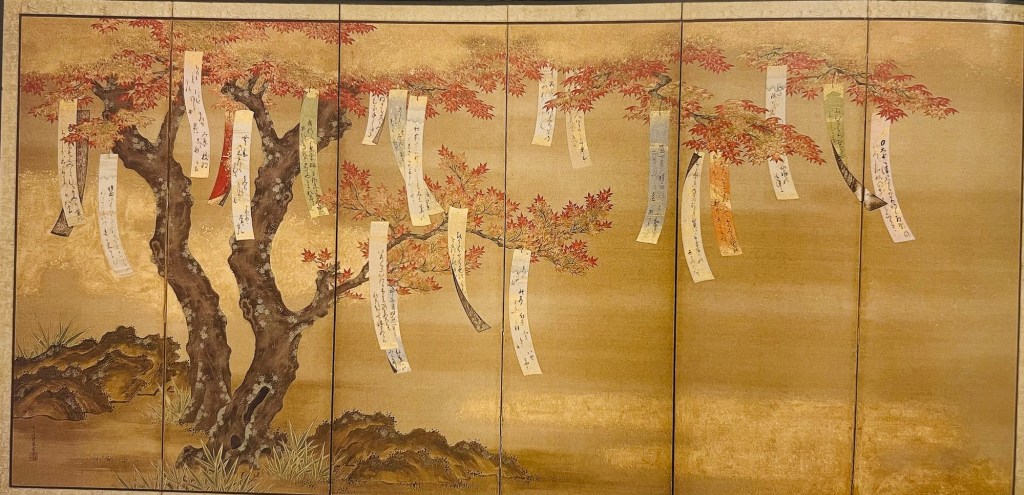
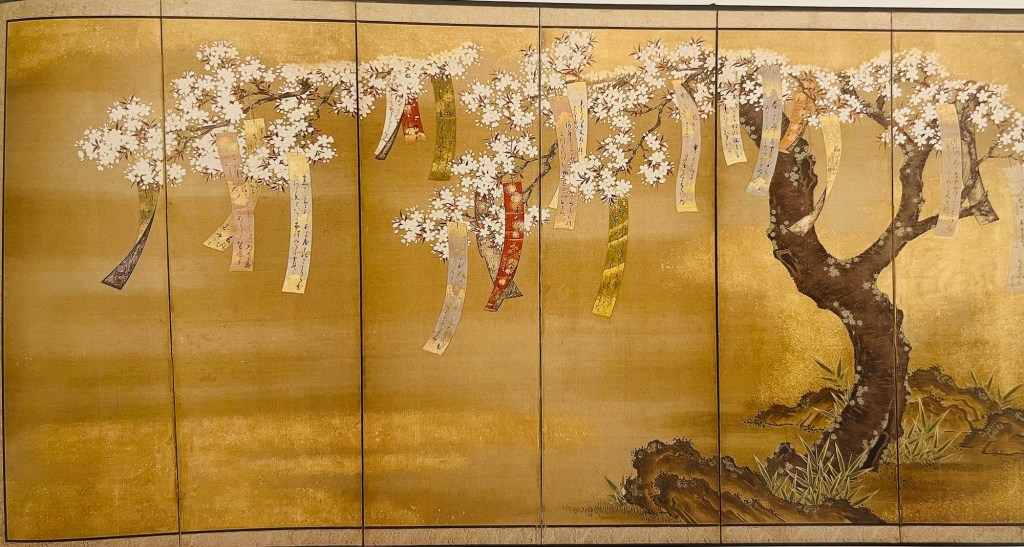
Illustration 12.Below: Flowering Cherry and Autumn Maples with Poem Slips, Tosa Mitsuoki, 1654/81, Pair of sox-panel screens; ink, colour, gold and silver on silk; each 144*286 cm. the Art Institute of Chicago. Kate S. Buckingham Endowment; image from “Beyond Golden Clouds. Japanese Screens from The Art Institute of Chicago and the Saint Louis Art Museum”, 2009, p. 132-133;






 JeanArt