Here, we have to show our Tutor our new standard of project preparatory work, which includes planning, exploratory and developmental work, research, reflection, evaluation, and the final outcome. You can find the list of resources I used at the bottom of this page.
My project below has a new direction for development, which suddenly became about different structures and new details. I showed the flower’s development at work in my previous posts. Below, you can see the painting I developed, which I had to take further, applying all new reflection and research skills such as practice audit and mind mapping.
Now I am taking the work into new direction after all the research and reflection I have done so far.
Actually, I previously thought the background was finished as an idea. However, I am reconsidering it now. While working on mind maps, putting my thoughts and research on large piece of A2 paper, I unexpectedly came to the idea of symbolic clouds and mist painting in traditional Japanese paintings. I didn’t think before that this project will something more than chrysanthemum flowers. Mind mapping unexpectedly brought me from the particular flower to the idea of painting a celestial theme, which I discovered while researching pattern symbolism in Asia.
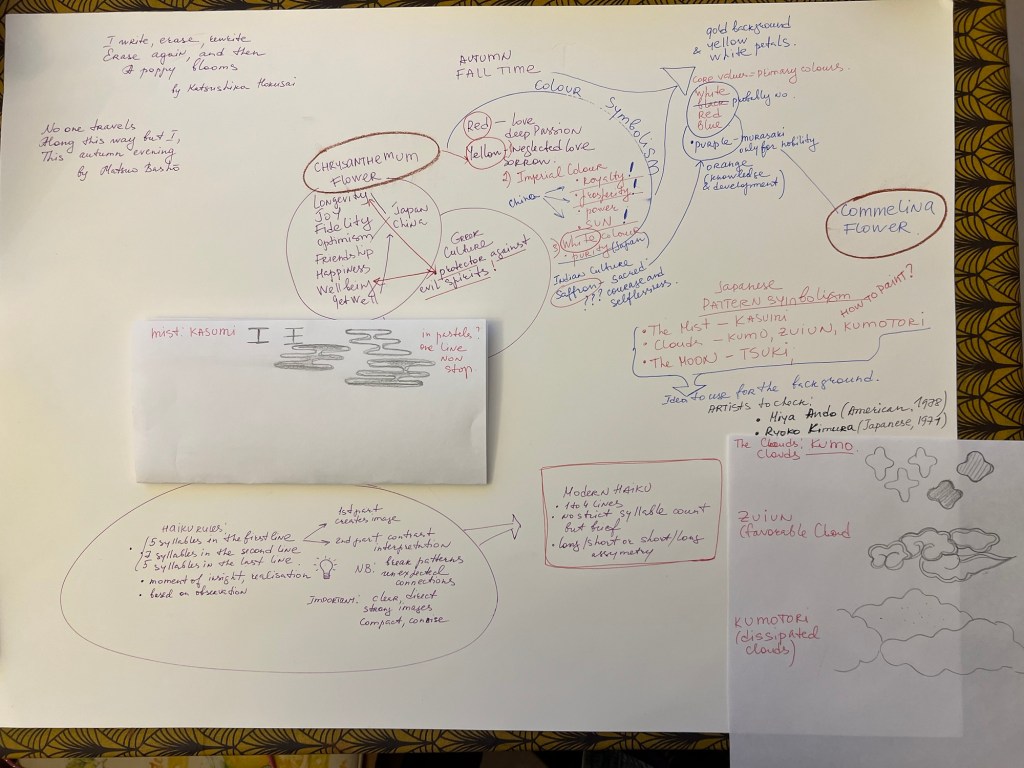
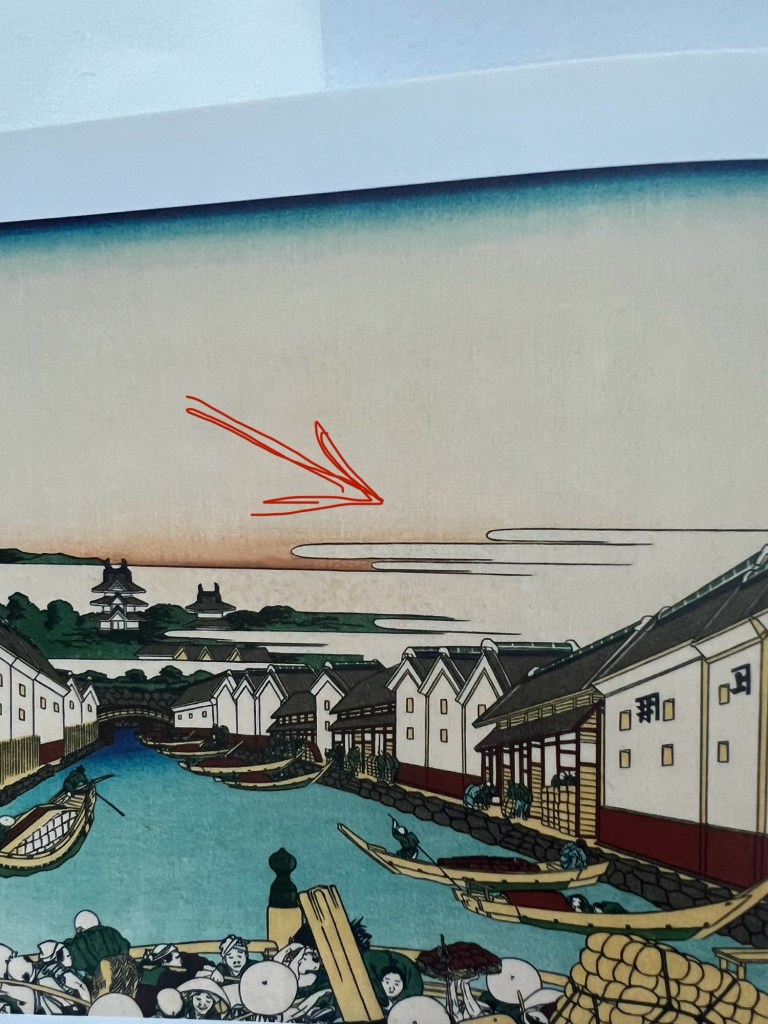
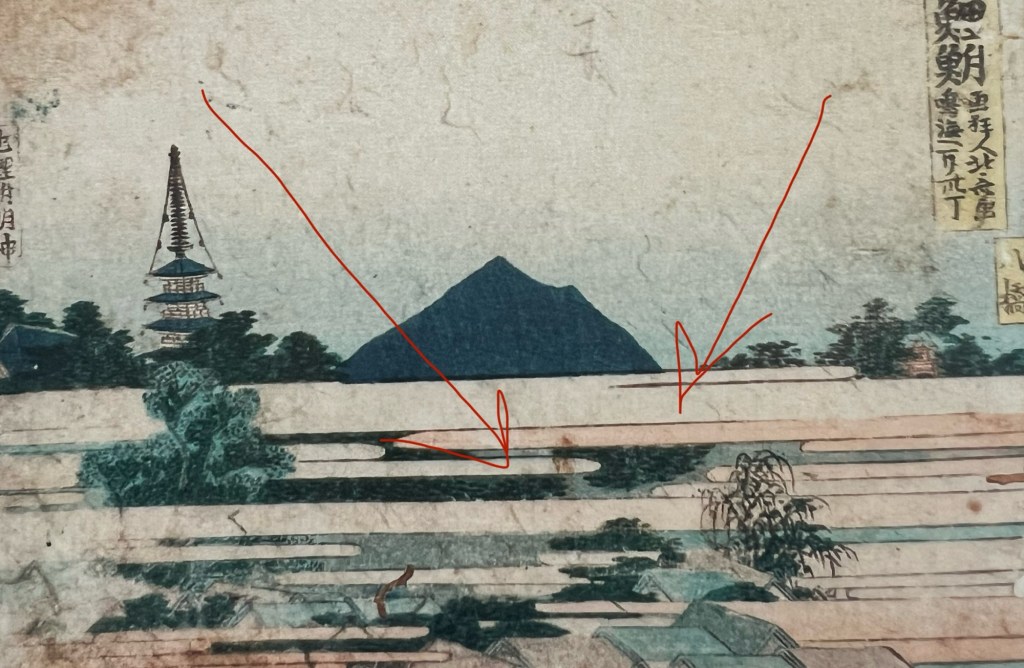
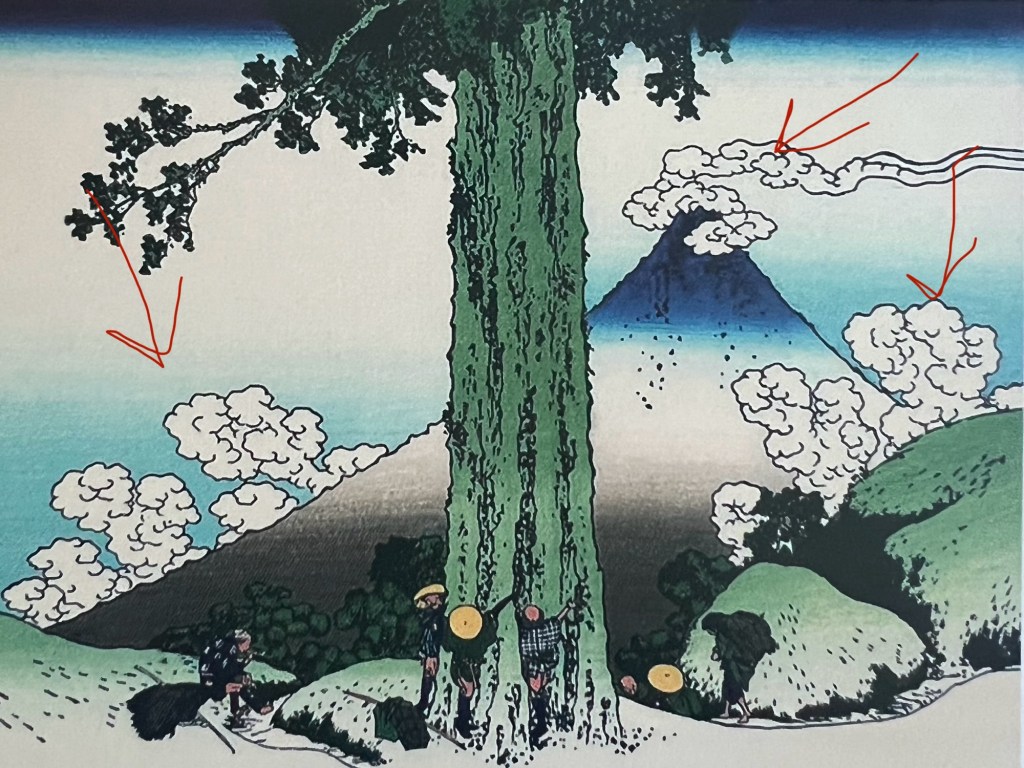
Thus, with a help of mind map, my creative process started from chrysanthemum flower then moved to Asian colour symbolism and further to pattern symbolism. I ended up with researching types of clouds and mist in traditional Japanese paintings, which are “Kasumi”, “sumo”, “kumotori”, “zuiun”. I also found new artists, such as Miya Ando ( American, 1978-) and Ryoko Kimura ( Japanese 1971-). Then I started to check the symbolic patterns in Hokusai’s artworks and now he viewed them differently. Below I place some of his artworks, where I noticed details in a new, more educated way. From left to right, follow the numbers:
- A Bridge in Edo, from the series 36 views of Mount Fuji, 1830-34, fragment, coloured wood, image via “Hokusai” book by Olaf Mextorf, p. 9, @Edition Place des Victories, Paris, @ 2017 Könemann;
2. South Wind, Clear Morning, from the series 36 views of Mount Fuji,1830-34, fragment, coloured wood, image via “Hokusai” book by Olaf Mextorf, p.153, @Edition Place des Victories, Paris, @ 2017 Könemann;
3. Chiryu ( Station 40), from the series 53 Stations of the Tōkaidō, 1804, coloured wood, image via “Hokusai” book by Olaf Mextorf, p.148, @Edition Place des Victories, Paris, @ 2017 Könemann;
4. The Mishima Pass in Kai Province, from the series 36 views of Mount Fuji, 1830-34, fragment, coloured wood, image via “Hokusai” book by Olaf Mextorf, p. 161, @Edition Place des Victories, Paris, @ 2017 Könemann;

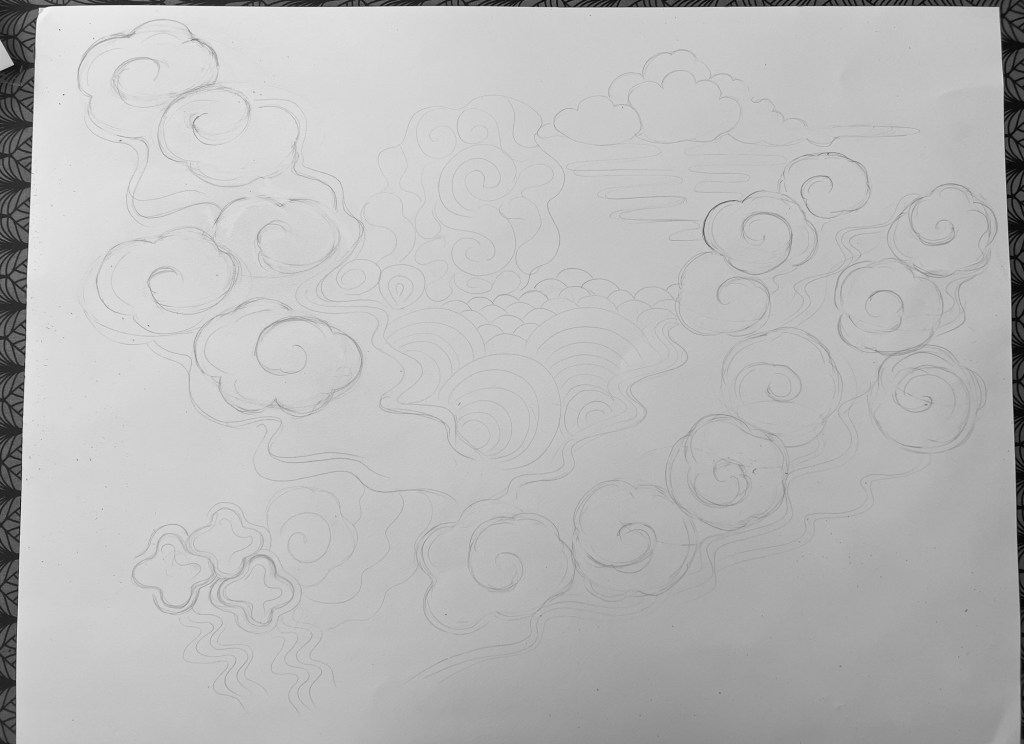
I made some sketches of clouds and mist in a new way, which I have never done before. I had to go back to upgrade my line skills before trying in inks, I tried in graphite pencils on A2 size paper.
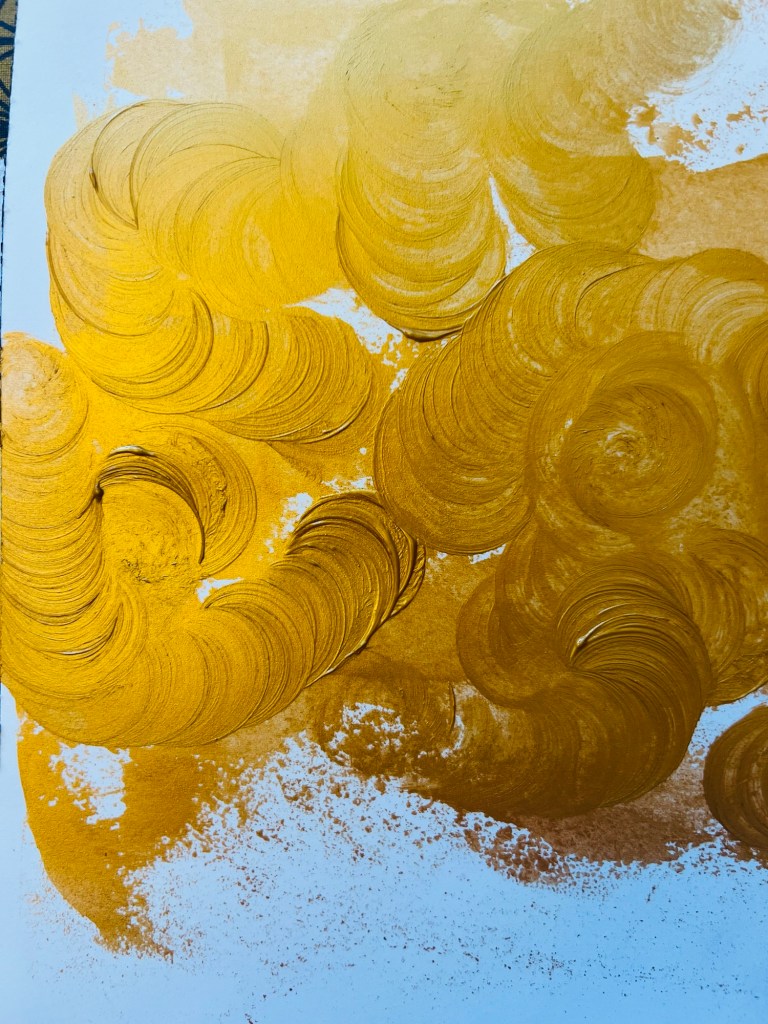
Then I developed clouds in inks, using different brushes and brush strokes techniques. I worked on A2 size paper for watercolours from Arches.


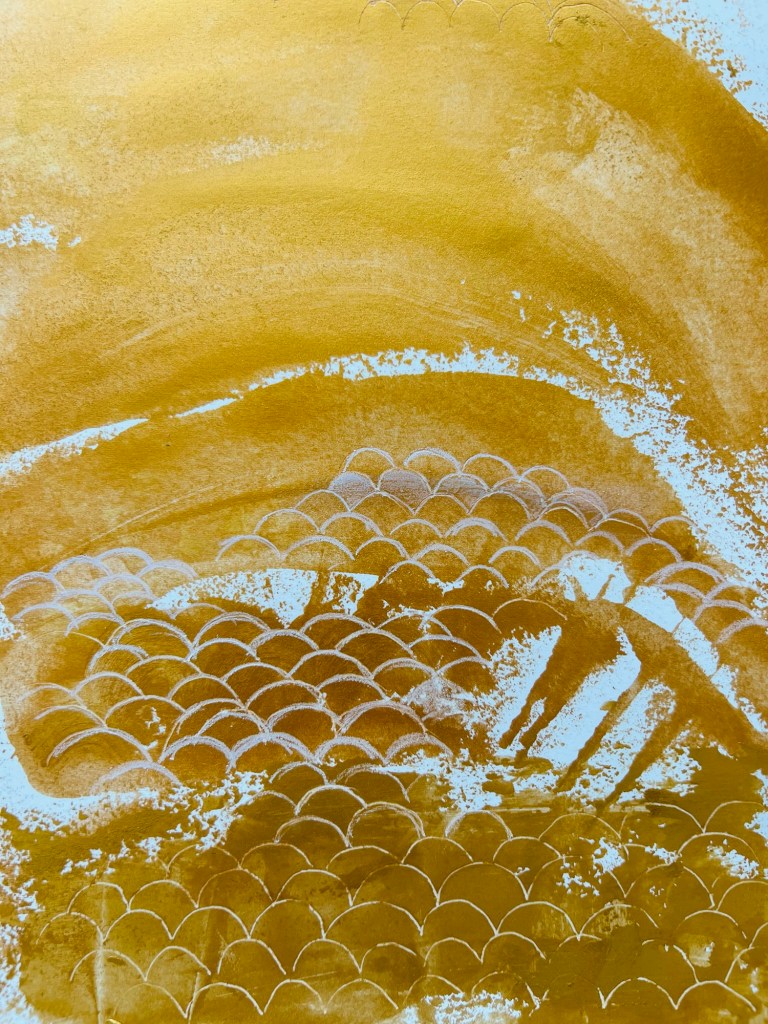
Introducing white and blue hues


I search for compositional options using my collage application.
Then I did a mistake. I painted some small size yellow chrysanthemums and this image below looks bad. I saw that flowers just don’t go inside the celestial theme.
However, that was exactly a moment when my project just instantly expanded into triptych, something like below. I just realised that flowers should be on separate surface and be as neighbouring celestial objects. At the same time the clouds and mists separately by themselves are kind of not sufficient, flowers add them more value. This images below are a prototype of my triptych idea. This is not a final point, since the development of the projects is still in process.
Another project in process is below. It is related to the mind map you also can see below. I have made this mind map to continue my project I started earlier on Level 2. It was a good chance to work on it using the mind map approach for further research. Below are the photos of my previous development I did earlier for Level 2. On Level 3, studying the current unit I decided to go black to that project and develop it further.
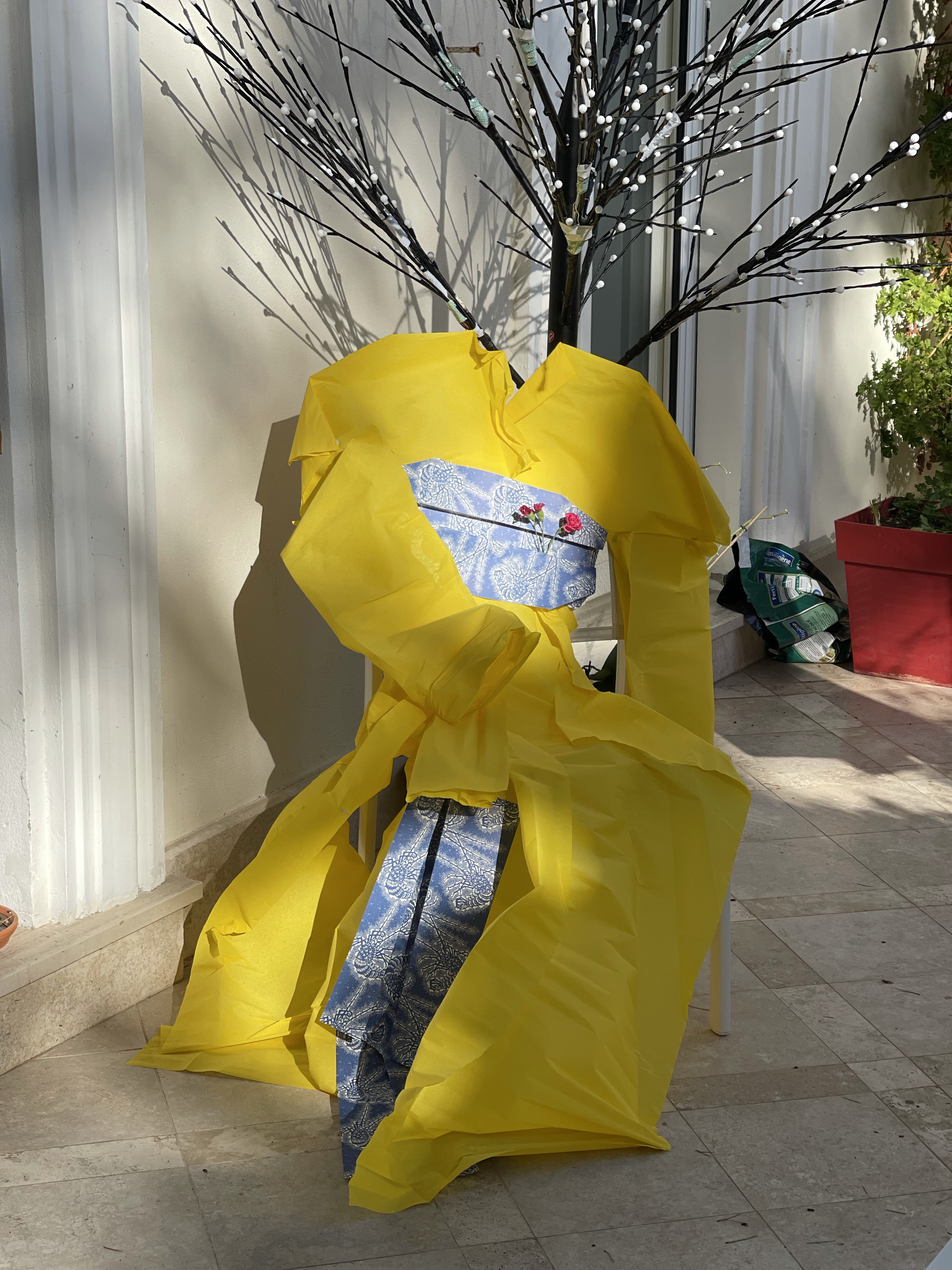
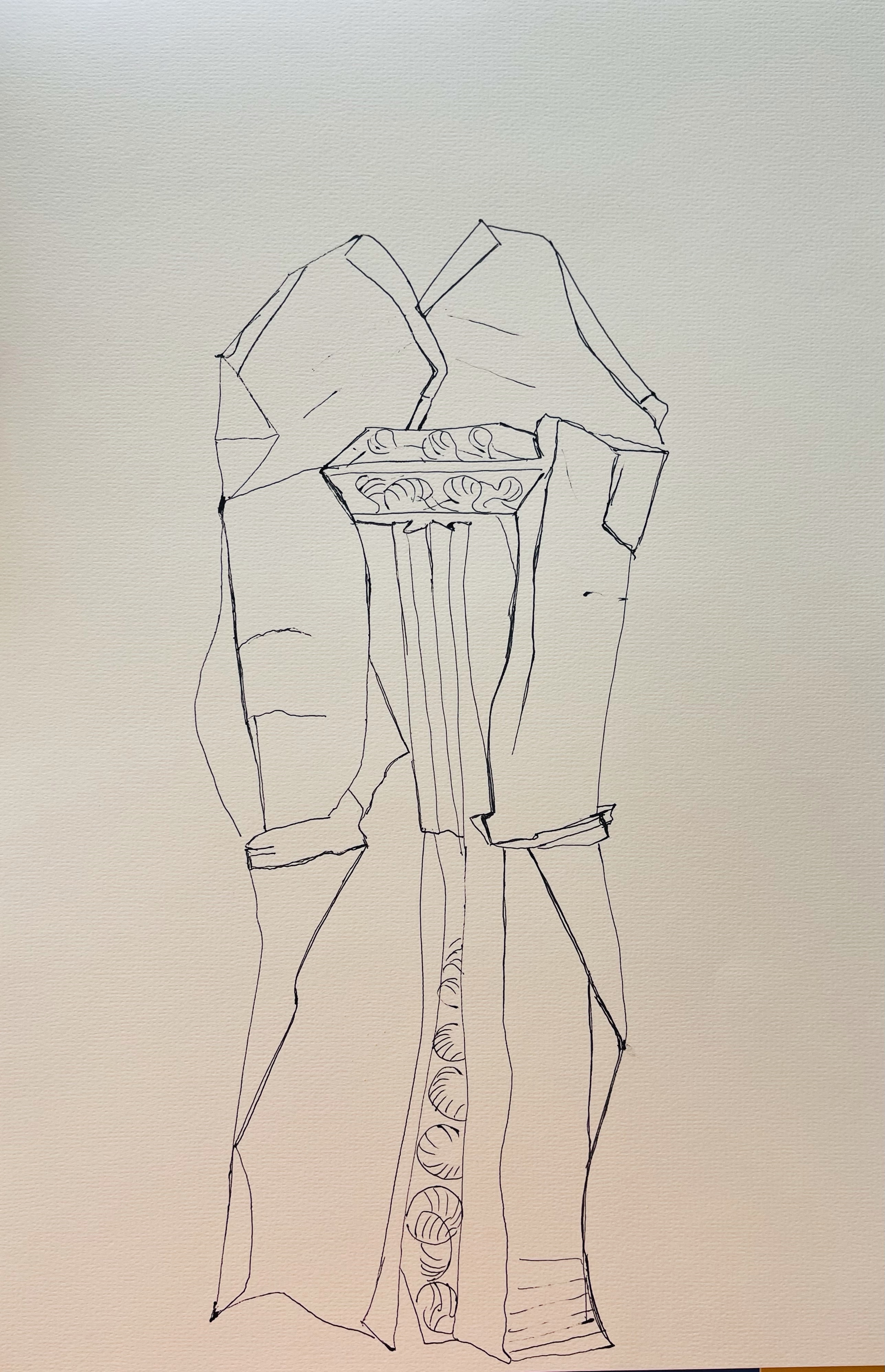


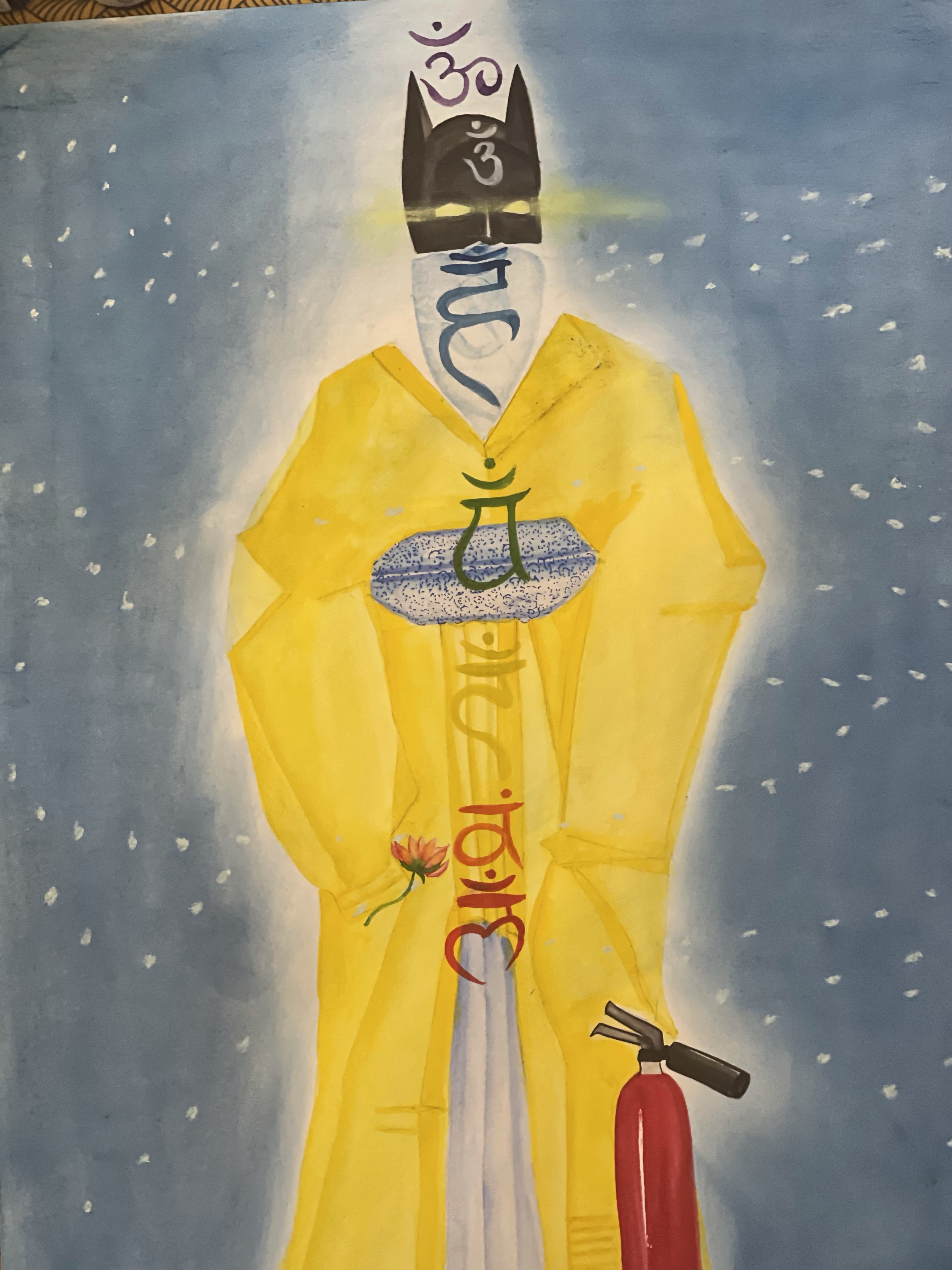
The Mind Map I did for this Unit to continue the developments above is below. I brought to the Mind Map the details of my previous main idea- Earth experience and cloth as a body: karma seeds, “mission impossible” symbol- Batman mask, fire distinguisher.
New details added: Supreme Being’s presence, samurai’s sword, accent on feelings of loneliness and frustration, exit.

Rough new sketches using the new mind map associations for the project.


This is a preliminary development of the project with new details. While working on this project I searched for paintings, which contain cloth or elements of clothing. I have found the painting of Frida Kahlo. Interestingly, I found that she also added celestial elements such as clouds on the background, the Supreme Being’s presence – tiny angels at the end of the stick, as well as water and earth below the feet of the figure on the painting.
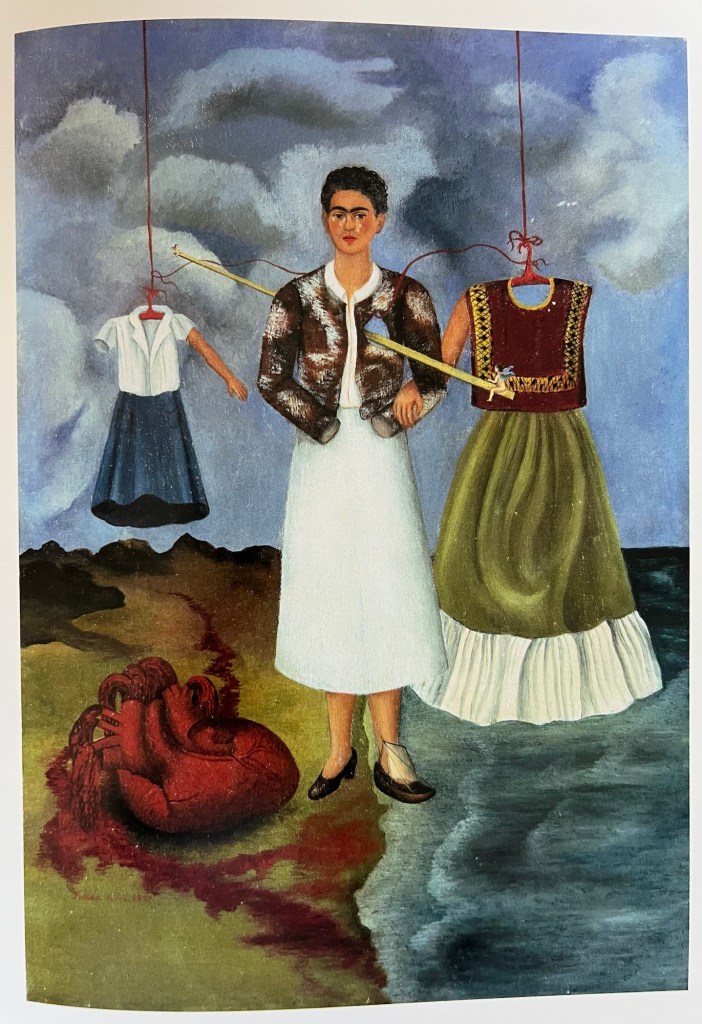
Below is my another sketch for the project in progress.
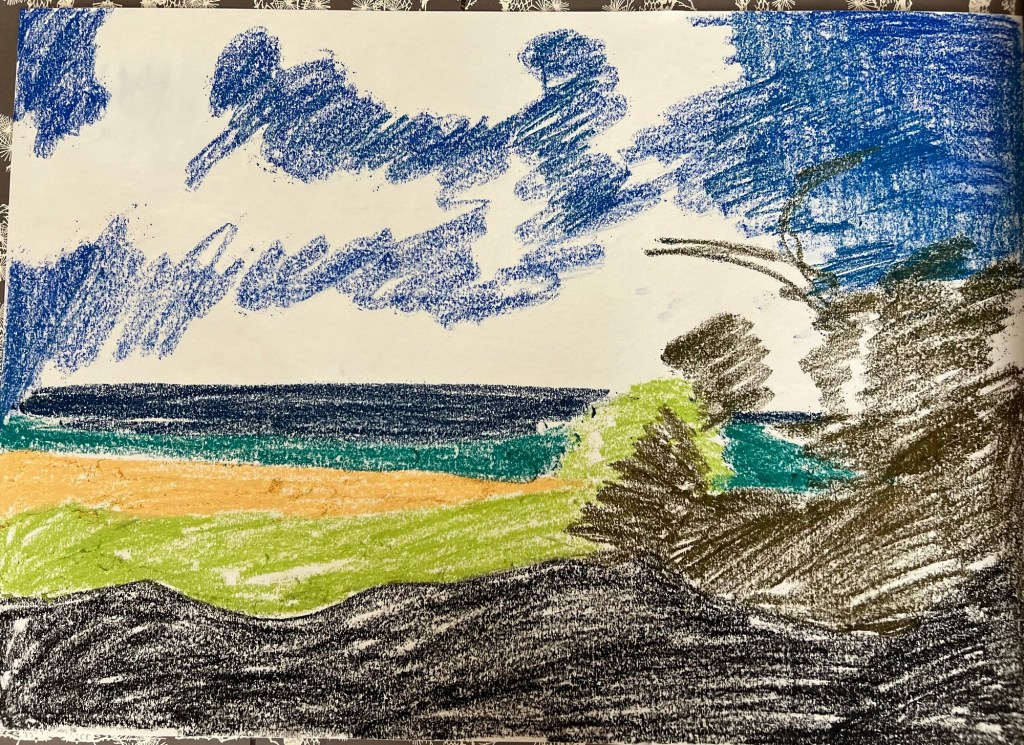
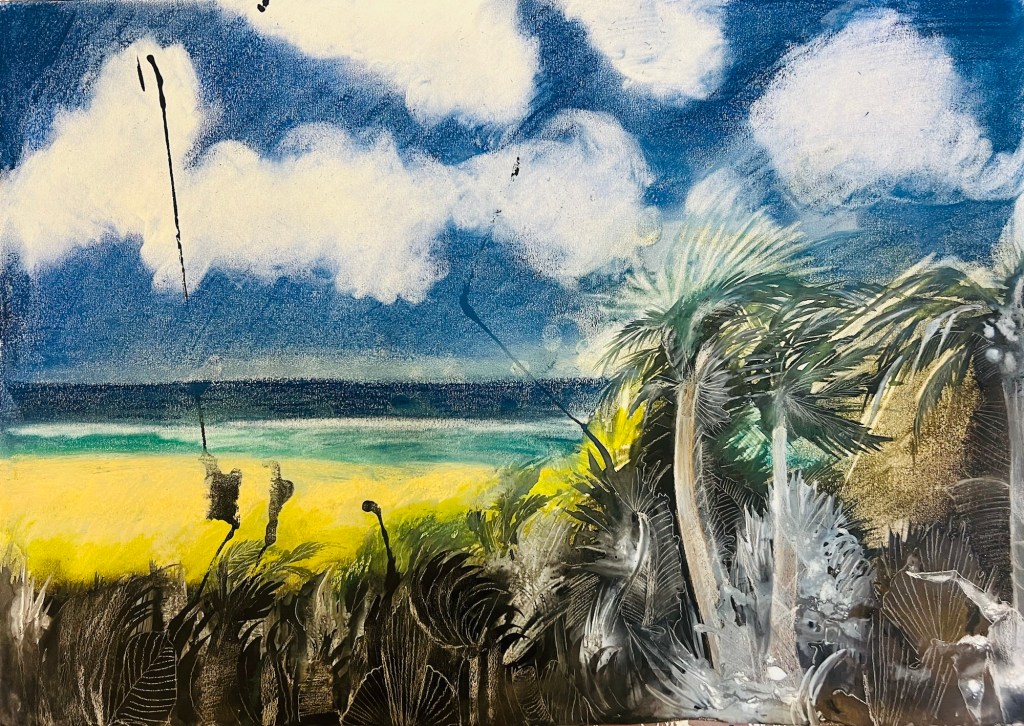
I am thinking about uniting it with my ideas from the Mind Map. I started to develop this drawing as a different, alternative perspective for my idea of Soul’s experience on Earth. I can place the symbol of Soul into celestial theme with stylised clouds – “kumo”, “zuiun”, “kumotori” as I indicated them around the orange figure like symbol in kimono, or I can do a totally different approach with night skies I did for the project below. Here I worked with inks over dry pastels, so the drawing is multilayered. I liked the outcome since I observe some dramatic tension between the skies and black mass at the bottom, where I worked with white aquarelle and white pencil, I also worked with a rubber eraser to create some strong white flashes.


Below I place the list of relevant materials and research I did for this project.
Online resources:
“Colours in Chinese and Japanese Culture. Colour Symbolism”, Devone Denomme, online on https://study.com/academy/lesson/colors-in-chinese-japanese-culture.html [accessed on March 10 2024]; “Colours in Japanese and Chinese Culture- Kaito Japan Design”, online on https://kaitojapandesign.com/blogs/colors-in-japanese-chinese-culture/colors-in-japanese-chinese-culture [accessed on March 10, 2024]; “Japanese Colours Meanings- Symbolic Colours in Japanese Culture”, Charlene Lewis, Art Context, October 2023, online on https://artincontext.org/japanese-color-meanings/. [accessed on March 10 2024]; “The Fundamental Forbidden and Permitted Colours in Japan”, Polina Couture, online on https://polinacouture.com/en/the-fundamental-forbidden-and-permitted-colors-of-japan/ [accessed on March 10, 2024]; “The Meaning of Natural and Landscape Elements in Japanese Crafts”, Japanese Motifs of Nature, Polina Couture, online on https://polinacouture.com/en/meaning-of-natural-and-landscape-elements-japanese-crafts/ [accessed on March 10, 2024]; “The Meaning of Flowers and Shrubs in Japan”, Polina Couture, online https://polinacouture.com/en/the-meaning-of-flowers-on-japanese-fabrics/ [accessed on March 10. 2024]; “Japanese brush painting: Water, mist and clouds”, 2010, Camelliateas channel, https://www.youtube.com/watch?v=0RhK1VHqlu4 Youtube, [accessed on March 11, 2024];
Books:
- Èloi Rousseau, “Hiroshige, Hokusai & les grands maîtres de l’estampe”, 2023, @LAROUSSE,
2. Felice Fischer and Kyoko Kinoshita, “Ink and Gold Art of Kano”, Philadelphia Museum of Art, 2015;
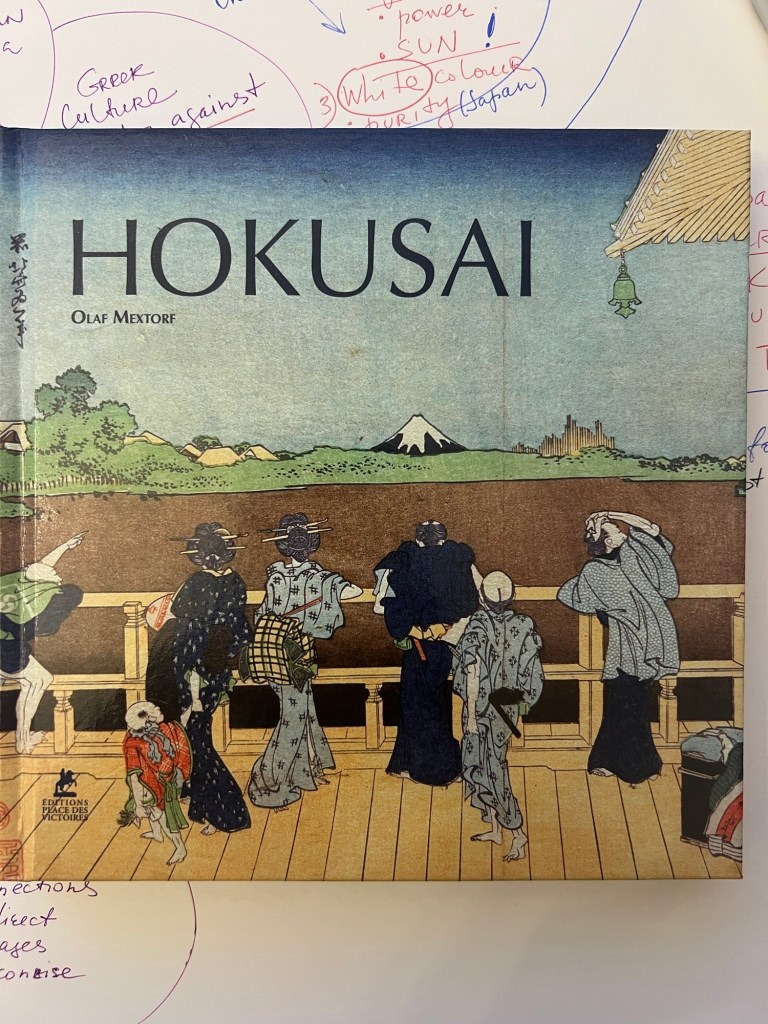
3. Olaf Mextorf, “Hokusai”, @2017 Könemann, Editions Place des Victoires, Paris.
4. Kazuhiko Tajima, “Flores de Edo Enciclopedia ilustrada de flores japonesas”, Traduccion Daniel Aguilar, @2022, Satori ediciones, España;
#5. Kristin Leal, “Meta Anatomy”, 2021, Sounds True Inc.
#6. Keiko Nitanai, “Il Linguaggio del Kimono”, 2014, @Snake, SA2020, Swizzera ( Switzerland);
#7. “Frida Kahlo”, Helga Prignitz-Poda, Gallimard, Munich, 2003;


 JeanArt