Exercise 1.5. Developing Ideas.
In this exercise we have to write about the development of our recent work, including details about mediums, scale, process, as well as ideas in the work and why we made it. Though we have to concrete on the bigger picture and reflect on mind and concept maps we have made in previous exercise, trying to identify and find creative potential they bring and enhance.
This project will be about the surrounding greenery I observe daily around my location. I started to develop my trial sketches of different fragments, which I will unite on a large canvas. I don’t have any compositional decisions yet because, intuitively, I think the composition will depend on the results of different fragments. I plan to work with acrylics, aquarelle and inks on canvas. Now, I develop sketches on paper; the best outcomes will be included in the large painting. I work on new shapes, textures, colour approaches and techniques for leaves, petals and stems. I develop these projects by taking lots of photographs of the plants, which seem interesting to me, and then I try different ways ( medium and style, colours) to reproduce them on paper. I don’t have a fixed idea of what kind of result I want to get; I just paint and see what comes out, and this is my primary research – I am open to all outcomes. Also, I plan to research composition options and check artworks depicting greenery and plants. As usual, I will use the app to make collages and find the most exciting composition decisions.




Project 2. Untitled, so far
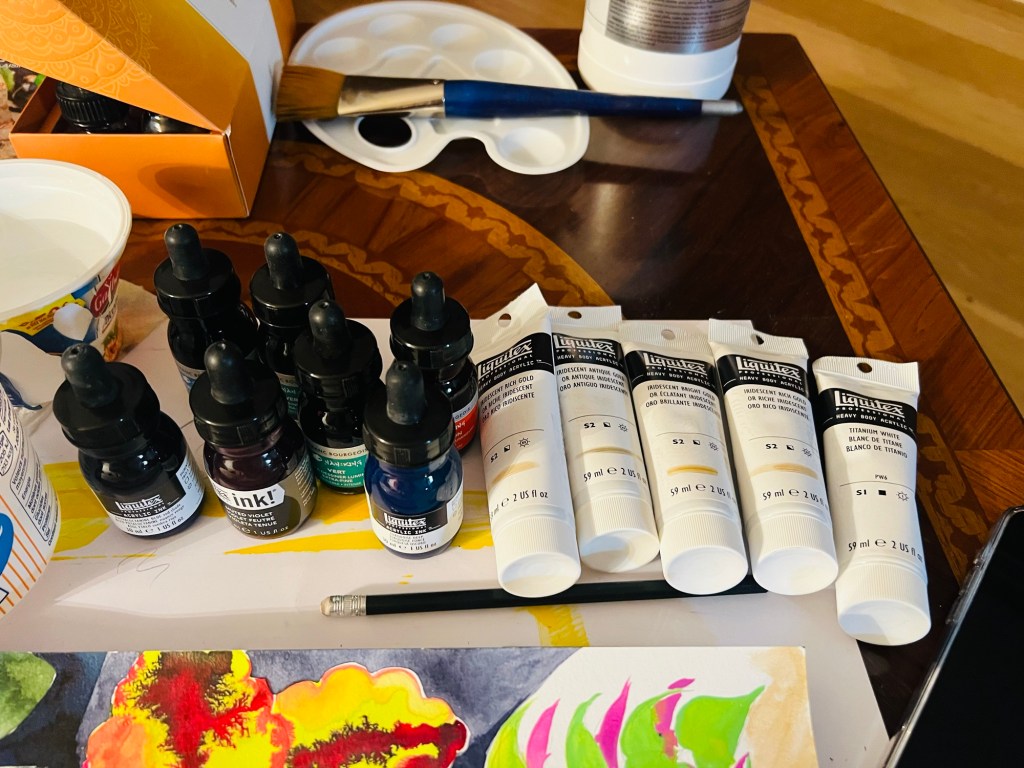
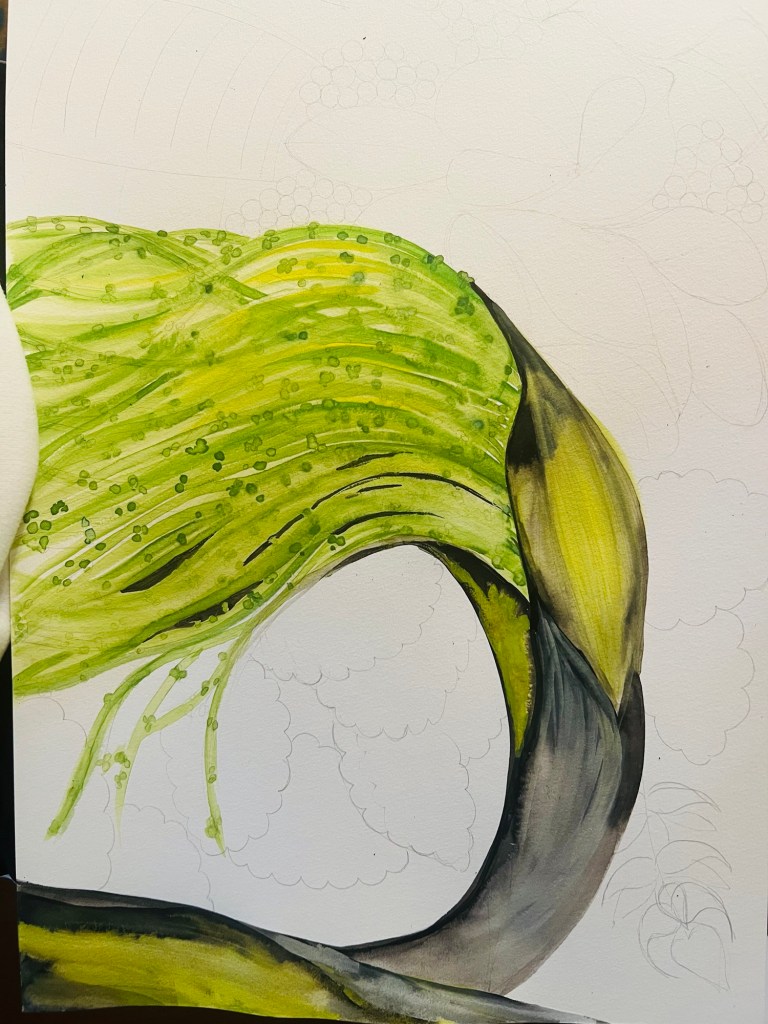
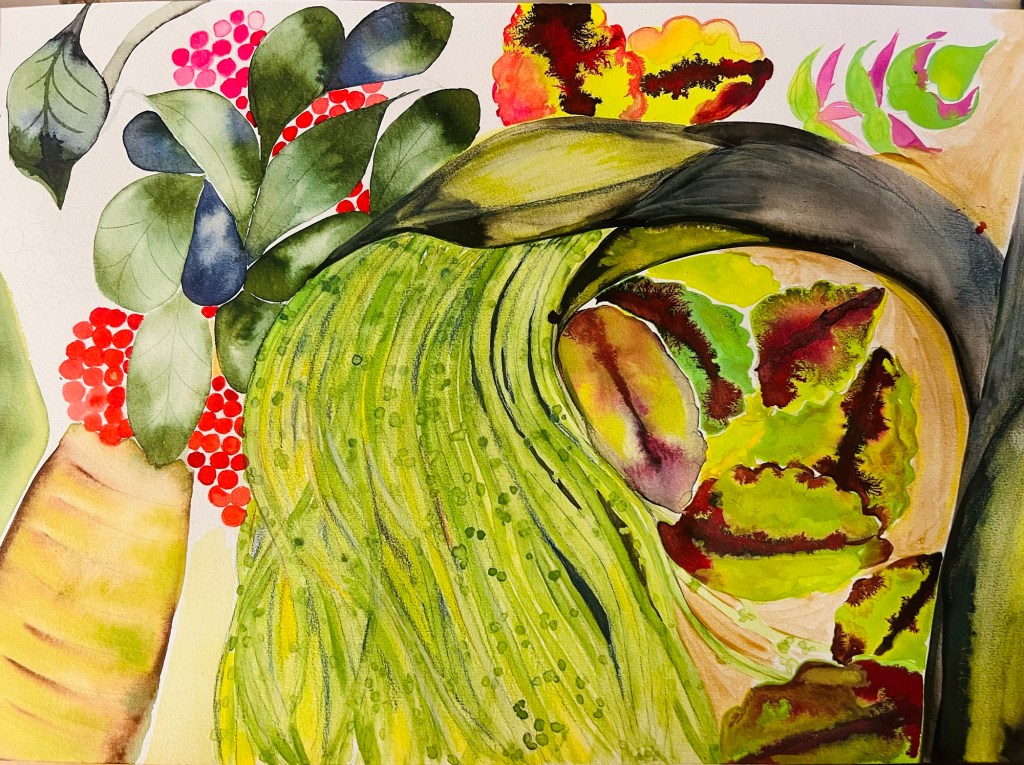
I started developing the Project below in January this year while waiting for the OCA to open my courses for Level 3, so I have included the developmental sketches and drawings in this exercise. This Project is my breakthrough in inventing and mastering my technique to produce my style Chrysanthemum flower and its leaves. I am also sure about the gold background. I made good progress on this Project since I produced an A2 size painting on paper in colours. All flowers are different since I tried different brushstrokes and practised different flower’ bulb shapes. I also experimented with a colour for the leaves, trying shades of green and blue. My plan to develop this Project is to make it in a larger size, either on canvas or on a wooden board, and incorporate poetry of my own or by a poet I will find resonating with my painting. I must decide about the font and its place on the canvas, so the compositional decision is still open. My research is about artworks with poetry. This genre is called “ekphrastic poetry”. There is aJapanese tradition of “tanka” or “haiku” poetry, which is often paired with ink paintings or calligraphy. Thus my research is branched out: a) “Ekphrastic poetry” and examples of it. I am interested in works of Cy Twombly (1928-2011) who often incorporated fragments of poetry into his abstract paintings. He included quotes from Sappho, Homer, Virgil, Mallarmé, Rilke and Cavafy; b) “haiku” and “tanka” genre; c) Philosophy and poetry about life experience and spirituality;


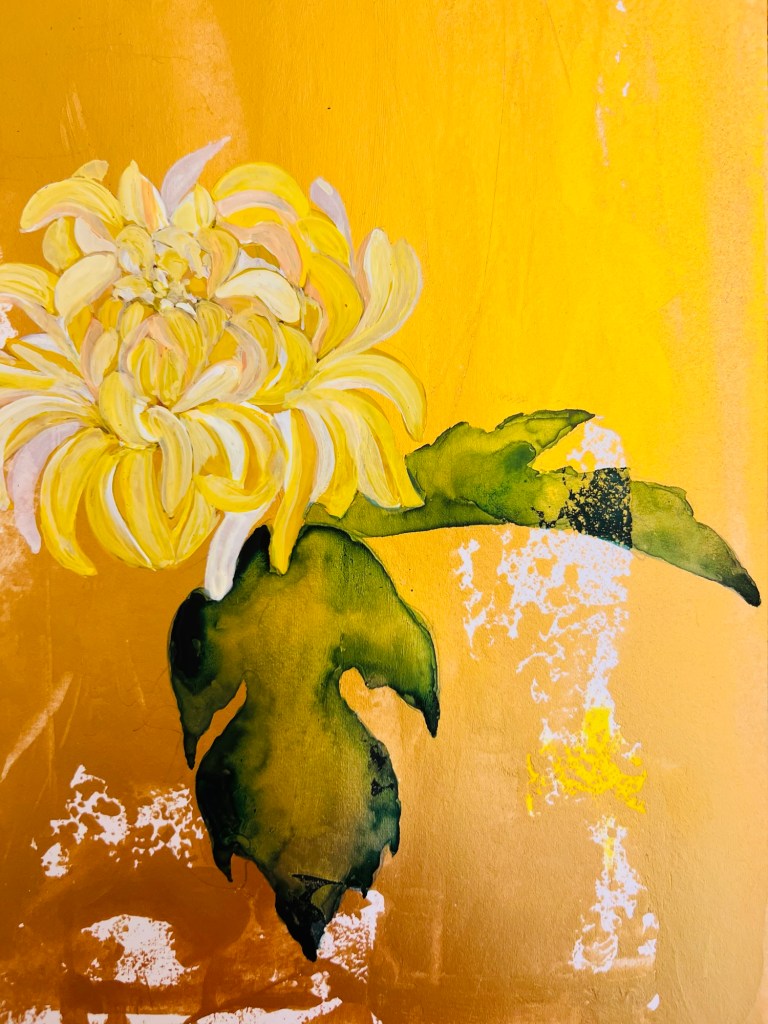

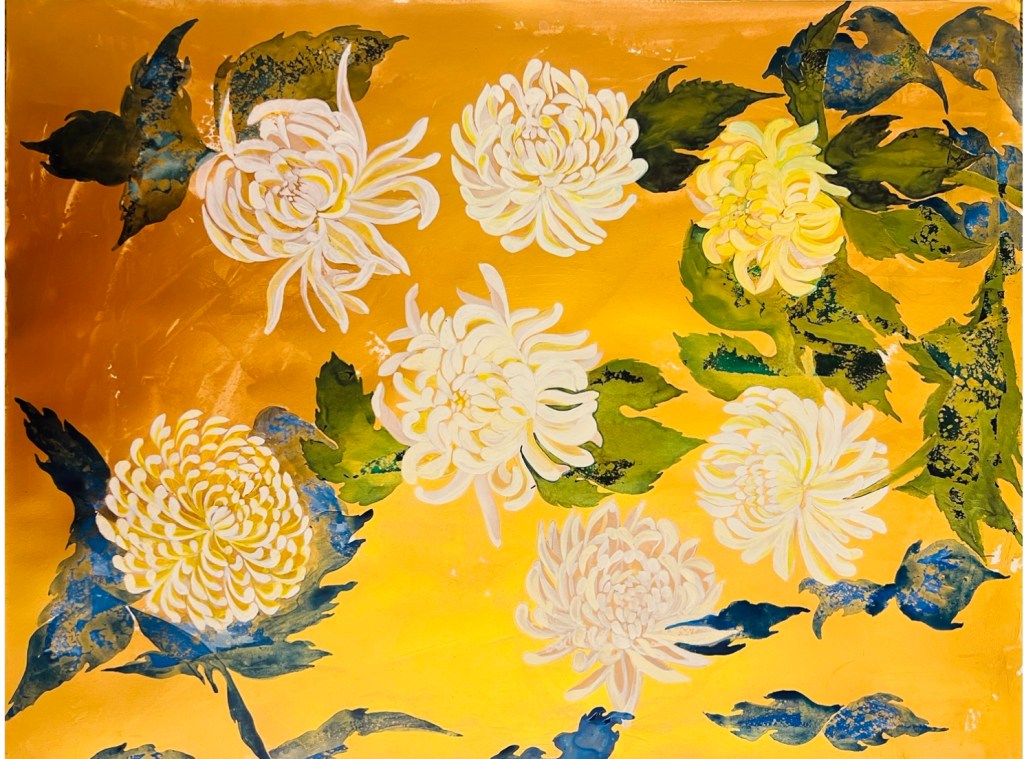


Another options for composition. The collage below gives me an idea of placing the poetry text at the upper part of each vertical plane. In the option above, without the collage, I am thinking about placing the text diagonally on top of the flowers, either in black or blue or green ink.


It was interesting to discover that Cy Twombly had an extensive, large and rich library as a part of his studio and often worked on his paintings with an opened book in front of him. As Mary Jacobus explains in her book “Reading Cy Twombly” : “…he never really separated painting and literature” (Princeton University Press, 2016 ). He also was interested in “astral transcendental geometry” and space.I want to bring some quotes from Mary Jacobus’ above mentioned book, because it exactly describes the artist’s working and research practice: ” The Twombly anthology permits unique insight into an artist’s thought process and working methods – the reading, brooding, and imagining that take place during the extended processes of pictorial composition” ( “Reading Cy Twombly”, p.3), “His books include handwritten mark- ups, rough notes, textual cuts, paint marks and illustrative doodles” ( “Reading Cy Twombly”, p. 2). The research Cy Twombly did with a poetry often was taking poems further, editing them and deleting parts of verses.
Bibliography: “Twombly and the Poets”, Gagosian Quaterly, Summer 2018 issue, online on http://www.gagosian.com [accessed on Feb 13, 2024]; ”Reading Cy Twombly: Poetry in Paint”, by Mary Jacobus, Princeton University Press, 2016, Literature, online on http://www.press.princeton.edu [accessed on Feb 13, 2024]; Book Talk: Mary Jacob’s – Reading Cy Twombly: Poetry in Paint, Cornell university Library, Youtube, 2016 [accessed on Feb 13, 2024]; 10 vivid haikus to leave you breathless, Read Poetry, online on http://www.readpoetry.com [accessed on Feb 16 2024]; “The Real Rules of Haiku” online on http://www.writebetterpoems.com [accessed on 16 Feb, 2024];
Project #3 Miami skies

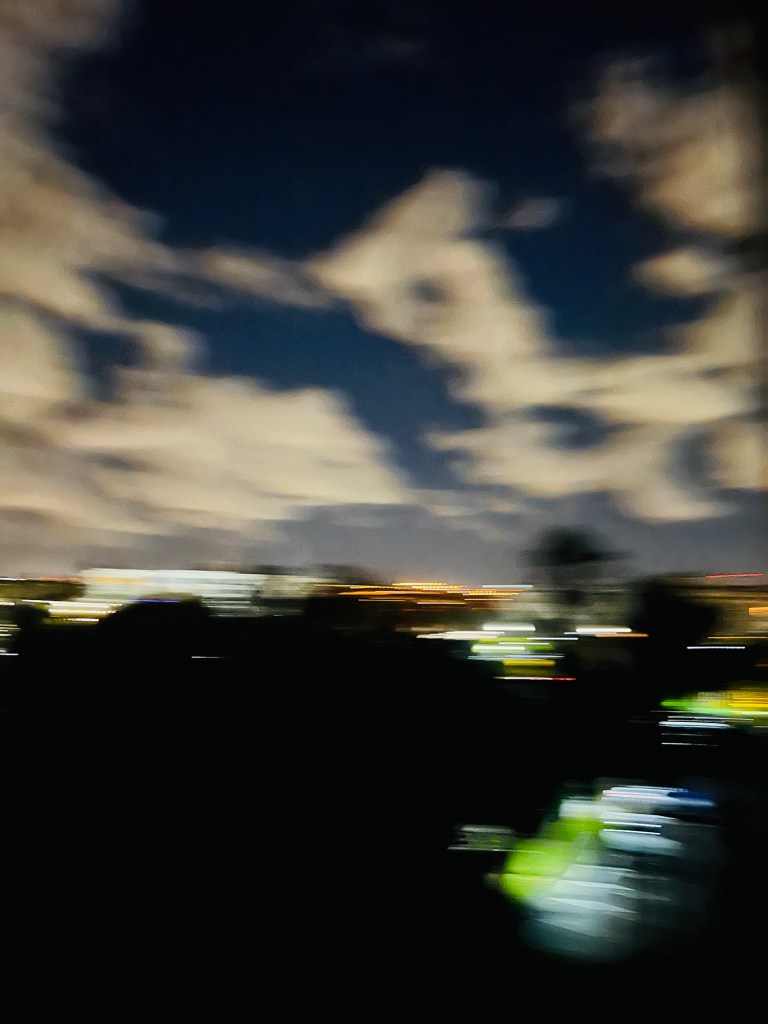

This project above emerged from my impressions of night skies in Miami Visited last and took photos with my iPhone camera. I plan to work in soft pastels or oils. The middle photo appeared very engaging – the objects are kind of smashed, united in one powerful dynamic of colours and lights. I like the deep darkness at the lower part of the middle photo and the contrast of moon lit beach and a dark part at the lower right corner on the right photo.
 JeanArt