I am happy the OCA invited me to start my next unit.
Project 1: Audit of Practice
Below, I place my works divided into two groups: the A group is about those works which I consider as key and “pivotal”, something that I am sure about in terms of the creative direction and significant progress of my technique, observational and compositional skills, including those works, which I want to develop further into the larger piece; group B– are works I can name challenging, not typical for me, but worth to continue to stretch my skills and aspirations further. They are “quieter” in terms of my understanding of what I was looking for and “less resolved” in terms of the final result. Still, they are existentially necessary for my development as a visual artist.
Group A:
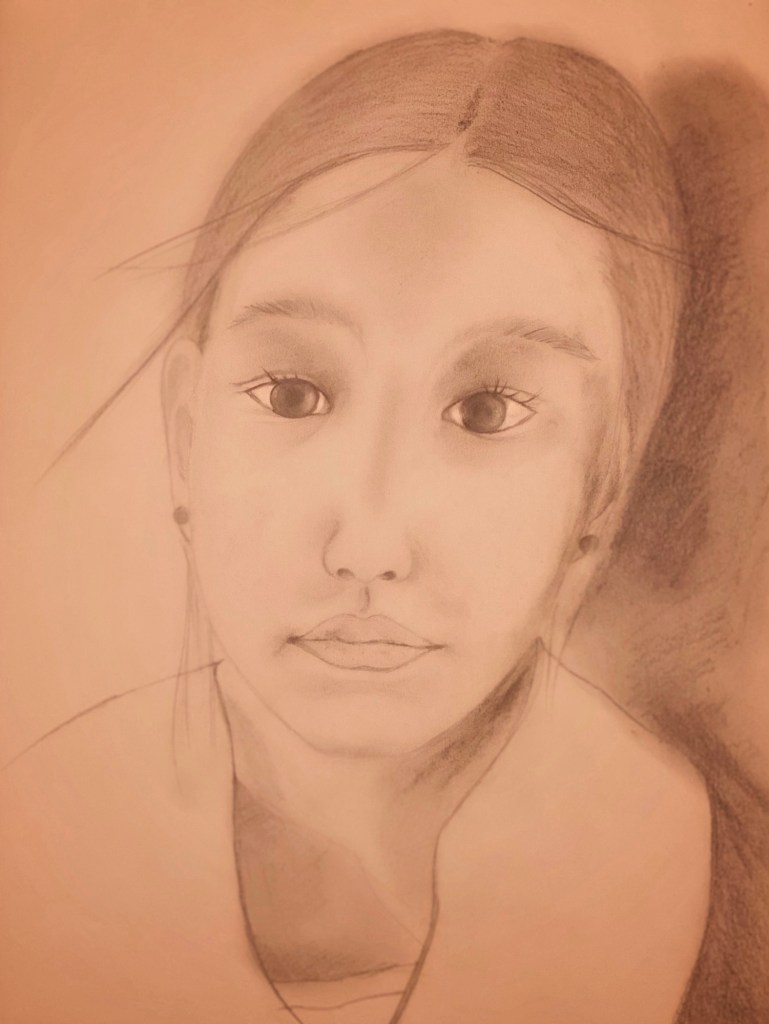


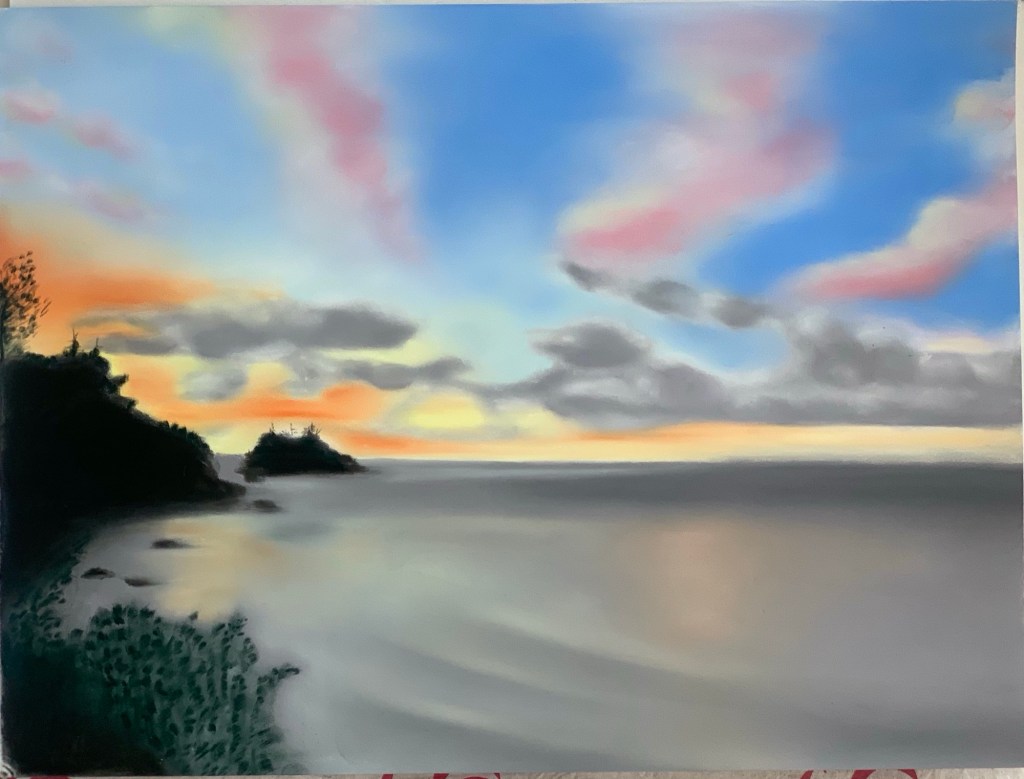

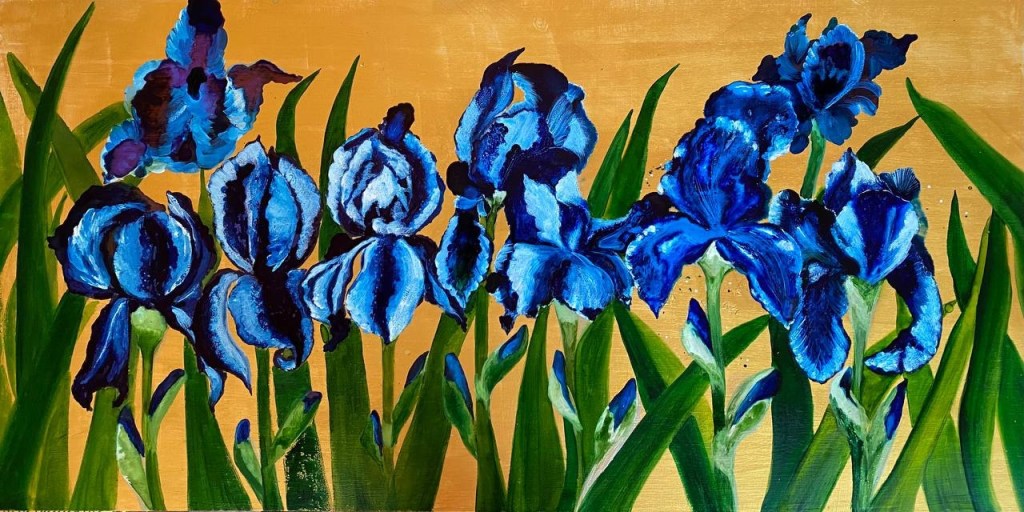


Question: What are the processes, interests, knowledge and experience that you bring to bear in your work?
I ask myself this question daily: What do I want to bring to my canvas for the viewer? What impact can my work have on people? Why do I draw and paint? What is special about my artwork?
After long and permanent reflection, researching other artists, and viewing their artworks, I understand that the creative impulse is universal for everyone engaged in the arts and is based on one common platform—a personal experience of Life as an existential phenomenon, which naturally is very individual for everyone.
I know now that my artistic impulse originates from my sense of being myself in the World. I can describe this sense as deeply spiritual. I celebrate my existence in the World around me in unity with a Creator with a personality.
When I engage in visual art practice, I see that I am not the one who wants to reflect on and channel traumatic/uncomfortable/disturbing life experiences on the canvas, even though I have some heavy ones. Among all my works, I have only one challenging life experience- my father’s depression; and so far, I have done only two works directly addressing social and political issues. The rest of my work is all about the vibration I sense observing the Creator’s creative power around me everywhere I go.
Below are my favourite paintings, which resonate with me so much that I can view them every day. I find them created in a highly elevated state of mind. The paintings below shape my artistic taste and inspiration. Though I haven’t reached the point when I can do a decent figurative painting, I refer to these paintings in terms of their elevated spirit, their overall high vibration, and detailed emotional aesthetics.


Another important aspect in visual art is my inclination to look for a story in any artwork. That is why I appreciate arworks, which invite the viewer to observe the story, specific context and interpretation of certain events, ideas and concepts.
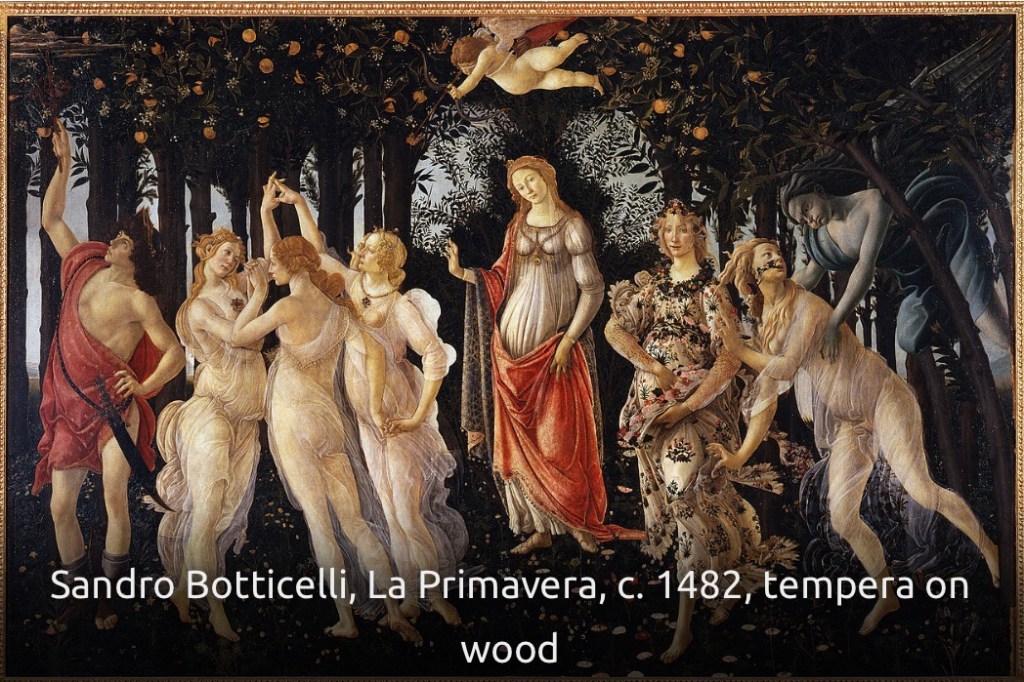


Another idea in my world is the Soul’s experience on Earth. I am interested in artworks and artists who reflect on themes beyond mundane, everyday, ordinary life. Their powerful and brave imaginations make me deeply interested in their interpretation of what Life means for a human.


Question: What questions, propositions and ideas are contained within or presented by your work? How do you feel this influences or informs what you do?
I paint plants—flowers, trees, and greenery—because I see them as one of the most sensual manifestations of the Creator’s aesthetics: I am deeply attracted by their colours, shapes, structure, and versatility. Flowers are a pure, highly elevated positive Creator’s emotion, and I humbly try to pass a tiny fraction of it onto my canvas.
The main idea behind my perception of the world, reflected in my artworks, is that God is a Persona. God has a personality, and we can have profound, fulfilling and direct contact with Him/Her. The works of Dr. Stephen Mayer, which discussed the scientific concept of intelligent design, and an ancient text and philosophy of Bhagavadgita profoundly influenced me. These ideas interest me in Hindu and European iconography and Japanese traditional painting artworks and practice since there is a substantial spiritual component. I have yet to produce any iconographic artwork because I needed to sharpen my technical skills first. This kind of work is part of my plans. I find myself exposed to absorbing quite different visual art traditions and practices across the globe: from traditional Japanese painting to Hindu iconography and Vedic philosophy to Central Asian nomads’ heritage and Roman art.
Question: Describe these relationships if you work across disciplines, i.e., painting/drawing, sculpture/performance, etc. What does the interaction of these areas of activity bring to your working process?
I am thinking about installations where I could use Sanscrit mantras chanting. I also think that I would love to collaborate with other artists on installations because I like to work in a team, and when we are joined, creativity might be powerful.
Group B: Experiments.
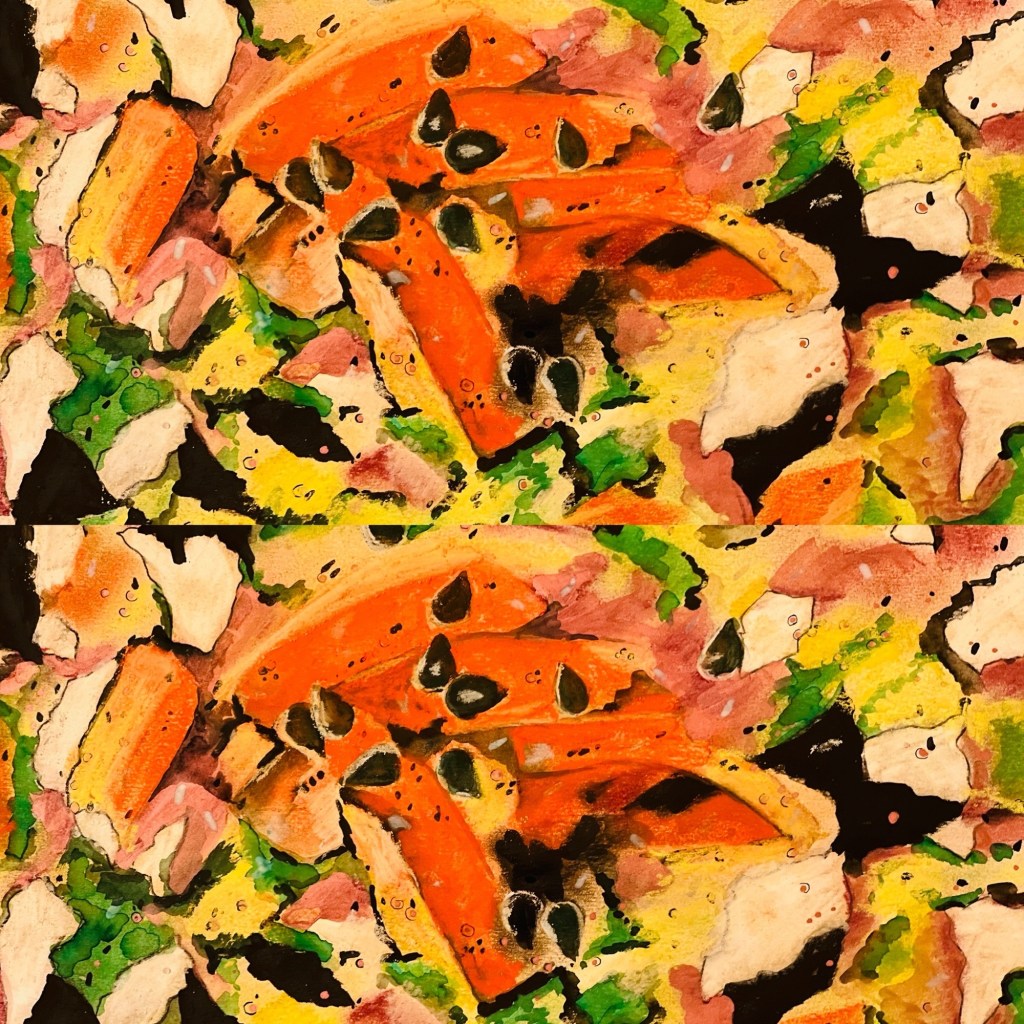

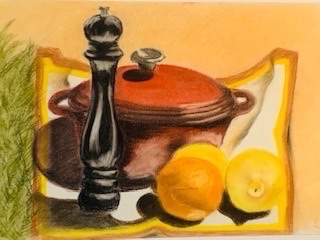
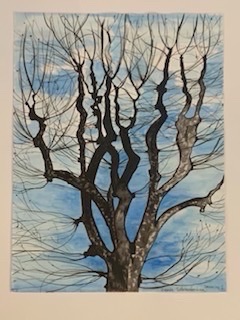


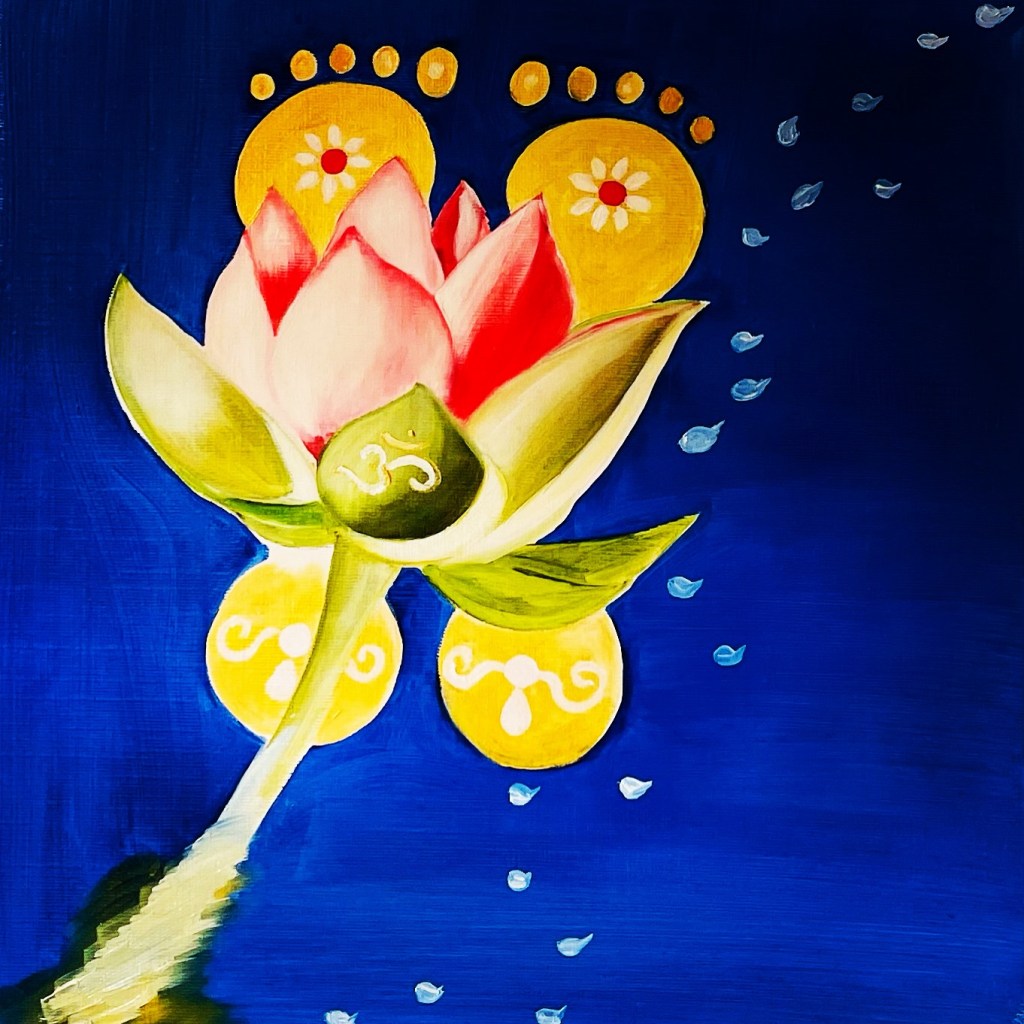


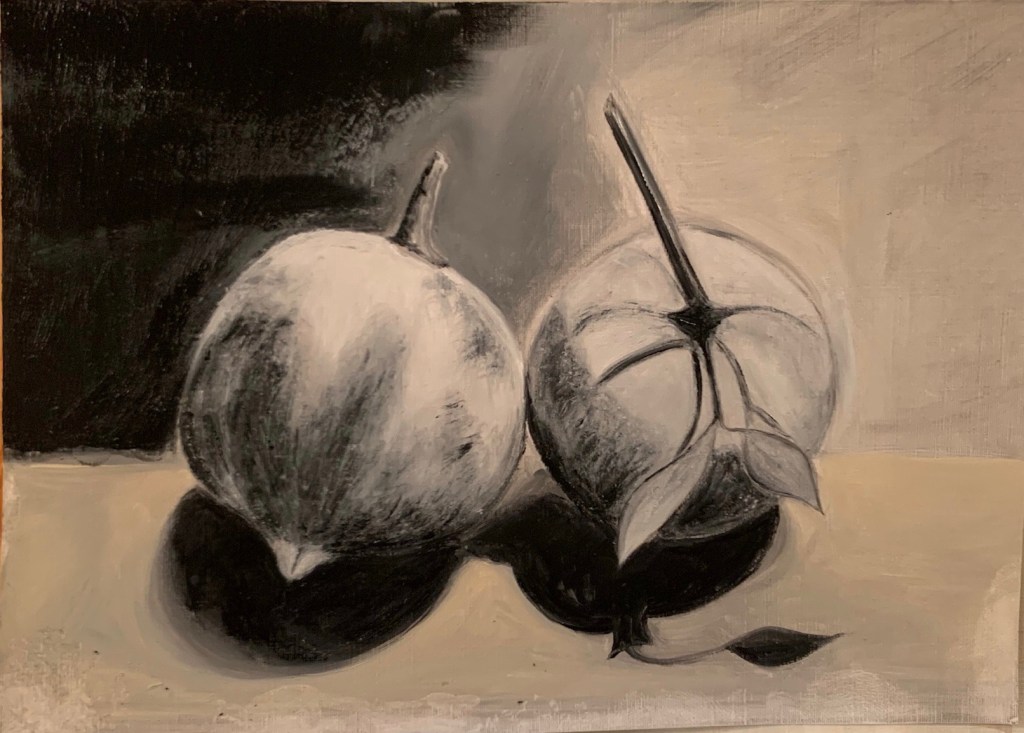

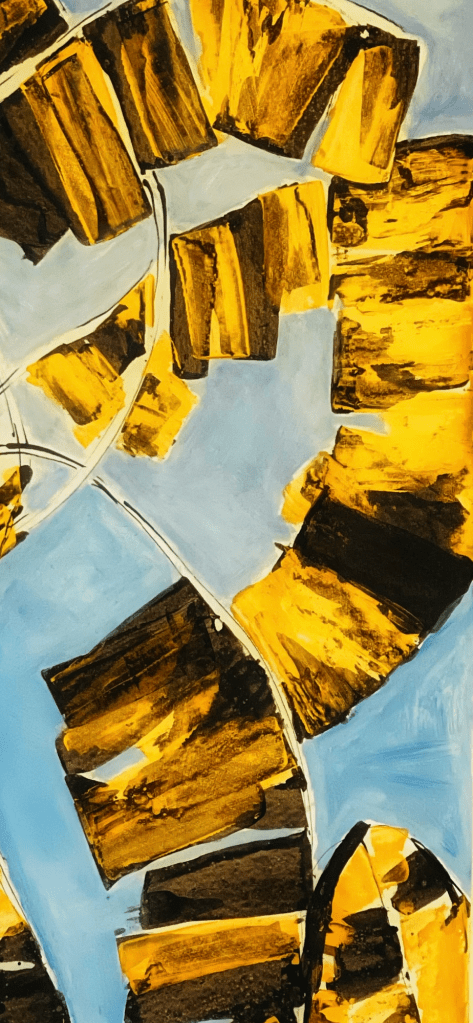
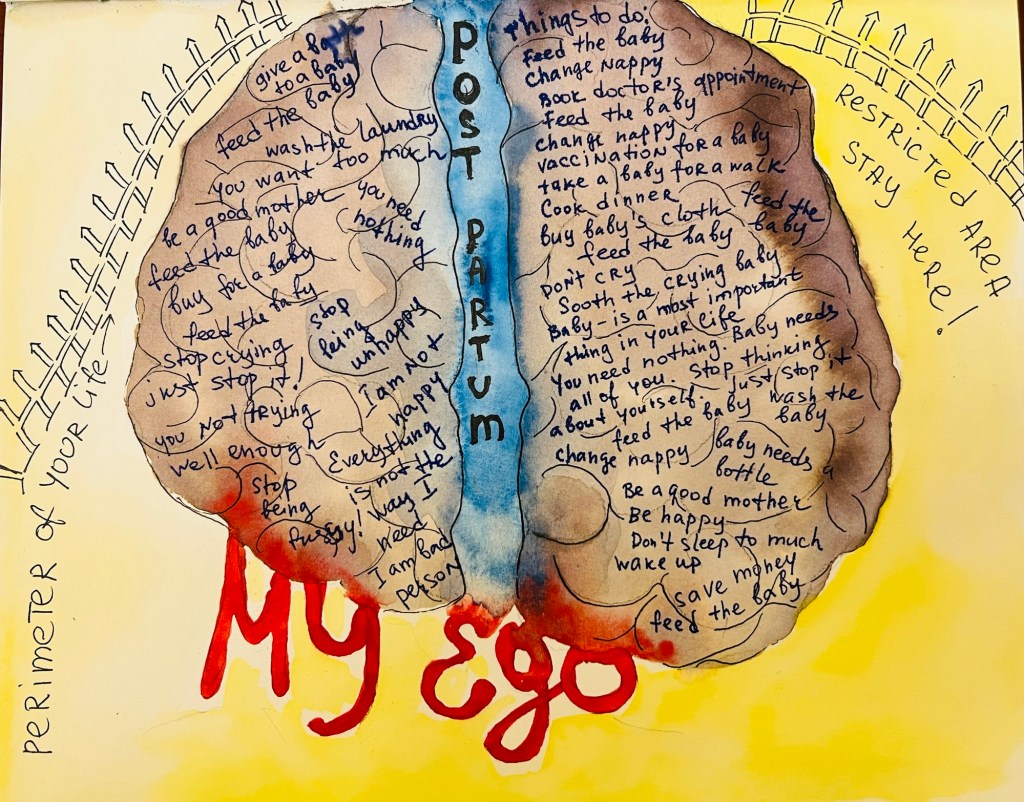

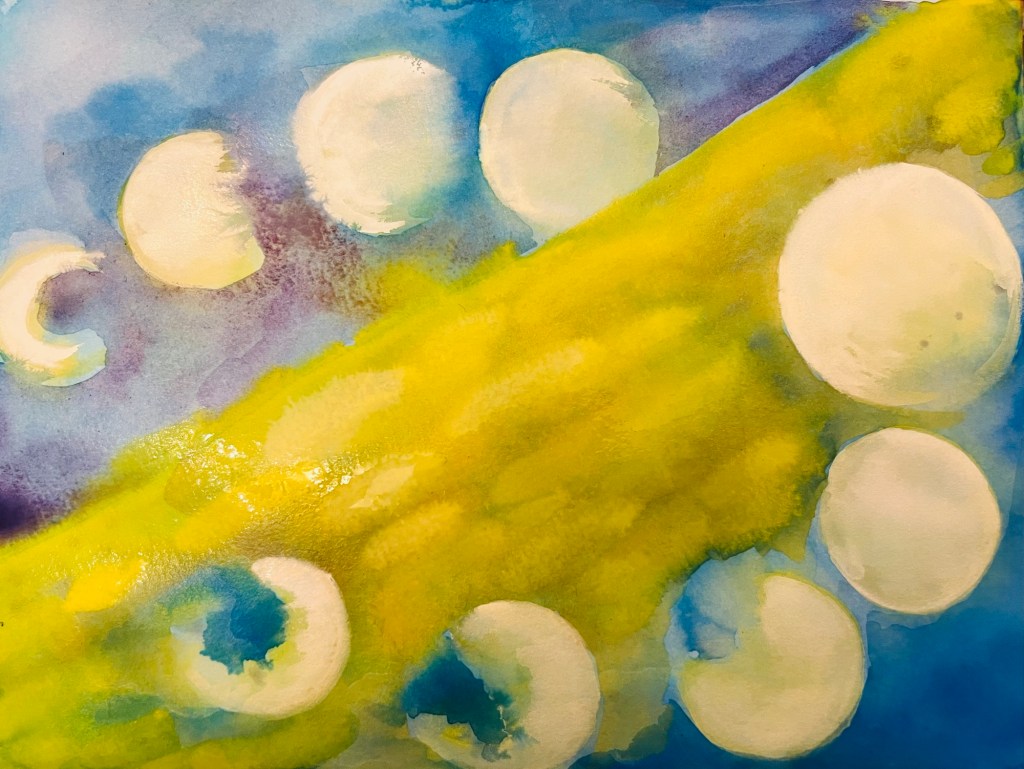


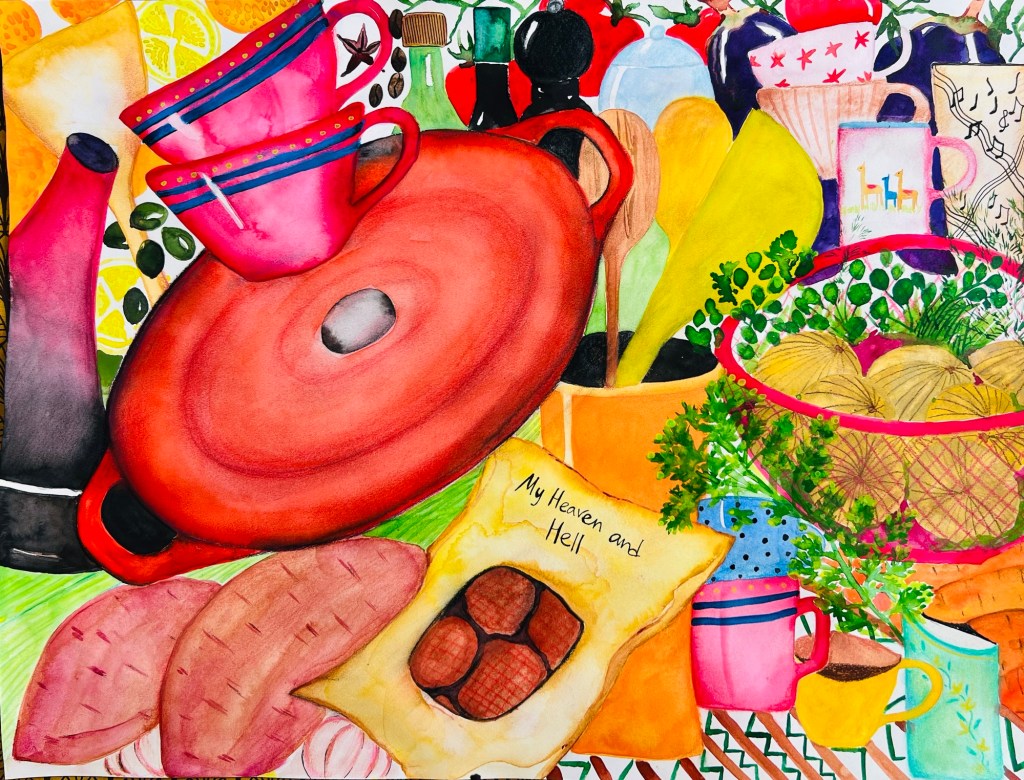
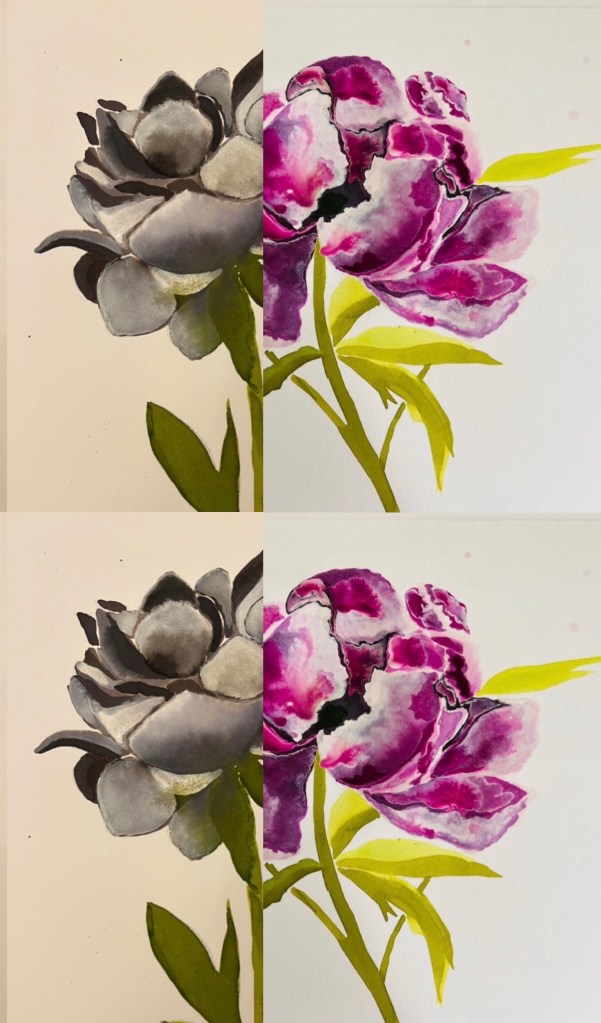
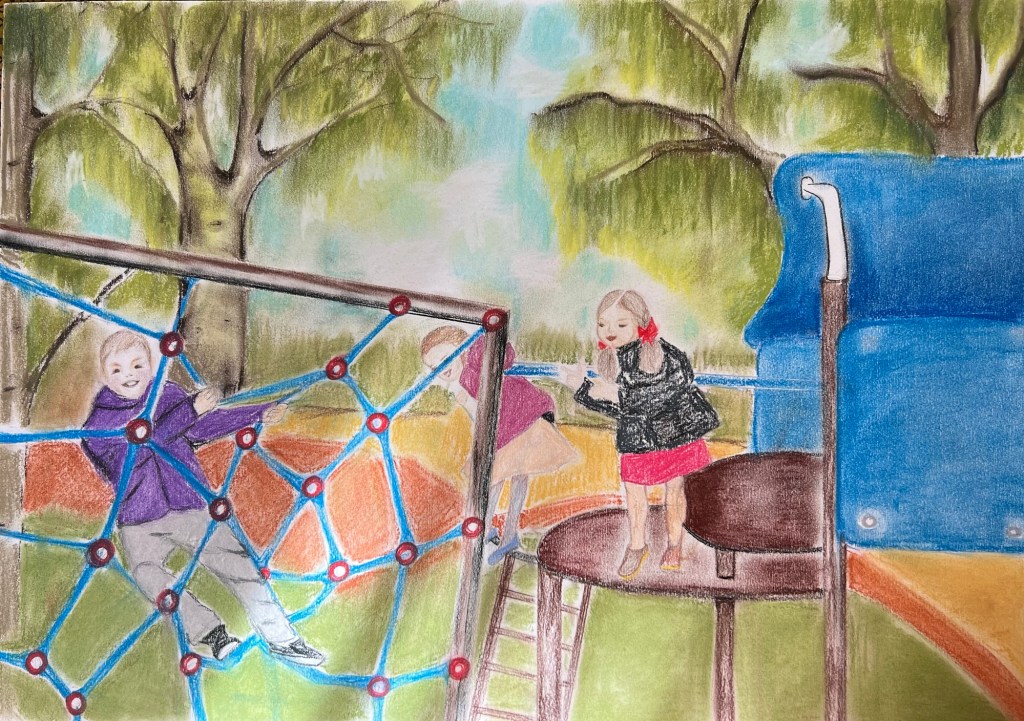




This group of paintings includes works with quite different stories behind each. They all have an open end, they are unfinished, and they contain just a beginning of the story, let’s say.
The “Sun Dissolving a Plant” and the “Moon Walk” are semi-abstract works; out of all my abstract and semi-abstract works, these ones have potential for further development because the outcome of the new technique I tried appeared not bad. I used a painting knife to work with inks on paper for the plant drawing. I find the final texture interesting, which looks great on a large-sized surface. The Moon in the “Moon Walk” is my first more or less good trail of painting the celestial bodies, which are quite different from plants but still enigmatic as they are. The “Qazaq Madonna” was my experiment in symbolic painting with a ciphered narrative about the main features of my ethnicity and the history of my people. Symbolism and ornaments are other subjects of interest to me, and I will develop this theme in my works. This is a sketch; many details, especially the figure, must be improved. I am not strong with figurative drawing. The woman looks very pale, some unfinished, while I wanted to accentuate the snow-white head scarf. I was thinking about making the head scarf from fabric. In this work, I am happy with how I put the narrative of my people’s story, but I need to improve the central subject – the woman’s figure and portrait. The “Postpartum” is another direction I want to explore and work with. This reflects my love for reading, good sayings, and prominent, meaningful texts. I enjoyed the assignments when we incorporated texts and writing on to the drawing, I see a great deal of possibilities for me to work further. The “Childhood’ was unexpectedly complimented by my Tutor regarding how boldly I work with green colour. This drawing is absolutely different from my usual practice, so I value it and don’t want to walk away from this style. This painting is very emotional; I painted it without any plan, being loose and immersed in my childhood memories. I liked the experience, and I think I must work more in the same meditative manner.
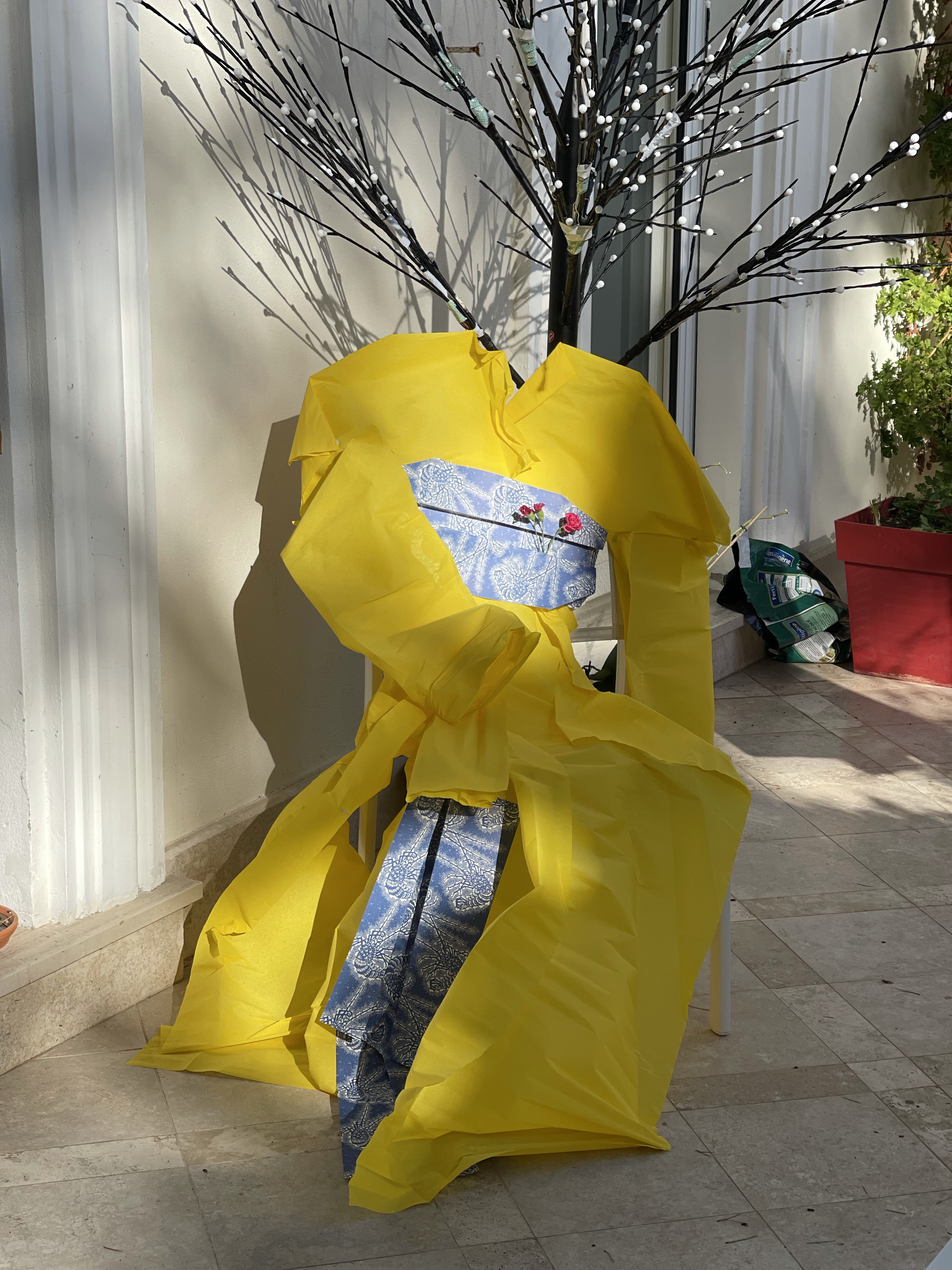
I have included some of my installation works with ready-made objects to show my potential and interest in conceptual art. For example, the Untitled with belts is a composition that I found in the drawer—I even didn’t touch it—as well as in The Morning Story. I like the idea of catching a moment when the artsy statement is made subconsciously and unintentionally when my job as an artist is to notice it and expose it to viewers’ attention.
 JeanArt