Research Task: Programmed Drawing.
Below is my research and reflection on Roman Verostco (1929-), “The Magic Hand of Chance”, presented by the Minneapolis College of Art and Design in 2014, and for interviews with Verostco. We are asked to compare Verostco’s drawing methods with Nick Laessing (1973-) who uses natural and mechanical forces to power his mechanical devices to produce drawings.
Roman Verostco is an American Visual artist famous with his algorithmic art.He develops a software, which controls a drawing mechanical device such as pen plotter. The plotter draws primarily with ink on surface according to the algorithm in the software . Versotco also attached Chinese calligraphy brushes to the mechanical arm to obtain some additional visual effects. He is one of the pioneers of computer generated art. Below are two of his artworks ( from left to right). After I read about this artists I thought that his artistic philosophy resonates with Clement Greenberg’s concept of art when any art should be done “for arts sake” and free from any idea behind it, and be about only its pure essence which are lines, shape and colour. Indeed, you can find Verostco’s artist statement on his website, where he explains: “My algorithmic work… influenced by the work and writings of the pioneers like Malevich and Mondrian. My current work continues the same quest for “pure form” that seduced early 20th century purists”.
Prairie Spring, (h3c), Roman Verostco, 2010, plotter drawing, ink on paper, image via http://www.artsy.net;

“Cyber Flowers”,Roman Verostco, 2000-2003, computer greeted drawing, image via http://www.dda.compart.bremen.de [accessed on July 18th 2023];

Nick Laessing (1973-) is a British artists and PhD researcher Slade School of Art, UCL well known for his installation and visual representation of music. He is interested in exploring his ideas about art technology and current ecological challenges, working in this interdisciplinary area. The art curator Jan Jelinek well describes Nick Laessing’s technique: “The works presented by Nick Laessing show three different techniques for visualizing sound: the representation of sound waves with collodion powder or watercolor paste, of two tuning forks in perfect harmony with a laser beam, and finally, the recording of a musical harmony in the oscillations of the harmonograph. Common to them all is that there is no direct contact from the artist on the respective medium. By constructing the apparatuses, he only creates the conditions for the development of the works.” (https://artmap.com/ceaac/exhibition/melody-always-the-art-of-others-2011).
I find a difference between Verostco and Laessing in their approach to the phenomena of of visual art. Verostco still creates the codes, the algorithms and considers the plotter’s drawing arm as an extension of his own arm. When he writes the algorithm he fully understands what he is doing and have a very clear expectations about the outcome on paper, since any algorithm is a set of commands. In this sense he practices art as any other traditional visual artist, though he is using computer’s help and the plotter to brings his drawings on paper. Nick Laessing, to me, is more a researcher. He creates the way how to visualise the sound and he is obviously is curious about how the sound waves will visually reveal themselves on paper as lines. Thus, he is a more a scientist, rather than a creator.
Bibliography: Roman Verostko, The Magic Hand of Chance, 1982
Video is a record of 2 cycles generated from an endless series that does not repeat itself, online on verostco.com [accessed on July 17th, 2023];”When the Artists Met the Algorist”, interview with Roman Verostco, November 11, 2022, online on www.https://www.rightclicksave.com/article/when-the-artists-met-the-algorist; [accessed on July 17, 2023]; Interview with Nick Laessing, ARTMap.TV, YouTube [accessed on 17, July 2023]; “Melody is always the Art of Others”, Nick Laessing / Ursiula Bogner
Presented by Jan Jelinek 12 Mar-22 may 2011, CEAAC Centre Europeen d’Actions Artistiques Contemporaines, Strasbourg, ArtMap, online on https://artmap.com/ceaac/exhibition/melody-always-the-art-of-others-2011, [accessed on July 17, 2023];
Exercise 3: No Hands.
In this exercise we are asked to produce drawings without using our hands. That was a challenge to come up with the way of producing the drawing without touching it with your hands. Finally I decided to use the power of wind in my living area. Often we have a strong wind, which massively scatters thick pine leaves around my house. I took a paper and a square piece of wood for painting and spread a long drying glue and wood lacquer over the surfaces, leaving them outside for several days to allow the wind throw the pine leaves on them. Below is the result. I didn’t interfere or influenced the process of how the wind “worked” on the surfaces I suggested to it. However, after observing the final result I got inspired to develop them further into the images without touching the surfaces with my brush or pencil, or in any other way with my hands, but using my Applications – the Snapped and the Layout. Below you can find the original work made by the wind and my further developments with using the modern visual image creation tools.
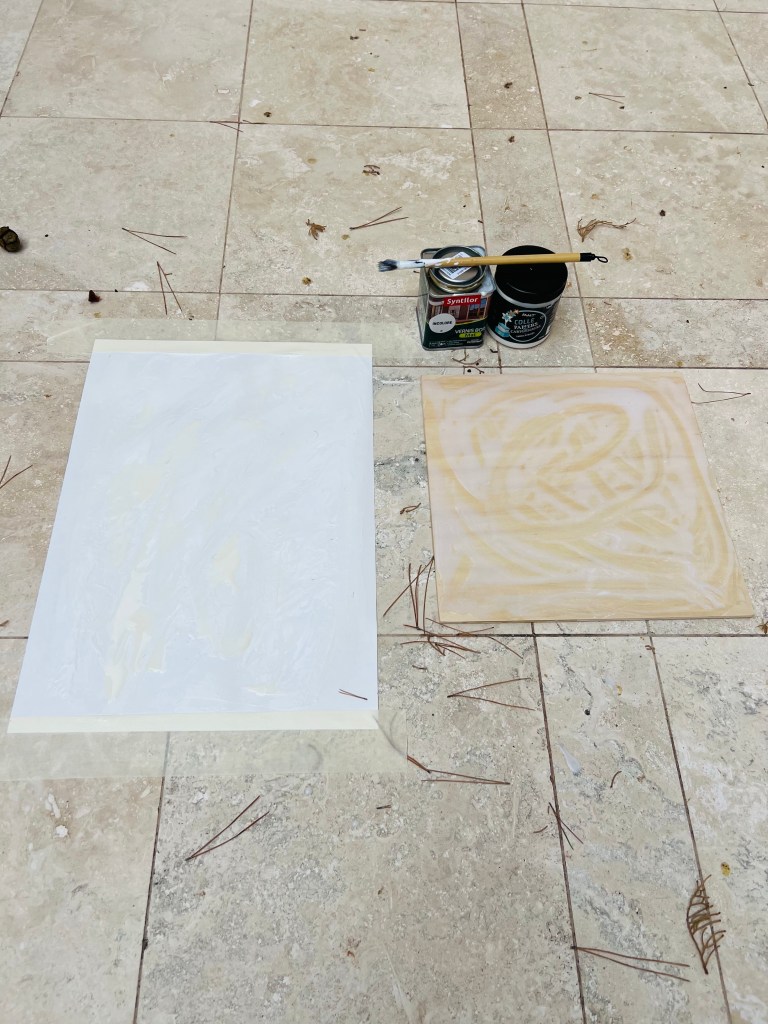


Experimenting with the results of wind work above.


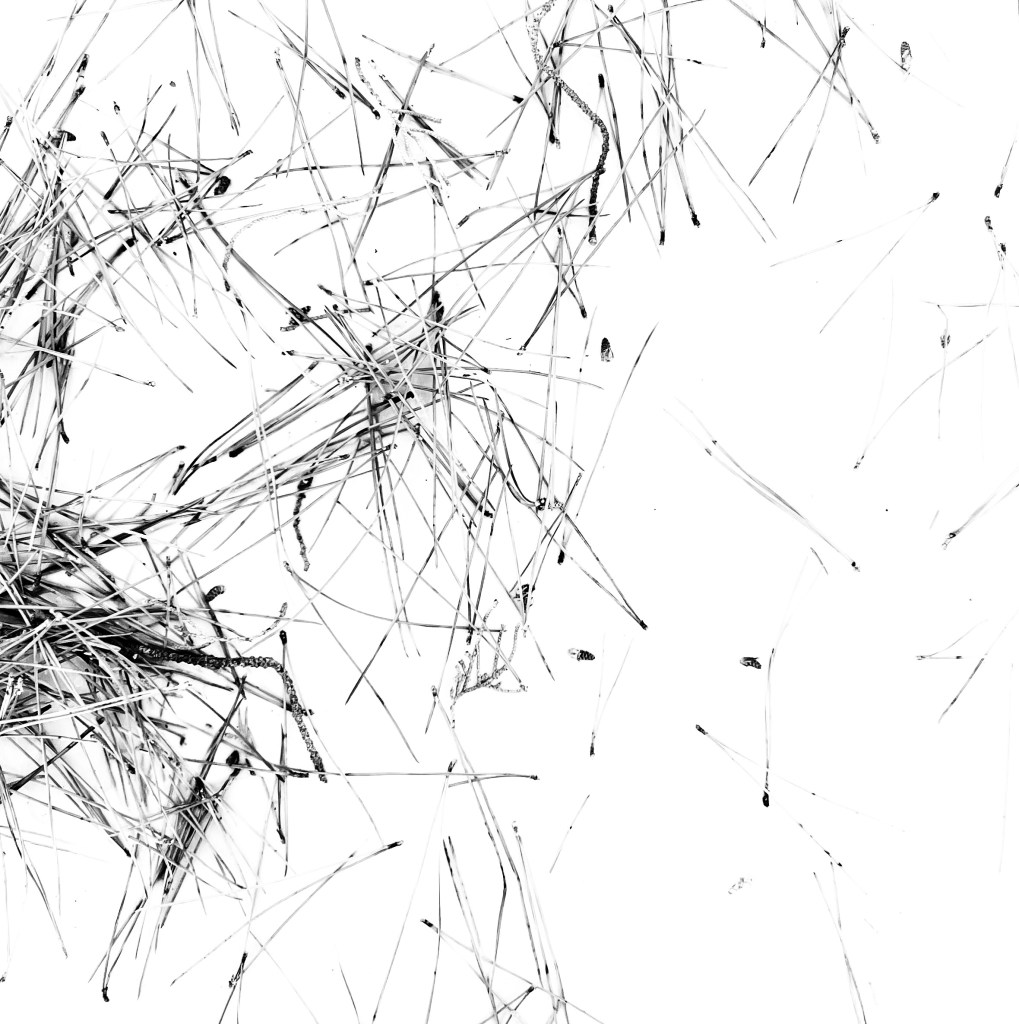


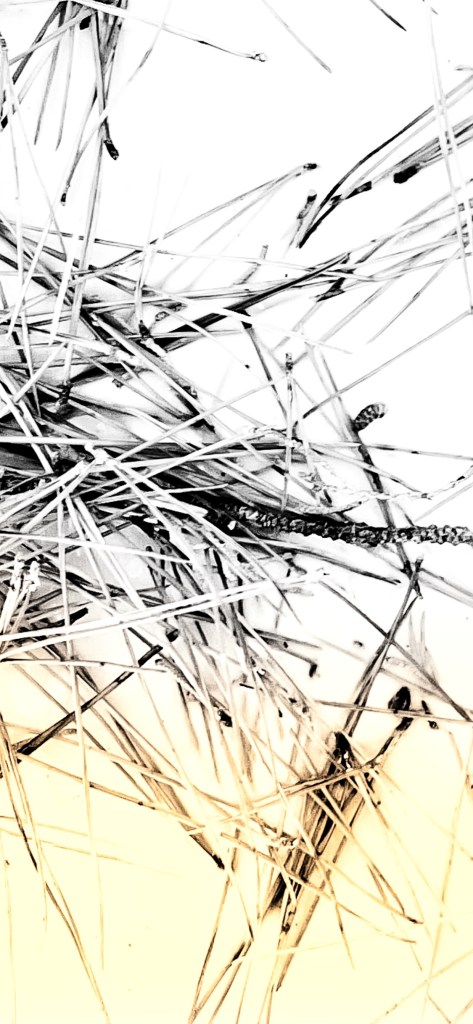

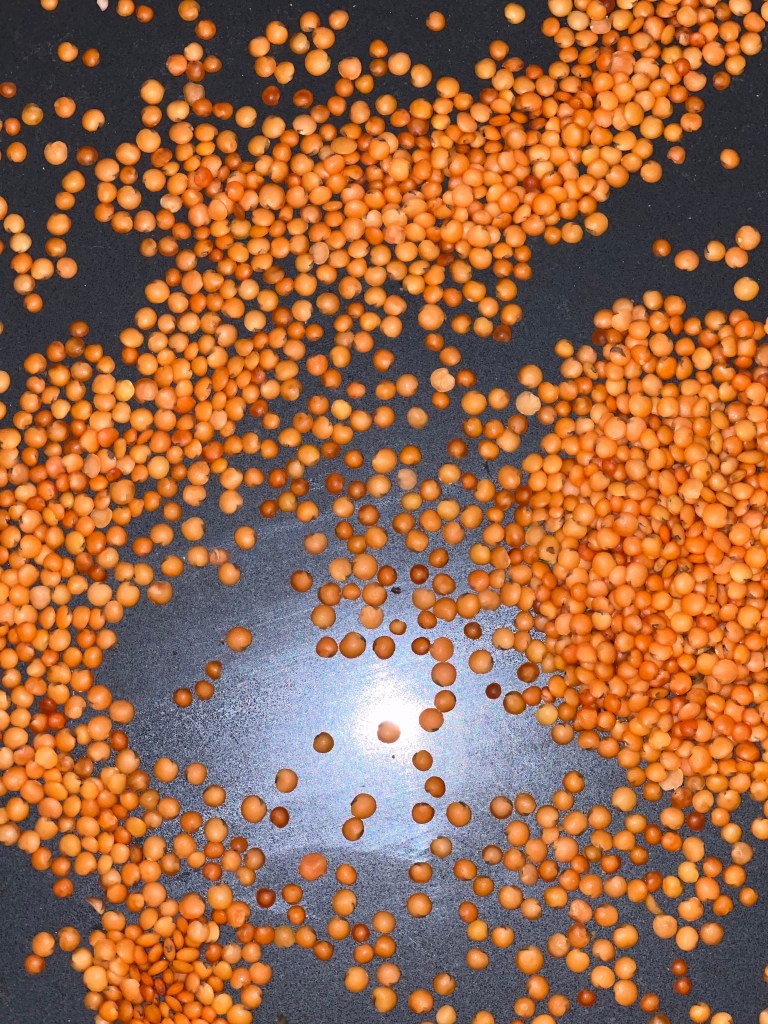
Another engaging outcome for this exercise happened when one day I found a good amount of red lentils scattered all over my granite stone kitchen island. Someone did it and ran away in panic. Thus I didn’t touch the process of accidental scattering and didn’t influence the result. Though I did play with the photo I took it with my SnapeSeed app. Below you can find the outcomes.



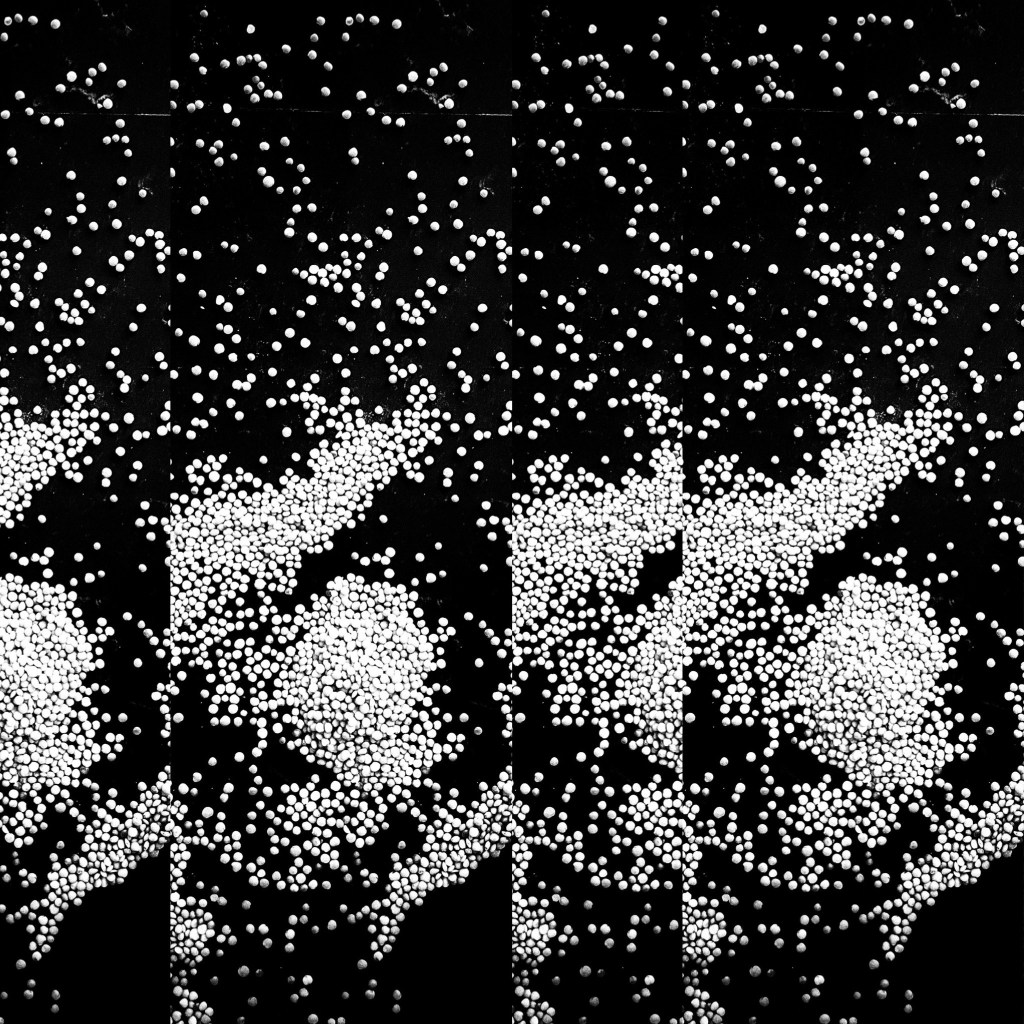
I observed an interesting effect on the black and white photo of the scattered lentils: the lentils don’t look like lentils and it seems they are dispersed as some sort of particles, also somehow the photo gives an impression of perspective, even though that was just a flat granite surface.

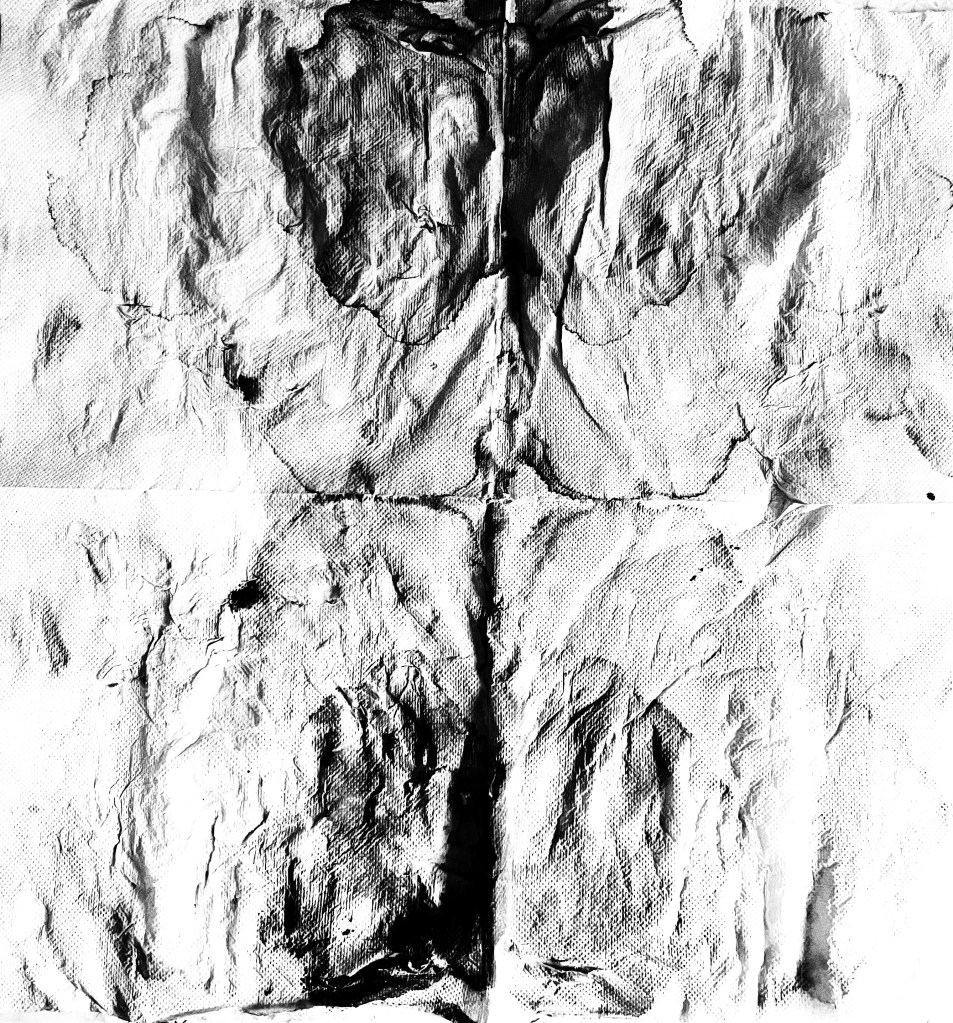
Another “no hands” drawing: a soft tissue napkin. The pattern was “created” by wet brushes, while using the napkin as an absorbing surface during inks and aquarelle drawing.

My reflection on the research topic and the “no hands” exercise.
I think at this point of me, being a visual artist, I am not interested in computer-assisted drawing as itself, making a drawing or painting with a computer as a surrogate of my hands. However, I like to use technology to develop my raw drawings, make collages with them, and try different filters to understand the direction I can work further. I fully recognise that modern digital and computerised technologies enhance creativity and must be used as a tool, the same as we use better quality traditional mediums – paints, inks, tools such as brushes, etc. I see a lot of potential in computerised aid to my artistic pursuits in developing patterns accented artworks. The modern textile production industry has been a great example of computerised art at the largest scale. It is important to note that many artists, when they develop an independent way of drawing with the help of natural forces or mechanical devices, are more focused on research rather than on their own creative ability and skill to bring their creativity onto the canvas. They get inspired by the fact that they don’t control the outcome. This is a different type of creativity; while I like to control my art, I need to be fully connected with the painting surface through my hands. The “no-hands” exercise was engaging, helping me understand how to expand my approach in searching for new, unexpected and unthinkable developments for the artwork. I find using chance -when you don’t control the result as I did with my “wind drawing” an excellent way to obtain a fresh start for anything new in my creative visual production. Though, I am not satisfied with the outcome produced without my participation, so any result obtained in this way will always be a starting point for me to develop to my own artwork.
 JeanArt