
Reading Task: Motion.
Exercise 1: Tracking movement.
We have to produce sketches tracking the movement of the object, what can be anything: a person, animals, transport or something else. We are asked to reflect on: how effectively our drawings convey with the sensation of movement?; were we economical enough with the information we included or did we include too much information; in what way dose the display make a difference to the impression of movement;
Below are my drawings, tracking movement of different objects. I am fascinated with the movement of Time, starts and planets, with the movement of energy in general abstract sense.
We are asked to reflect on our movement tracking drawings: 1) How effectively do they convey the movement? 2)were we economical enough with the information we included or did we include too much information? 3) in what way does the display make a difference to the impression of the movement?
I will reflect on those questions for each of my drawings below.

I worked with inks to track the movement of air and the wind, using the thick brush #4 from Wax Artcompany, which is a Japanese painting brush. I tried to leave airy areas of heavily diluted ink on paper, so the medium spreads freely on the surface, mixing with each other without strong edges. I tried to make light my ink layers moving from left to right, penetrating each other and kind of dissolving into each other, what creates a sense of dynamic. The air is transparent and moves swiftly and freely, so I tried to catch it. I think this drawing is economical or laconic, since there are only two ink pigments and one type of brush work. However, I don’t agree with the second question which presumes that it can be “too much information”, because the movement is a complex phenomena and can contain lots of information, respectively its tracking in drawing may require more details and work, This is evident from my further drawings.
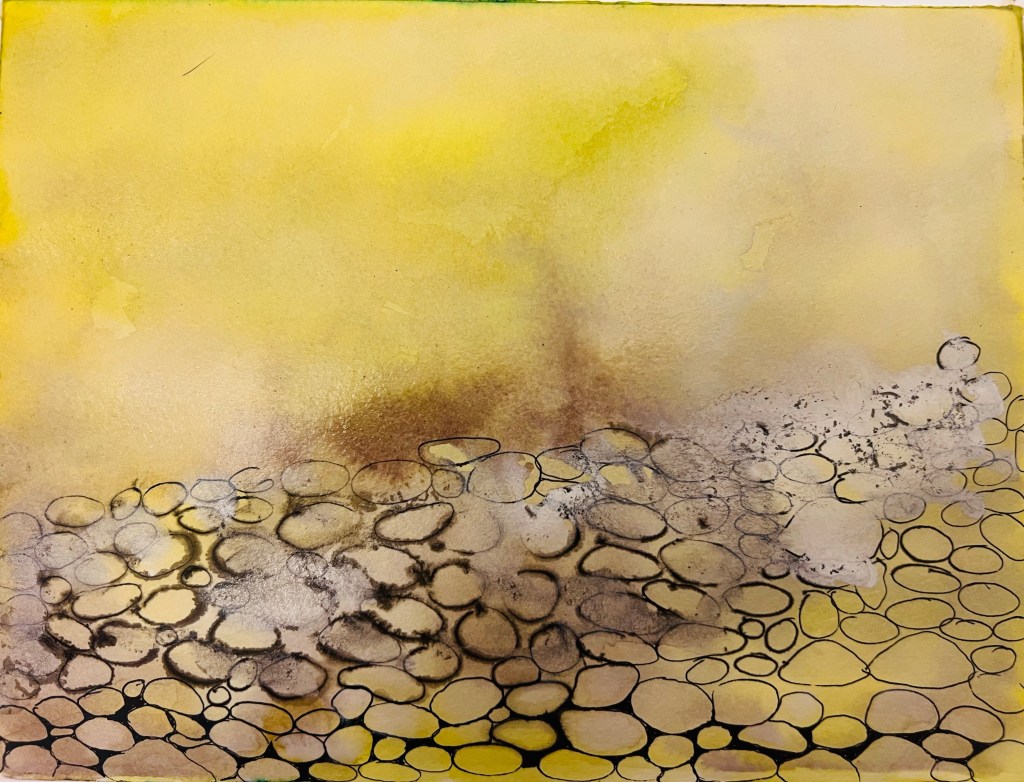
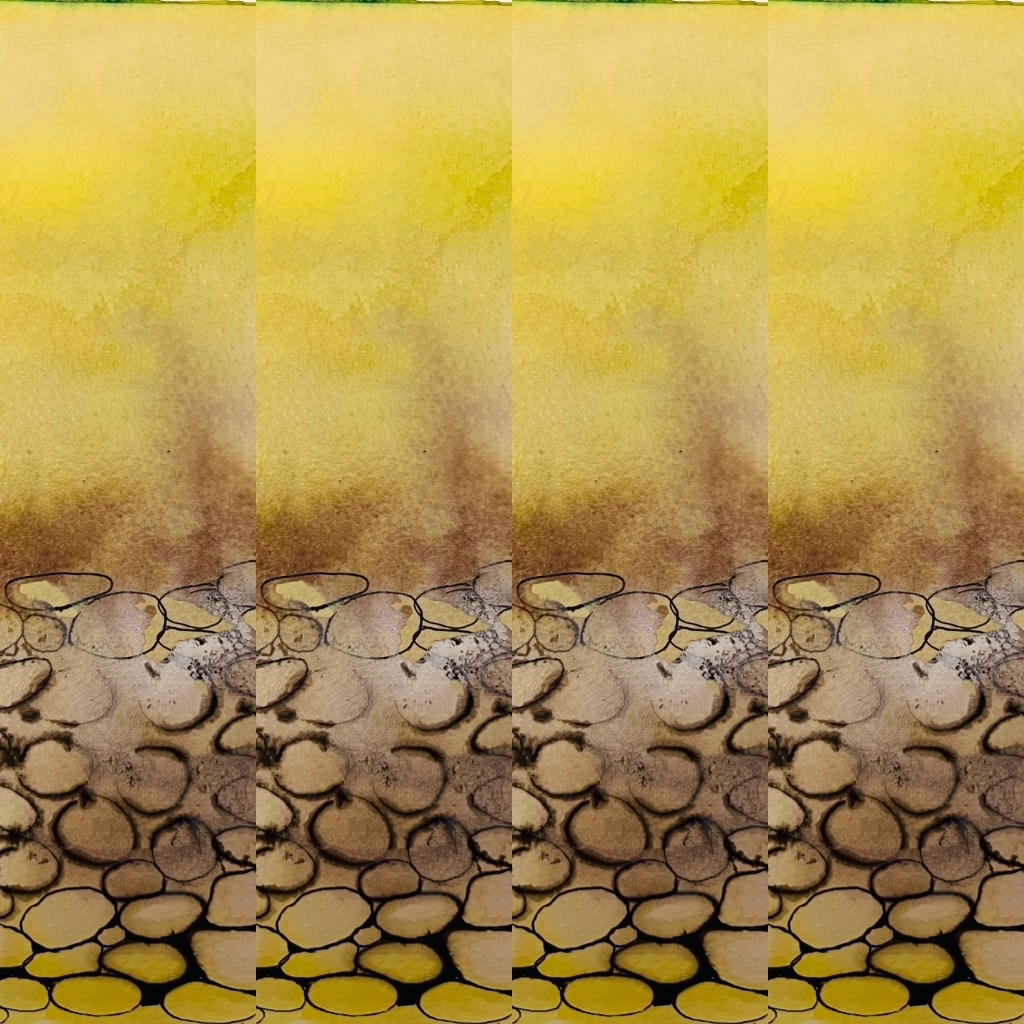
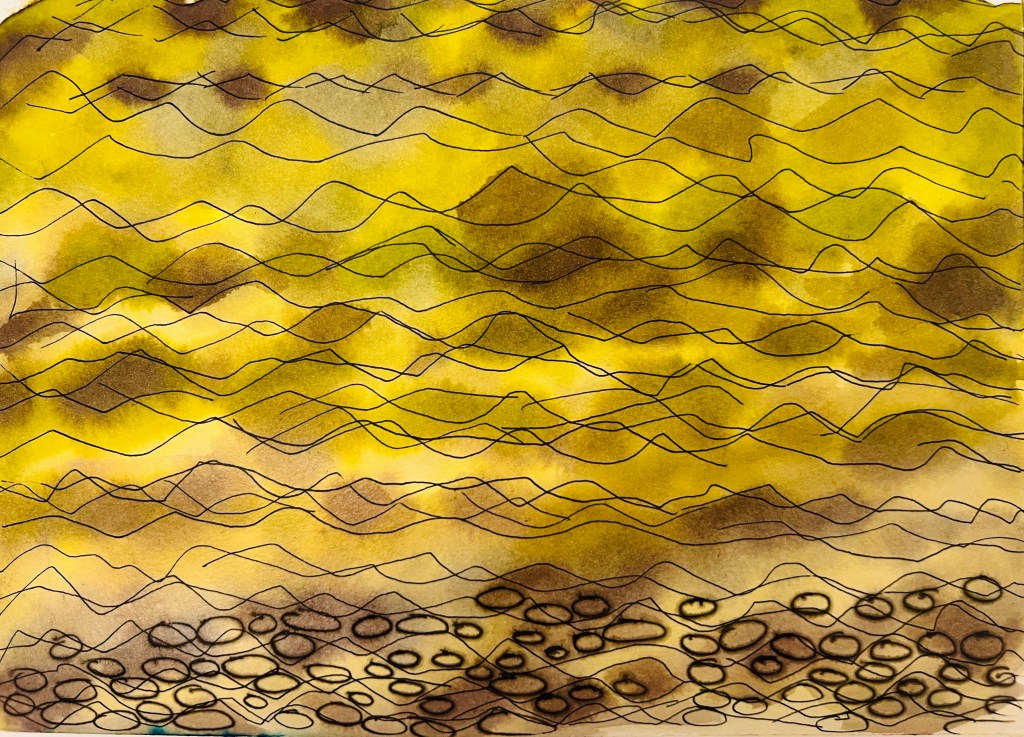
The drawings above and below are about water and pebbles. When I was observing sea water and the pebbles under it, I noticed that because of water’s constant movement you can’t see all the pebbles at once simultaneously. So I made some pebbles clearly visible and some of them – not, applying some white layer on top and working with black ink pen on wet surface to make the edges loose. The drawing below is a further development, an alternative water movement, which I did tracking the small numerous waves of moving water and adding more dark brown pigment ink on the surface to indicate the shadows which appear constantly in different places of the moving water surface. These drawings contain lots of information, because the subject is more complex. If we compare the moving air/wind and the moving water we clearly see that the water is much more complex subject by its nature, it has more material substance to work on.
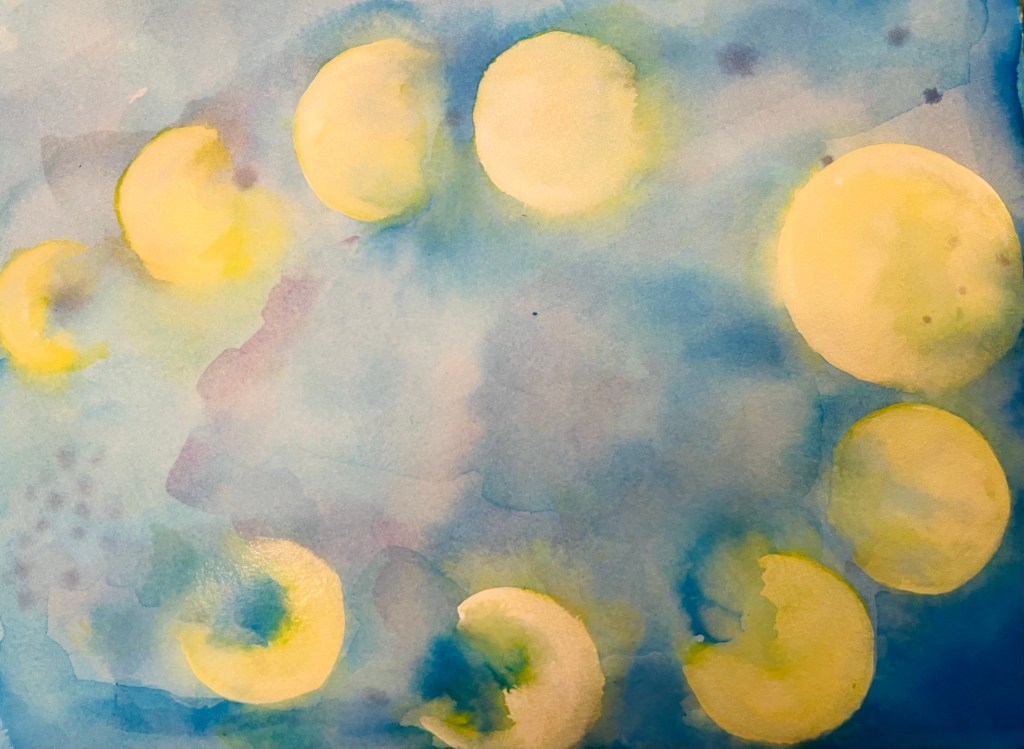
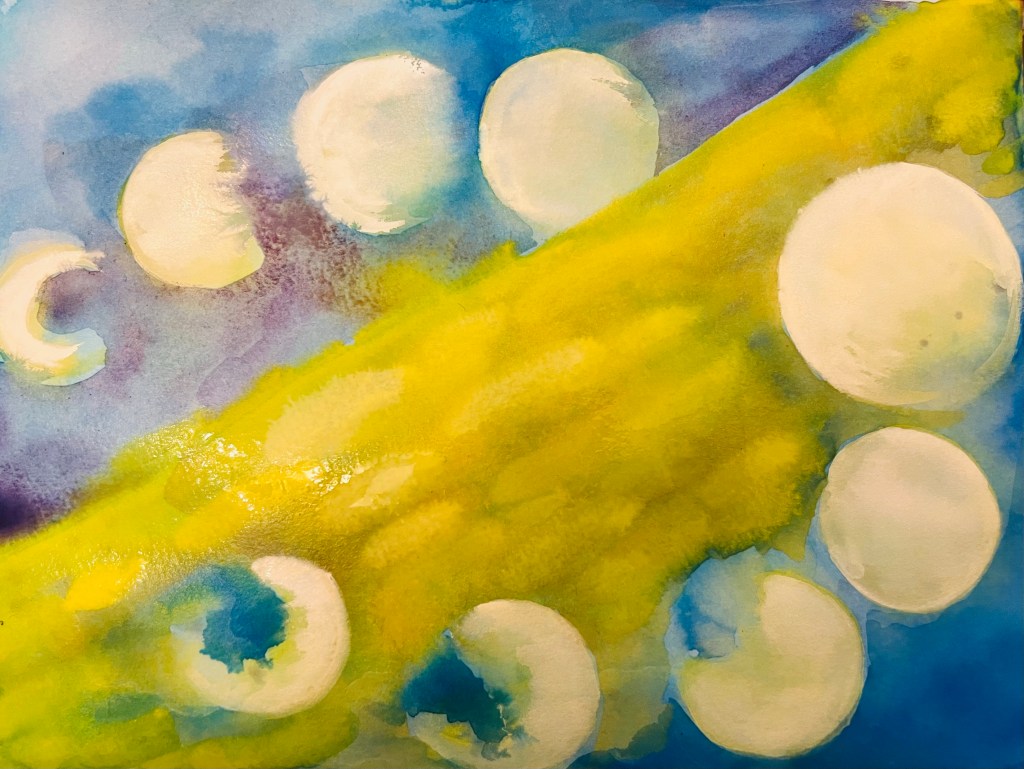
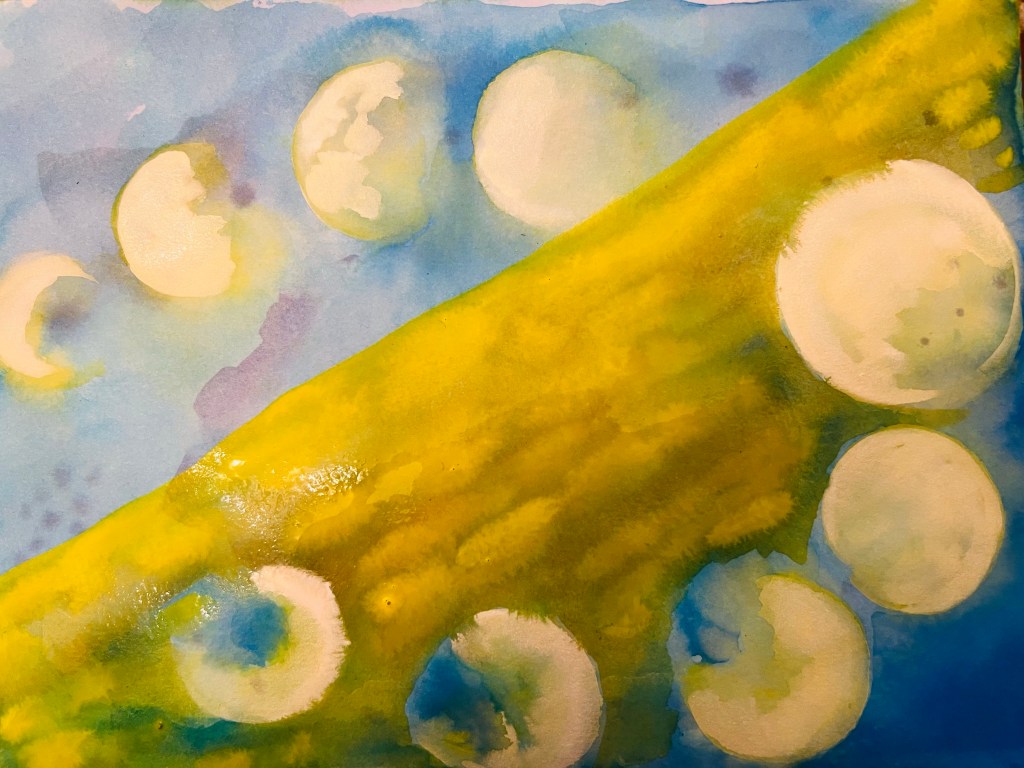
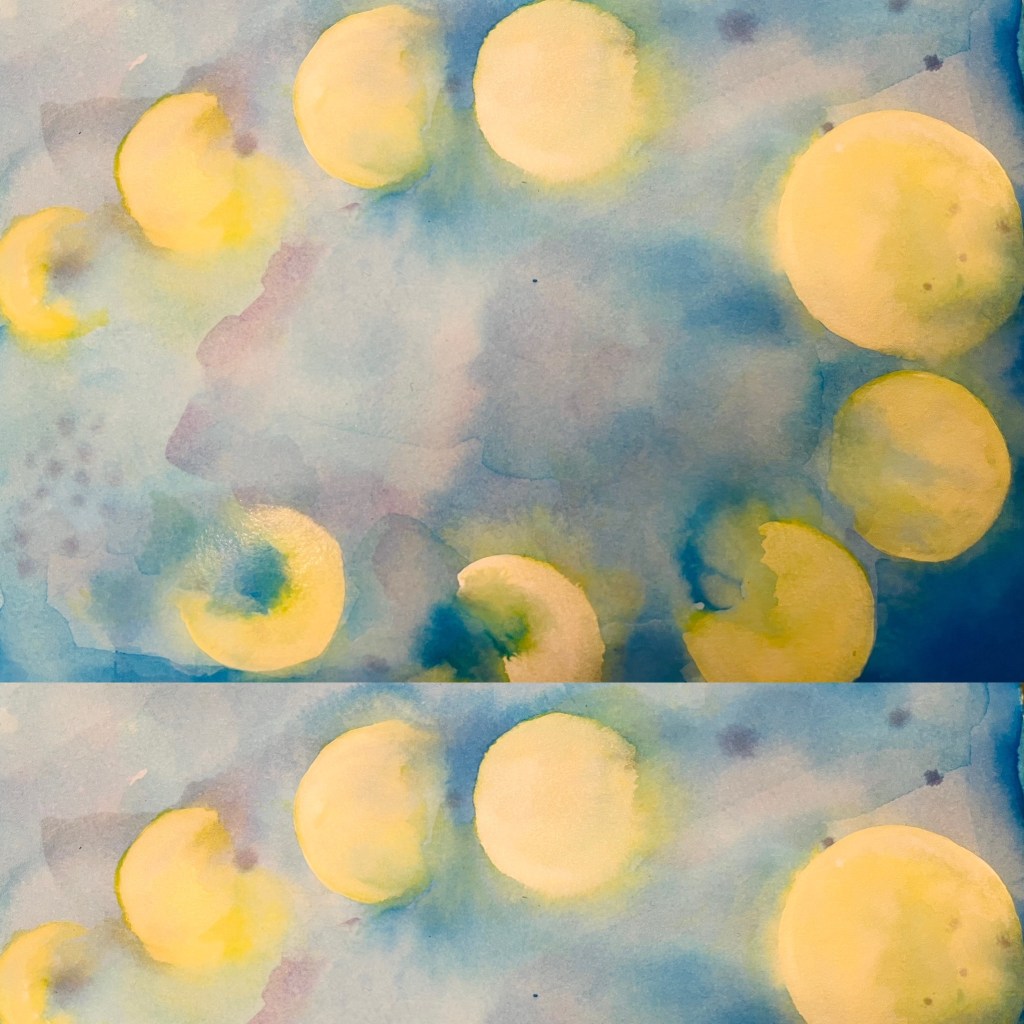
The drawing below is the Moon’s movement. The celestial bodies move all the time and their movement is very dramatic and intriguing. The Moon is a fastest moving object around the Earth, so it is on the constant move. I like this drawing of mine, it does have some hypnotic effect because of the changing Moon images. You can see below a circle of the Moon cycle: the waxing and the waning Moon. Each phase is a totally different Moon.
On the drawing below I added the thick streak of yellow Sun ray. You can see inside this wide ray thick brushstrokes which indicates the movement of cosmic energy, the same is about the overall negative space and the blue background: I made it uneven and complex, to out line the idea of constant change in Cosmos and constant move of powerful cosmic forces. My Moon goes through the Sun beam what also increases the effect of their Cosmic unity they constantly undergo. This drawing also contain s lots of information and I like that. That makes interesting to gaze at the drawing and gives it some visual power.
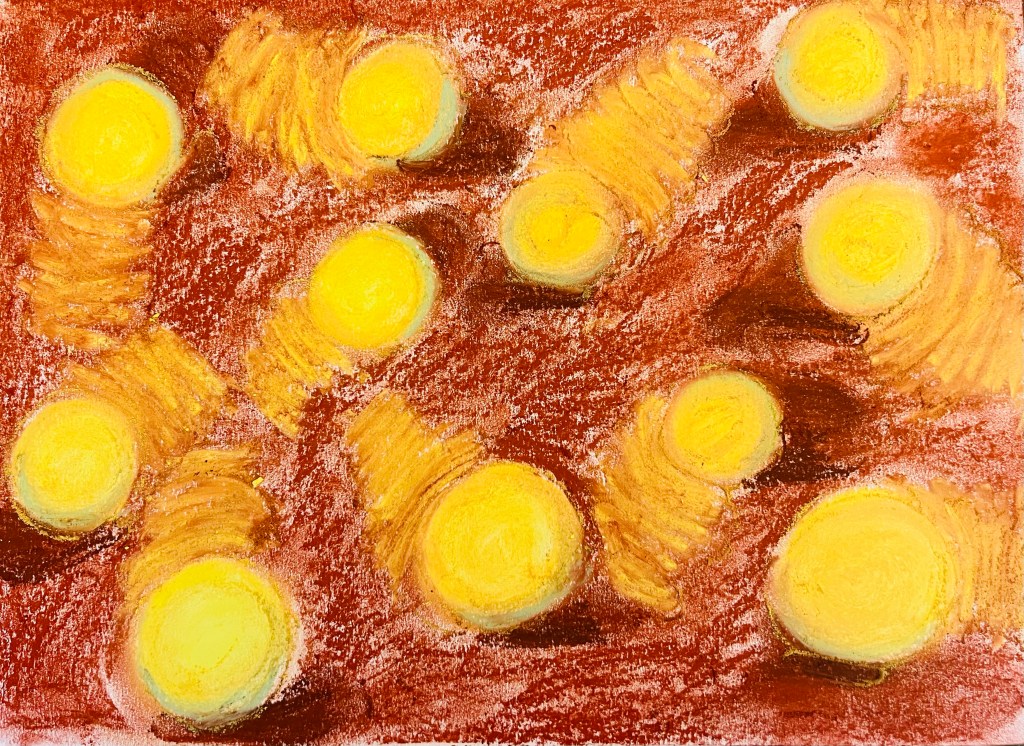
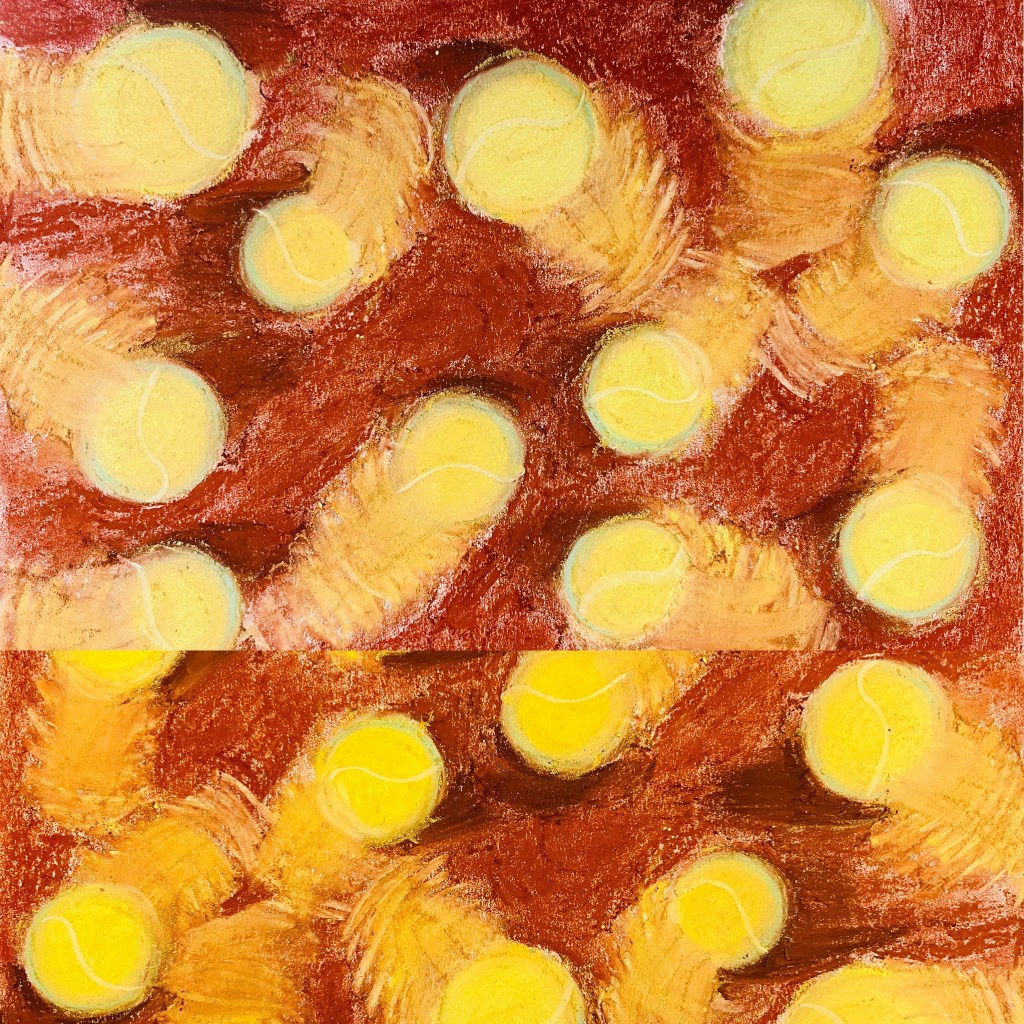
I have been always super intrigued by the movement of the tennis ball during the game. So I tried to study its motion. Tennis balls’ moves on the tennis court are chaotic and random. I tried to convey the sensation of tennis ball’s movement through drawing yellow “tales” in thick streaks behind each ball and shadowing the spot of their impact on the tennis court’s surface. I worked with soft pastel sticks which contain prefect colour for the clay tennis court surface and the bright yellow tennis ball.
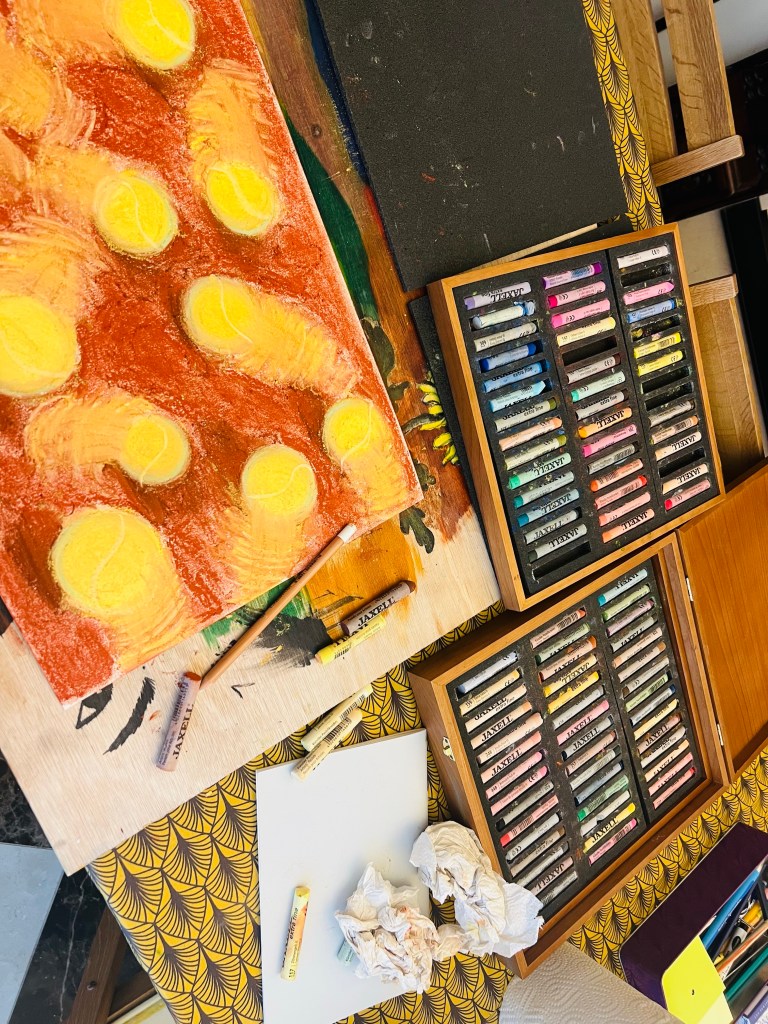
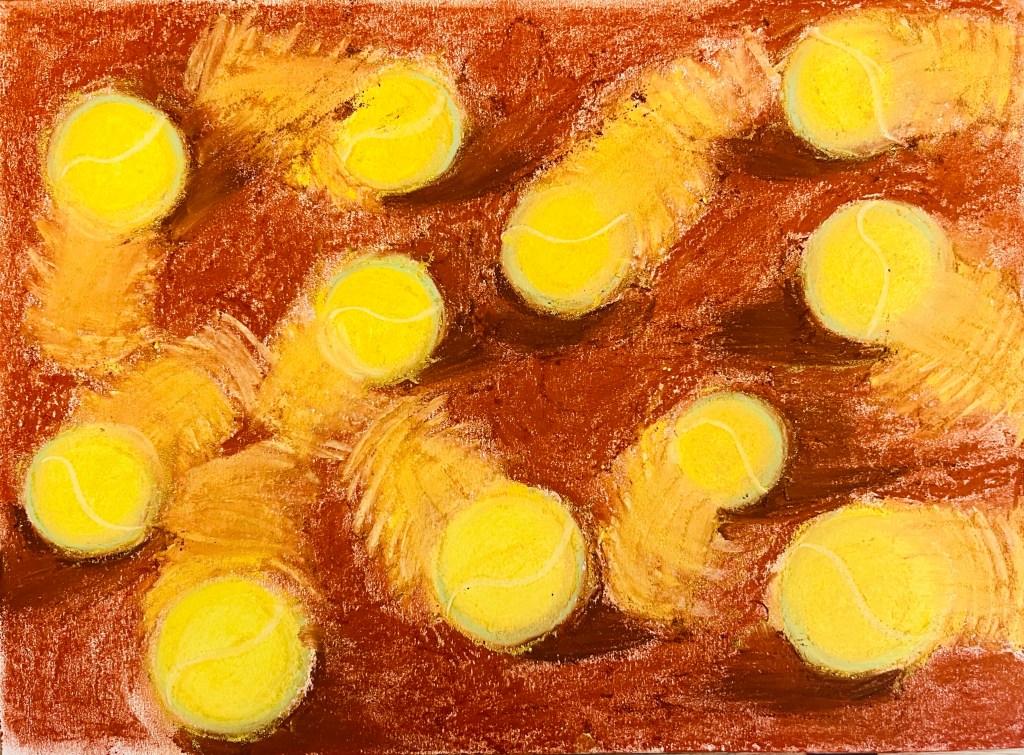
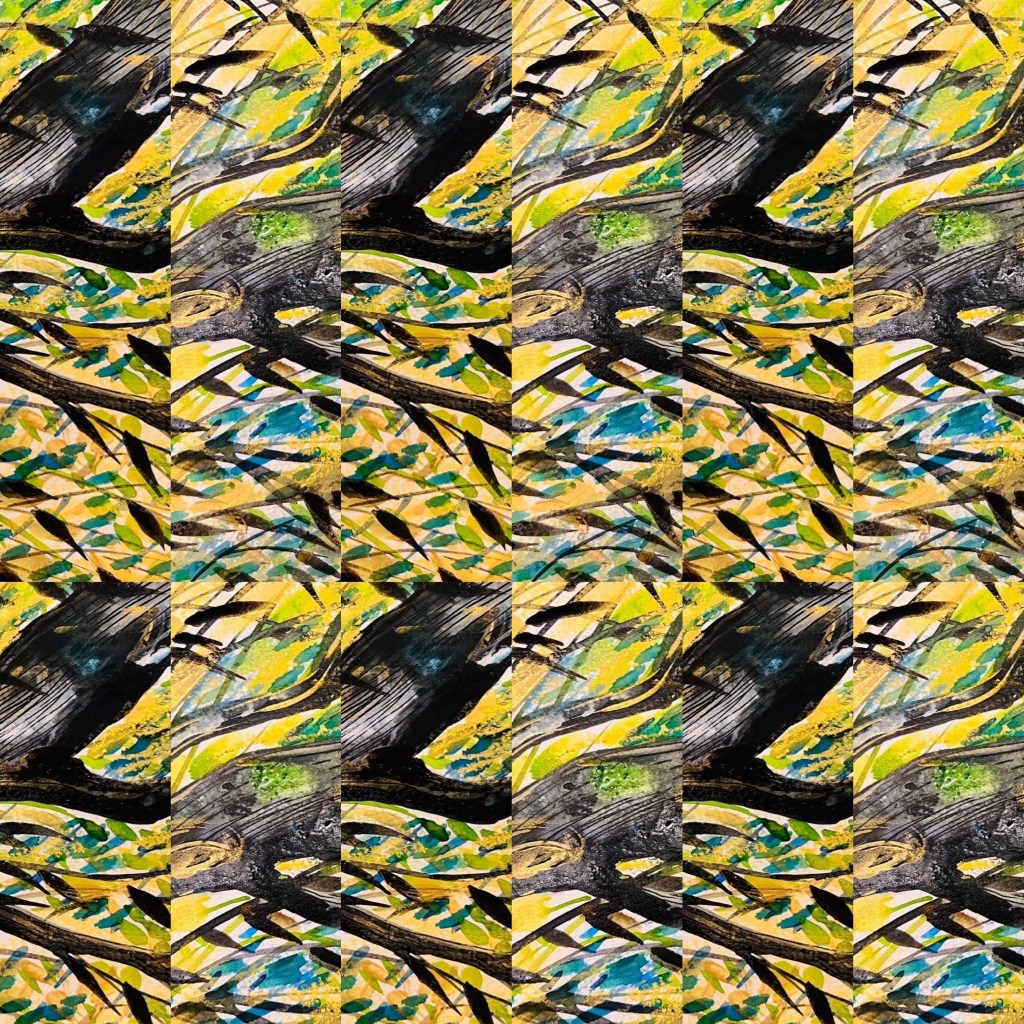
This drawing is an interesting material for collaging. The collage below looks funny and interesting, the repetition of the original image enhances the sensation of movement.
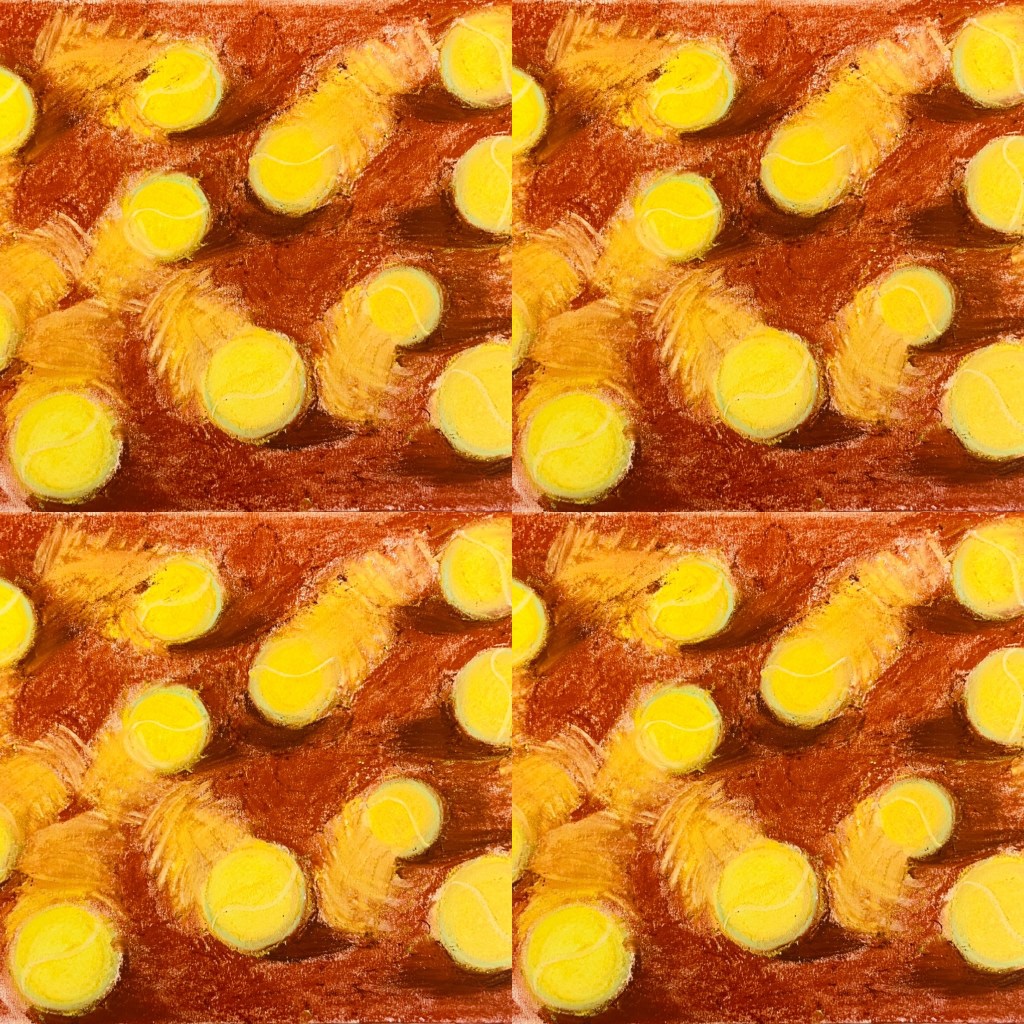
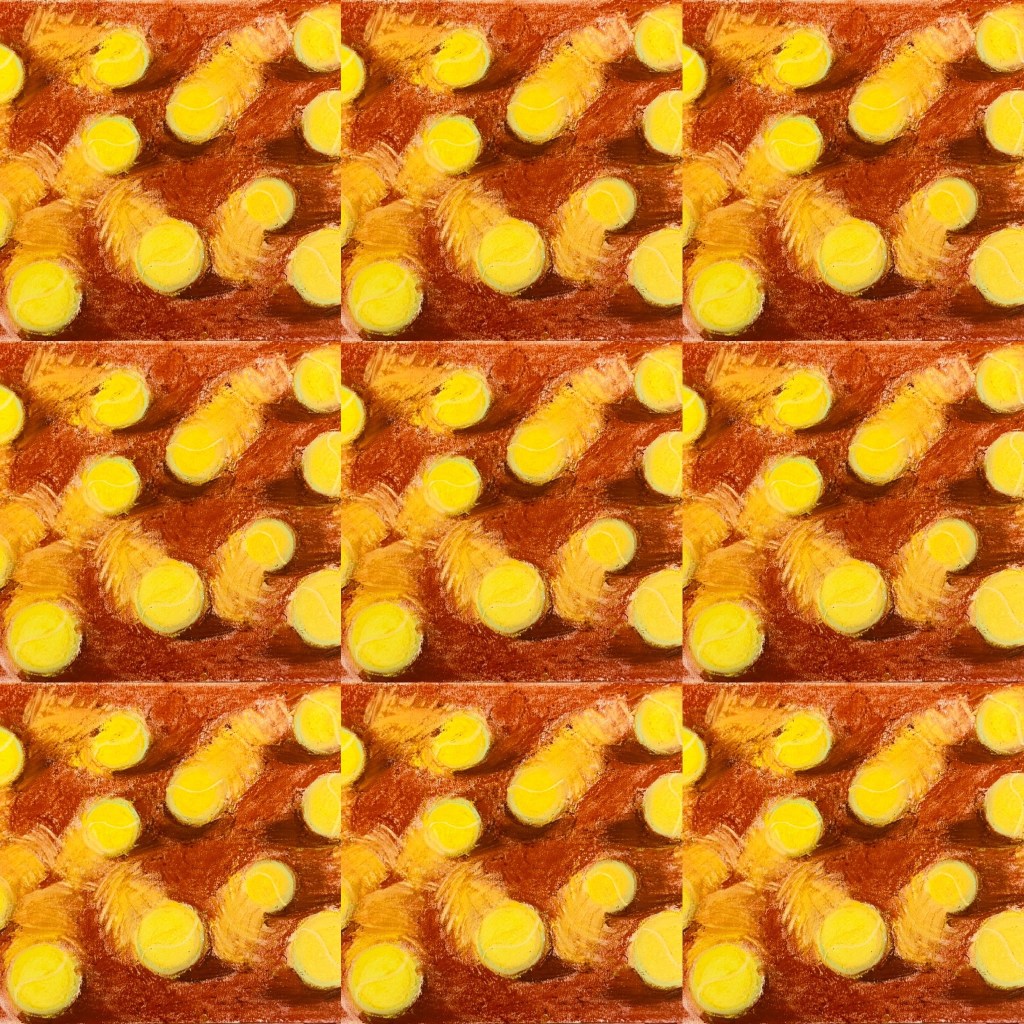
Another collage with the same image, turned.
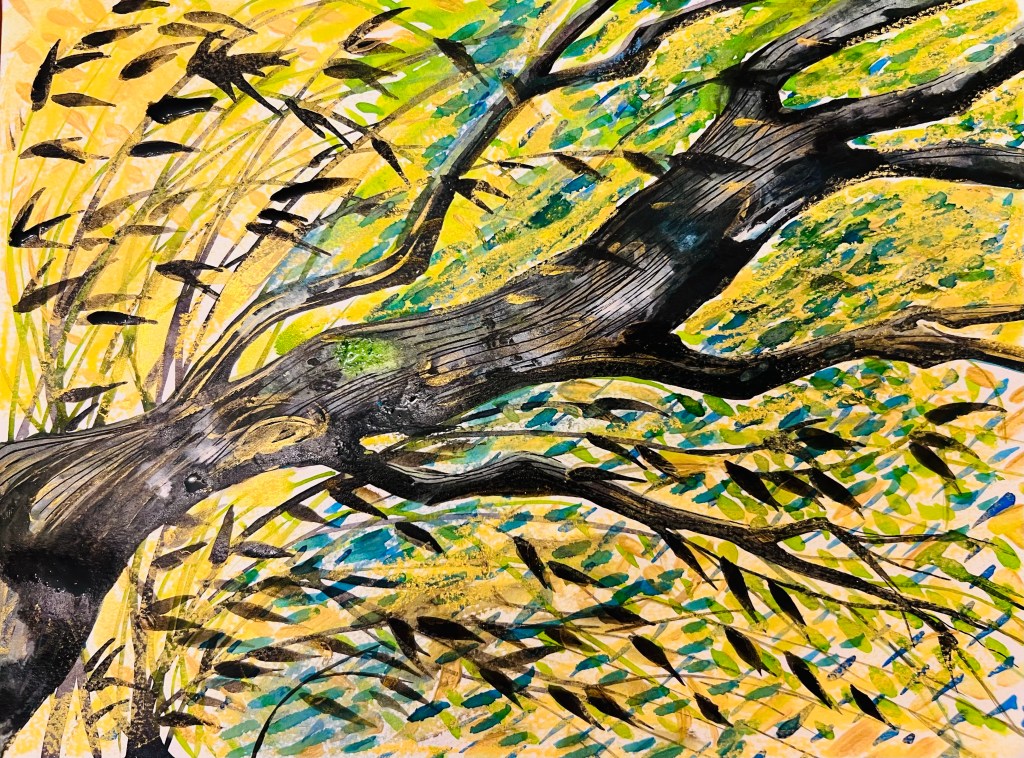
Another study of movement I find in trees and leaves. This drawing is complex, it contains lots of details, many and different brushstrokes and layers of ink, acrylic and soft pastels. The sensation of movement is given through the visual complexity of this drawing. Also, I tried to convey the sensation of movement directing the stems, brunches, leaves and thin lines on tree’s bark from left to right. Thus there is an impression that everything is moving simultaneously.
 JeanArt