
This page is devoted to my Critical Writing piece. Posted on September 20th, 2023.
Here I add my final reflection about my Critical writing piece for the course I have added on September 20th, 2023. I put my final notes onto this post page I opened on may 29th, so my Tutor can see the initial stage of my writing project on one page and the main books I have used.
I have sent my Tutor the first draft of my critical essay on September 5th, 2023. He sent me his feedback. My main challenge was about the word count and technical aspects about proper citation, such as captions and block citation, I had to add some additional references. I have exceeded the word count, having 3707 words (before bibliography). In order to decrease word count to required 2000 words I followed my Tutor’s suggestion to put some paragraphs into notes which are not counted. I followed all his advice, adding references and captions, placing large pieces to notes and managed to make a word count of 2986 words.
My critical writing project was developed from general idea to wrote about one Japanese aesthetic concept “kazari” to the final title “Japanese painting traditions in works of Ogata Kōrin and Kano Ryokei“. As it was recommended by my Tutor in May, after I submitted the proposal, I narrowed down the theme and focused on two particular artworks. I researched canons of Japanese traditional paintings and tried to identify their implementation in the artworks below. I must say that was an amazing journey and I was completely consumed by the project. Since I had to analyze general essential concepts applied in traditional Japanese visual art, I significantly elevated my understanding of painting theory and Japanese traditional visual art in particular.
Posted on 29.05.2023, below.
I decided to write about the Traditional Japanese painting style, which is based on the concept of -“kazari” – “will to decorate” and ” sōshokubu”- “decorative beauty”.
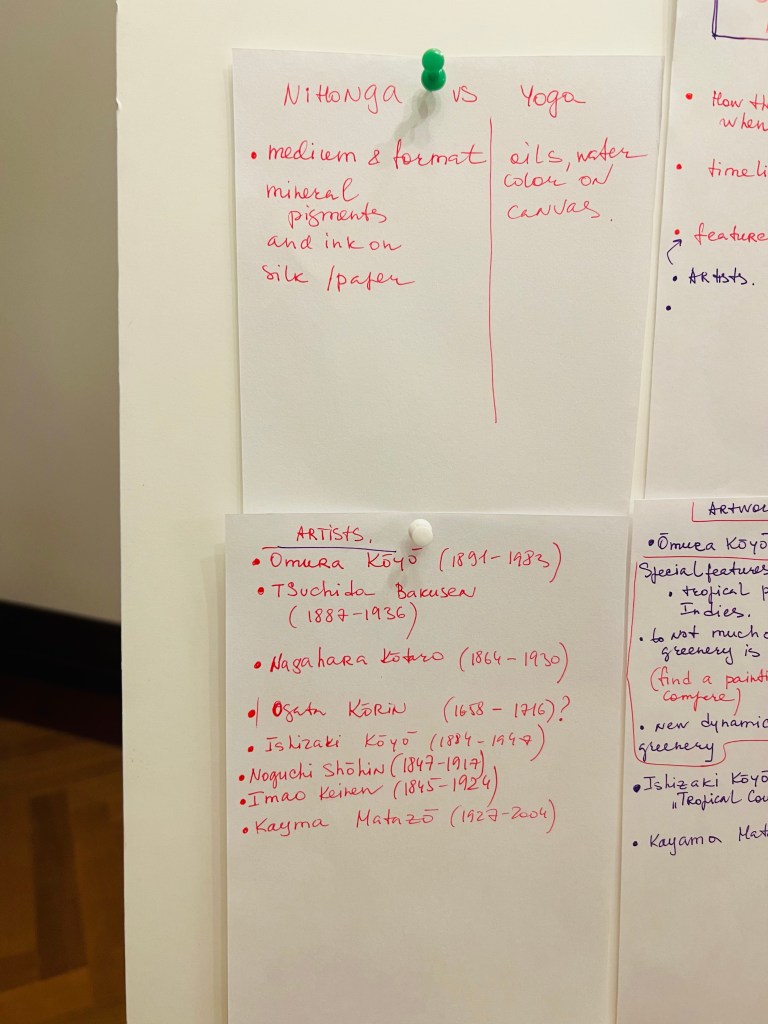
At this point, I have to submit a draft to my Tutor so we can begin working on the essay. Thus I started to organize the material by blocks, arranging them on the whiteboard on the photo below, as well as reference materials- books, which I have collected for the last 18 months.
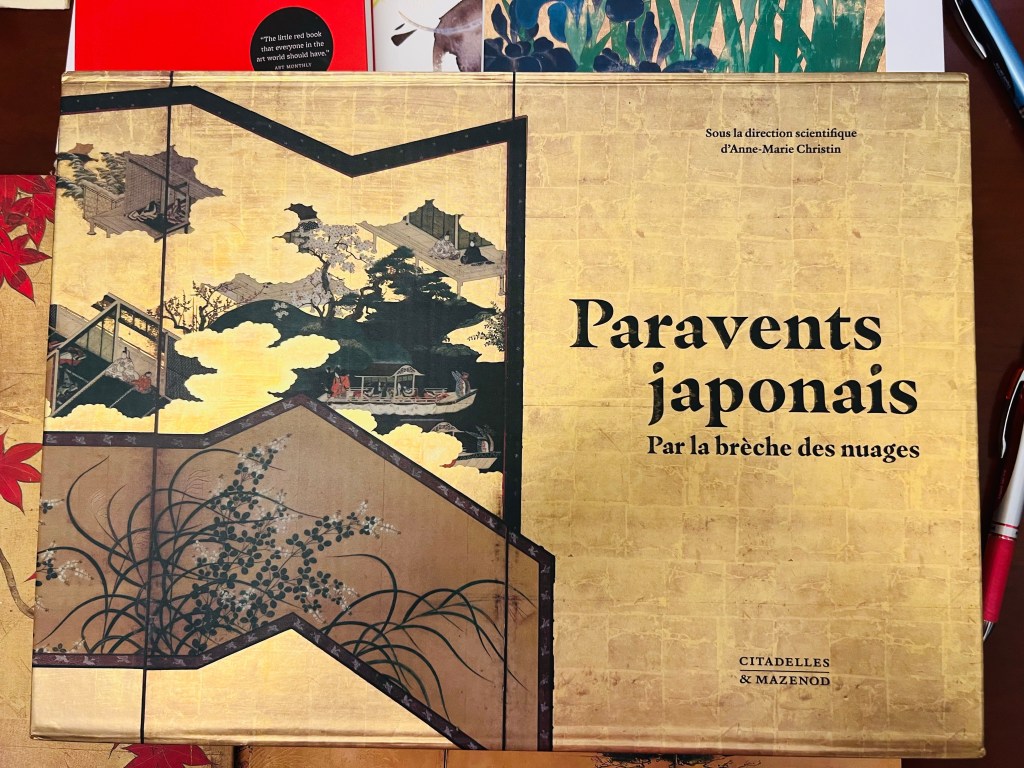
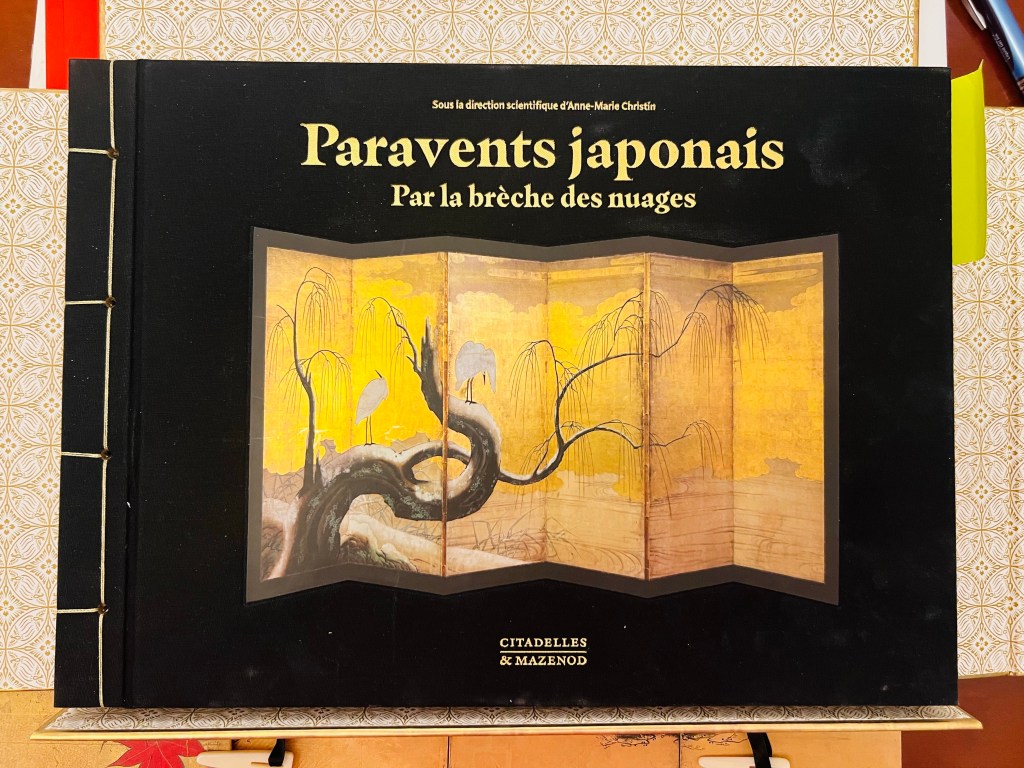


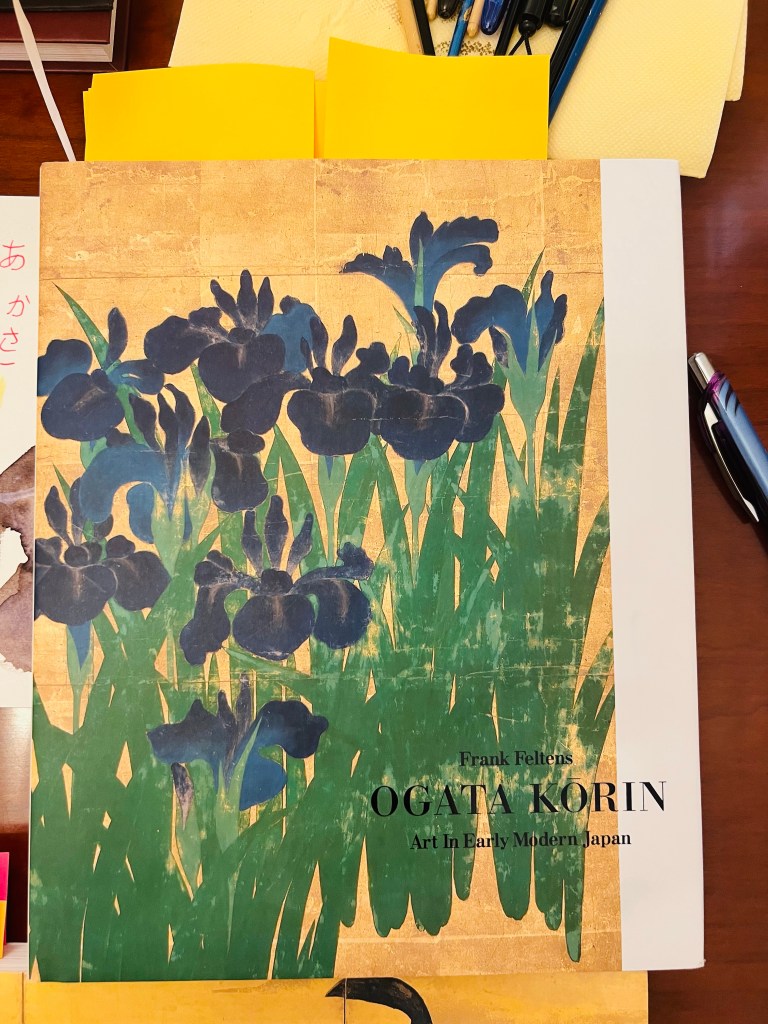
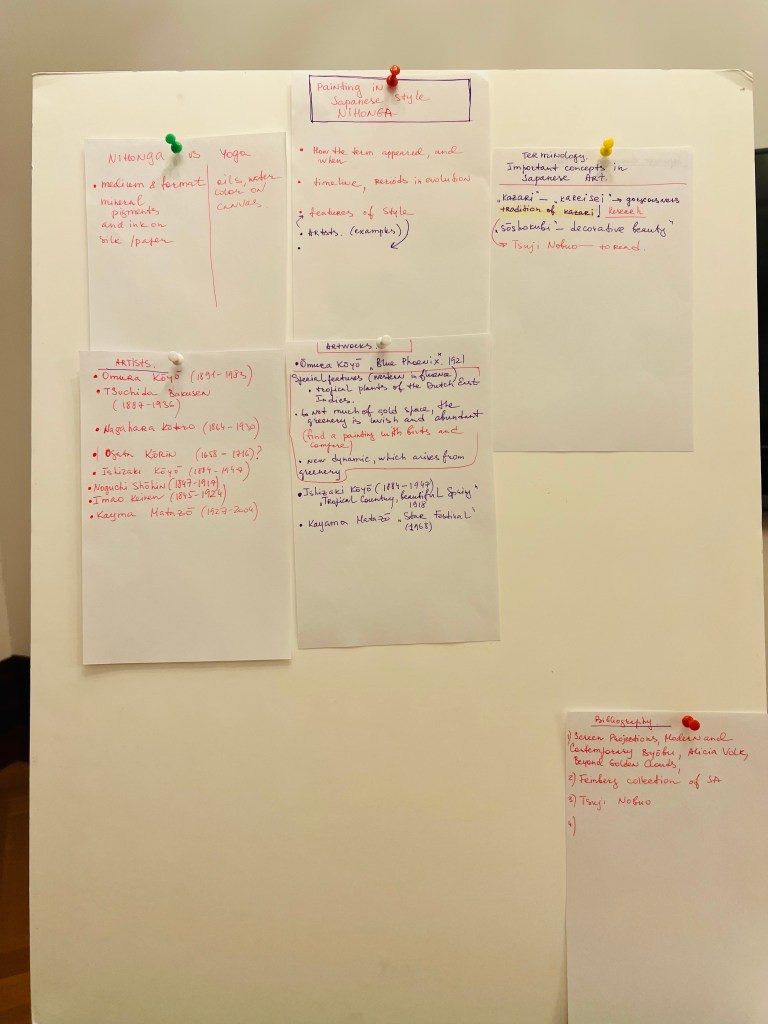


I have also found two important for my topic, vintage books on Google Play. These are on the photo below from my Google Play bookshelf.
- “On the Laws of Japanese Painting” by Henry P. Bowie, first published in 1911. It is said on Google Play: “This work has been selected by scholars as being culturally important, and is part of the knowledge base of civilization as we know it. This work was reproduced from the original artifact, and remains as true to the original work”.

I think I have found a good epigraph for my critical writing essay:
“It was as though the skies had opened to disclose another kingdom of art” (“On The Laws of Japanese Painting”, Henry P. Bowie, p.19, 1911, @2013 Read Books Ltd;)
About the concept of “Kazari”
“Kazari is the foundation of Japanese aesthetic sensibilities, since it is the force that transforms a space from ordinary to extraordinary”; Kazari is not merely decoration, according to Tsuji, but a “will to decorate,” a deep spiritual need that engenders much of Japan’s artistic creativity. His summary of the principal characteristics of kazari in Japanese aesthetics—fantasy, surprise, exaggeration, playfulness, spontaneity, asymmetry, improvisation, and more—assists the reader in identifying the role of certain art objects in setting the psychological and spiritual tone of a space.” Rousmaniere’s essay, “Arts of Kazari: Japan on Display,” argues for the necessity of the viewer’s active participation in the concept of kazari. Not only does the object need to possess certain physical characteristics to encourage engagement, but the viewer also must possess a prior knowledge of the past uses and symbolism of the object as well as an understanding of something beyond what is actually represented by its physical form.” (“Kazari: Decoration and Display in Japan, 15th-19th Centuries, by Meher McArthur, Curator of East Asian Art, Pacific Asia Museum, Pasadena, CA, online on http://caareviews.org/reviews/574)
Below is a continuation of my Critical writing development I have made during Part Five of the PAD course.
Japanese paintings were often critiqued by Westerners, who considered them to be flat, and “simply decorative”, without a proper linear perspective, no shadows, concluding that the art of painting in Japan was still in infancy. (p.22, HB)
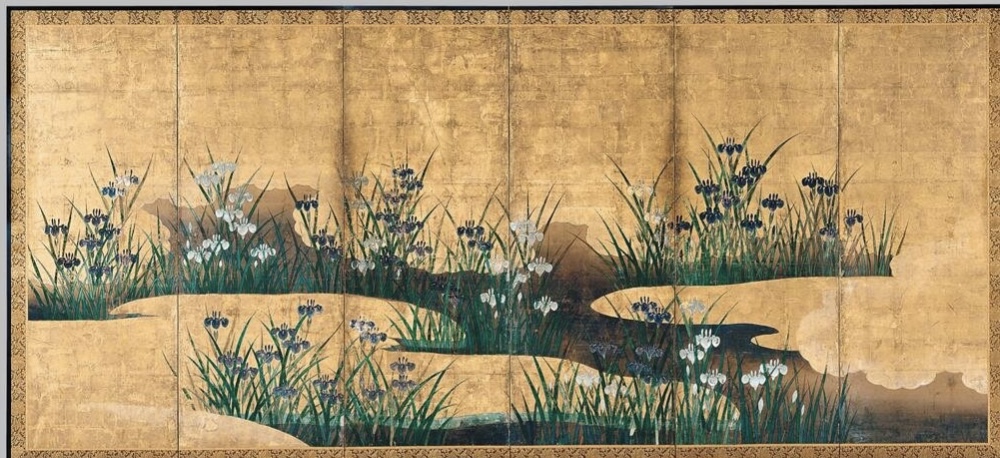
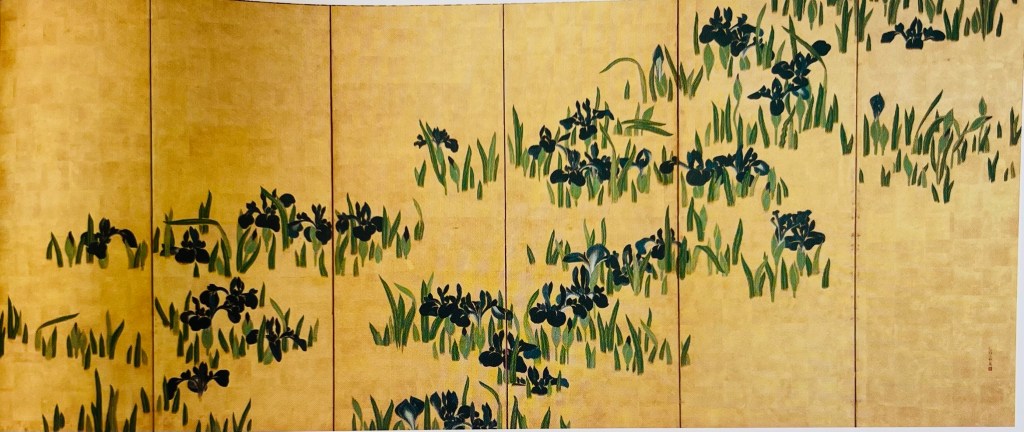
Below are the paintings I will concentrate for my Critical Writing piece. Probably, I will focus on first two pairs out of four pairs below.

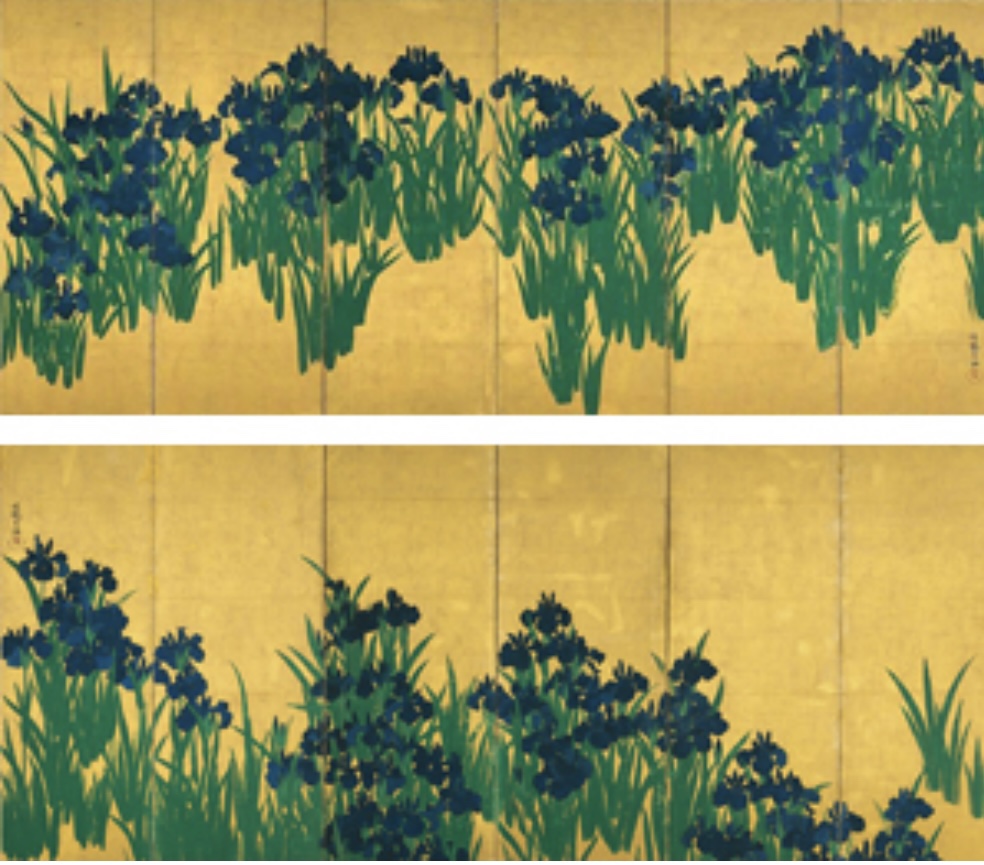
Each six-panel screen measures 150.9 by 338.8 centimetres (59.4 in × 133.4 in)Ogata Kōrin, pair six -panel folding screens Irises, early 1700, Nezu Miseum, Tokyo. Image form Frank Feltens, “Art In early Modern Japan”, 2021, Yale University Press, New Haven and London; page 45
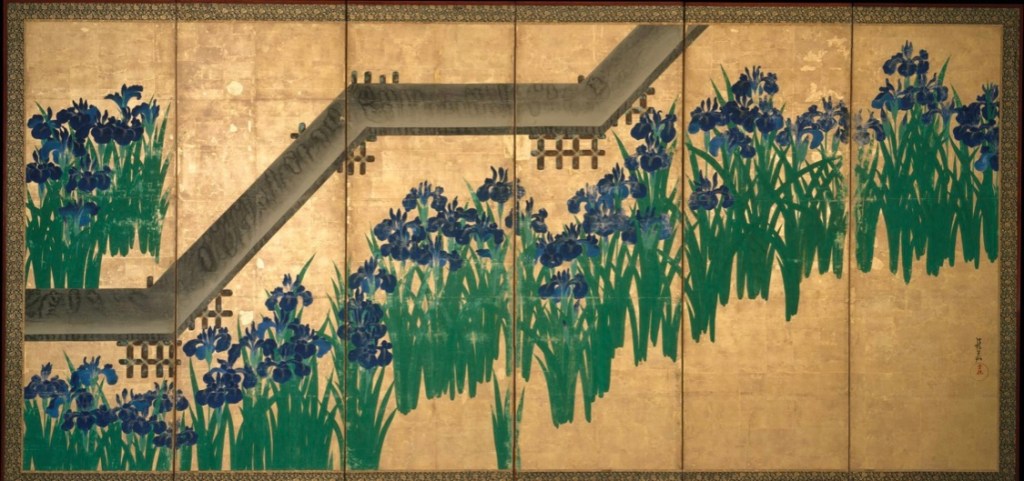

 JeanArt