The final assignment fro Part Three, Drawing Two.
For this Assignment, I had to resist my temptation to draw and paint a garden as an exterior landscape since I had always been keen on depicting plants and trees. It is always challenging for me to engage with cityscapes or figurative drawing. However, I reviewed the material and my works in this Part of the Course, and I got the idea of incorporating black ink figure drawing, as Joy Gerard does in her paintings. I searched for a theme and tried to reflect on the “changing landscape” concept and the figures in time and space, “before and after” effect, reporting a story – what we covered in this Part. Below is my work in progress and the outcome. The theme is a social unrest/protest in Kazakstan, which took place in January 2022.
I wanted to depict a night scenery of a cold January night at the Square of Republic in Almaty, which has become a place of tragedy again, as it happened in December 1986. This place in the city symbolises the Qazaq people’s efforts to build democracy and sovereignty. In both years of protests, we lost many innocent lives. I referred to photographs I found in open public sources. All of them depict protesting people under gloomy, dark skies. The colour of the sky and city lights looked very special to me, so I wanted to channel this mood of anxiety, uncertainty and danger.
Materials used: A3 size tinted pastel paper from Clairefontaine, soft pastels from Jaxell, black Indian Ink from Sennelier;

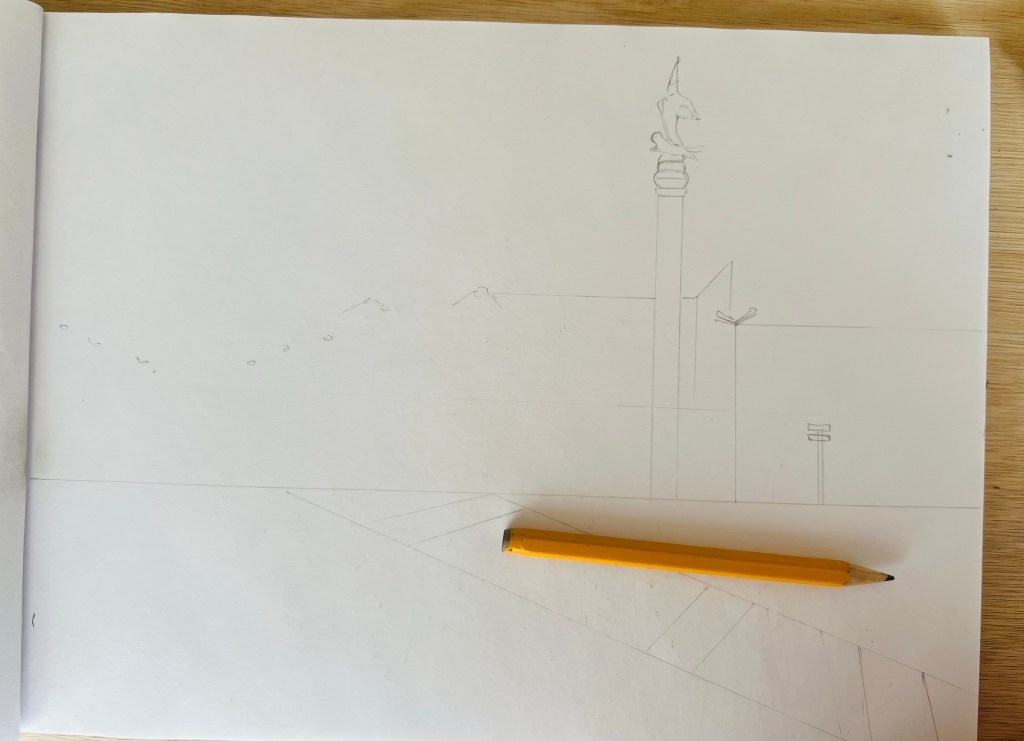
Preliminary pencil study in the sketchbook to decide about the composition.
I made a significant accent in the foreground: a massive black asphalt road. This road military vehicles will follow to suppress the protesters. I emphasised it in the composition because I wanted to show the power of suppression and defenselessness of ordinary unarmed people. That is why I didn’t plan to make their figures dominant, also because historically, they were not prevalent at this moment of resistance. These peaceful, unarmed protestors were shot in the next several hours. They anticipated the danger and made a long poster with the words in Qazaq ” we are ordinary people, we are not terrorists”. This moment was photographed, becoming an iconic image of “Qandy Qantar” (“Bloody January”). It was a moment of great hope to be heard and seen, a moment of truth and a tragic faith coming on them and a whole nation. Below is this iconic photo:

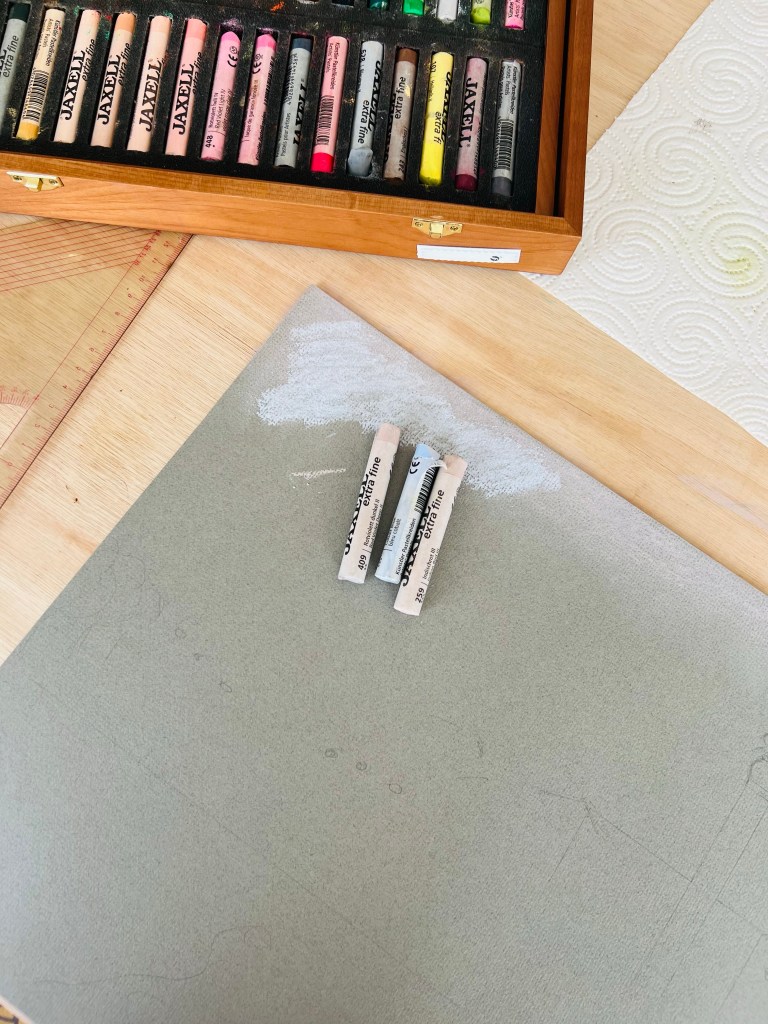
Work in progress: I used light grey tinted paper because I wanted to depict the dark grey, night skies. To create a color of the sky, I had to put multiple layers of different pigments: 259 Indian Red ( which actually looks as pale greyish), 459 Cobalt Blue (very light blue), 409 Red Violet Deep II, 618 Grey II and additionally – 423 Ultramarine Deep. Jaxell soft pastels are the best for me because they blend smoothly, and layers go nicely. The architectural elements, such as the stellar column with a sacred figure of an ancient warrior and the silhouettes of the buildings and lamp stand, are done with the shades mentioned above of grey and blue. For the road at the foreground I made with rich 605 black pigment.
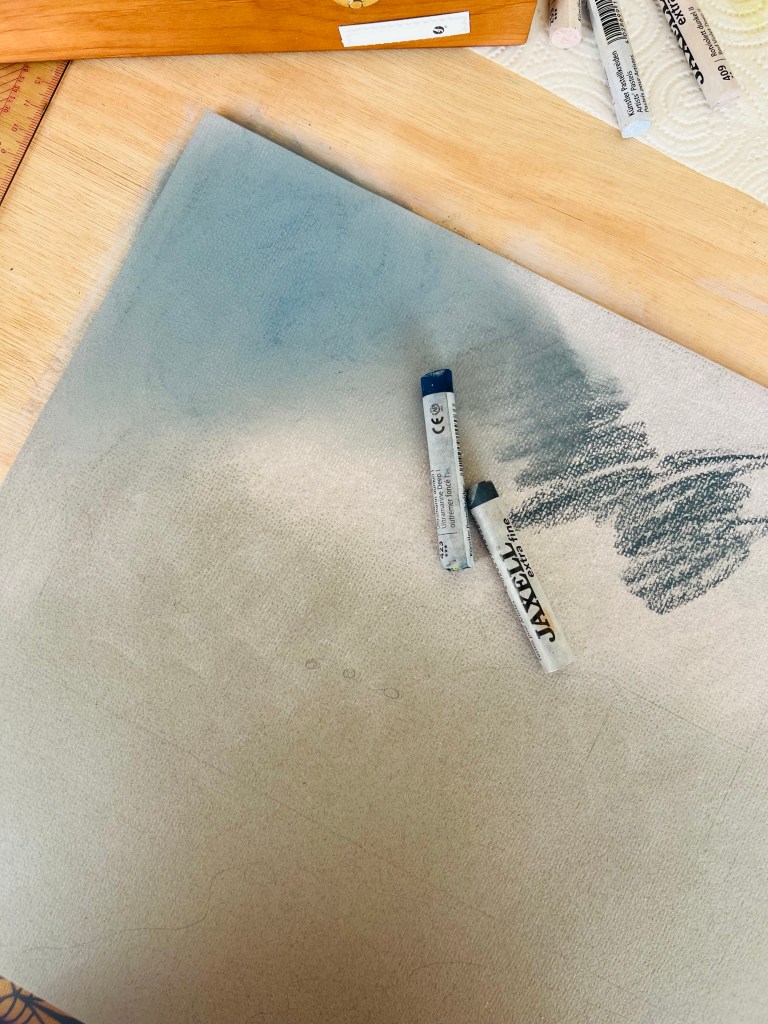
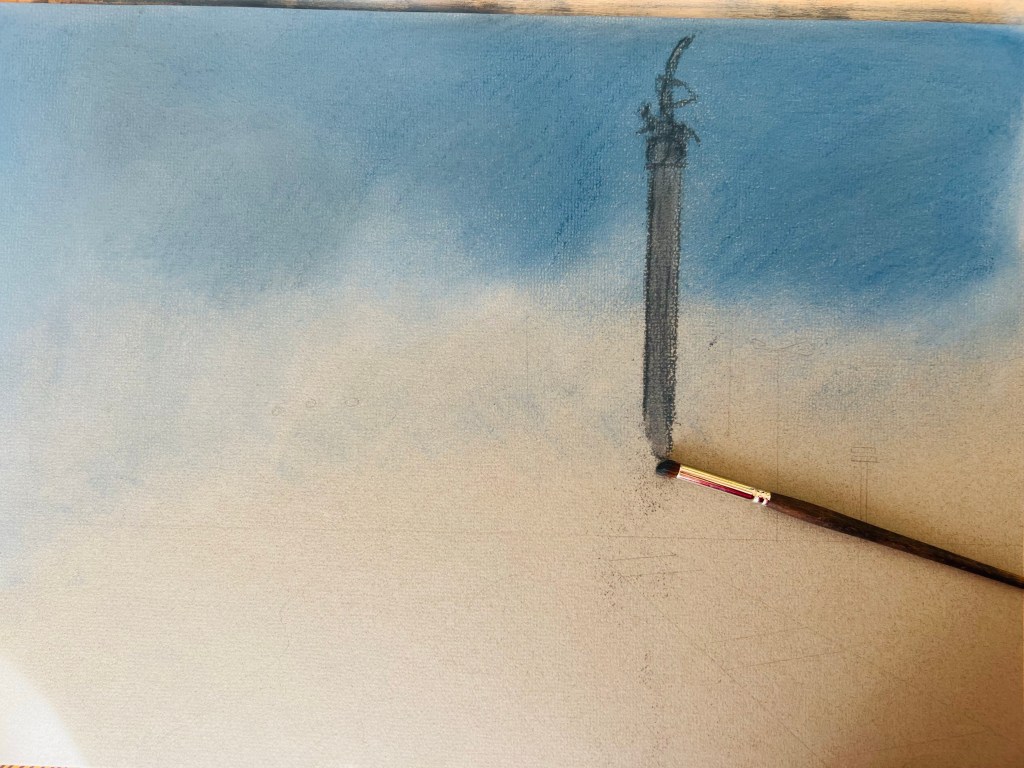


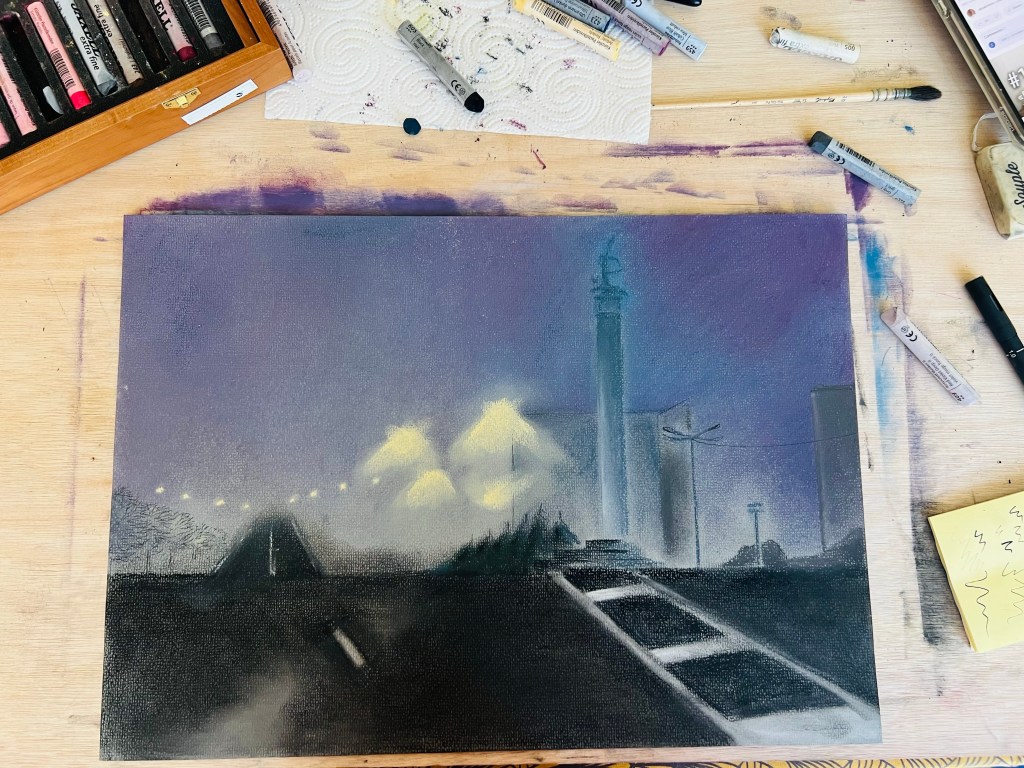
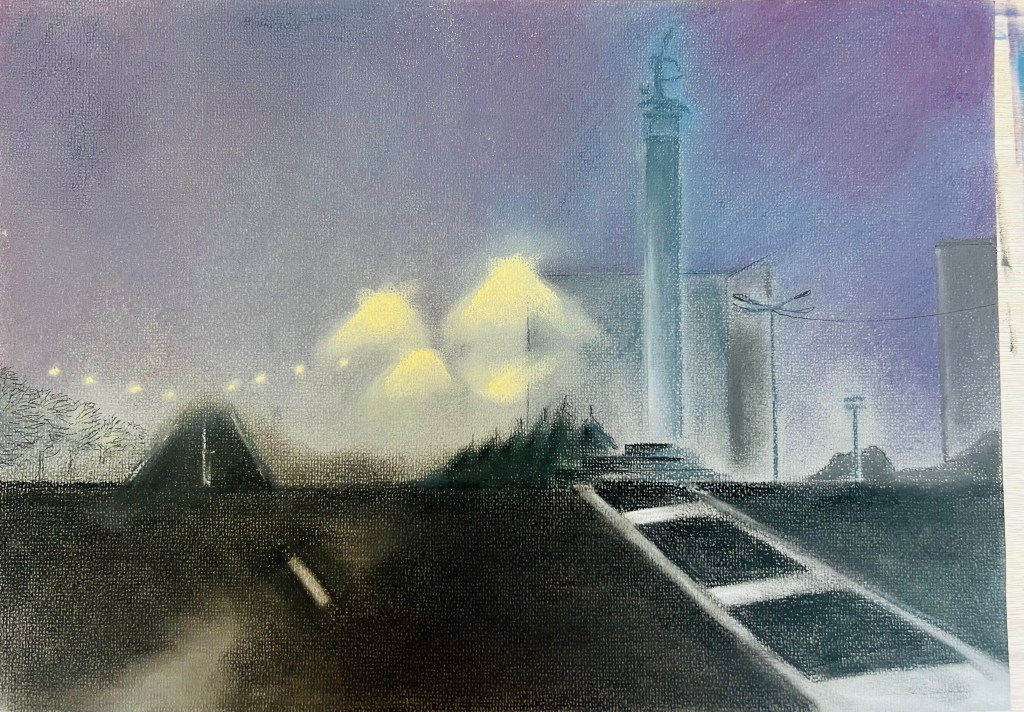

Below is the night protest scenery with people. I placed people’s figures with black ink. That was a suitable medium because it goes well on top of the pastel layers. The paper and porous pigments absorb the ink really well. The colours on the photos below are slightly different because I was taking photos during the different time of the day: under a day light and evening electric light.
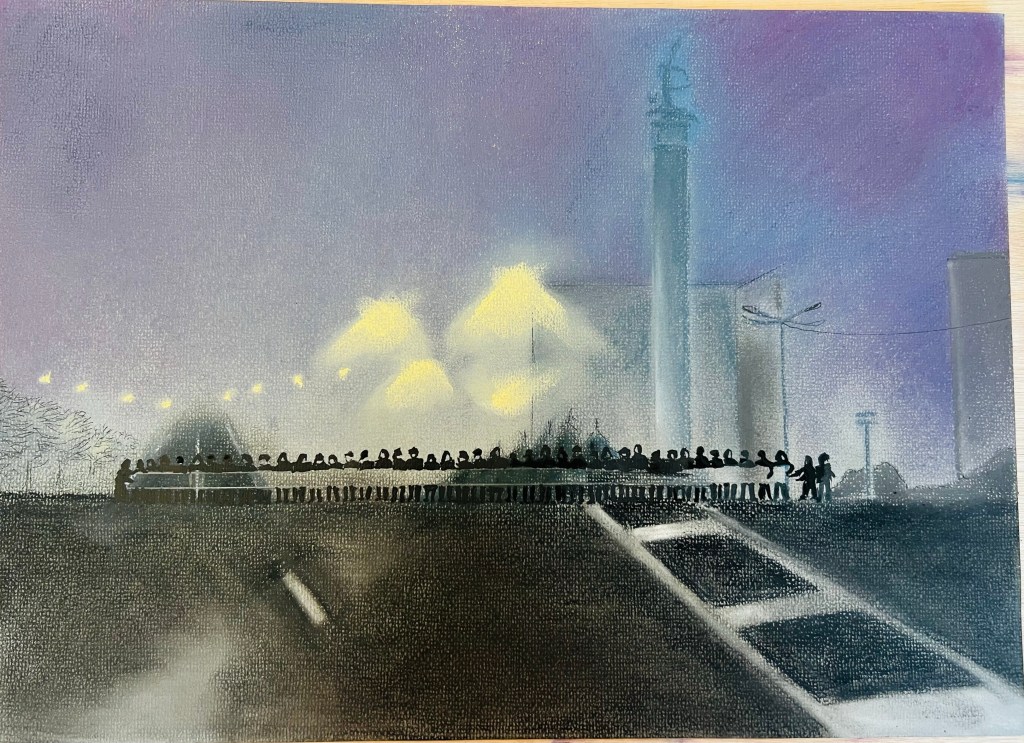


Below are two finished drawings of changing landscape and the continuation of my reflection.


The final result of this project is below. I have collated two images of the landscape, placing a landscape with people on top of the image of an empty square. These two images have to be seen and viewed together simultaneously. I suggest to a viewer a Hope and Expectations in this dialogue between an occupied Square and an a silence of the empty Square- before and Silence and calm senseless Eternity – after.

Hopefully, I made a good reportage; I think I found a relevant connection between these two images in a diptych: viewers can watch the complex story unfolding. The dialogue between these two images provokes many questions and invites reflection, creating a space for polar opinions about the event. Every viewer would see a different narrative because the protests are always controversial.
For some people, the emptiness will be comforting- nothing has changed; for others, this unchangeable reality is their desperation; they will see no hope. Some will see tiny black figures as insignificant – as they perceived those people during the days of protests. Others will see in small black silhouettes a symbol of courage, which has always been in social deficit in the country.
I didn’t make a monochrome drawing because it would limit the story’s narrative. My drawing did not have much architectural detail, which would look great in black and white since these colours are excellent for outlining straight lines of concrete buildings. The cold weather and the fog needed some blue and grey colours, as well as street lamps lights are quite important for the mood I was working on. My idea was about the spectrum of the crowd’s emotions: from hope and happiness, a taste of freedom of speech and protest to anxiety and fear, a momentum the nation has been waiting for 30 years of dictatorship. I tried to channel this emotional spectrum and once in a life time opportunity via black and brutal foreground and high night skies.
Additional reflection on viewpoint:
As I mentioned earlier in this blog post, I needed to show the massive black asphalt road as a medium to show the suppression of the protest. The viewpoint is that the crowd would be viewed by someone in that vehicle carrying snipers who shot the people. For this project, this viewpoint creates the tension I wanted to channel. If I would make the viewpoint from above the crowd or, let’s say, from somewhere from the side – the effect would be as someone emotionally distanced and disconnected from a scene
 JeanArt
[…] Continue to develop the Parallel Project (PP) and connect it with my Critical Writing piece (CW) I must submit by the end of the course. In part Four, I devoted more time to working on my PP and followed Tutor’s advice to connect the PP and CW. His advice made me take a different direction for my PP, so I opened a separate page, leaving the first drafts I submitted to my Tutor in part Three. To submit more developing sketches and reflections on how the outcome matches my expectations. I worked more on developing sketches for the exercises and PP and included more of my thinking. Though, I must say that not all my works “ask” me to create different sketches for a particular project. Sometimes I really go with the flow: I start and don’t know where I will end up. This approach is also fair and aligns with previous instructions for other courses I did. I prefer this approach because creativity is very much about exploration. However, I understand that a complex compositional and detailed project requires many preliminary sketches. We talked about my attempt in Part Three to work in the style of Jay Garrard. Here is my Tutor’s feedback quote: “What is similar, and what is different? It doesn’t matter if you feel you are behind her; even if you are hard on yourself, this reflection is essential – critical analysis. The final thing you do in your blog post – you take this step back and review it in writing. For example, her viewpoint is much higher than yours in most of her works. Talk about why it is so. How changing your viewpoint affects the viewer depending on where you put the viewer. Think about similarities and differences. Where do you want your viewer to be?”. I added my reflection to the relevant blog post and marked it in blue. Here is the link:My Tutor asked me to think about the “viewpoints” again for my last assignment in part Three: “Think about viewpoints – where you want ‘us’ to be in relation to the images you create.” I added my reflection on the relevant blog post and marked it in blue, you need to scroll down the blog post text. Here is the link:https://zhan-art.com/2023/03/27/drawing-two-part-three-assignment-three-time-and-memory/(opens in a … […]
LikeLike