Exercise 3: A biographical drawing.
In this exercise we have to bring through drawing our chosen sitter’s story, which we have to familiarise ourselves with. Below is a drawing of my father sitting in the hospital chair, waiting to be taken to surgery. That was a heavy, silent moment when I felt his anxiety, I observed him being reluctant to have the surgery, but it was a moment of surrender as well. I used a blue ink ballpoint pen to outline his psychological condition of no joy, sadness, and acceptance of the inevitable.


Another study for a biographical drawing. Some trial sketches. Self portrait
I had a long wait to draw myself in national Qazaq headwear and used my chance to work on this study for this exercise. Once I got enchanted and inspired by the historical photo of a young Qazaq woman wearing a massive traditional white headwear – “zhaulyq”/”kemeshek”, holding a baby. That early XIX century photo depicts a young mother, so I called this photo -“Qazaq Madonna”. I sketched my self-portrait using a mirror to draw my face. Since I don’t have this headwear, I just added it as I felt it to look on my head. The sketch came out as a good one. It is unexplainable to me, but I do feel inspired to draw/paint portraits, but I feel blocked when it comes to draw a moving human figure or several people in one space. This drawing has a lot of potential to become one of my parallel projects for this Course. I have several ideas for the background and negative space. What is for sure – I will include a traditional Qazaq ornament and a baby’s figure. In terms of medium, I will use soft pastels for the face because they will work well for shadows.


I need to develop this idea further and was considering different options in terms of mediums. Below is a trial of my new medium I bought recently – oil pastels sticks and technique trial. Here I am experimenting with my new set of oil pastels from Jexell. I watched some YouTube tutorials how to paint with this kind of oil sticks. I must say I was not greatly impressed with their ability to blend smoothly. It its quite difficult to blend them with a finger as all tutorials suggested. I experimented with blending them using a brush and some linseed oil. That worked quite well. The sticks are good for ornament, which I imagine to be a part of the future drawing.


I wanted to create a self portrait, which would tell my story. I felt the story could be told not only with facial features and subject’s posture but also with interesting background around the face. I checked for some artworks, representing portraits, which would reflect my idea. Below is the portrait I found as transmitting the idea of artist’s view on a personality, which he represents via creating an unusual background. If I will do people’s portraits, they will always be in style with portraits of Gustav Klimt, containing lot of interesting atmospheric details around the subject.
This is a “Portrait of Fèlix Fènèon, Opus 217”, 1890, Paul Signac (1863-1935), oil on canvas. Image from my book “ Paul Signac”, page 69, 2021, Könemann, Editions Place des Victoires, Paris;
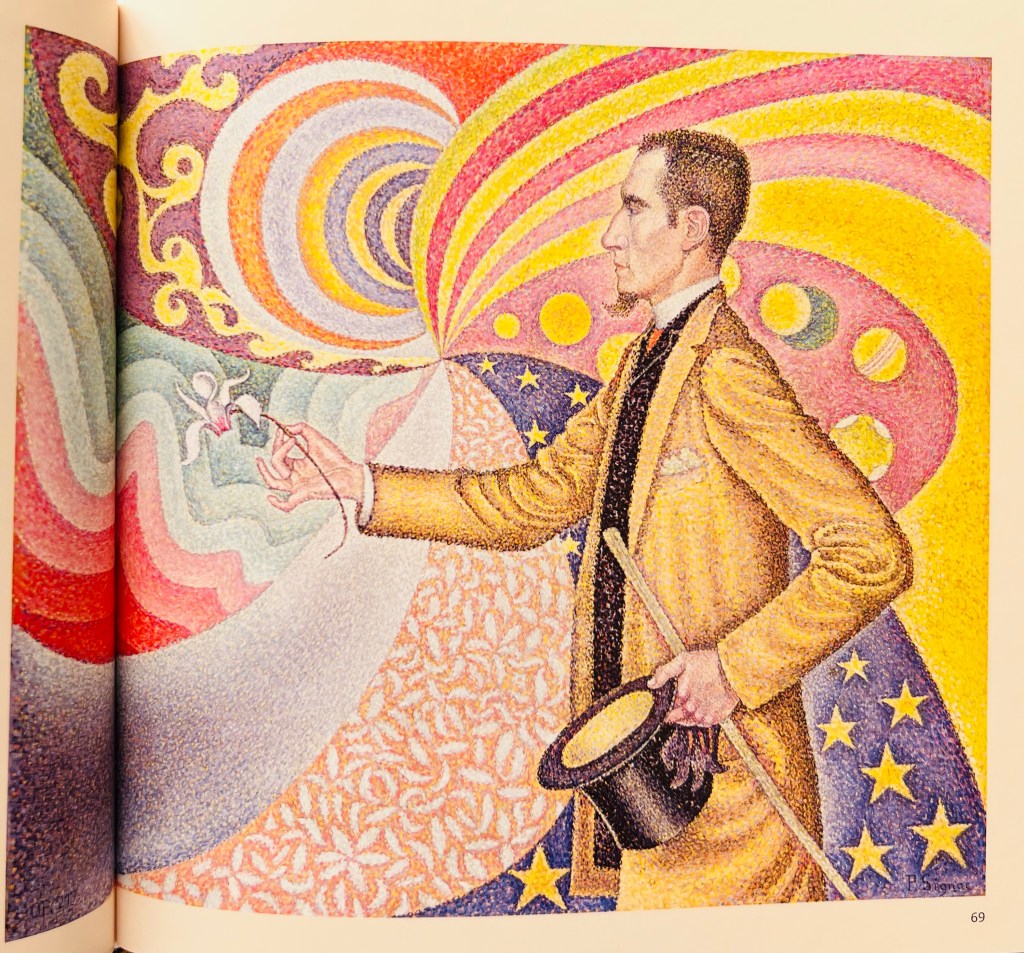
Geoffrey Smith in his article “Neo-Impressionism. The Science of Colour from Seurat to Metzinger” on http://www.neoimpressionism.com [accessed on March 12th, 2023] says : “…Signac spend a great deal of time experimenting with the background composition, trialling many combinations of colour and form, pasting different layers on preparatory drawing”. He assumes that this “swirl of spiralling, sinuous abstract designs” were Signac’s inspiration a Japanese wood block prints, “possibly a design for a kimono”. Another point of my attraction to this portrait is the fact that the subject – a man- holds the flower. I did some research on why Signac put the flower into Felix’s hand, but there was no a clear unanimous opinion about that.
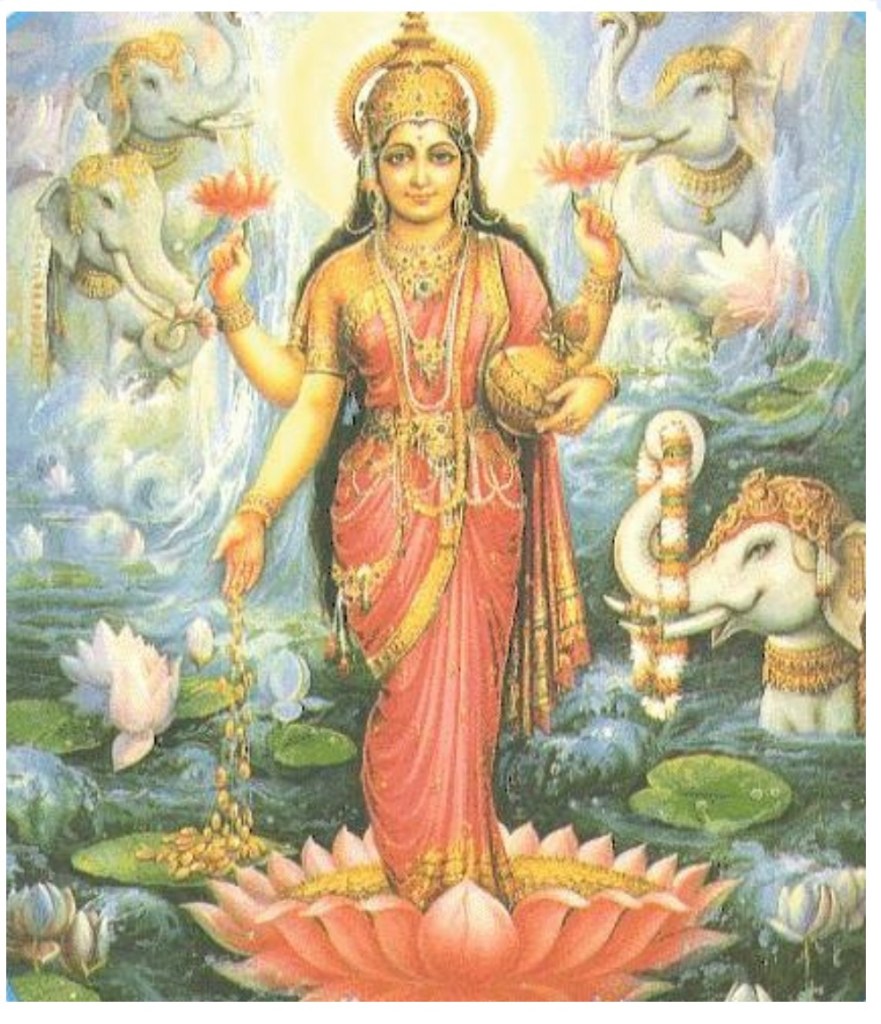
However, this detail is very much in line with my intention to use it in my drawing, because I am also a big fan of Hindu iconography, which depicts Gods and Goddesses holding flowers, as well as a quite detailed and loaded background.
Another important observation for me is that the background dominates the surfaces. Art critics of Signac’s time did like it at all.
Below you can find two images of Hindu Goddesses – Parvati and Lakshmi. This is just amazing how so different drawings by their origin: the”Félix Fénéon portrait” and traditional religious Hindu drawings have so much in common in terms of their background: they all have a very dominating, powerful, colourful and busy background, which does reveal the personality of the subjects.
From left to right: “Parvati and her son Ganesh”, author unknown, the image via http://www.mythologica.fr; “Lakshmi”, author unknown, image via http://www.mythologica.fr;

Bibliography: “Neo-Impressionism. The Science of Colour from Seurat to Metzinger”, Geoffrey Smith, on http://www.neoimpressionism.com [accessed on March 12th, 2023]; “Portrait of M.Félix Fénéon in 1890 by Paul Signac”, Rollo Paterson – The Last Impressionist, YouTube video, [accessed on march 12th, 2023].
My further development for this study is below.
I continued to develop the self portrait, drawing a whole female figure, which was seating in a traditional oriental way, wearing a national head wear. I have incorporated Qazaq ornaments: two birds above the head and a thick most common and recognisable traditional ornament line behind the figure.


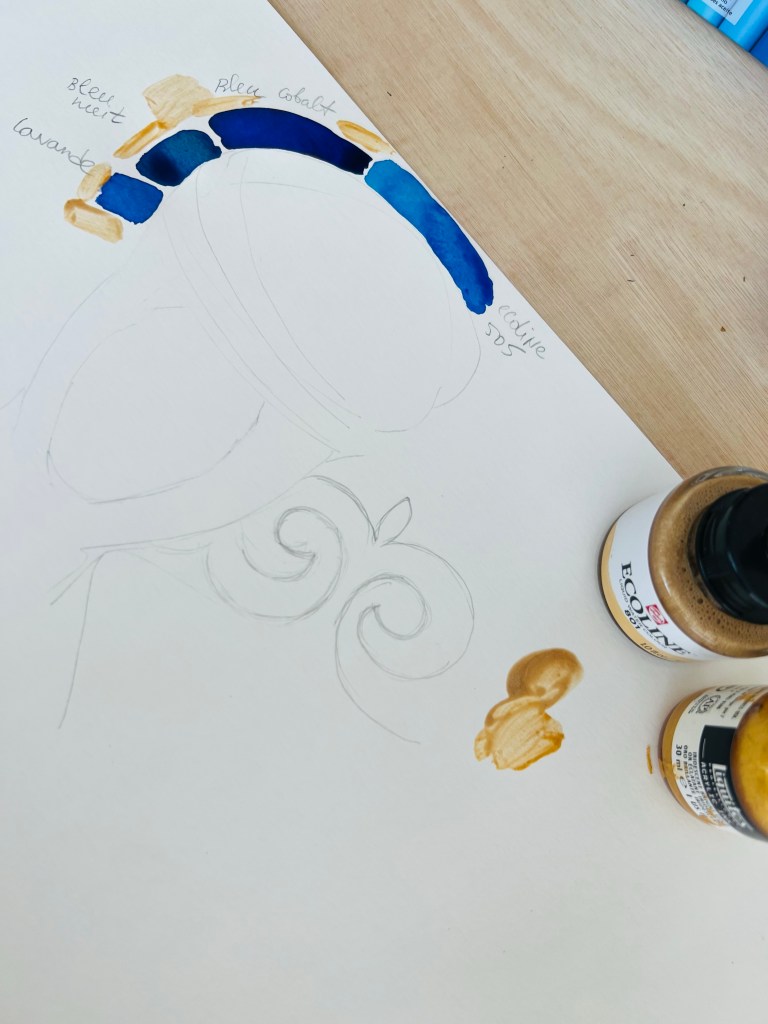
I wanted to represent the woman’s figure as a Goddess, outlining the idea of motherhood, which is in its turn is symbolised by massive clean white headwear in Qazaq culture. This type of head wear signified a status quo of being a mother. My idea was to create a background, which would complement the white colour of the headwear and reveal my story of motherhood since this is a main area of my life to be unfolding so far. I was thinking about the blue colour and tried different mediums on a separate paper . I also tested how can move forward with a face. For the background I tested different shades of blue ink and a blue oil stick. Out of four different options for blue I liked the Éclats, Bleu Cobalt ink from Herbin, it gave a nice smooth dark blue colour I was looking for. However the oil stick gave an interesting texture with a perfect royal blue color.


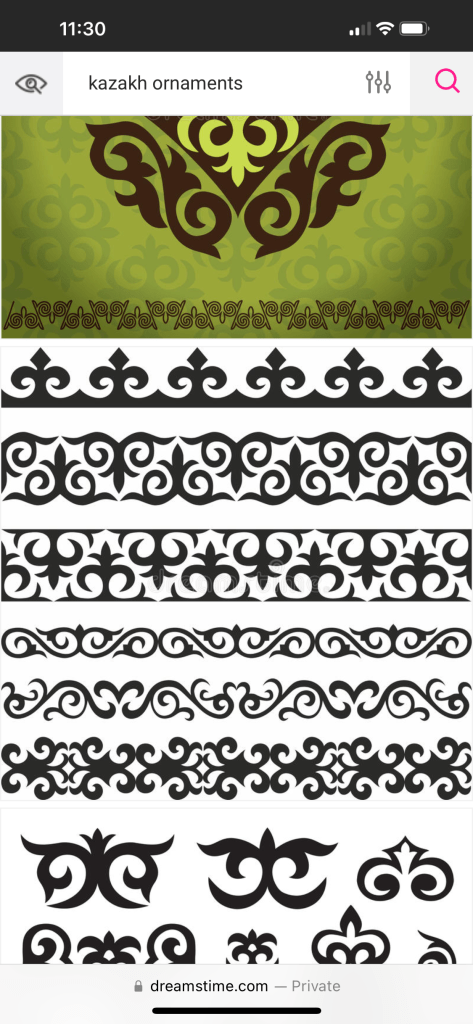
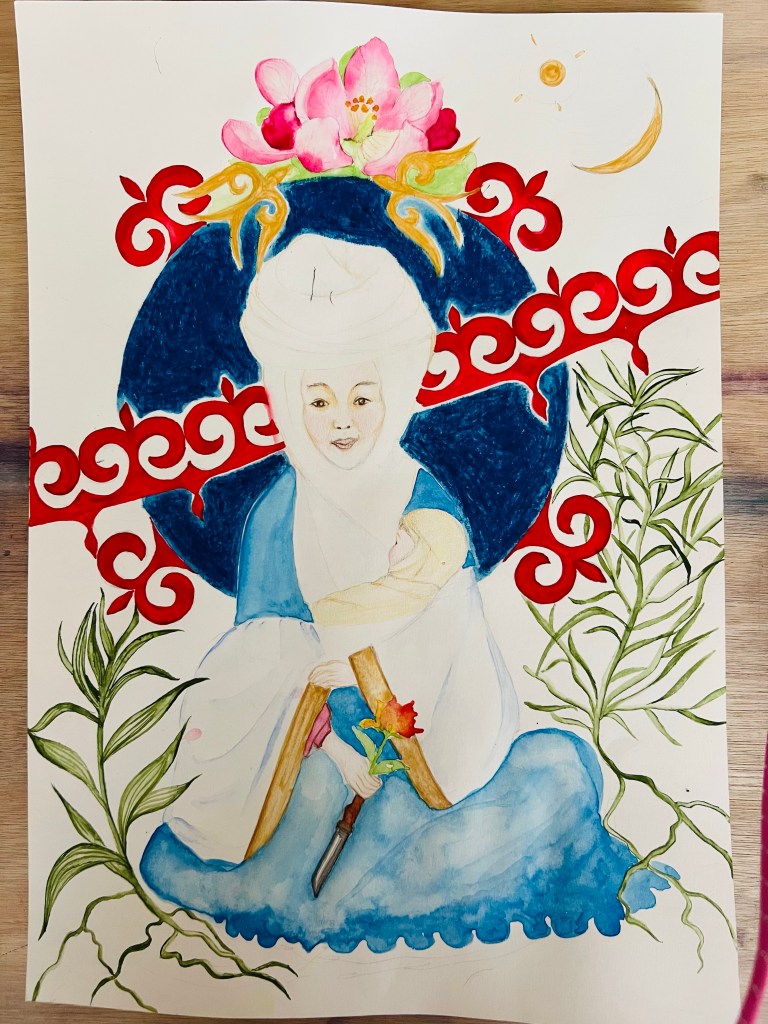
I changed hands position because I decided to unfold the story more, adding detail such as a knife and placing it in the right hand. The symbol came to me as a part of my reflection on the Qazaq female legacy, which is about being kind and open but at the same time tough and decisive if needed. I made a deliberate dissonance between the kind facial expression and the hand holding a knife – a weapon. I picked up the knife as an object to incorporate into my drawing because I could make its handle like a flower, which is also controversial. I like to bring controversy to the paintings. The knife as a weapon anyone uses at a close distance shows that we accept people and let them get close to us. I added a Qazaq ornament – two bird-looking pieces around the head to show the elevation of the mind and consciousness.


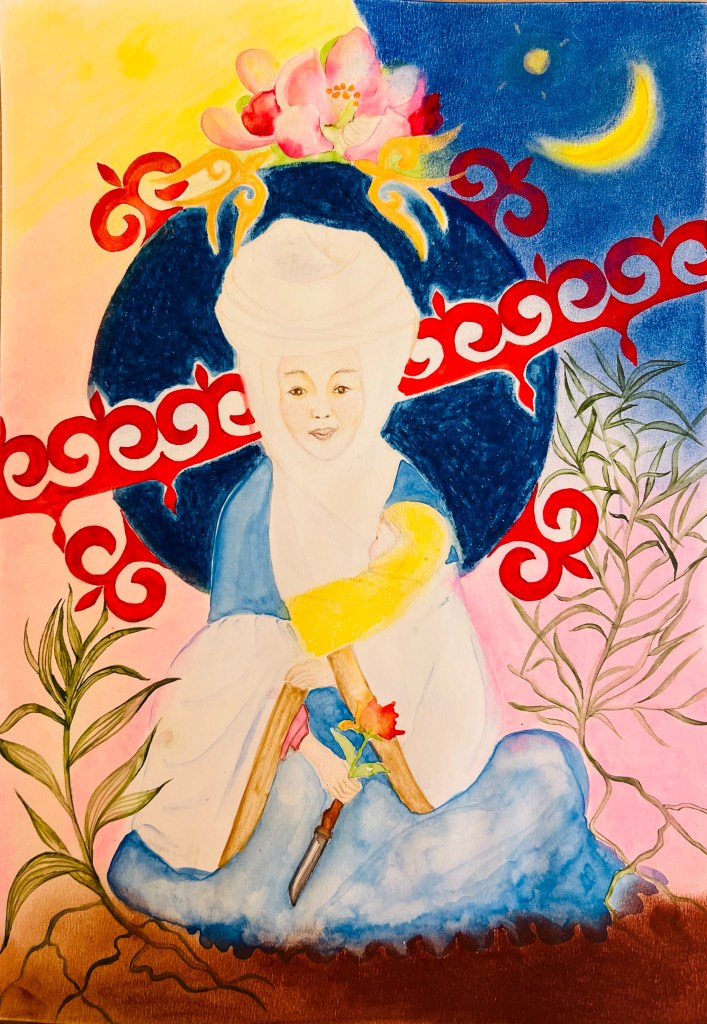
I used my Japanese Tambi Aquarelle set below. The circle around the upper part of the figure is painted with Jexell oil sticks. I added a plant, which is a “kumarshyk” plant frying in a dry climate with extreme weather conditions. The plant was used to feed people in the Great Hunger Times 1920-1935 when we lost 50% of the nation. I painted with roots to show that life was hard and our people used to survive in a harsh environment, though always trying to elevate their consciousness, and women played a crucial part in this process of building up the spirit and nation’s self-sense. I also added a new main and a Venus star in the right upper corner to show Hope for a better future, God’s will and artistic talent of my people – the Venus star.


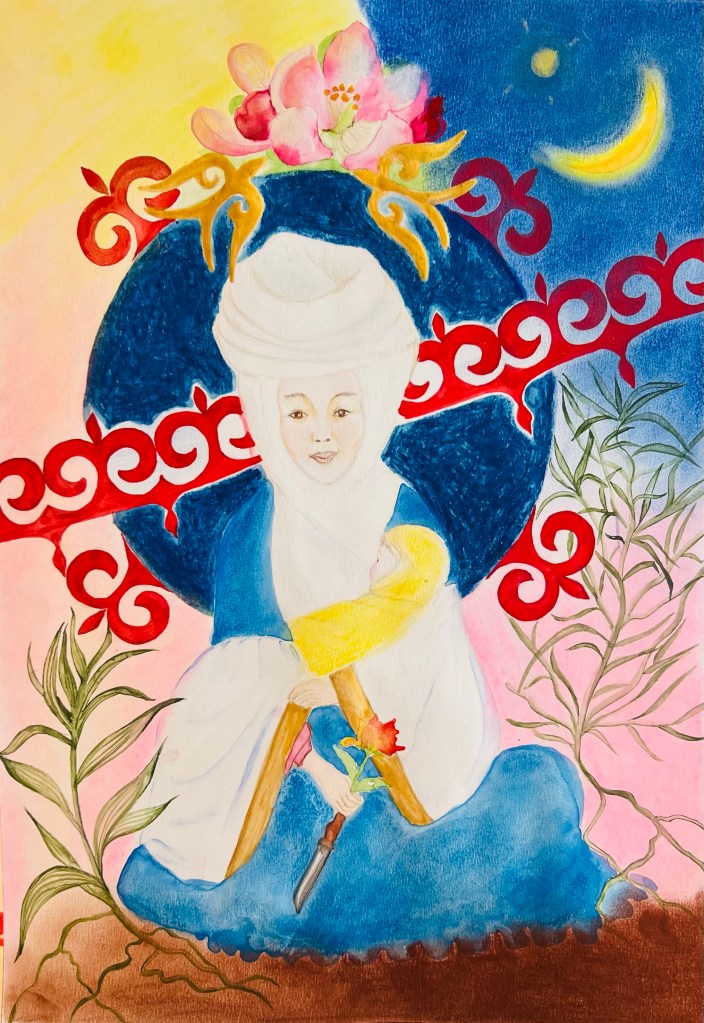
I decided to paint the baby’s cloth, half of the upper left part and the new moon in yellow to unite these elements, because a baby is a a new Day, a New Hope and it is very auspicious to be born on new moon.
My reflection on the outcome: In general I liked the outcome and enjoyed the process of creating a story, thinking about how can I connect personal and collective narrative/ ideas with symbols on the surface. I am thinking to develop this idea further in larger scale and in oil paints. In the outcome below, I think the face is bit pale, because the background is very dominant, so I can add more of flesh colour. I also have to work on hands details. The background can be different, there are many options for it. I am also thinking about creating series of female portraits in the Qazaq theme.


Reference photos form open public resources

 JeanArt