
Research Task: Trace Artists
Doris Salcedo (1958-)
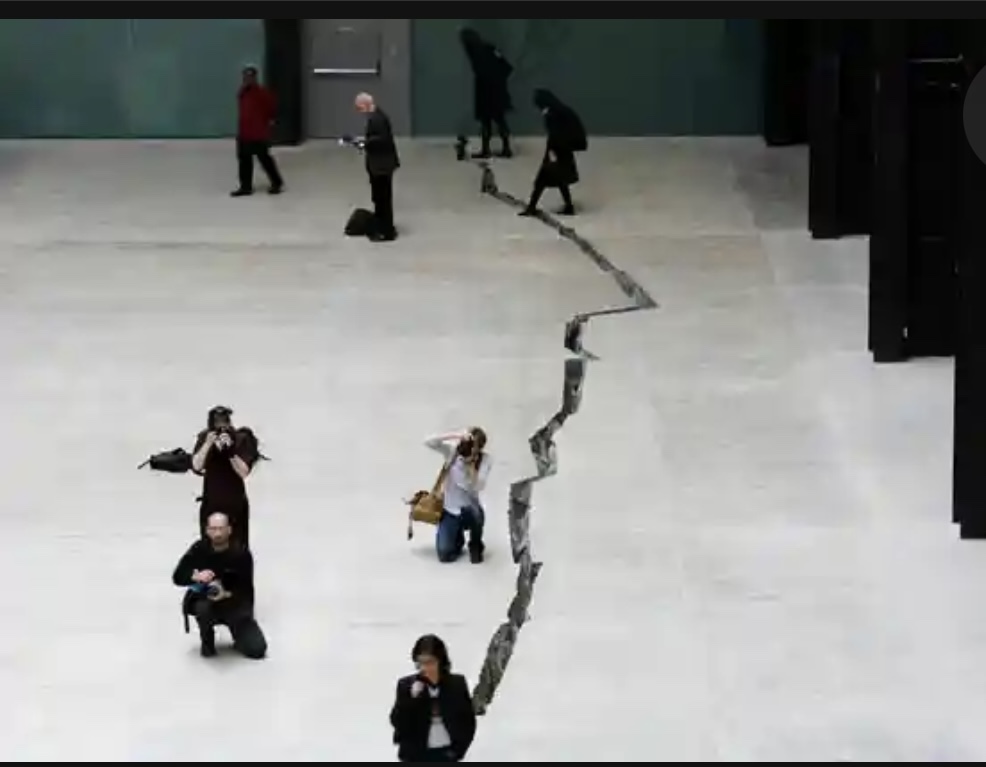
Doris Salcedo is a well known Columbian-born, visual artist. She often uses daily commonplace items such as wooden furniture, concrete, grass and clothing in her installations and artworks. Her artistic aspiration are greatly influences by her personal traumatic experience she had in her country- Columbia. Through her artworks she wants to share her own idea of mourning and grief about those loved ones who have been lost in Columbian turmoil of guerrilla groups fighting, the military, drug trafficking. She said “The important task for an. artist here is to try to give the society tools for mourning….”(www.moma.org). She received her formal training in visual arts in the Universidad de Bogota, after she studied art with renowned Colombian artists Beatriz Gonzalez. In the early 1980s she enrolled in the MFA program at the New York University. One of her most notable works is her installation “Shibboleth”, which is a 167 meters long crack in the floor of the Turbine Hall at the main entrance of Tate Modern. The crack, as Salcedo explains is a representation of “… borders, the experience of immigrants, the experience of segregation, the experience of racial hatred. It is the experience of the Third World person coming into the heart of Europe.”
Below are some of her artworks. From left to right: View of Shibboleth, 2007, Doris Salcedo, photograph: David Levene/Freelance, image via http://www.theguardian.com;
Untitled, Doris Salcedo, 2003, 1550 wooden chairs, 8th International Istanbul Biennial, Istanbul, 2003; image via http://www.publicdelivery.org;

Ingrid Calame ( 1965-)
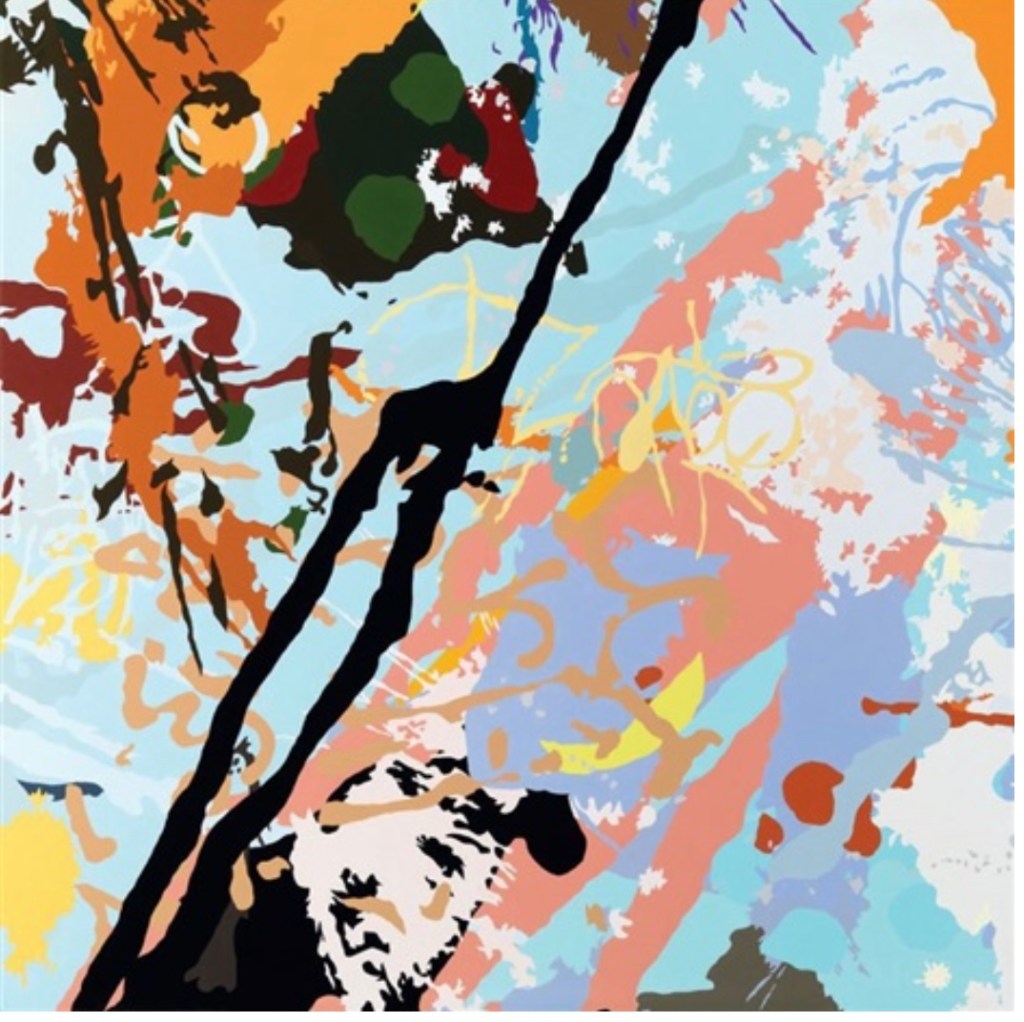
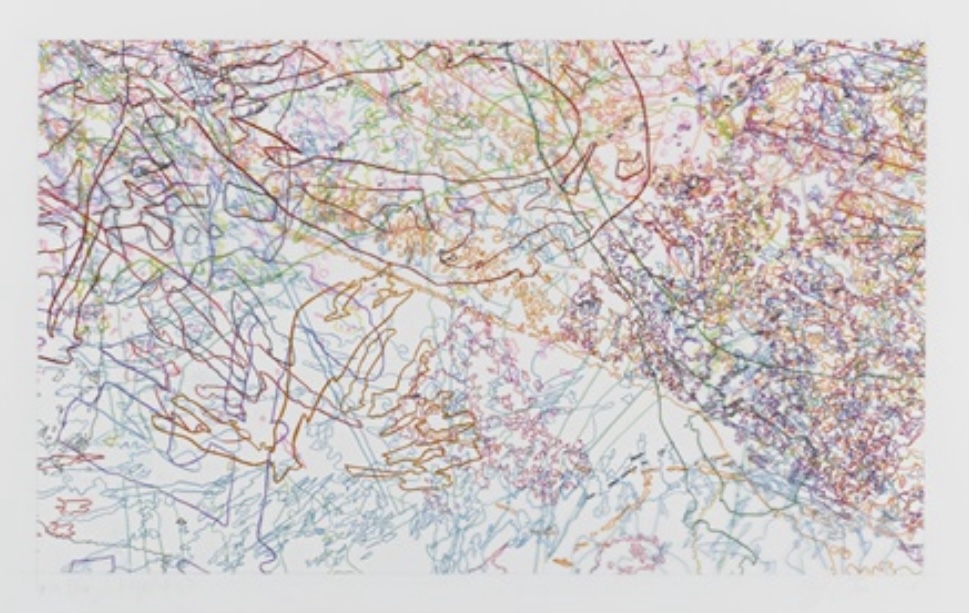
Ingrid Calame is a contemporary abstract artist known for tracing stains and markings she finds in her environment. She transfers them into complex abstractions. He holds a MFA degree from California Institute of the Arts in Valencia, California. As art critic James Cohan puts it in his article about Calame’s exhibition: ” the structural source of Calame’s abstract paintings is the topographies of stains that she finds on the streets and side walks of New York and Los Angeles that she meticulously documents and catalogues”. Her artworks can be classified as expressionistic abstractions, she says: “Colour for me is a trigger for thoughts and memories”.
Below are some of her artworks. From left to right: UHN-SPST, Ingrid Calame, enamel on aluminium, image via http://www.artnet.com;
196 DRAWING (UP TO THE LA RIVER TRACINGS), 2005, Ingrid Calame, coloured pencil on Mylar image via http://www.artnet.com;
I did my research further on the following artists who engage with the concept of trace, index and presence.
Susan Derges (1955-)
Susan Derges is a British contemporary photographic artist best known for her pioneering technique of capturing the movement of water by immersing photographic paper directly into rivers and shorelines, what is, actually, is her study of traces moving water leaves. As a photographer she experiments with different analog and digital techniques to create new forms and perspectives. Her artistic ambition is to capture invisible scientific processes such as the physical appearance of sound vibration, the evolution of frogspawn, the cycles of the moon. Susan Degree received her training as a painter at Chelsea School of Art, then at The Slade, London. She also did a research study at Tsukuba University in Japan what was a catalyst for most of her works being inspired by Chaldni and Japanese minimalist culture. Her artworks can be found at The Getty Museum, the Metropolitan Museum of Art, New York, The Victoria and Albert Museum, London, The Hara Museum of Tokyo and many others.
Below are some of her artworks, from left to right:


David Maisel (1961-)
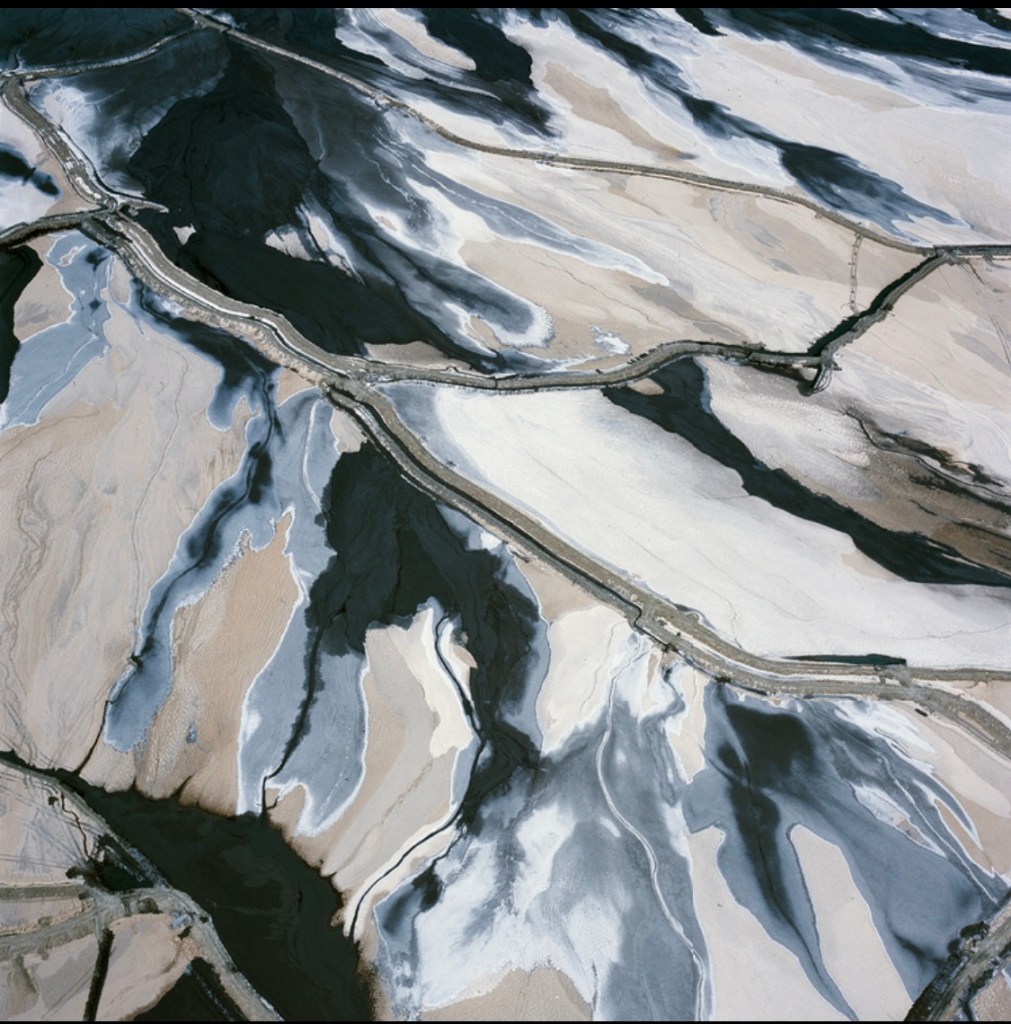
David Maisel is a well know contemporary American visual artist, photographer, who creates powerful aerial images of impact of human intervention on the landscape. He was born in NYC, received his BA at Princeton University and a BFA degree from California College of Arts, San Francisco. He is interested in aesthetics of radical change of human-altered environments. He investigates institutional archives and shows the power of objects to evolve over the time. For example one of his projects depicts the damage brought by massive lithium and copper mining sites in Chile’s unique and fragile Atacama desert. His artworks – photographs and multimedia projects, as well as public installations can be often seen at international exhibitions and private collections, as well at the Metropolitan Museum of Art, The National Gallery of Art, Washington, the J. Paul Getty Museum and many others. he is a recipient of a 2018 Guggenheim Fellowship in the Creative Arts.
Below are some of his work, from left to right: Tailings Pond 1, Mineral, Centinela, Copper Mine, Antofagasta Region, Atacama Desert, Chile, 2018, David Maisel, image via http://www.artsy.net;
The Lake Project 13, 2002, David Maisel, Archival Pigment Print, image via http://www.artsy.net; The Fall (Borox 5), 2013, David Maisel, archival pigment print, image via http://www.artsy.net;

Bibliography: Doris Salcedo, 1958, Bogota, Colombia, online on http://www.awarewomenartists.com [accessed on Nov 27th, 2022]; Doris Salcedo, born 1958, online on http://www.tate.org.uk, [accessed on Nov 27th, 2022]; Doris Salcedo, Colombian, born 1958, online on http://www.moma.org [accessed on Nov 27th, 2022]; Ingrid Calame (American, b.1965) online on http://www.artnet.com [accessed on Nov 27th 2022]; James Cohan, Ingrid Calame, October 4 – November 1, 2003, New York, online on http://www.jamescohan.com [accessed on Nov 27th 2022]; “Artist Ingrid Calame on how she draws”, Interview by Dale Berning, 19 Sept, 2009, The Guardian, online on http://www.theguardian.com [accessed on Nov 27th 2022]; “Traces, Indexes and Implied Presence”, online on http://www.artsy.net [accessed on Live 28th, 2022]; Susan Derges, online on http://www.danzigergallery.com;Hundred Heroines, Susan Derges, by Megan Ringrose, online on hundred heroines.com [accessed on 28th Nov, 2022]; David Maisel, American, b.1961, online on http://www.artsy.net [accessed on 28th Nov 2022]; David Maisel, Yancey Richardson, online on http://www.yanceyrichardson.com [accessed on Nov 28th 2022];
My reflection on trace artists I did a research on.
Exercise 2: Finding Inscriptions and Traces around
Below are the photos of traces I have observed around daily visiting those usual places around me. The traces as my inspiration.


Traces I left with my tennis shoes while playing tennis


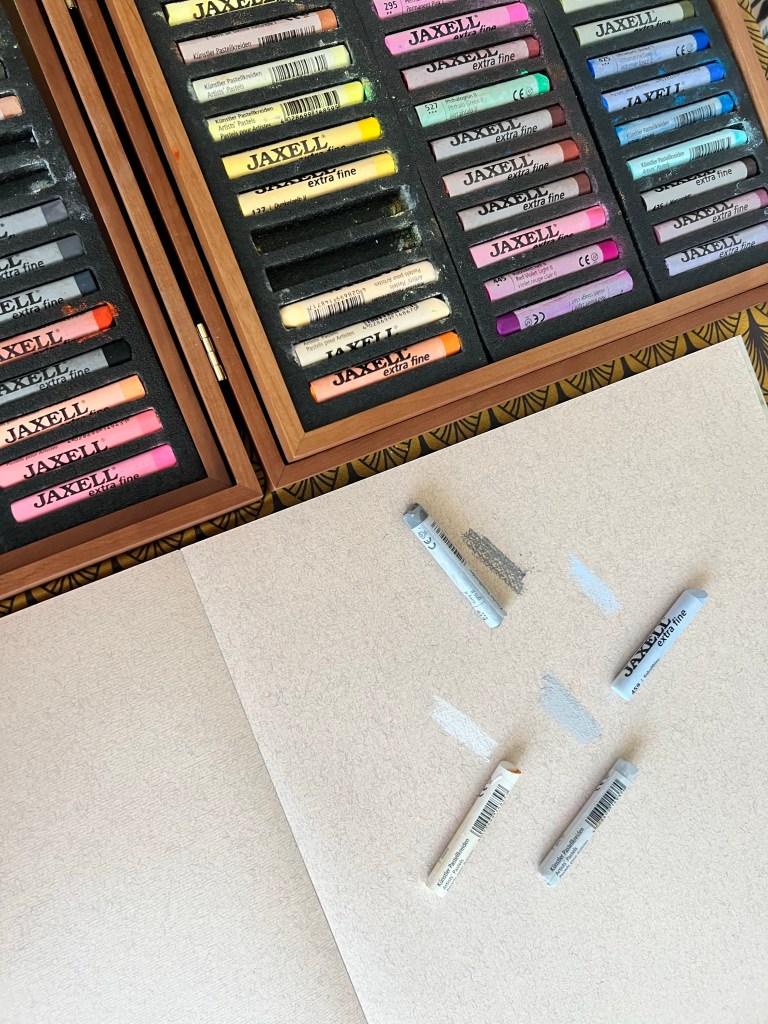
I used soft pastels set from Jexell, pastel paper, using 2 sheets making an A3 size, Japanese Tambi aquarelle set, ink pen.
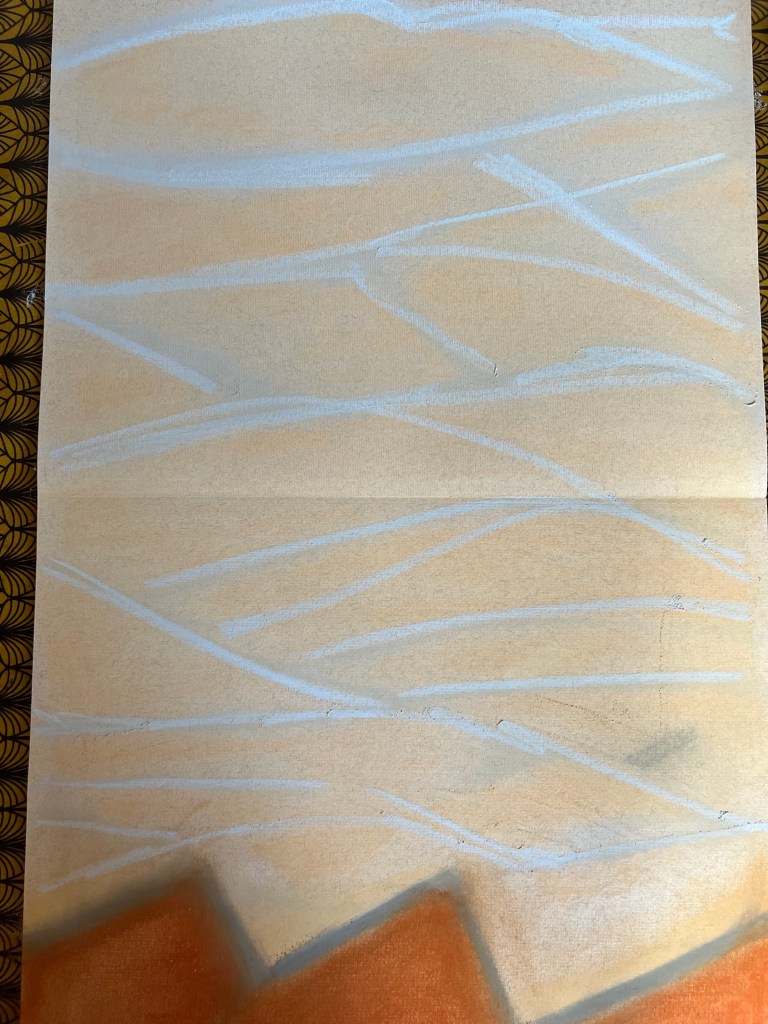
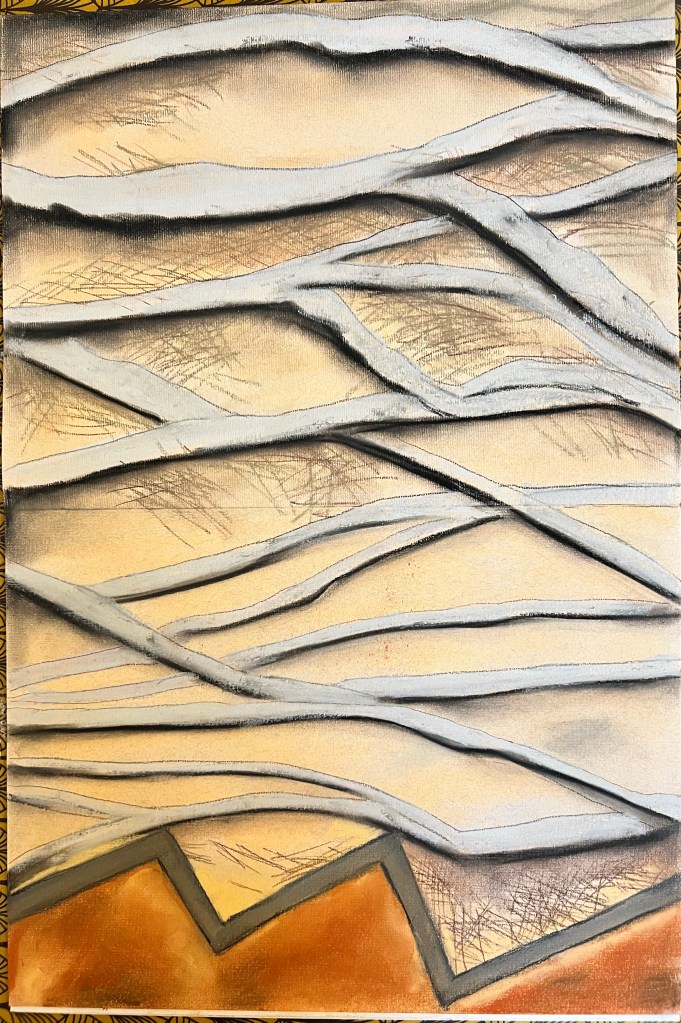

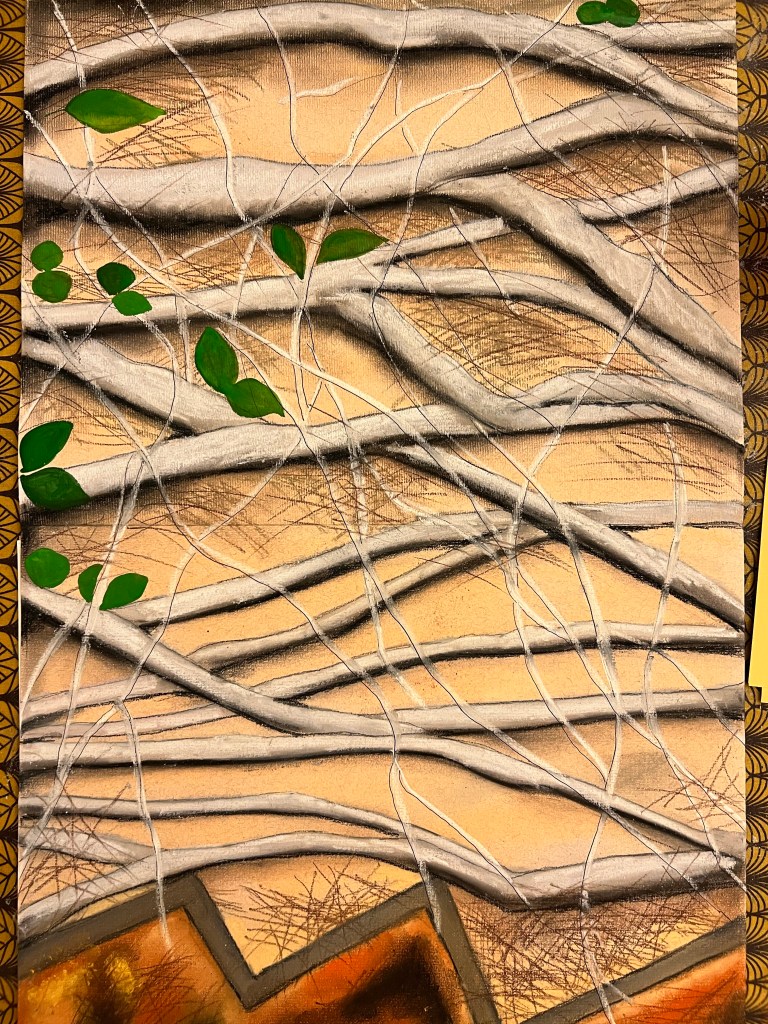

The final outcome
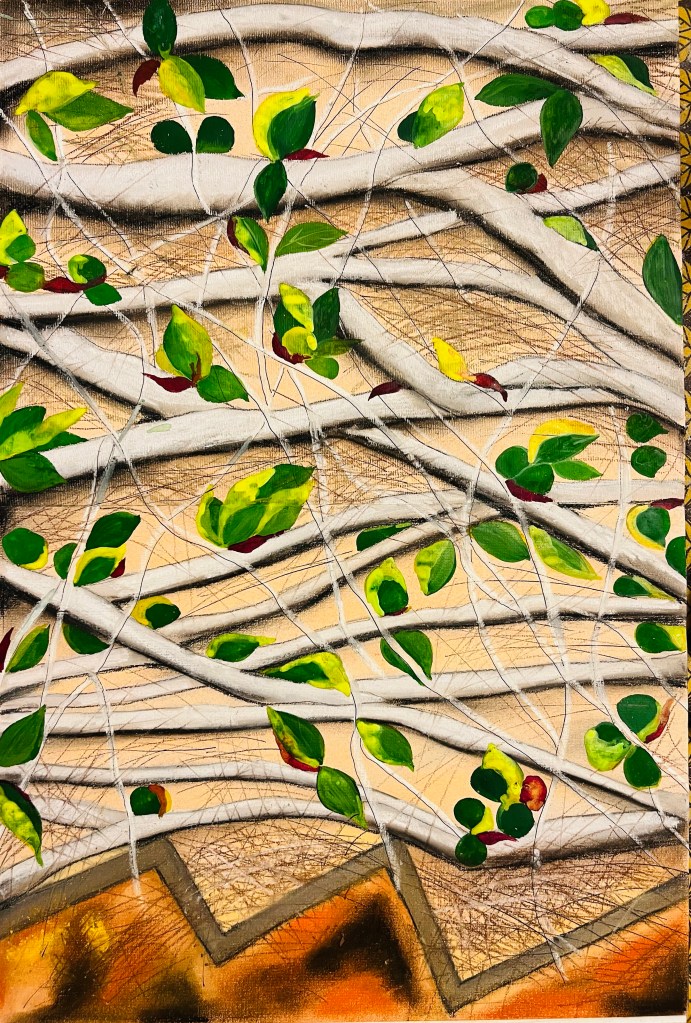
I have used the fixating spray for pastels. Then I decided to add more lines with black and gold color ink to explore how the painting will change. I wanted to make it more intense. The result is below.
 JeanArt