
Research Task: artist Charlotte Salmon. We have to research on artist Charlotte Salomon and reflect on the following questions:
Does the strength of her work lie purely in its remarkable narrative, or, without knowing the story, do we appreciate it solely from the quality of the drawing or its expressive nature? Can you see the influence of her artistic contemporaries in her work? If so, who and in what aspect of the work do the influences lie?
Charlotte Salomon (1917-1943)
Charlotte Salomon is one of the most prominent female Jewish artist of XX century. She is famous for her unique, lifetime project called A Life? or Theatre? which comprises seven hundred and sixty nine gouaches. This artwork is autibtigraphocalShe was born in Berlin and was an only child of haute-bourgeois German Jewish family. Charlotte received some formal training in arts at Academy of Arts in Berlin, but she dropped it out at some point. She lived a short and tragic life, full of misfortunes such as suicides of her loved ones- her mother and grandmother. She was killed by Nazis in Auschwitz concentration camp in October 1943, being 26 years old. Below I put some of her artworks I find as especially touching to me.
Zelfportret (Selfportrait), 1940 from A Life? or Theatre?, Charlotte Salomon, gouache on cardboard, image via http://www.awarewomenartists.com
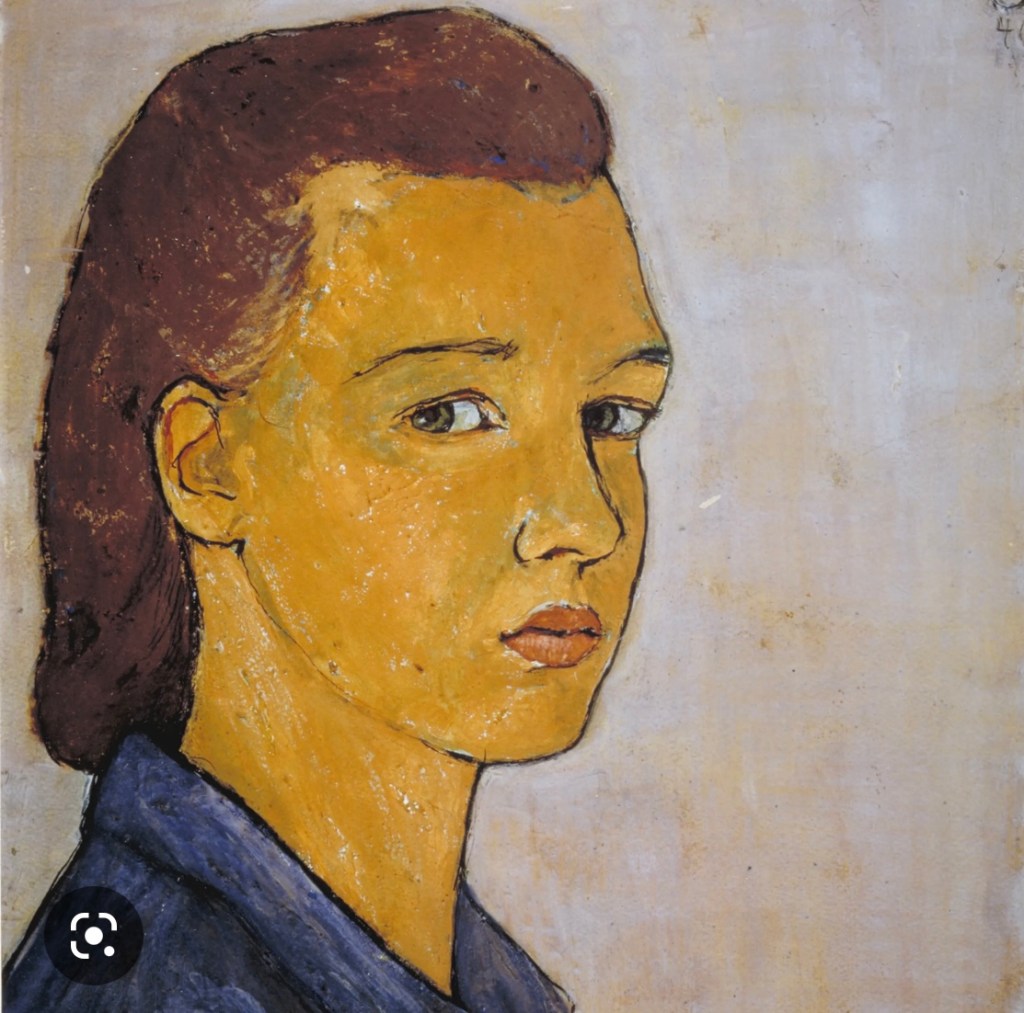
Sheet 4175, 1940 from A Life? or Theatre? Charlotte Salomon, gouache on cardboard, image via http://www.awarewomenartists.com

Charlotte Salomon
Does the strength of her work lie purely in its remarkable narrative, or, without knowing the story, do we appreciate it solely from the quality of the drawing or its expressive nature? Can you see the influence of her artistic contemporaries in her work? If so, who and in what aspect of the work do the influences lie?
I asked myself if I would appreciate Charlotte Salomon’s artworks less if I wouldn’t know a story of her life or a particular story behind a specific painting. The answer would be as probably- no. But, whether you know or don’t know the story behind it, her artworks catch viewers’ attention because they are deeply emotional. Her paintings are complex; they stimulate the viewer’s thought process and are thought-provoking, amaze with a unique expressive artistic style. When I gaze at her artworks, they puzzle me, I look at different details, and I want to know and see the story, the narrative. We must read her paintings, the lyrics and the objects, the scene and the play on the canvas. Her case is when a remarkable narrative is in harmony with amazing artistic talent. I particularly admire her ability to paint portraits and facial expressions in a tiny size with a limited number of lines. Her line skills are extraordinary, as well as her feeling of the right composition.
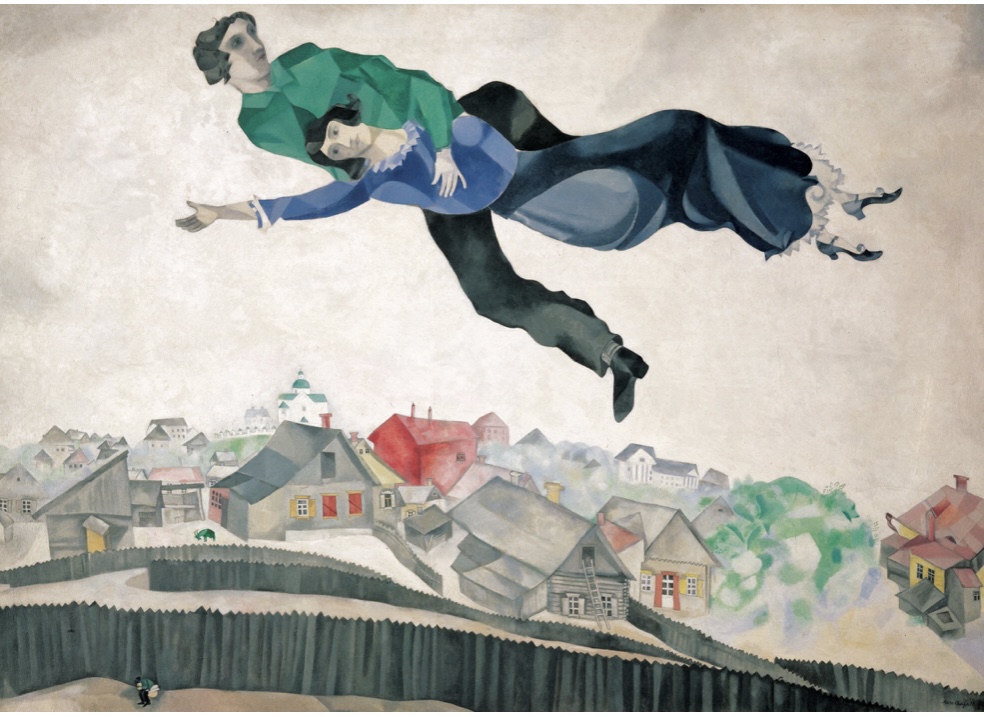
I find a great deal of influence on her personal artistic approach from the artworks of Henri Matisse (1869-1954) and Marc Chagall (1887-1985). Below are some of their paintings, from left to right. I find a lot in common in the overall compositions, linear and colouristic approach.
La joie de vivre, 1905, Henri Matisse, oil on canvas, image via http://www.blog.artsper.com;
Portrait de Marguerite, 1906-1907, Henri Matisse, oil on canvas, image via http://www.blog.artsper.com;
Open Window, Henri Matisse, 1905, oil on canvas, image via http://www.blog.artsper.com;
Over the Town, 1918, Marc Chagal, oil on canvas, image via http://www.arthive.com;


Bibliography: “The obsessive art and great confession of Charlotte”, by Toni Bentley, July 15, 2017, online on http://www.newyorker.com [accessed on October 15th, 2022]; Charlotte Salomon 1917-1943, Encyclopaedia of Jewish Women, by Mary Lowenthal Felstiner, online on http://www.jwa.org [accessed on October 2022];Charlotte Salomon (1917-1943), Artiste-Pentre, Youtube, [accessed on October 15th. 2022];”A spirit the Nazis couldn’t erase: Charlotte Salomon : Life/ or Theatre? review”, by Jonathan Jones, 6th of November, 2019, online on http://www.theguardian.com; Charlotte Salomon German Painter, Editors of The Art Story, online on http://www.thertstory.org {accessed pn October 15th, 2022];
Exercise 4: Sequential narrative.
For this exercise we must produce 3 drawings, no smaller than A4, each done at different time of the day.
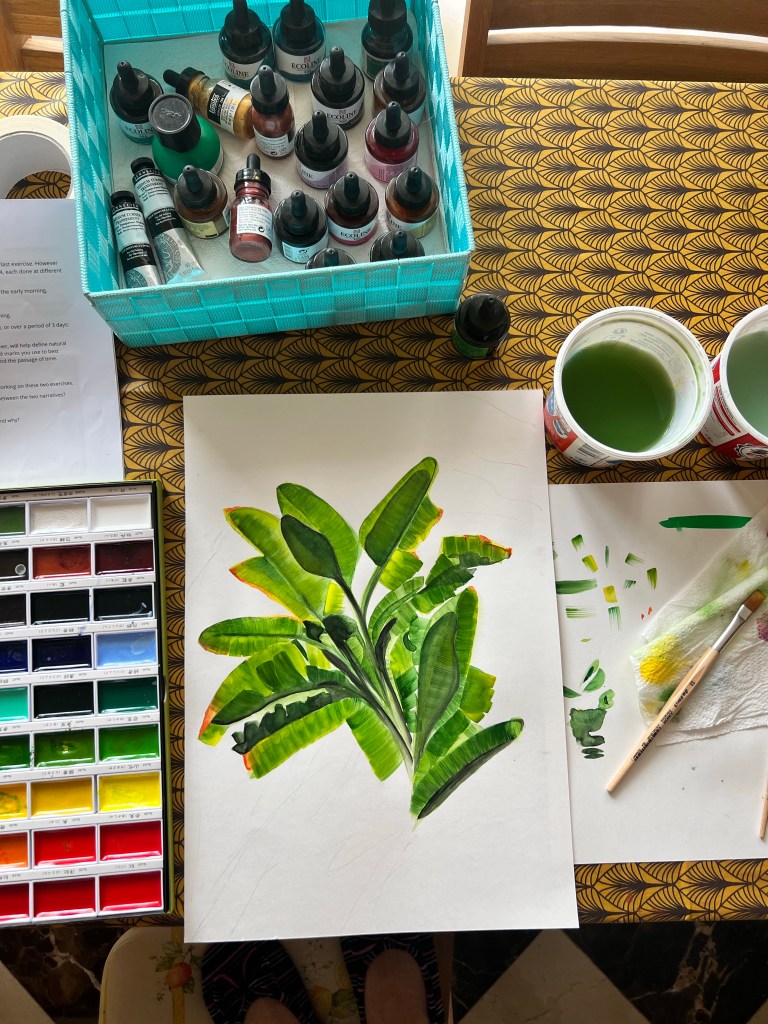
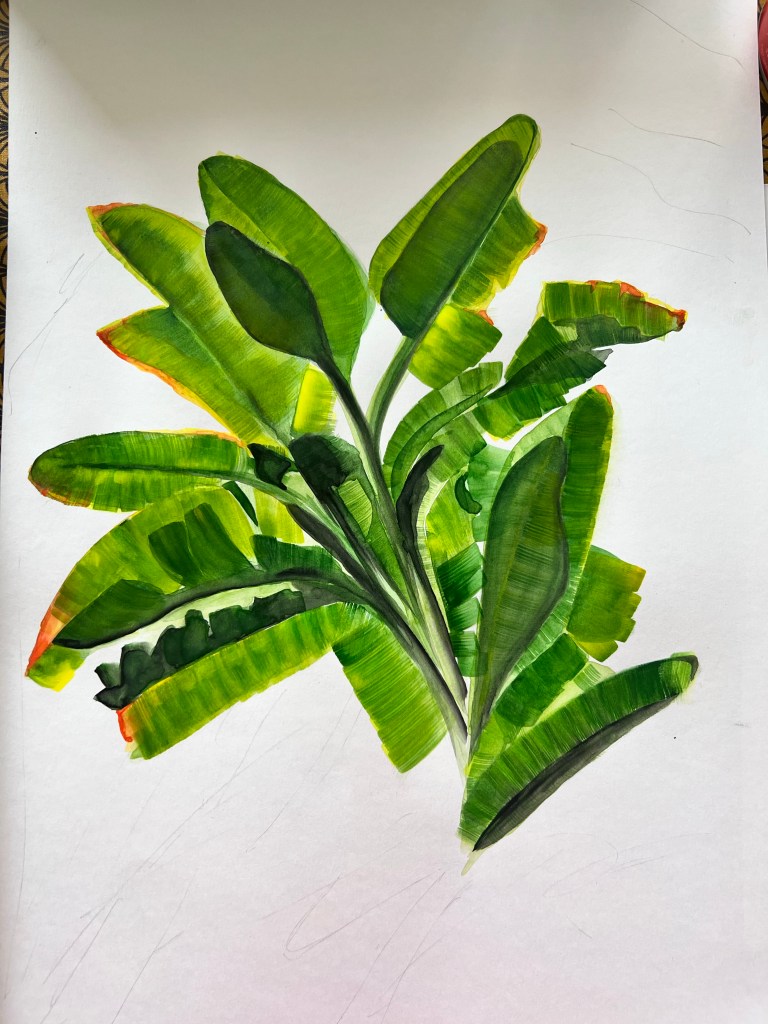
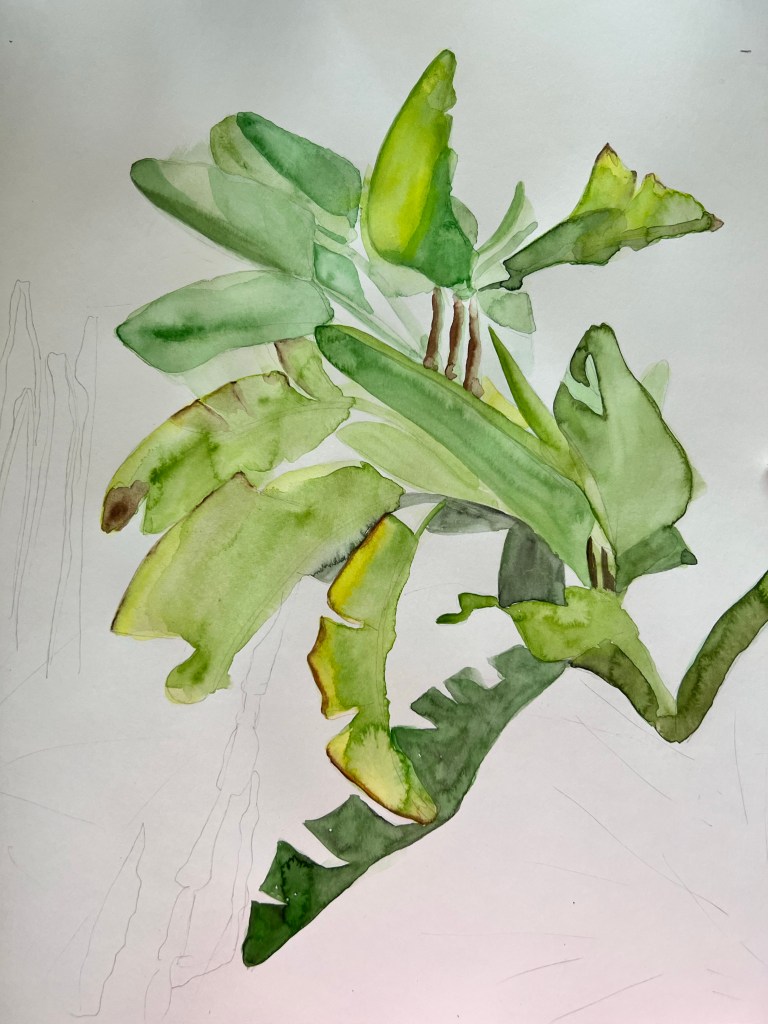
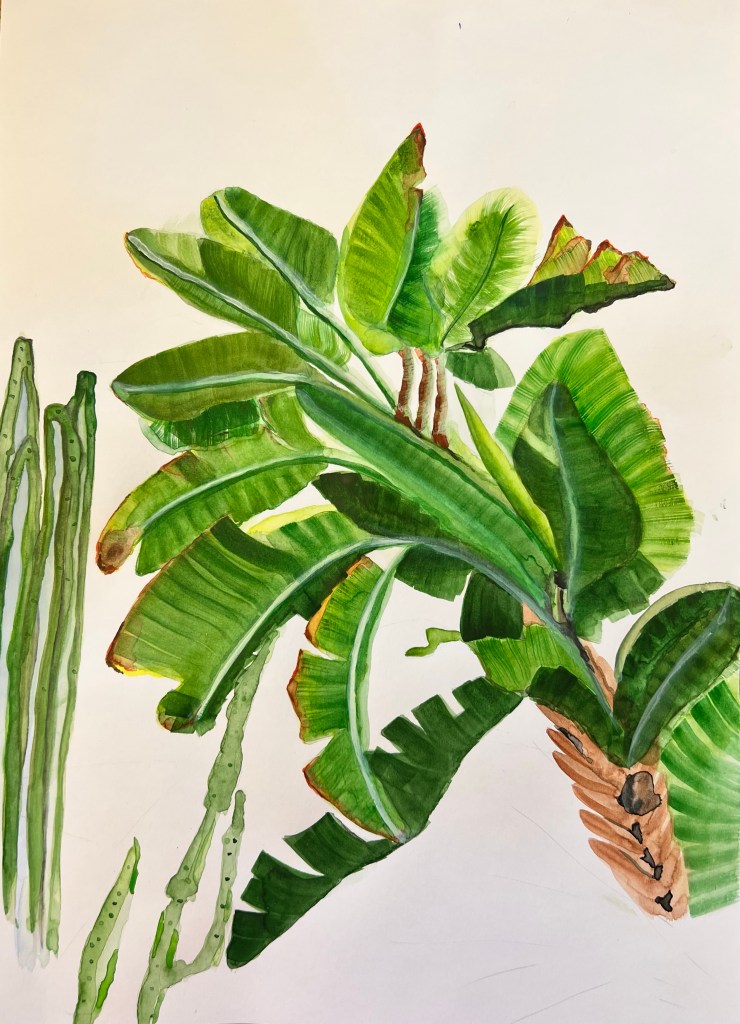
Below is an outcome of my work for this exercise. I have chosen to observe and paint a large plant in the garden. It was a convenient and suitable object because it looked very different at different time of the day, what was really engaging for me to study and reflect in drawing and painting it. I have used: an A3 size, 200 g/m3 mix media paper from Canson, 36 colours Japanese aquarelle Tambi set, shellac based inkfromSennelier in Spring Green 873, liquid watercolours from Ecoline in 700, 656, extra fine dry pastels from Jaxell, brushes for ink painting. I picked up aquarelle and inks as a medium because they allowed me to create effects of different shades of green, black and grey colours and shadows from sunlight. Aureole also allowed me to create transparent layers to achieve a variety of greens in a complex garden picture. Oils would be too heavy for implementing my idea of creating a garden mood. Dry pastels I used for background to show the sky, clouds and a sun light in twilight time. Aquarelle wash as a background was too risky for me, since it could dissolve the edges of my objects on the paper. I have discovered that using dry passes over dried aquarelle produces a neat and aesthetically pleasing effect. Personally, I am not a big fan of very visible, messy brushstrokes. It appears to me- dry pastels and aquarelle work in a harmony together. The night time plant was very interesting and engaging to paint. I thought it would be more interesting for me to paint the plant when it was well lit by the sunlight, but, unexpectedly, I found painting it in twilight extremely stimulating. It took a while to find a perfect colour for the night time, since painting the leaves just in black didn’t work for me and that was not what I was imagining and thinking about. I mixed grey and dark green colours to achieve a dynamic shade of grey. Touch ups with white colour as a top layer with a flat brush also helped me to achieve an interesting visual effect. As you will see, the same plant came out as very different, though naturally I ended up with a triptych. The viewer can see how the same plant lives his moments differently, depending on the sunlight.


The outcome:

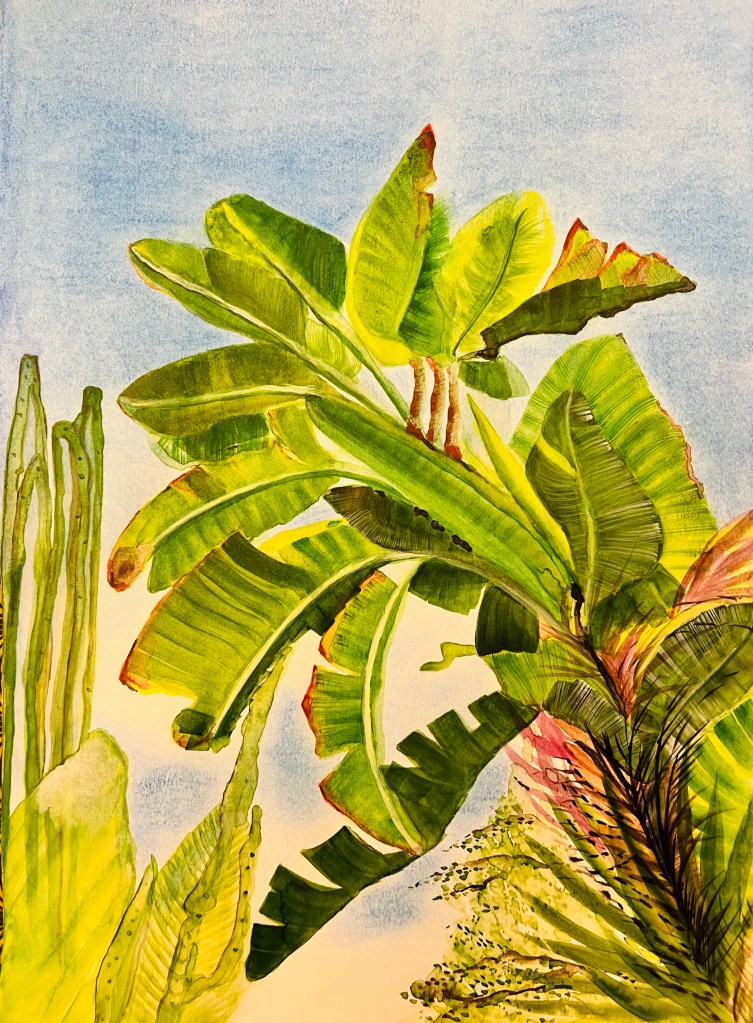
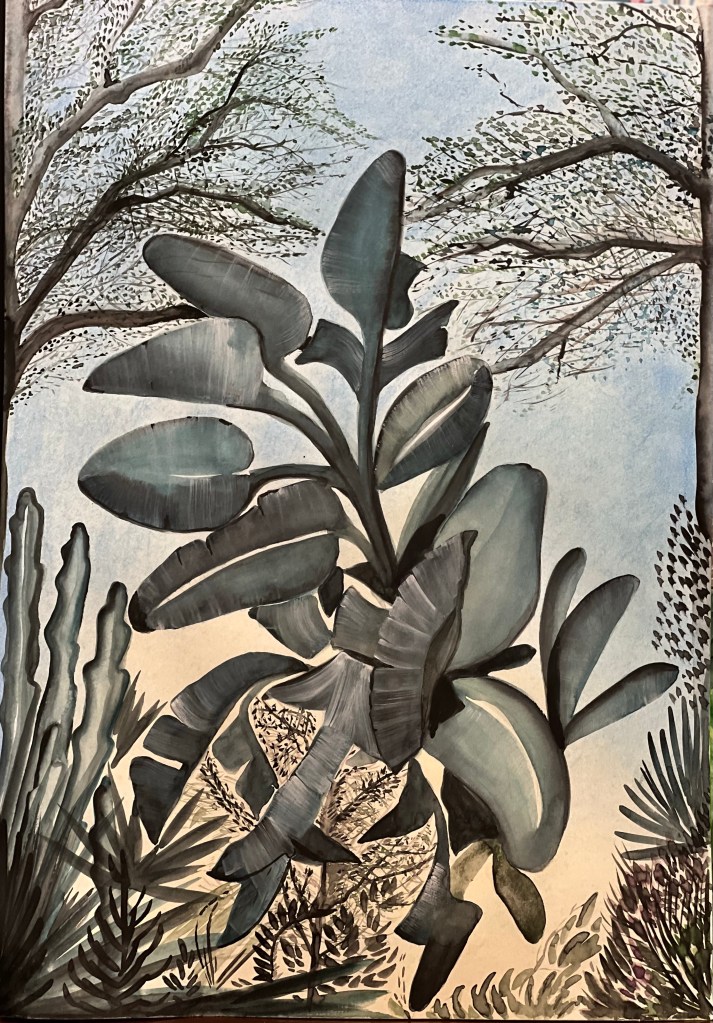
The triptych:


Work in progress:




 JeanArt