Reading Task:
Wickstead, H. (2008) Drawing Archaeology in L.Duff, and P. Sawdon (eds) 2008 Drawing. The Purpose. Intellect Stress, Bristol. online on http://www.academia.edu [accessed on October 8th, 2022];
Exercise 3: Continuous narrative.
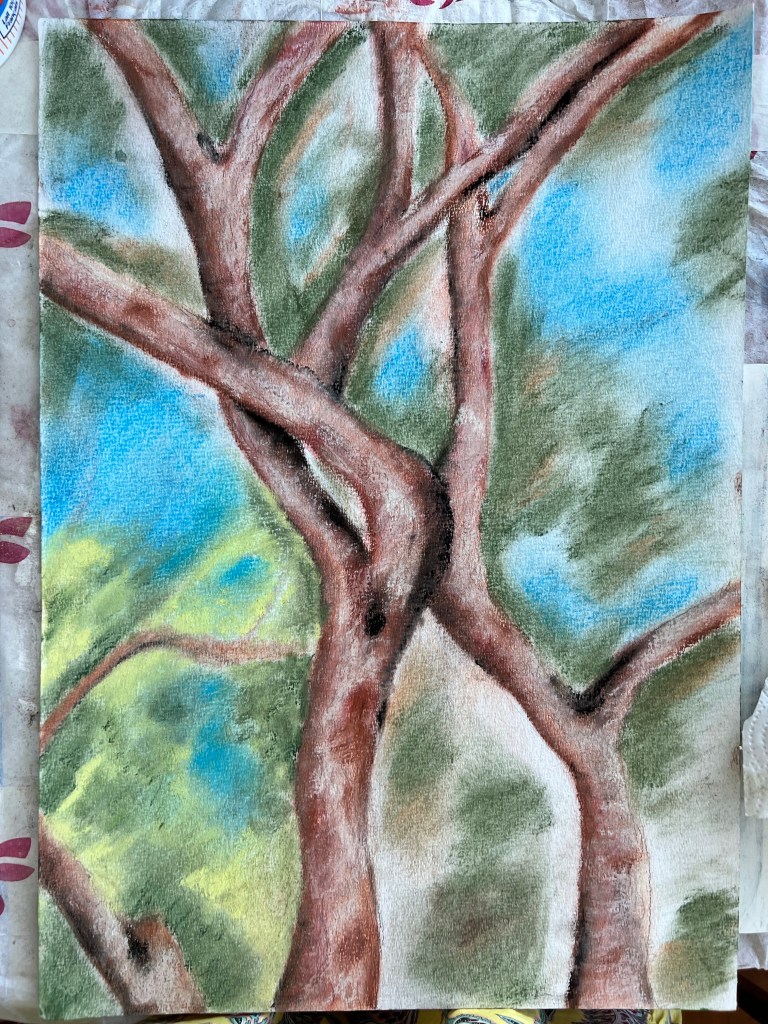
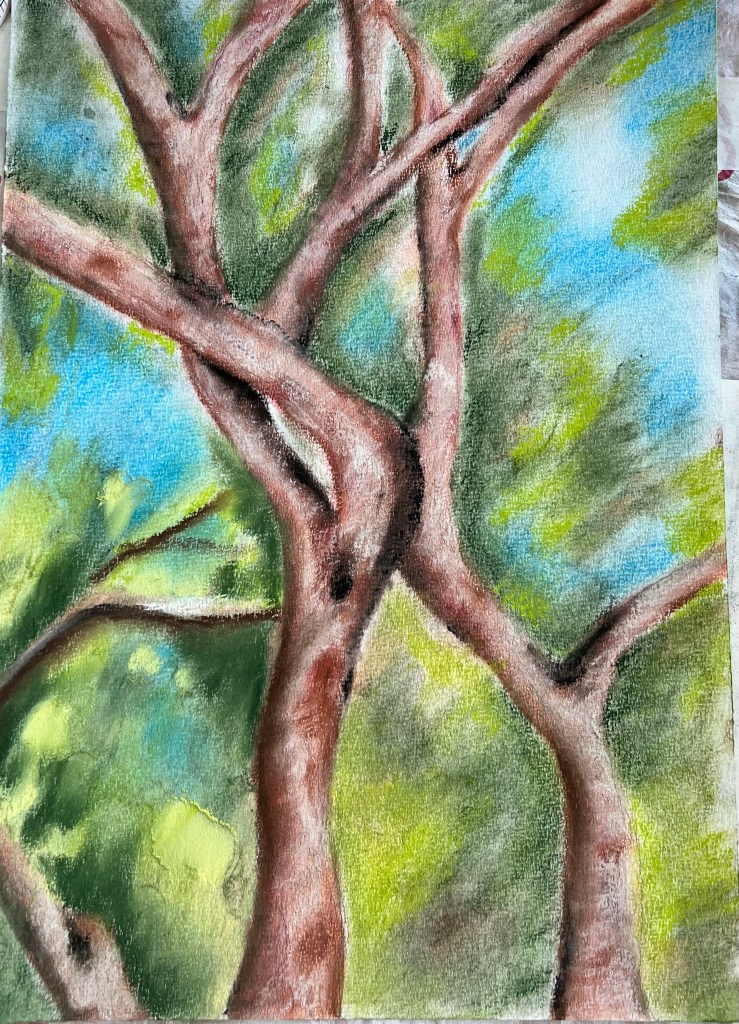
For this exercise I picked up a landscape I observed in Izmir, Turkey. I used A4 drawing paper from Canson and a set of dry pastels from Jexell. Below are the sketches I did according to the instructions on the page 38 of our course book. After researching continuous narrative, I need clarification on the instructions to study a landscape for this particular exercise. The continuous narrative applies to depicting multiple scenes, objects, and characters in one frame. That’s why continuous narrative artworks are often represented on large-scale surfaces to embody all the characters/objects/scenes. At the same time, we are asked in this exercise to study a landscape and do it in an A4 size format: the small size format with no active story. I don’t think I completely understood the idea of course developers’ for this exercise.
Bibliography: “What is narrative in Art”, Kaitlin Garcia, Stephanie Przybylek, Humanities Courses, updated on 04/14/2022 online on http://www.study.com; [accessed on October 8th, 2022];
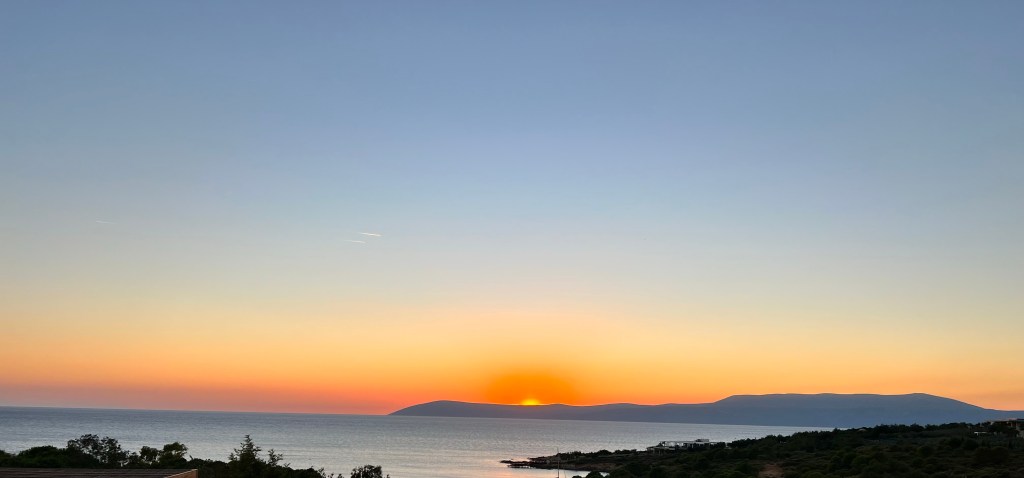


Sketches:


Another trial for a tree as a continuous narrative. Soft pastels and inks on paper.

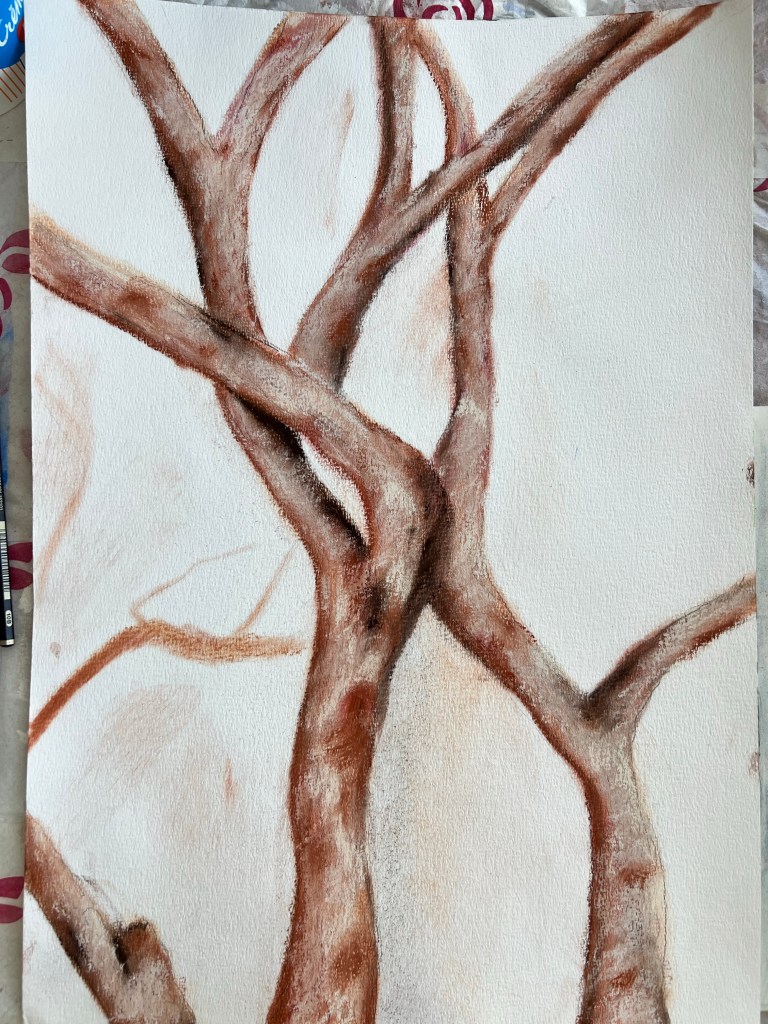
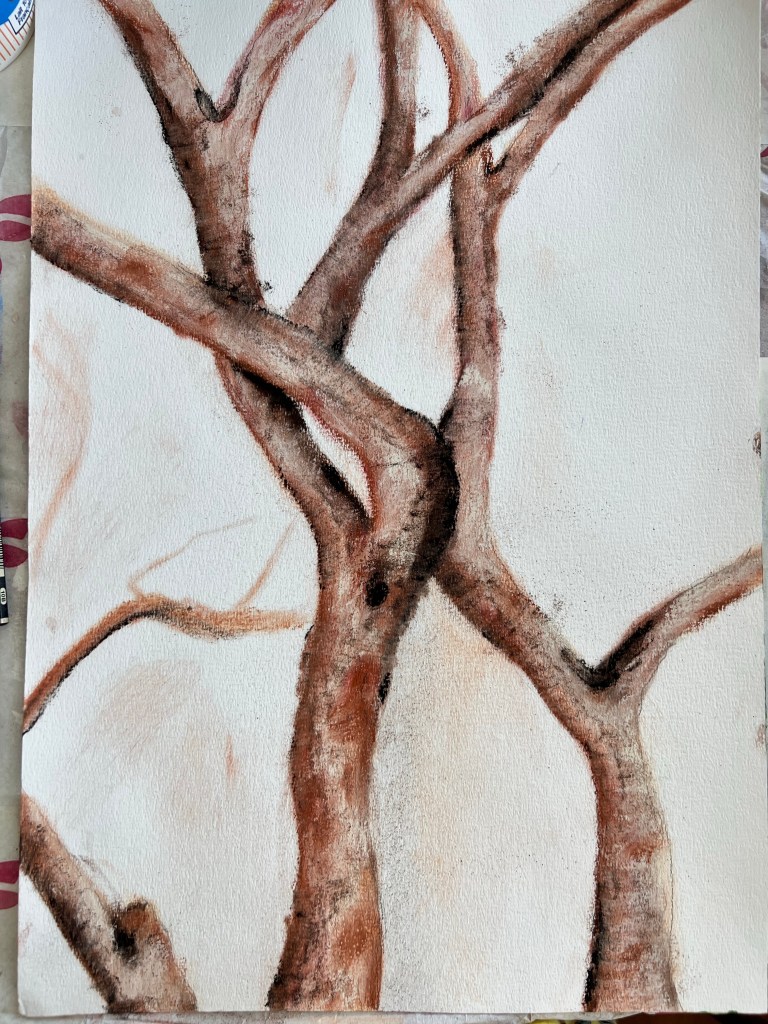




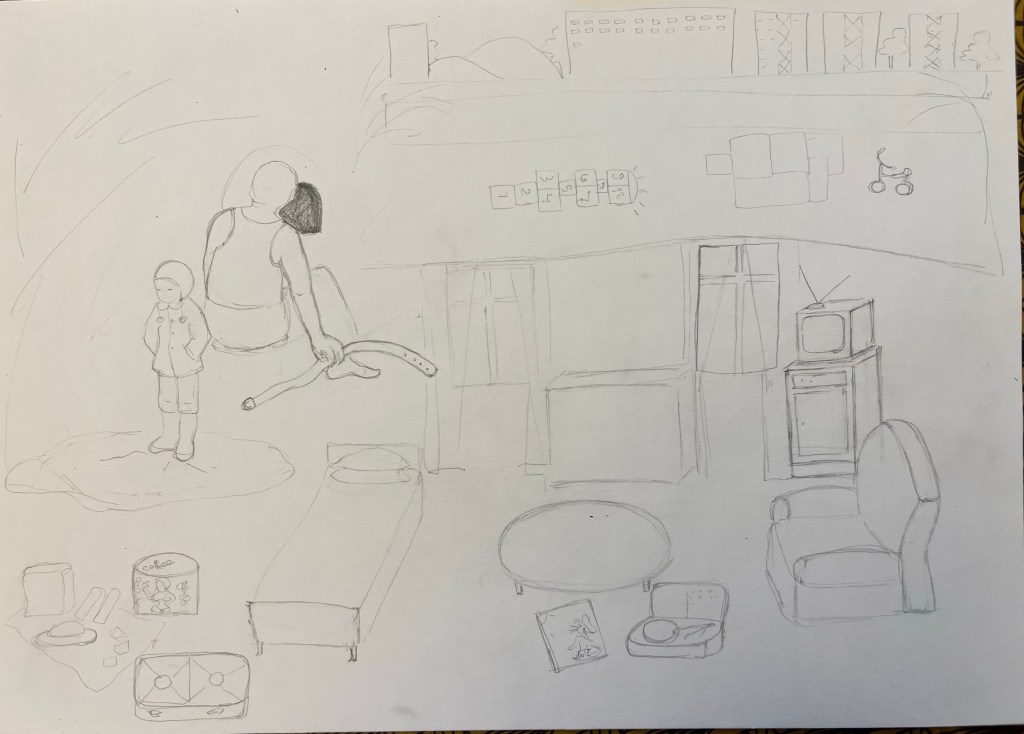
Below is my another drawing for this exercise about continuous narrative. I used A3 size mix media drawing paper from Canson, blue ink pen, HB pencil ands of pastel pencils Gioconda 24 from Koh-I-Noor. This a story of my childhood, which I spent as a child, living along with a clinically depressed family member. There is a quite strong personal narrative unfolding on the paper. This drawing I consider representing a continuous narrative since it depicts different scenes in one frame.

Work in progress :

 JeanArt