Research: to investigate a concept of Narrative through a range of techniques and presentations, and to begin to create a personal visual language.
Reading Task: Environment and Storytelling. We are required to read:
Embury, G. and Minichiello, M. (ed) (2018), “Chapter 6 Creating a Narrative” In: Reportage Illustration: Visual Journalism. (s.l.): Bloomsbury Publishing. pp. 112-127.
My reflection on reading.
This reading made me think about the stories I tell in my artwork. Of course, my works have a narrative that comes naturally and automatically to any artist. “What is this about?” – this is the first question any viewer asks themselves while gazing at any object of visual art. We look for narrative and can’t avoid finding it, even though some artists follow Greenberg’s path creating art “free from thought”. The viewers will find some narrative anyway.
So what stories do I deliver in my works? Most of my narrative comes from my spiritual inclinations and faith in God. I go to the garden and see His hand, creative thought and power. I paint many garden fragments because I am thrilled with God’s creativity and artistic ability.
Another favourite narrative for me is about my perception of our Earthy existence. I like to think about the human soul’s journey.
I am not attracted to the representation of any conflict or aggression. However, I have some works which reveal my pain, which comes from the way I lost my father. I think my narrative is very introverted and even anti-social. However, I appreciate those artists who can deal with social surroundings and situations as artistically as Louis Netter does it.
This reading also made me think about my apathy for comic books. For some reason, I have never been fond of comics. I perceive comics as a simplified version of a story. However, I fully admit that my view on this genre is also a simplification and underestimation of visual art and narrative talent of those who create them.
This reading contains advice for illustrators who want a better look at reportage drawings. I did it when I watched a tennis match and observed kids playing at the playground. I drew the tennis players, cameramen, and playground elements such as a fountain and swings.
Usually, I don’t put a task to represent an actual social story involving people at a specific location. Normally, I am free from any location and can play with my subjects, creating an imaginary environment. As well as, I don’t depend on any superior opinions and visions since I don’t have any employer of my artistic talent or a client yet:))
I also build up my narrative gradually as other artists. I research the subject and think about the individualisation I can make and add to it. I experiment with the mediums since different mediums work differently for the goal. American illustrator, teacher and author Louis Netter gives a great interview about his creative process, favourite materials, and work routine. I liked his comment about being absorbed if he spends 4-5 hours working on his sketches at the location. Actually, for me, this is also an important point in my creative process, which I always try to catch. I know the best result I can produce if I have this moment of being completely absorbed by the creative process. It does require time. You really need to work continuously for several hours to achieve this state of mind.
I use my camera a lot; this is my essential tool, because I refer to photos I have taken for details and colours, finding a composition.
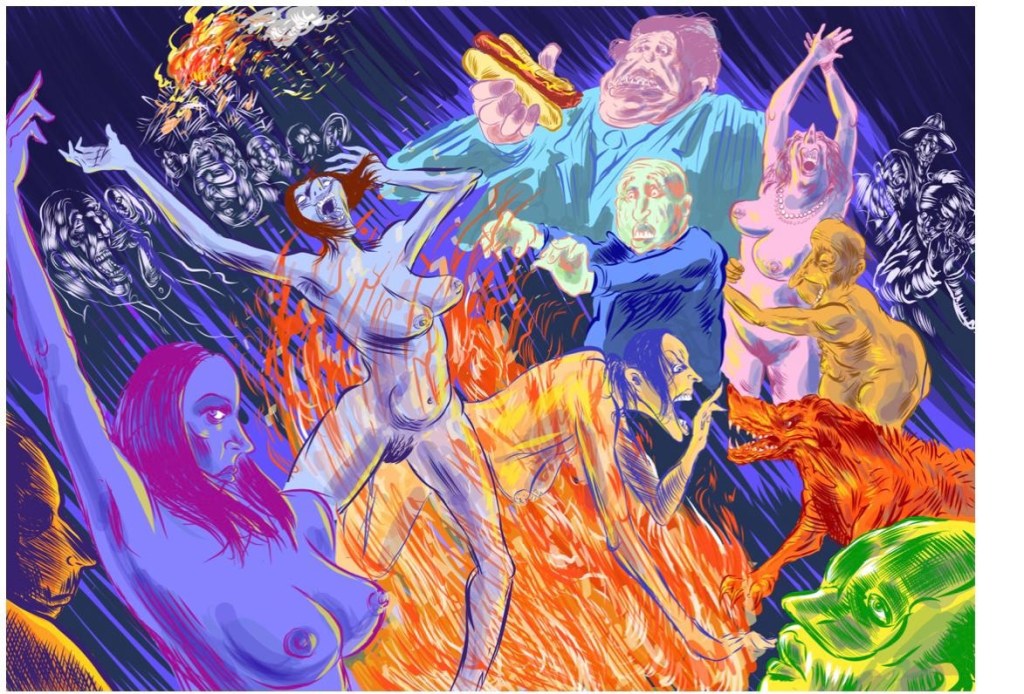
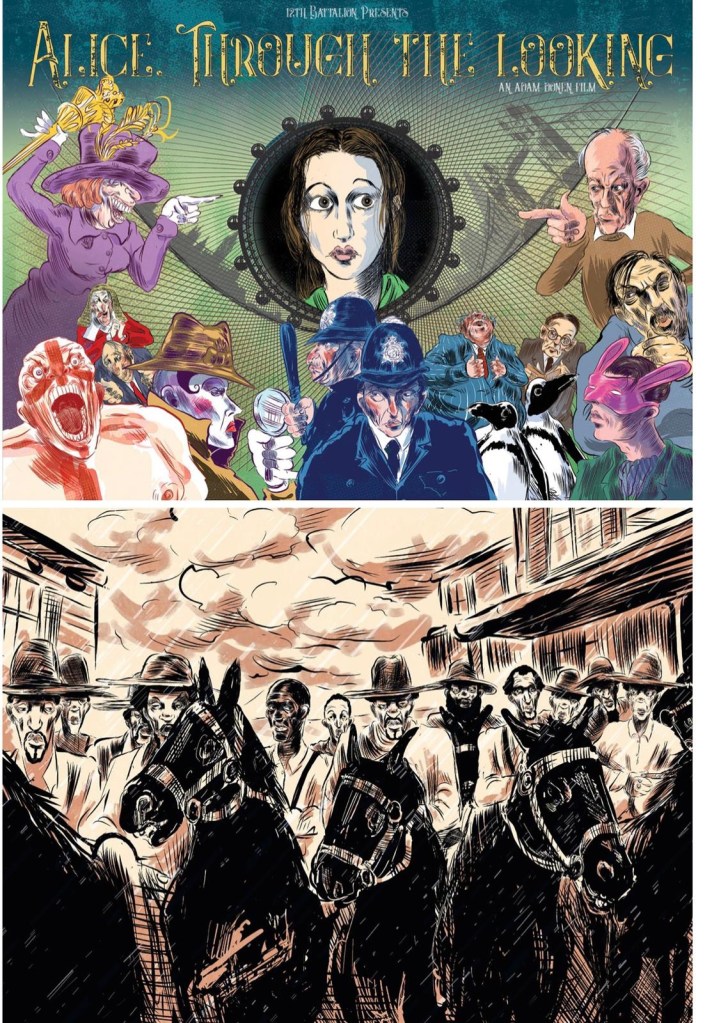
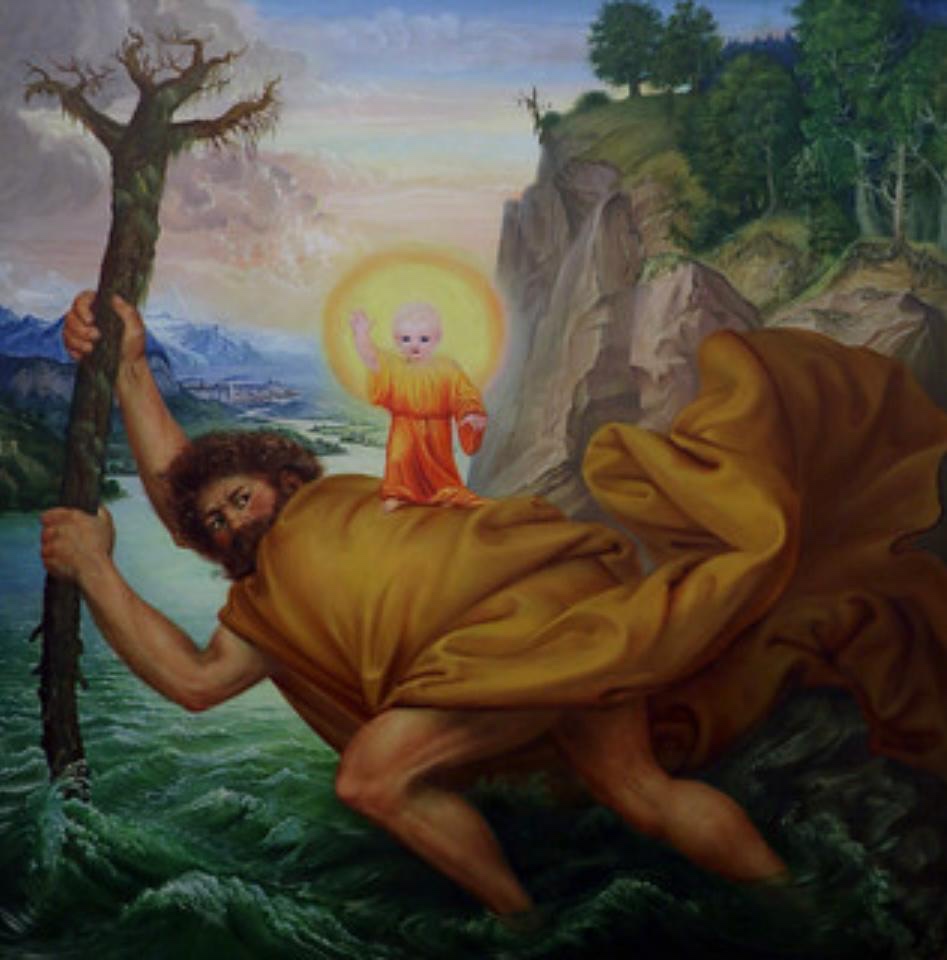
I also looked up at works of Louis Netter and other artists he mentioned in this interview: George Grosz (1893-1959), Otto Dix (1891-1969), Nicholas de Crecy (1966-), William Kentridge (1955-). I checked Louis Netter’s website http://www.louisnetter.com. He is obviously a very talented visual artist with a notable, distinct individual approach to drawing. His artworks a incredibly intellectual, since they are about how he brings it on his website: “Both of my illustration work and my personal work reveal in the delights of decadence and absurdity. We live in strange times and although I had initially thought that satire was dead….. we can still find ways of laughing through clenched teeth”. Below I put some of his and other above mentioned artists’ artworks I found as very appealing to me.
Louis Netter, images via http://www.louisnetter.com;

Below: Saint Christopher, Otto Dix, oil on panel,1938, image via http://www.blog.artsper.com;
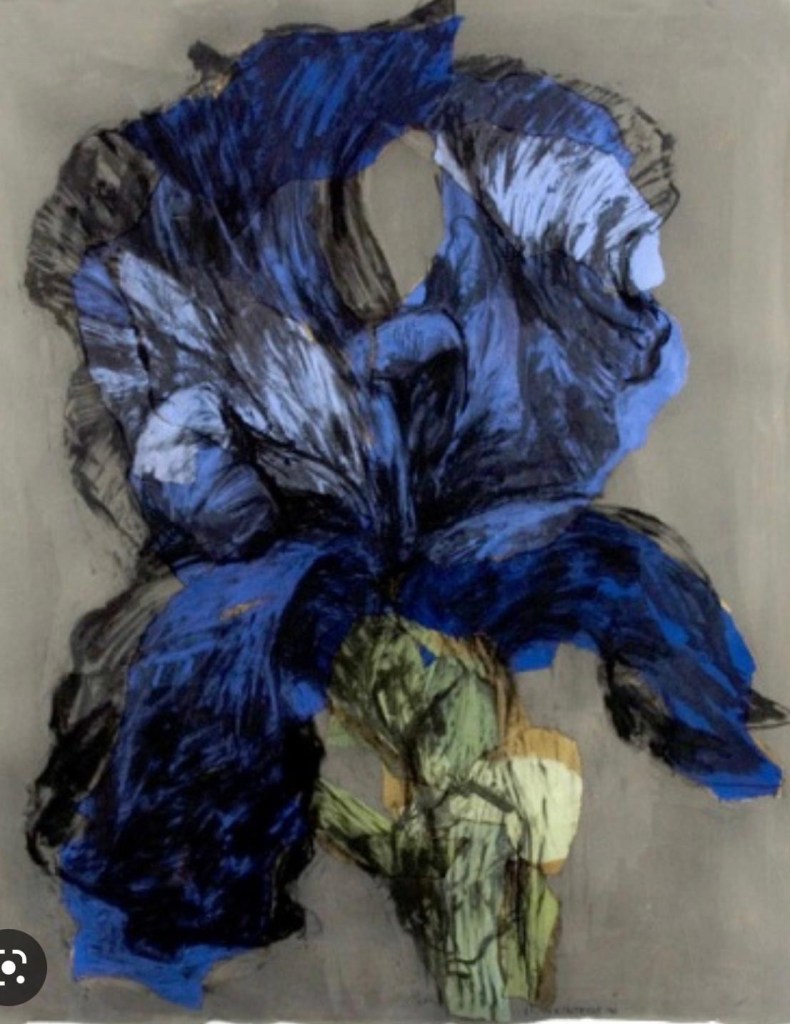
Below: Dutch Iris, William Kentridge,1996, charcoal on paper; image via http://www.artnet.com;
“10 Things to Know about ….Otto Dix”, Emmanuelle Callerame, 2021, online on http://www.blog.artsper.com, [accessed on Sept 5th, 2022]; George Grosz, Tate, online on http://www.tate.org.uk; [accessed on September 5th, 2022}; Louis Netter, About, online on http://www.louisnetter.com; [accessed on September 5th, 2022]; Nicholas de Crecy, online on http://www.artnet.com, [accessed on September 5th, 2022]; William Kentridge, online on http://www.artnet.com, [accessed on September 5th, 2022];
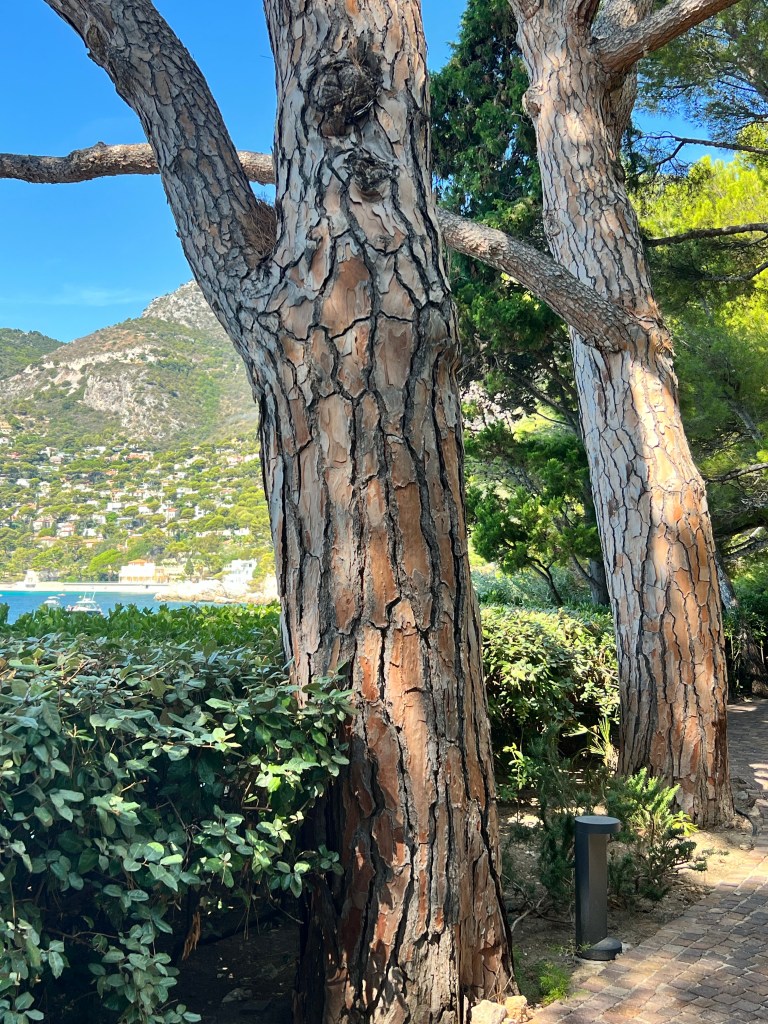
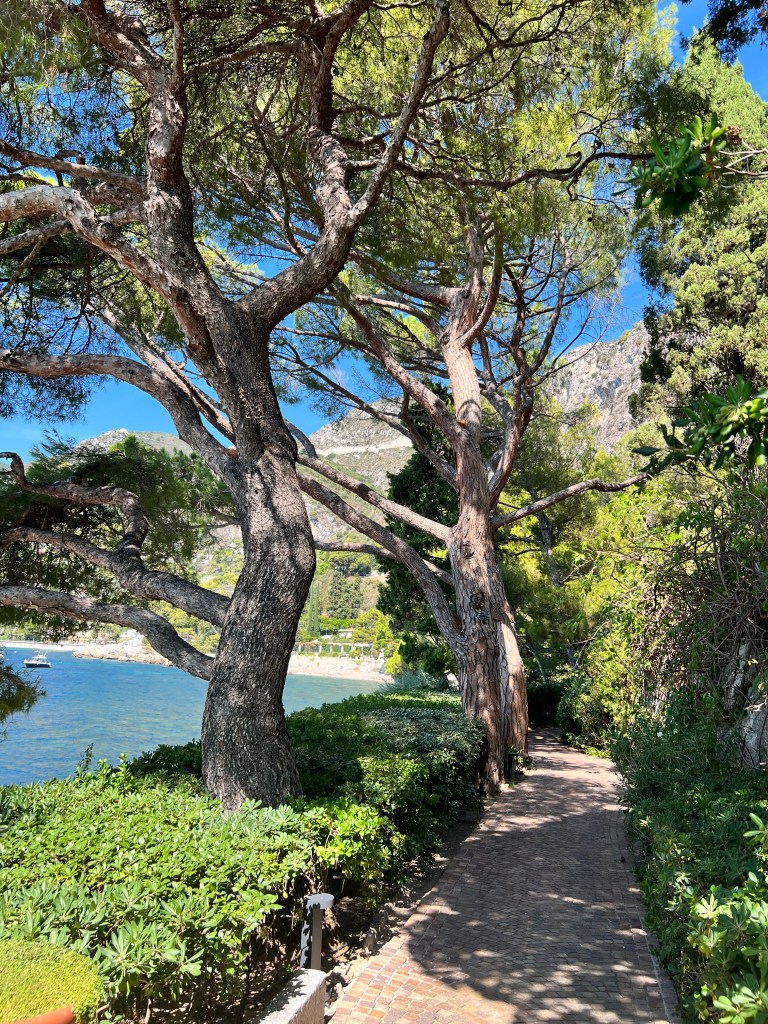
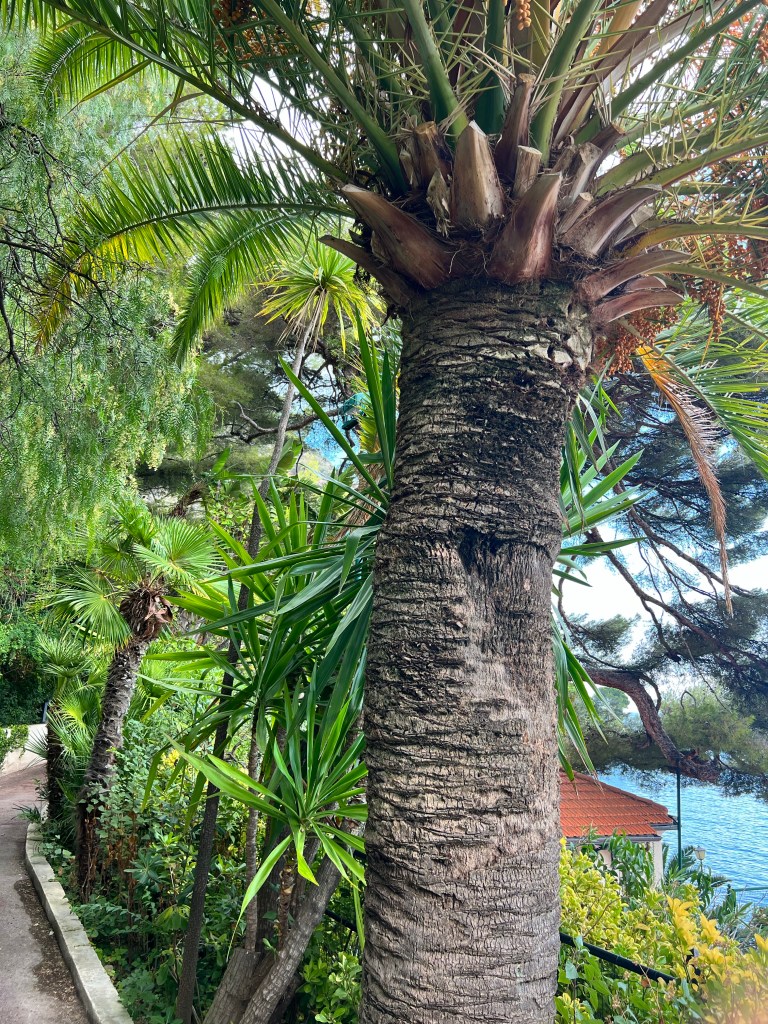
Exercise 1: Modifying pictorial space. We must choose a subject and represent it in A3 size format, gradually reimagining it by breaking down the visual information through a process of modification. Below I place some photos of the trees, which strike me with their stems’ colours and shapes.

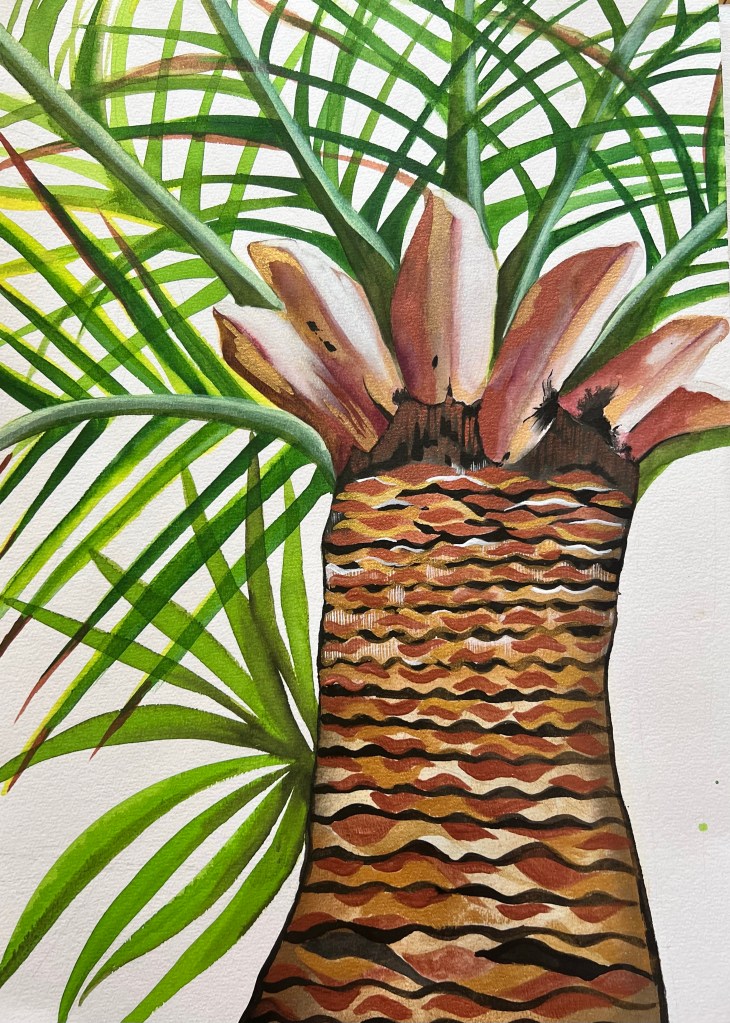
Below is the outcome of my work.
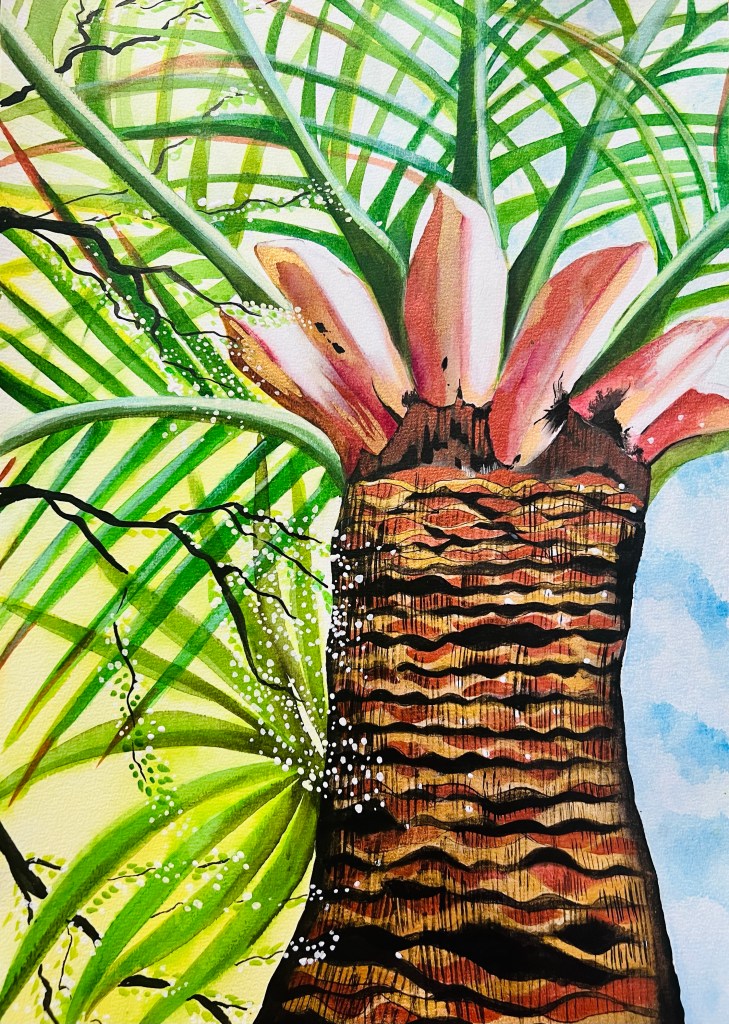
I used an A3 mix media, 200 gr/m3 paper from Canson, black ink from Lefranc Bourgeois “nan-king”, Gansai Tambi water based gold and silver colour pigments, ink brushes and Japanese aquarelle Tambi set. I was very instated by the skin on the trees and made it as a main subject.I transformed the natural look of tree bark into imaginary design, using a contrast of black and gold inks. I have noticed that the paintings with a white block at the center is a kind of complete, because at this point the image looked pure and not busy, airy and imaginative. I added a sea in blue tones. It transformed the painting into different direction.

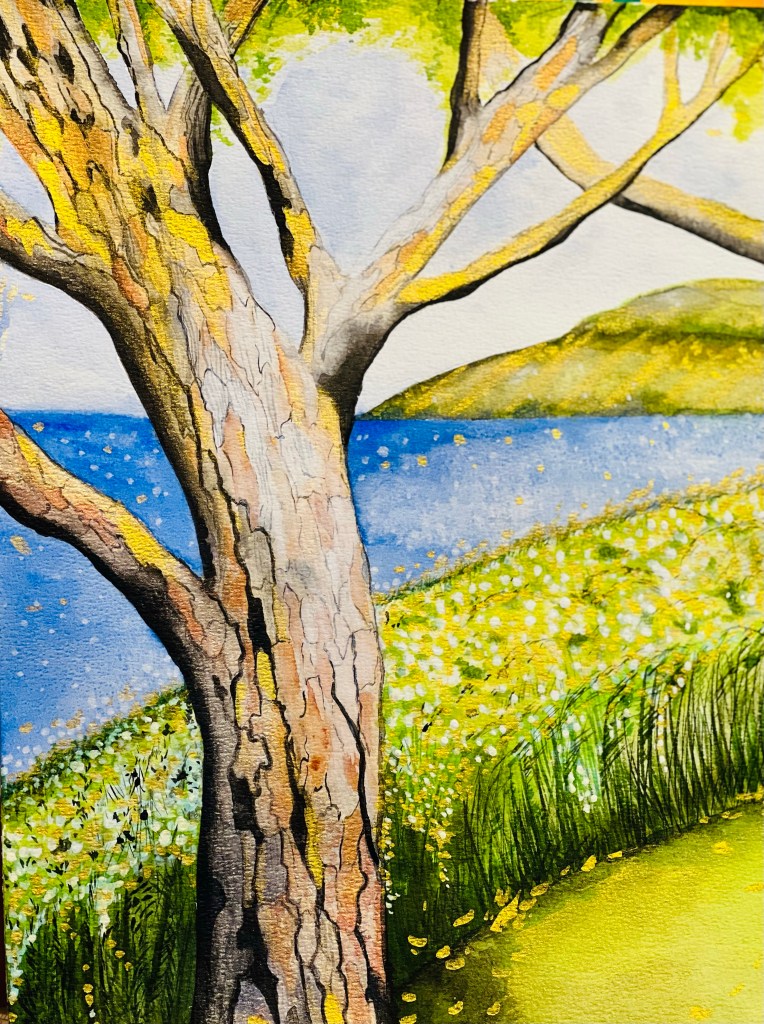
Work in progress:
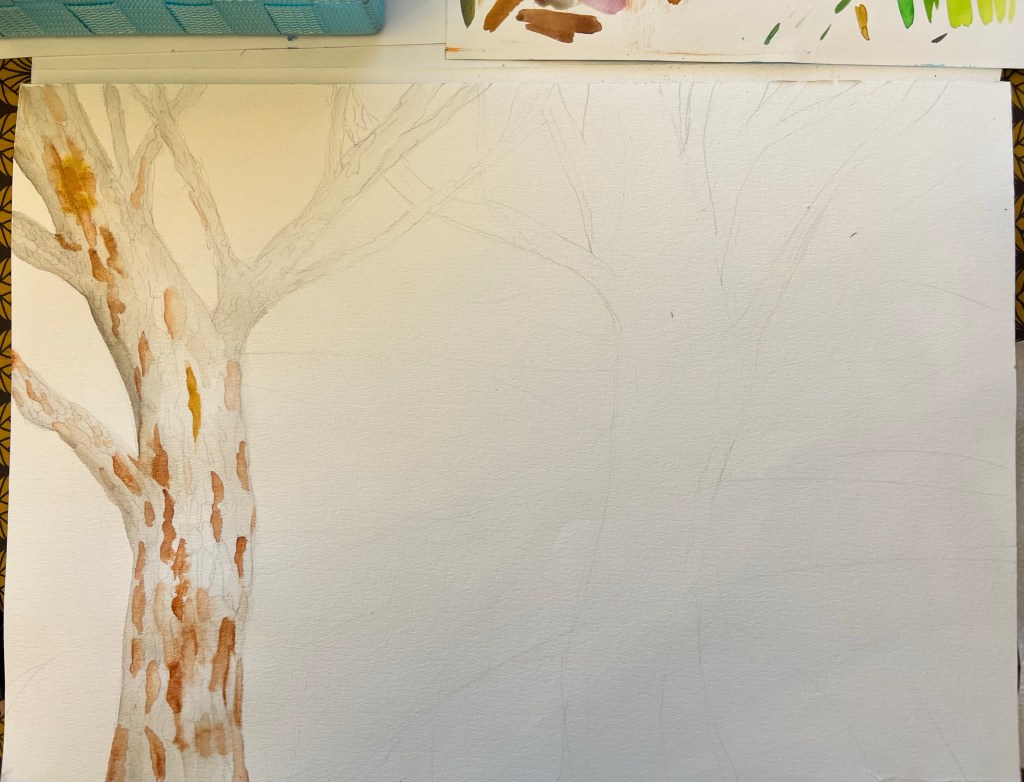
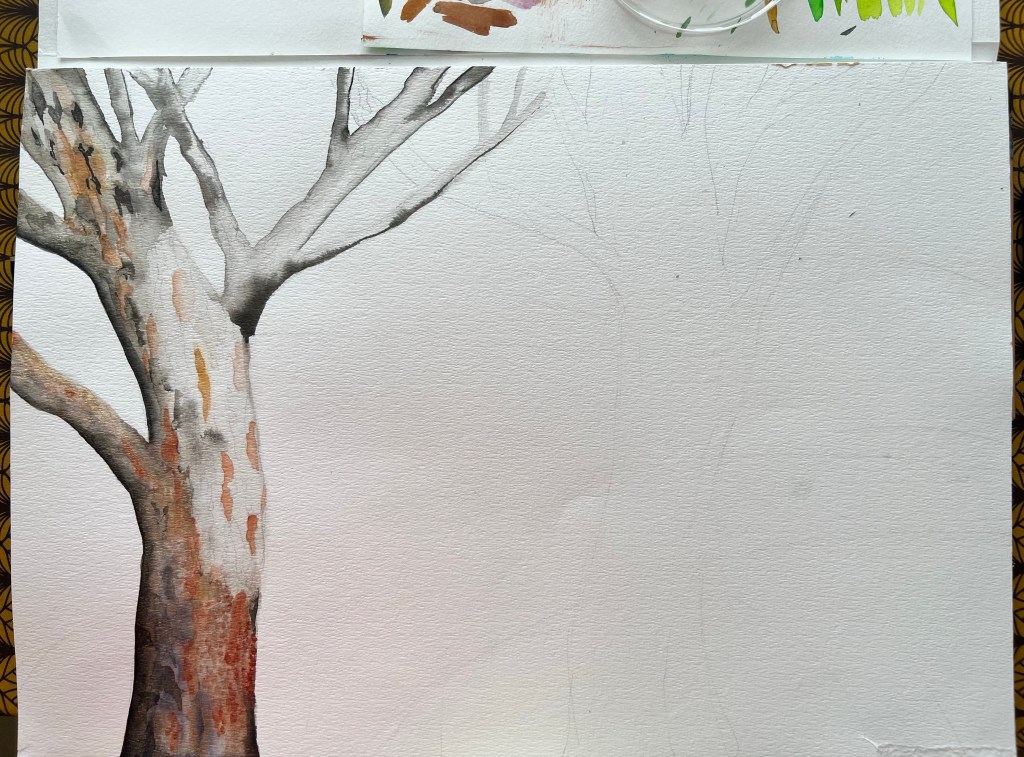
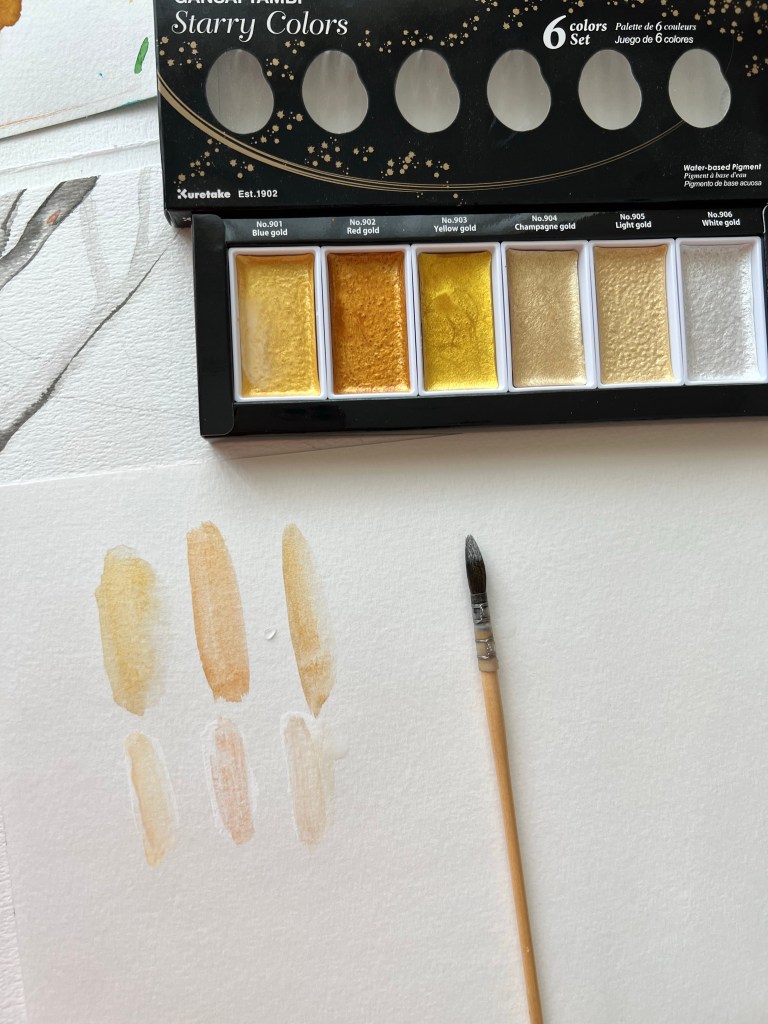
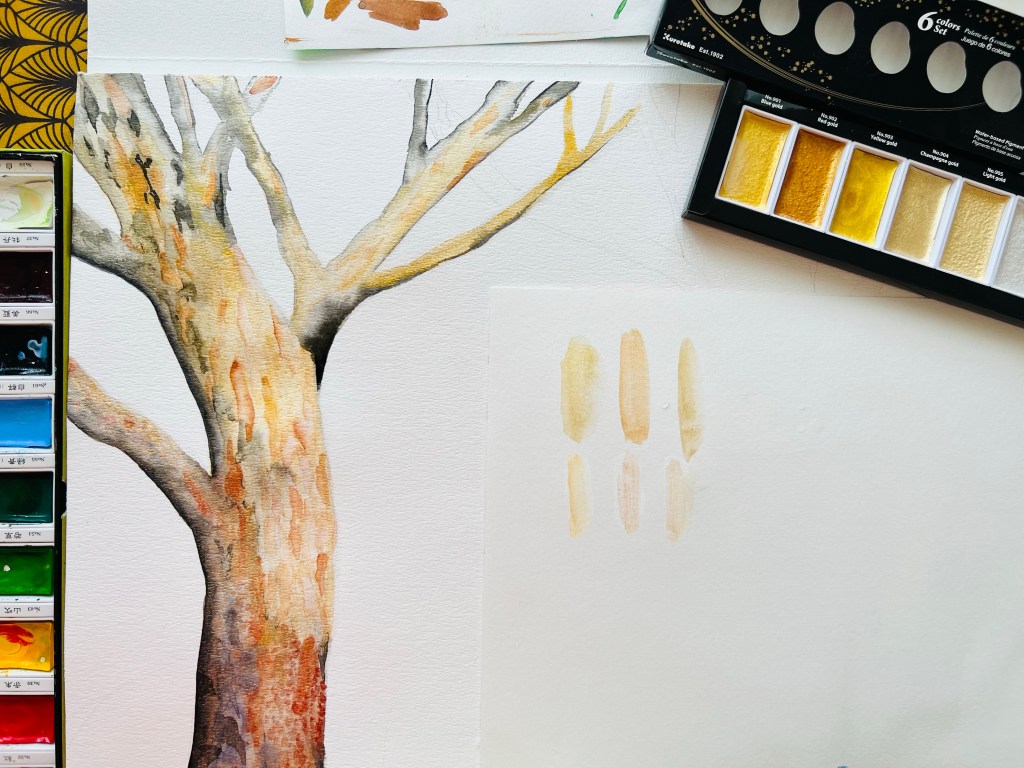
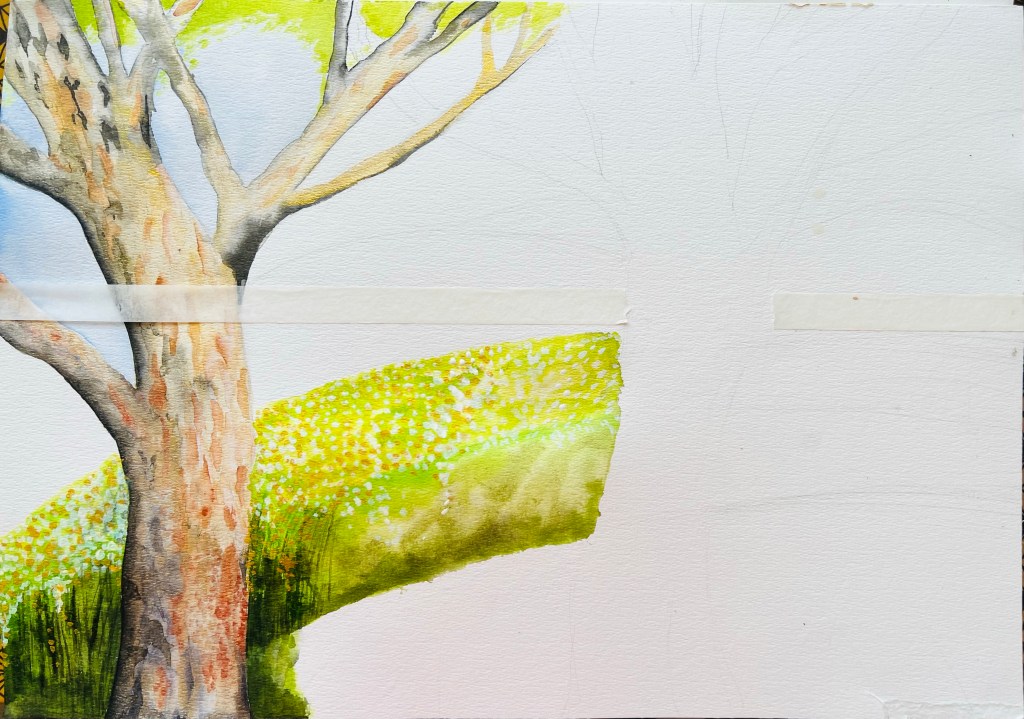
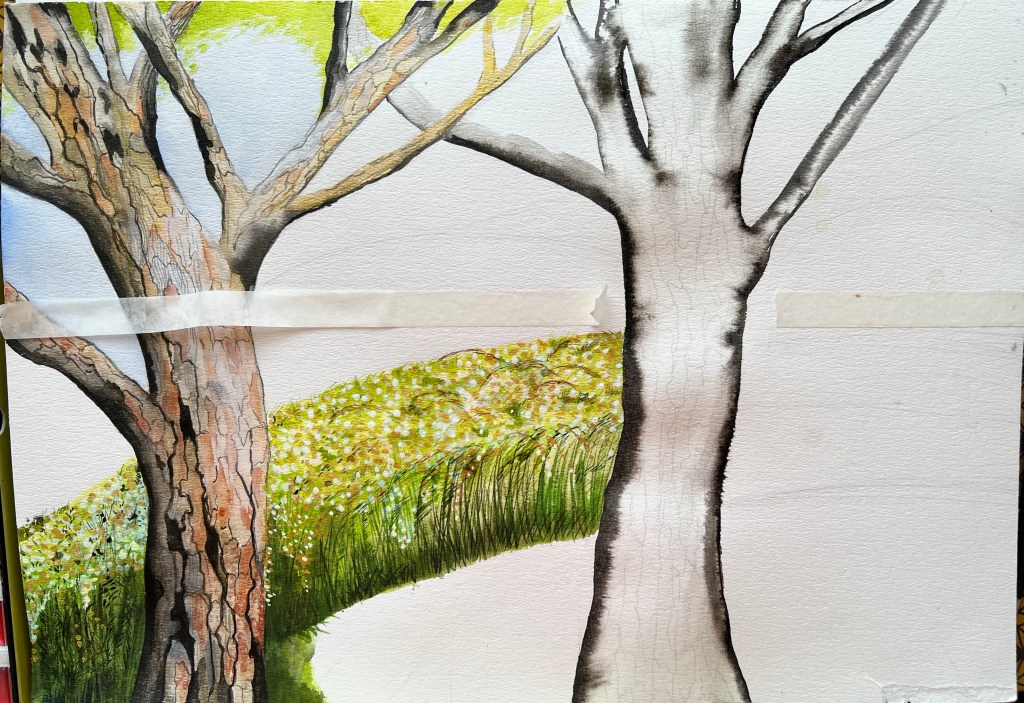
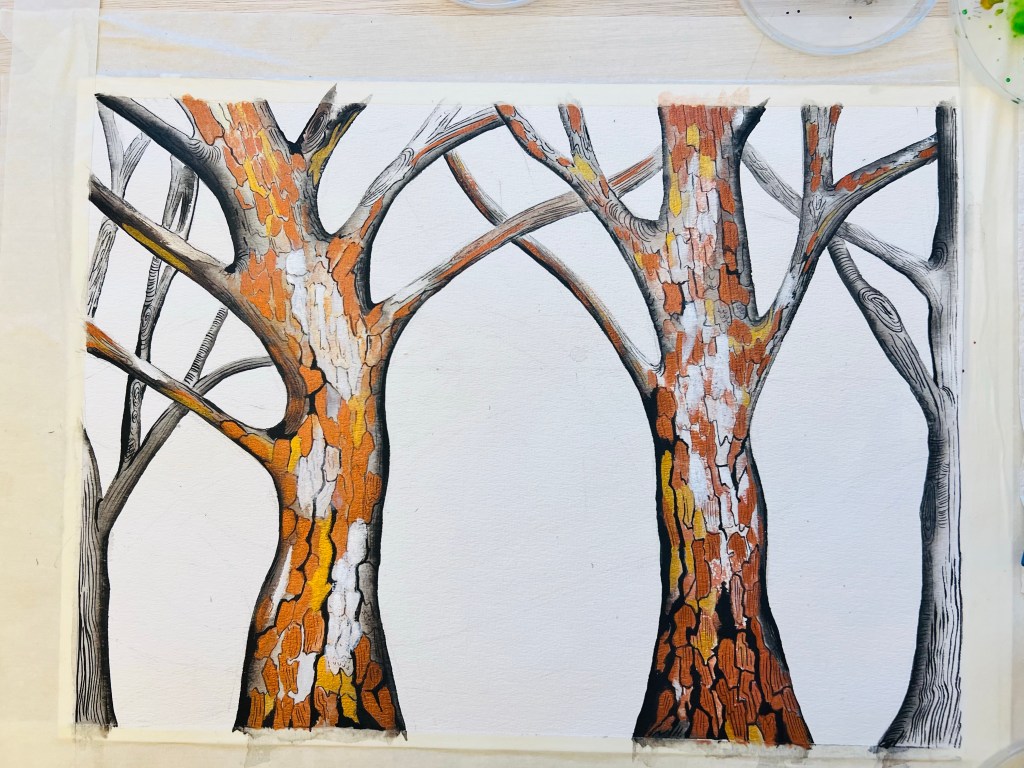
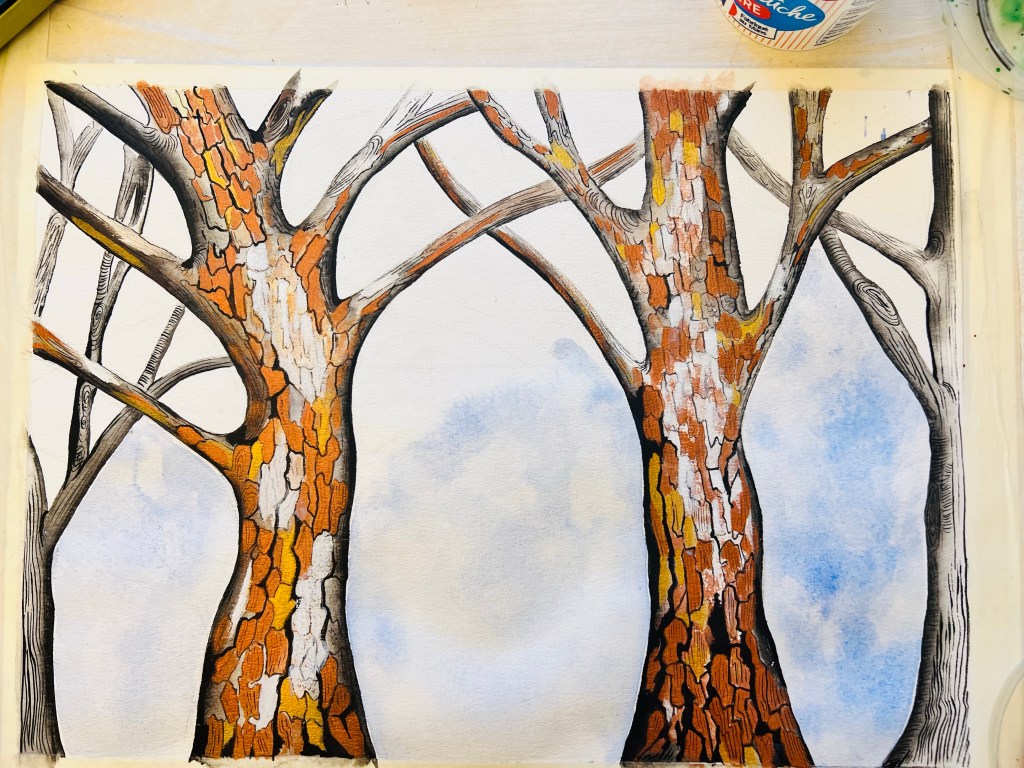
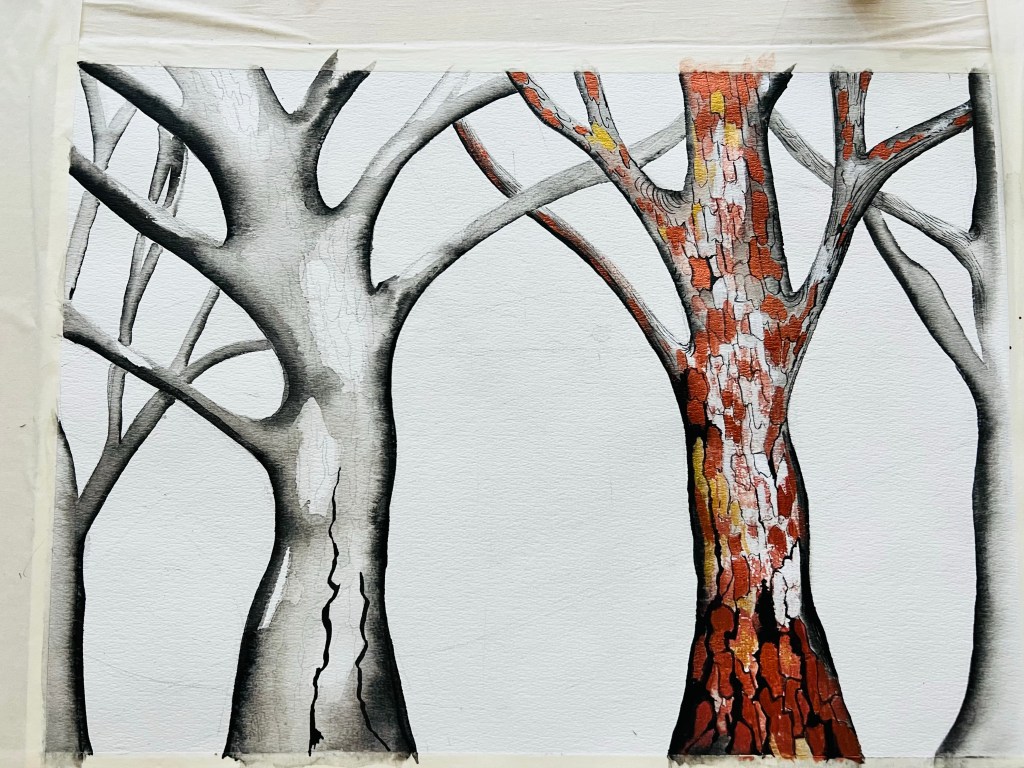
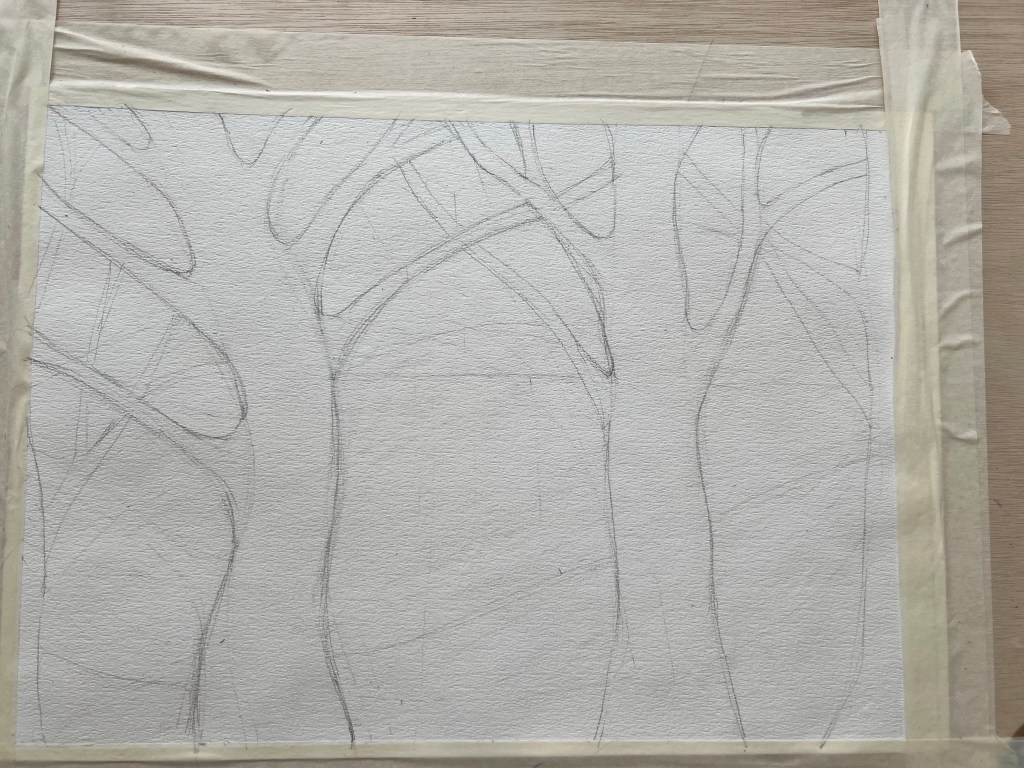
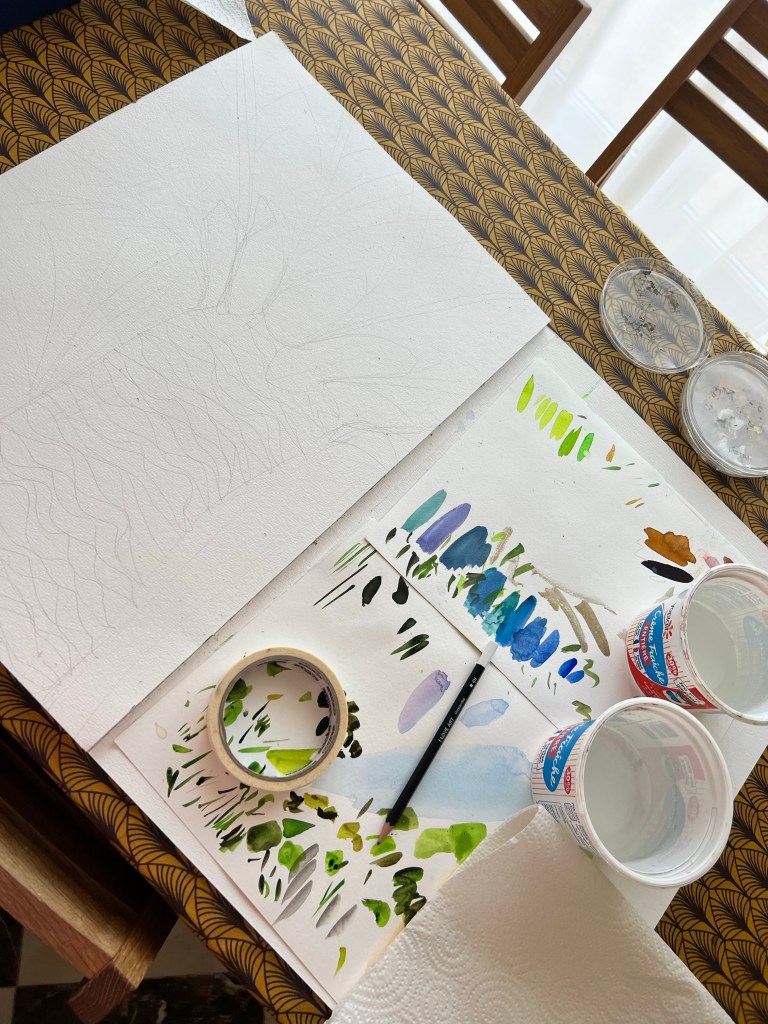
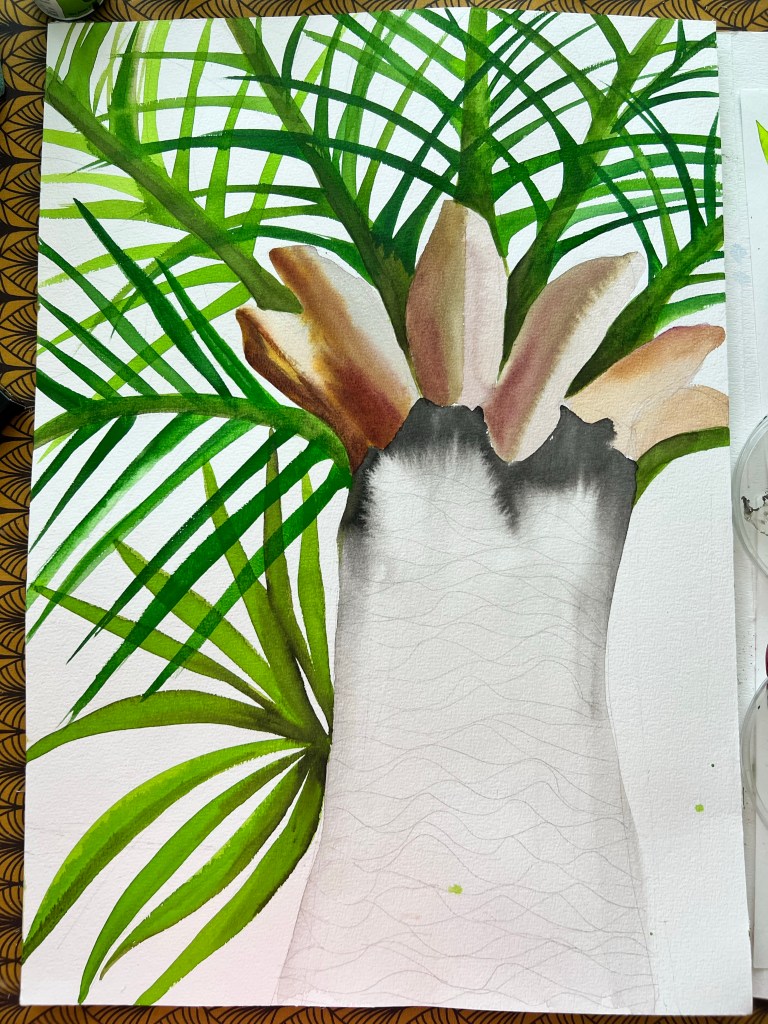
Another representation. In this version I have changed the composition and the design of the trees.
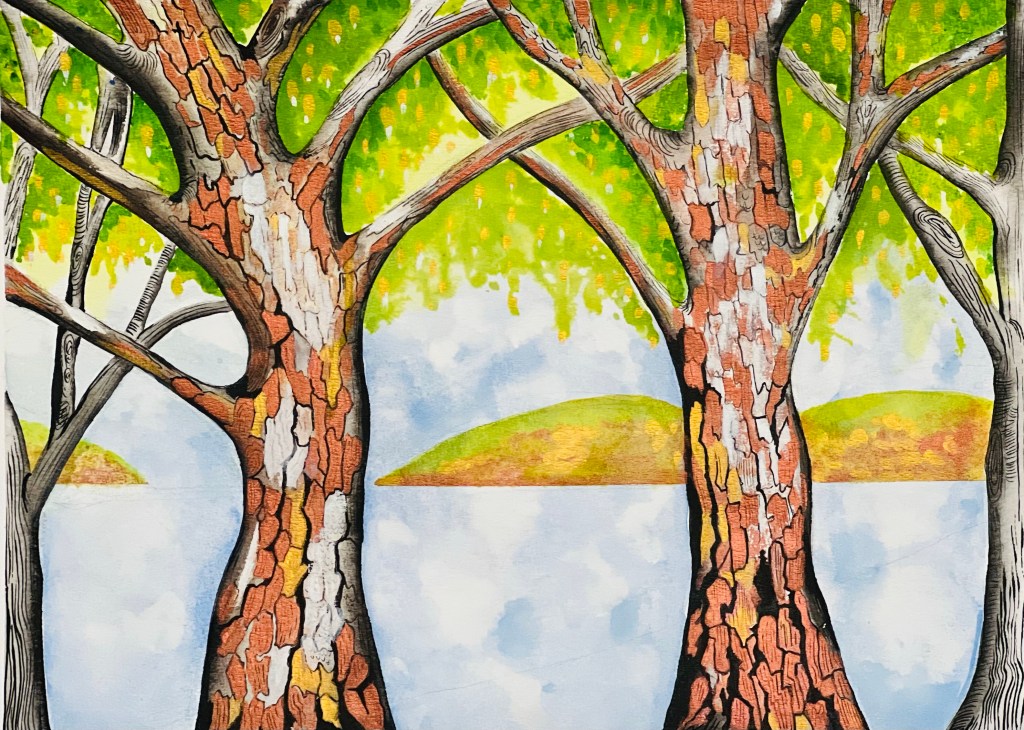
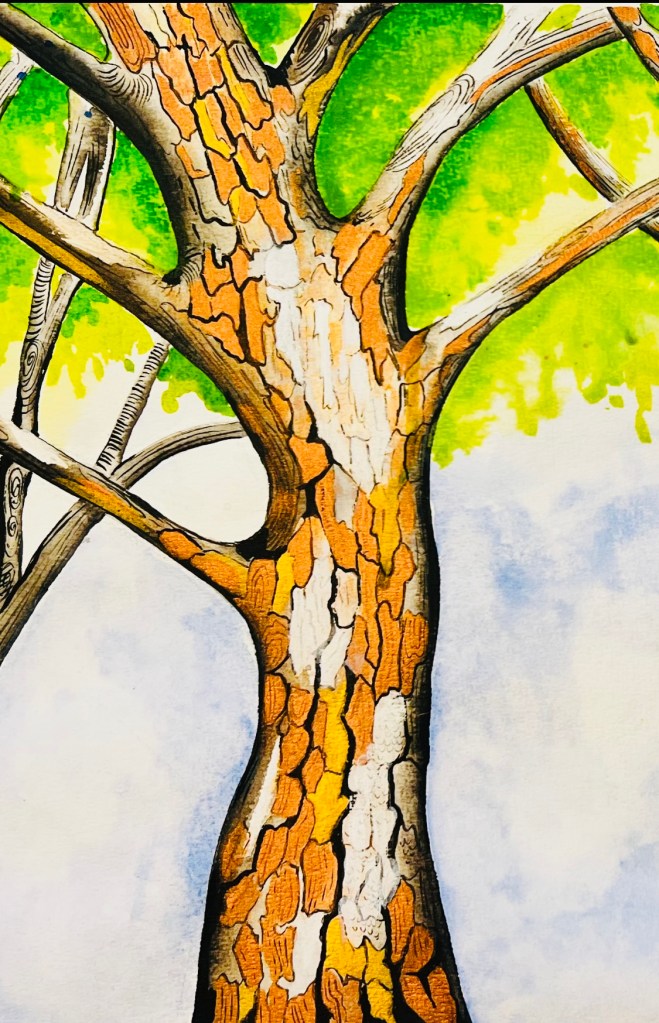
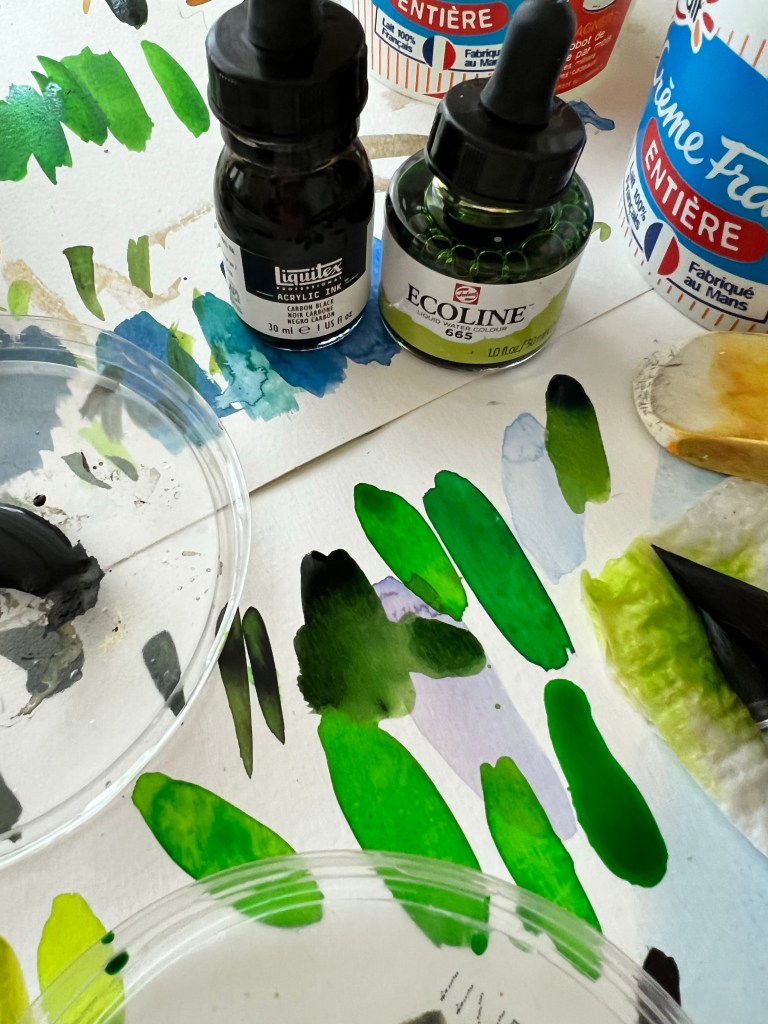
Work in progress:
Another object to study.



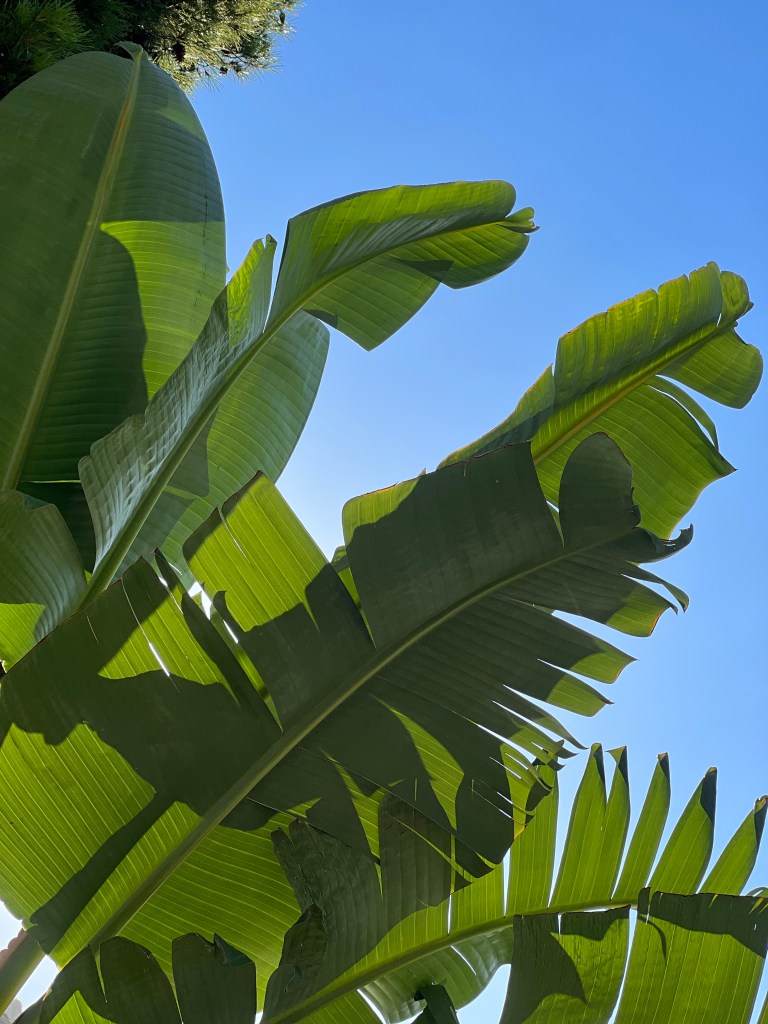


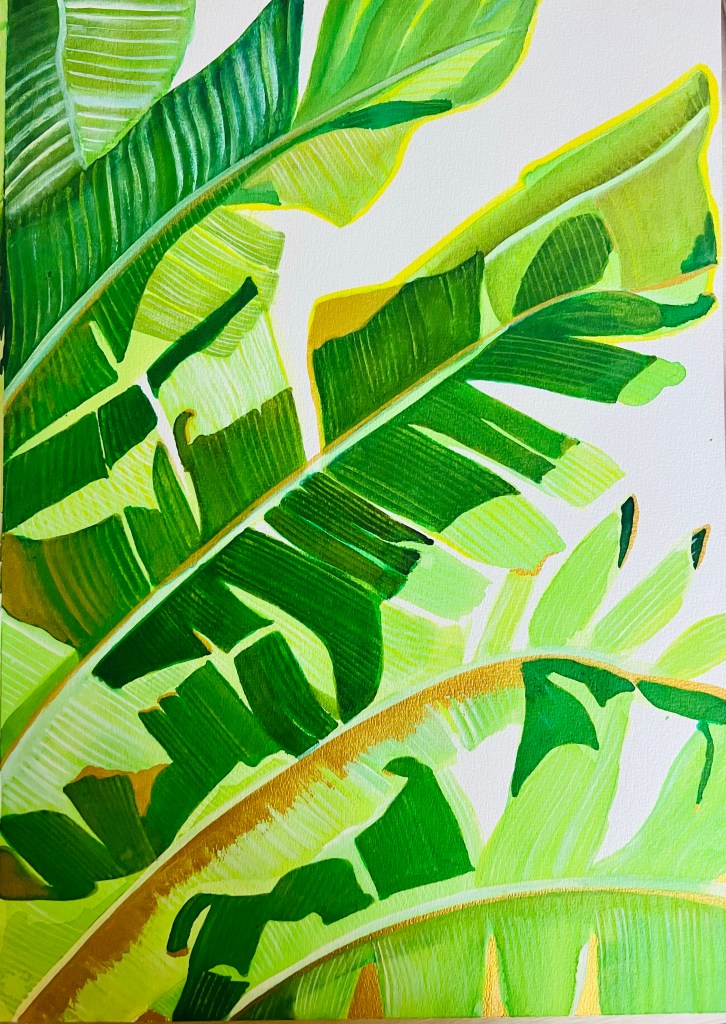
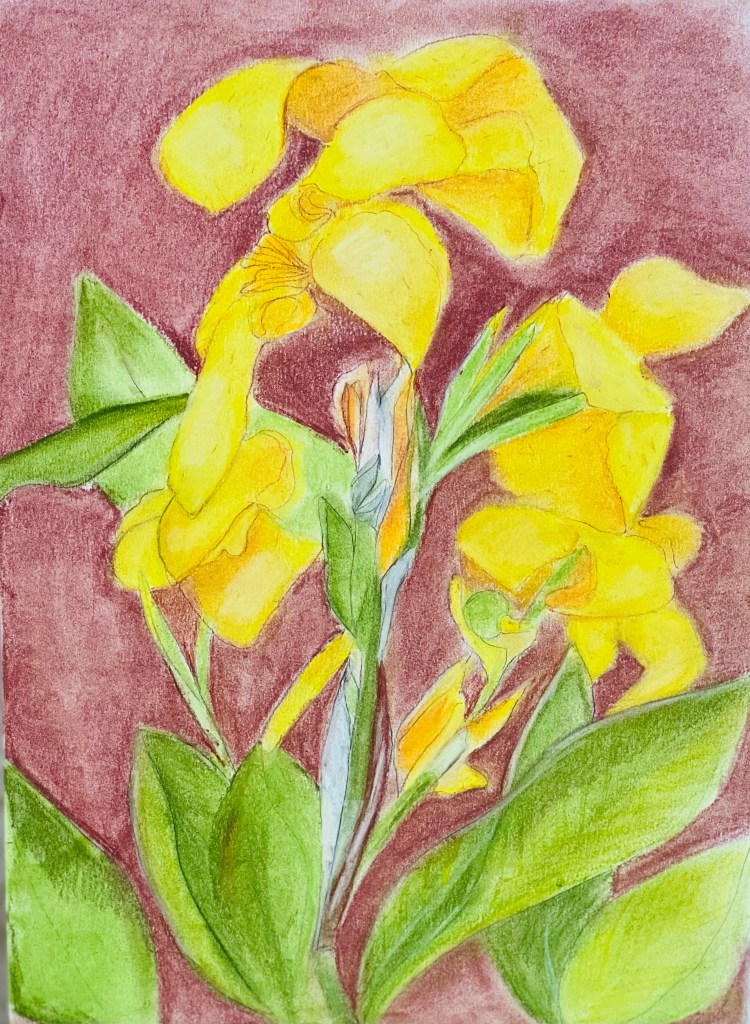
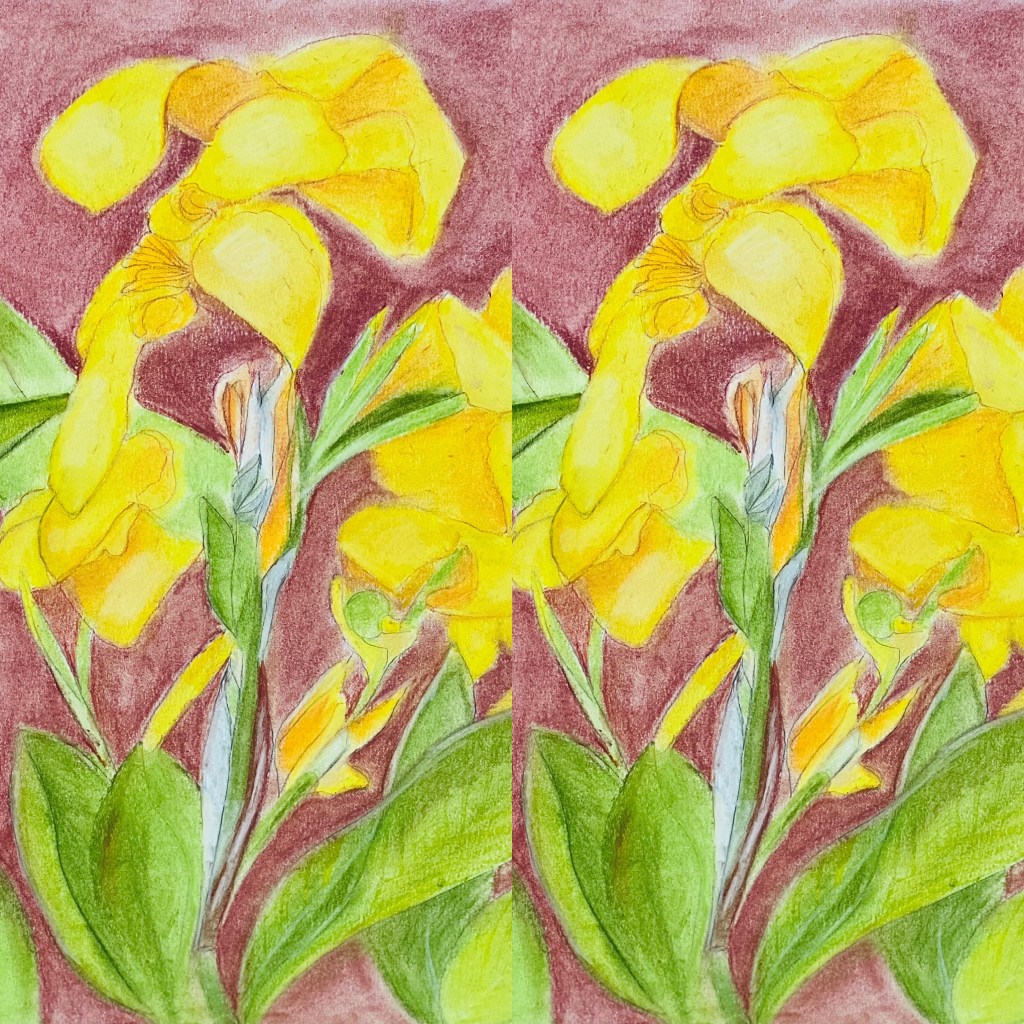
Below is my study of an iris flower. In two versions I have created a very different pictorial space.
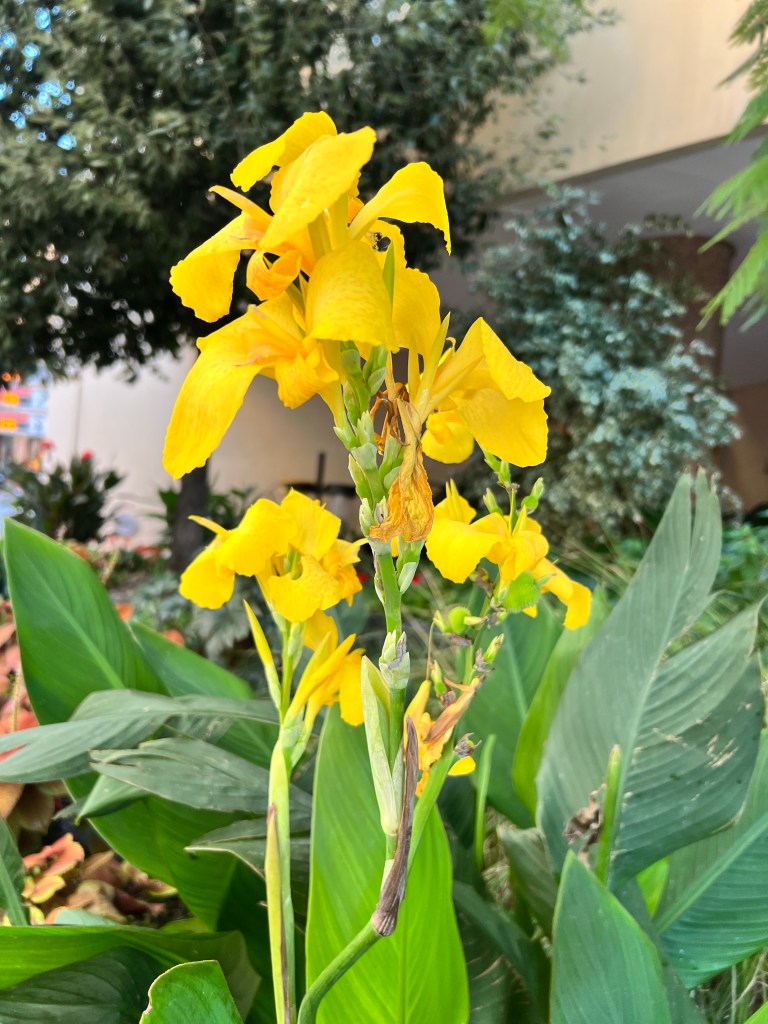
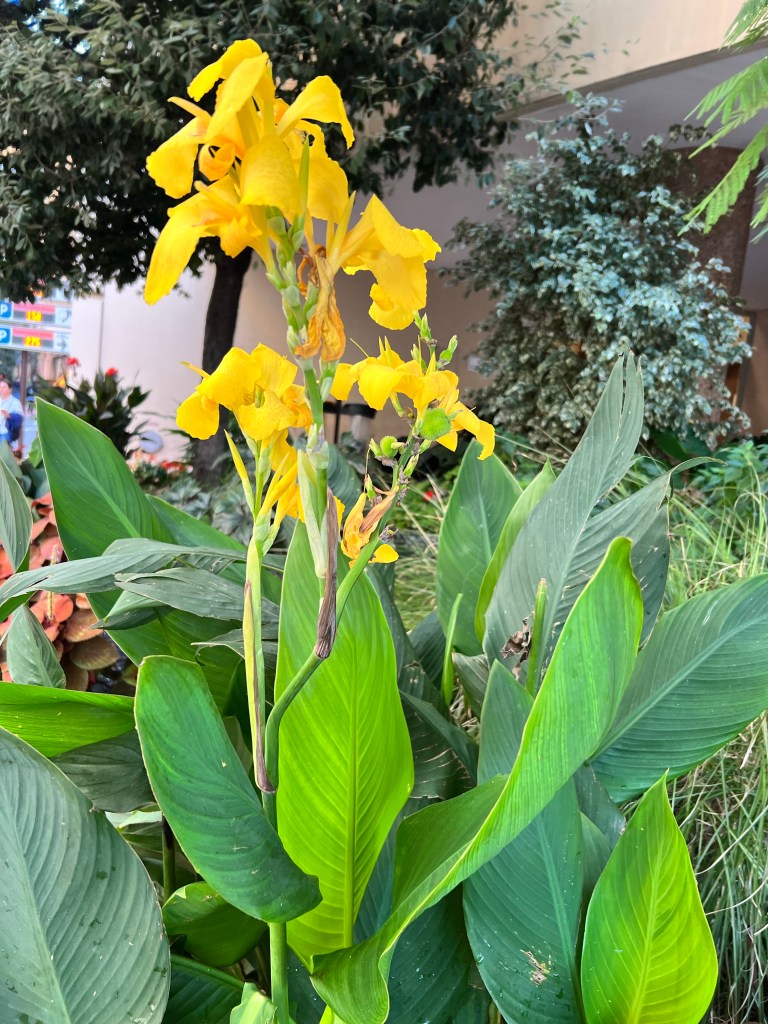
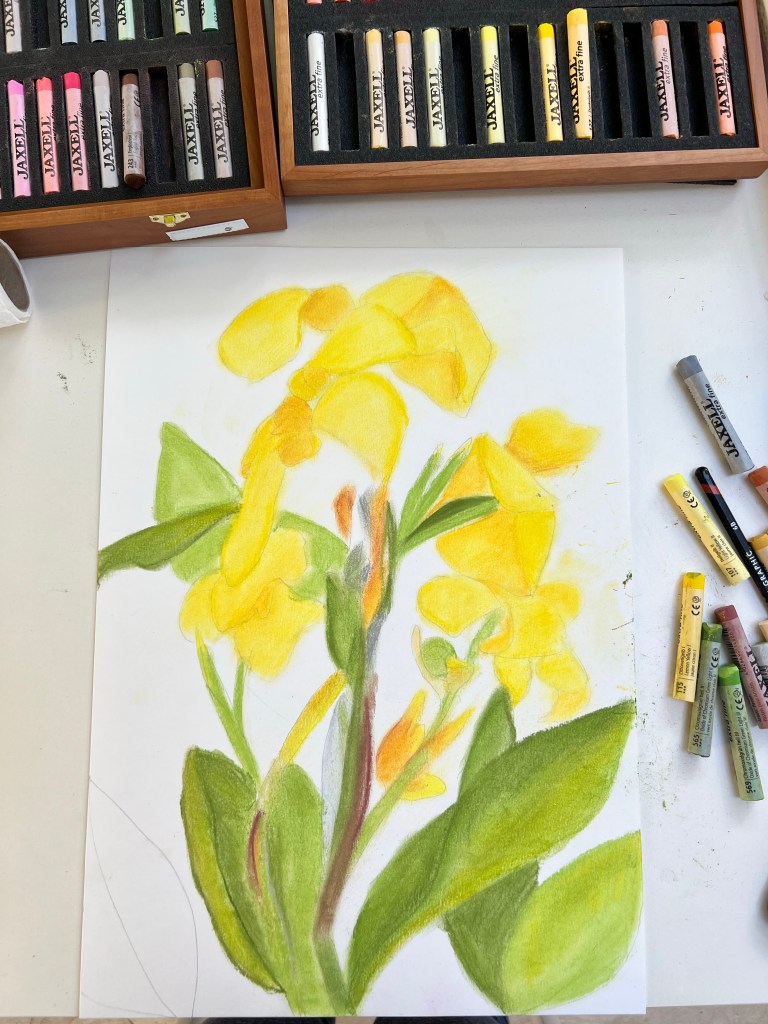
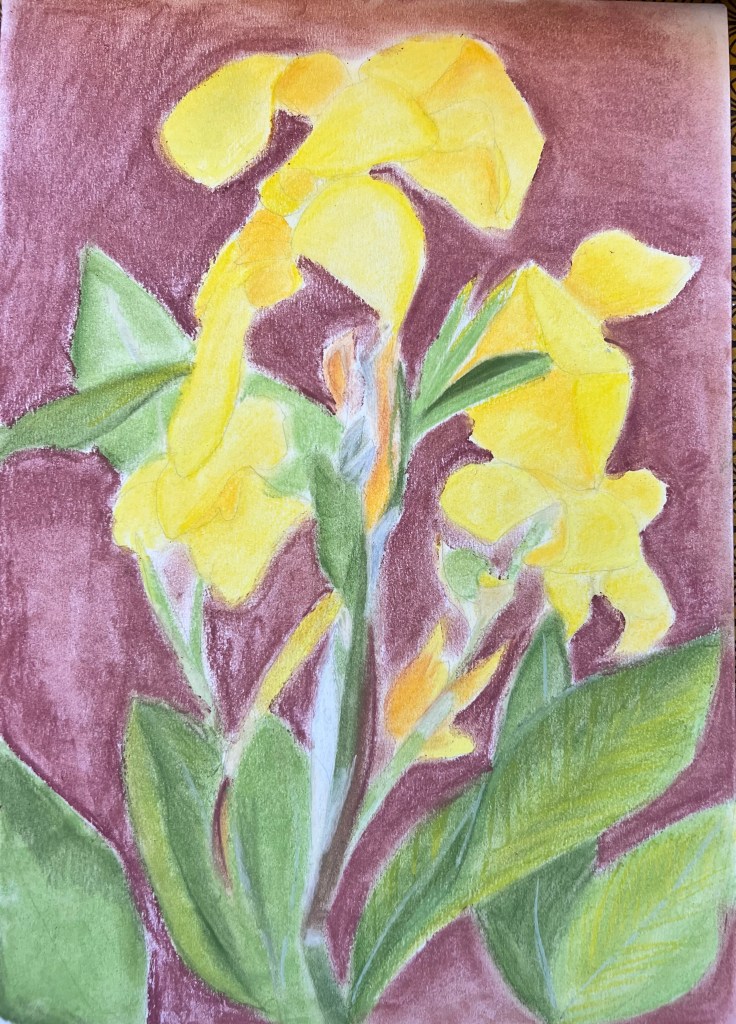
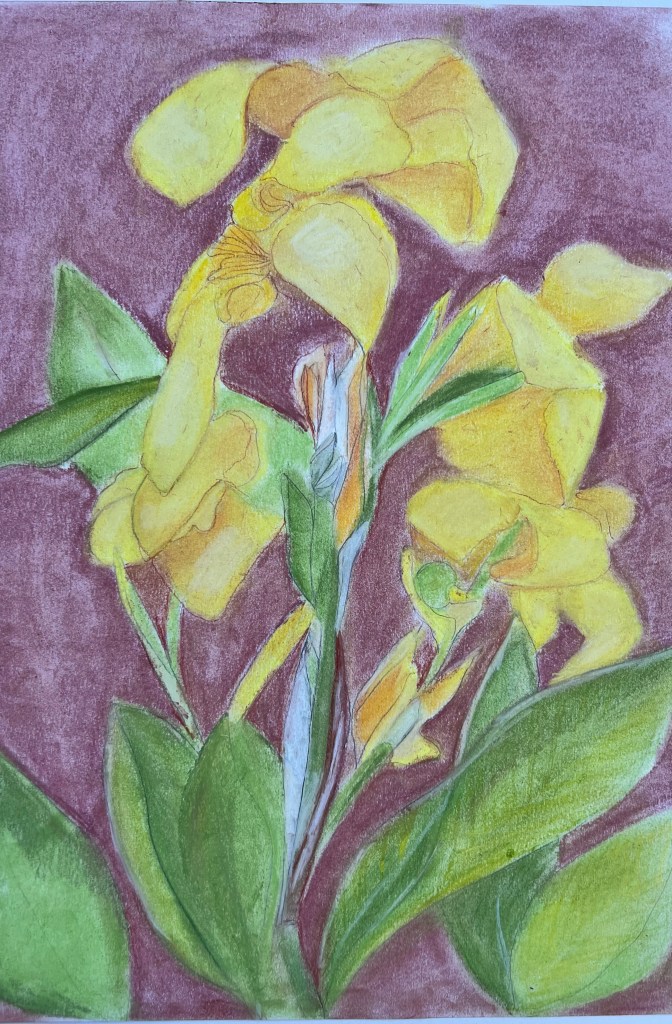
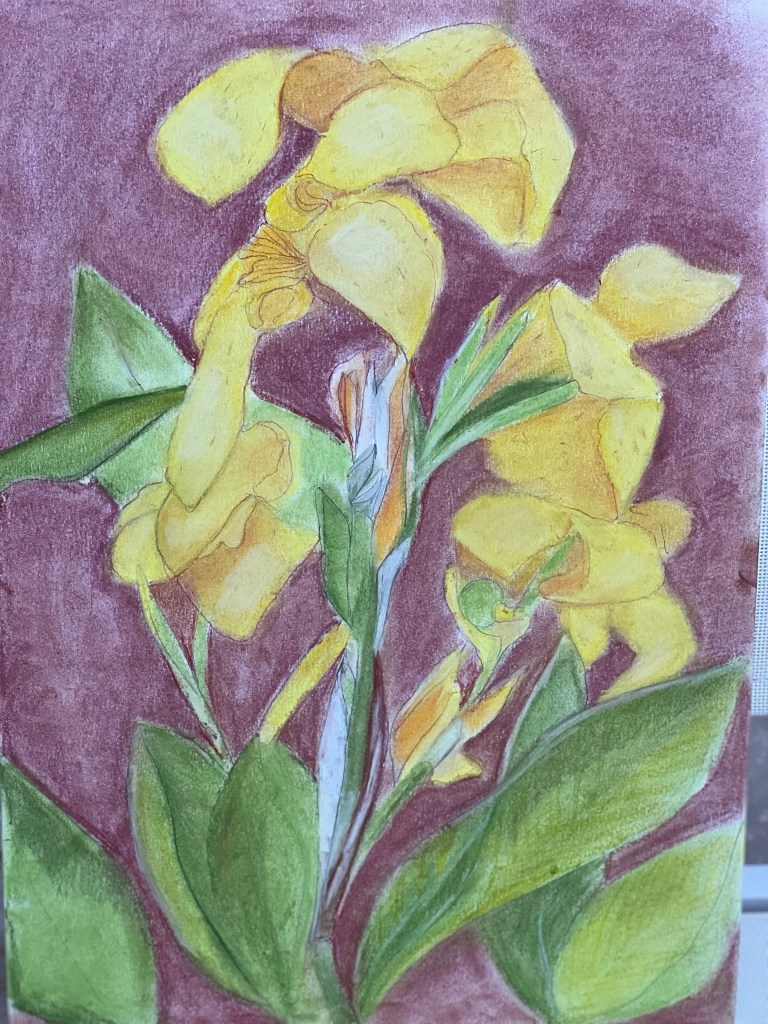
I always check how the image can be changed with the “Layout” app, which I use to combine the photo of my work in different ways.
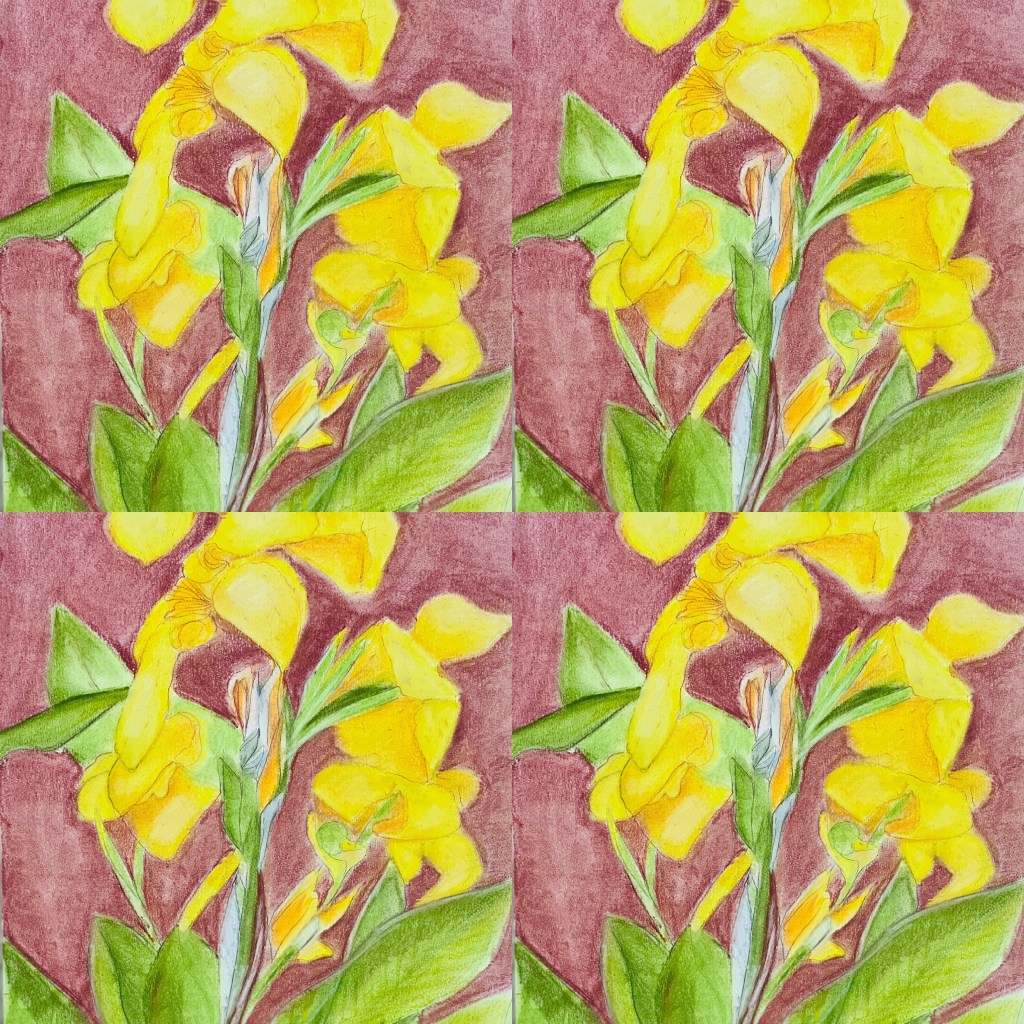
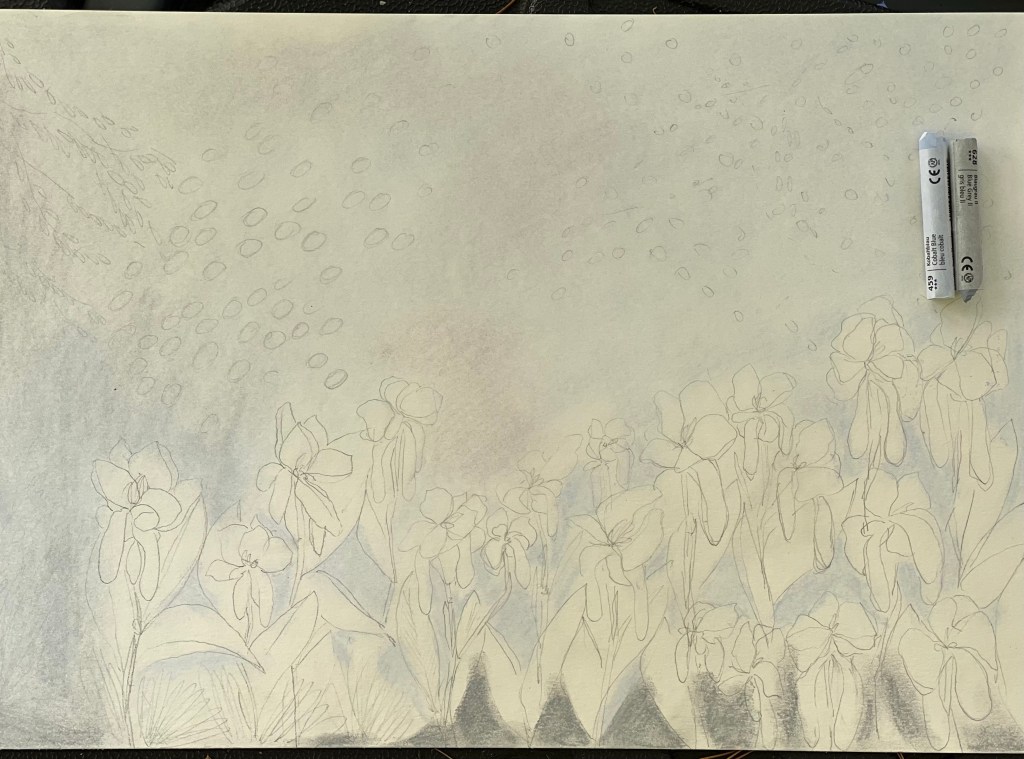
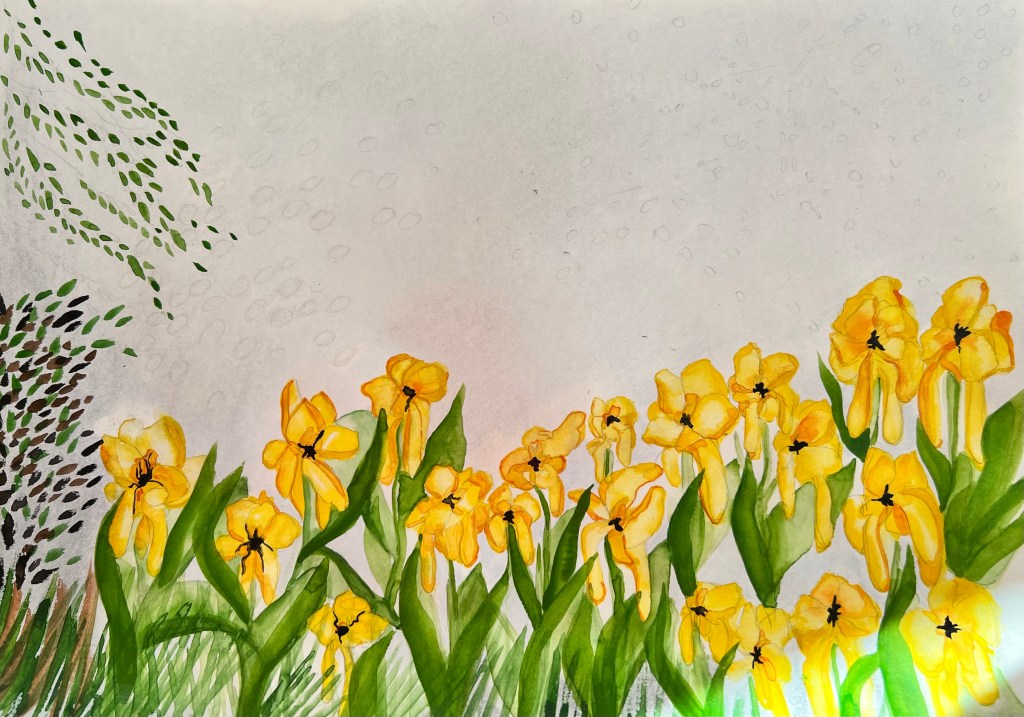
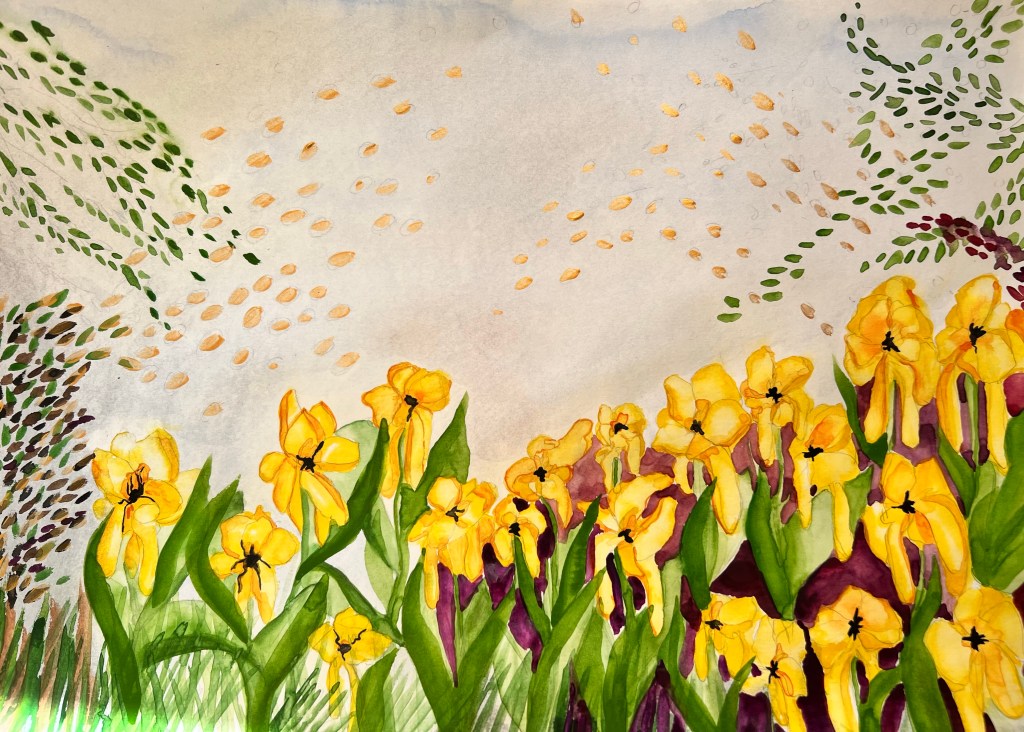
Below I transformed the pictorial space from still life to landscape.
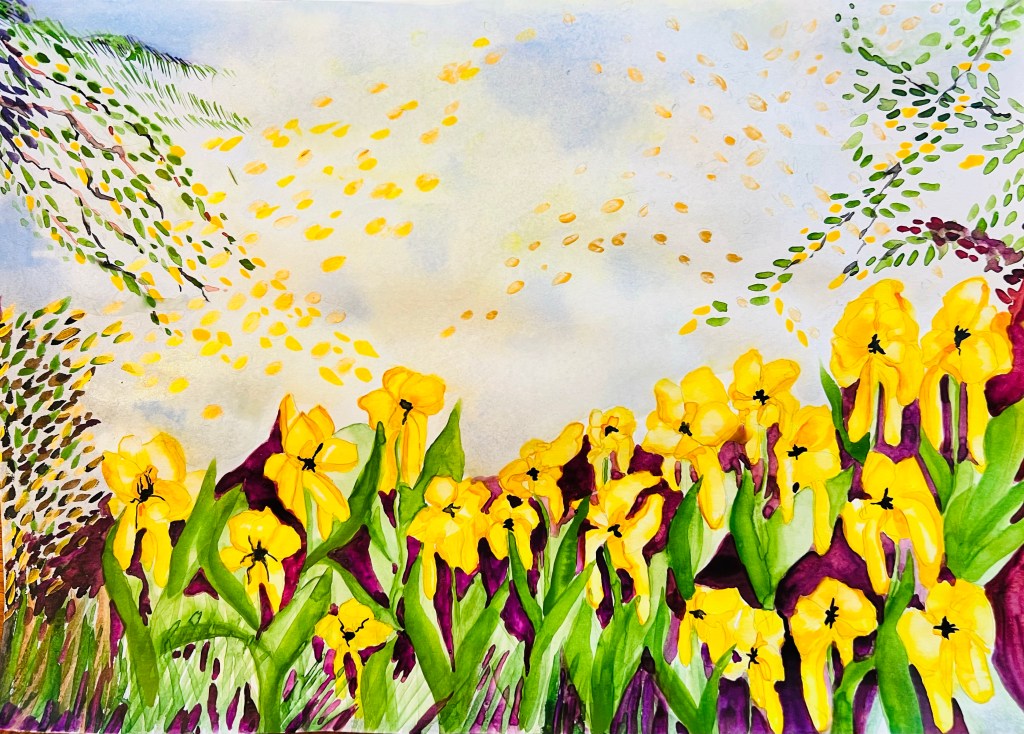
Reflection on modifying pictorial space.
Since I am a firm believer in narrative existing in any Art, I find the process of “narrating” as a core component of any creative activity. “Narrating” is artistic studying the object you got fascinated with or inspired by. The studying process starts with reading the object carefully. Then, I look at the details, reflect them on the surface with my medium, and I am still determining the whole story I will end up with. I start with a tiny detail, and often I still need to find out the end of the story. My complete freedom of direction of the narrative on the surface is the main joy I find in Art. Probably, the same way feel all movie directors, screenwriters, choreographers and all creative people. A lot begins with a pencil. To me, composition comes first: I change and try places of the objects and details. I am always in conflict between two stages – thinking to develop/obtain the best composition and starting work on colours and details. It takes a lot of effort to resist rushing in the second stage. “Narrating” for me now is all about the discipline of thinking about the story I am going to deliver on paper to avoid jumping off, skipping off the initial stage of reflection, trail and experimenting with the composition and mediums.
 JeanArt