Project 1. Working with text.
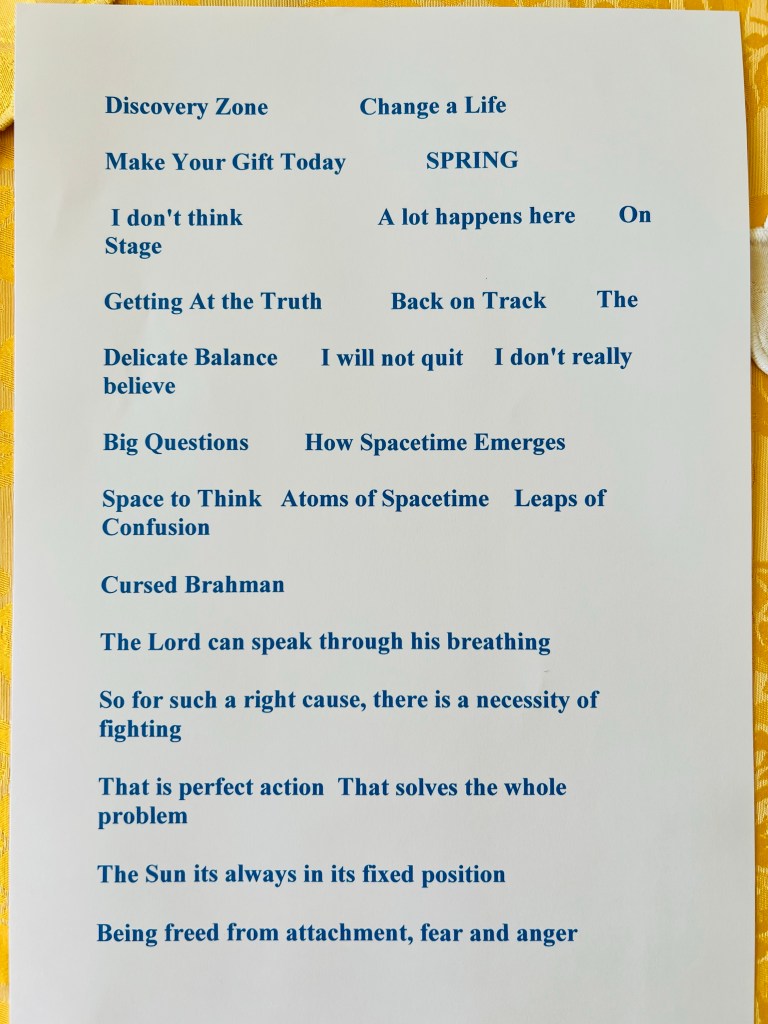
Exercise 1. Cut-up technique. Below are the phrases and words I used for the exercise. I found them in the school magazine of my daughter’s boarding school, the Scientific American magazine (March 2022 issue) and the “Bhagavad Gita as it is” written by His Divine Grace A.C.Bhaktivedanta Swami Prabhupāda (@1972);
Discovery Zone, Change a Life, Make Your Gift Today, SPRING, I don’t think, A lot happens here, On Stage, Getting At the Truth, Back on Track, The Delicate Balance, I will not quit, I don’t really believe, Big Questions, How Spacetime Emerges, Space to Think, Atoms of Spacetime, Leaps of Confusion, Cursed Brahman, The Lord can speak through his breathing, So for such a right cause, there is a necessity of fighting, That is perfect action, That solves the whole problem, the Sun its always in its fixed position, Being freed from attachment, fear and anger.
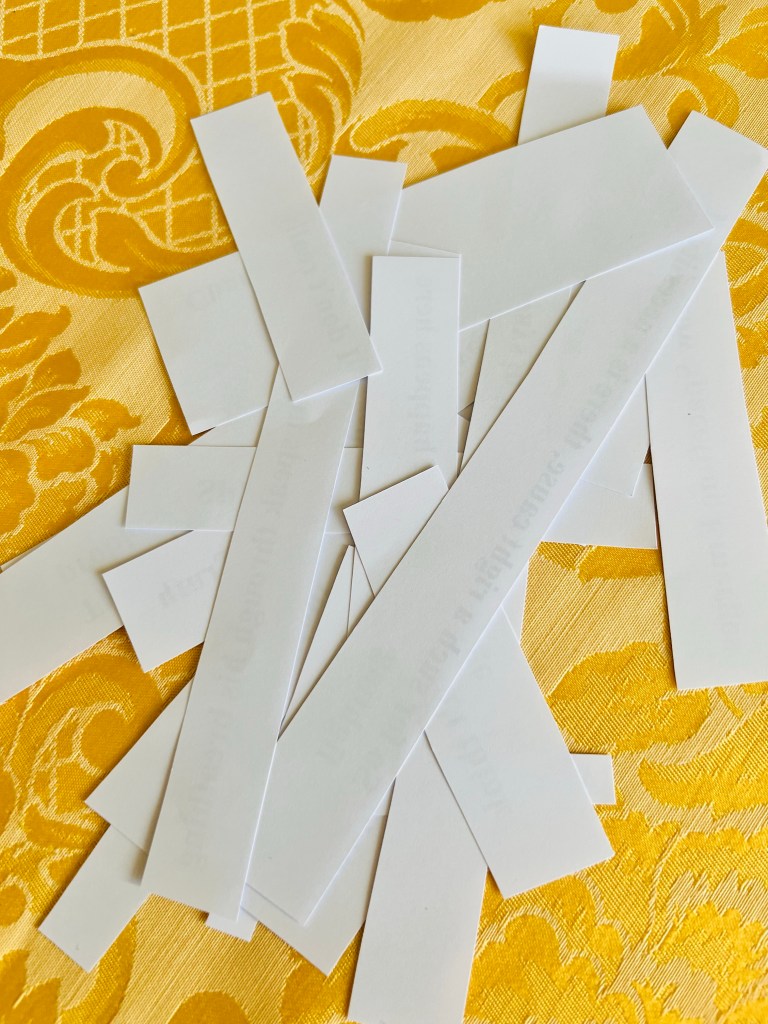
Below you can find the photos of my progress in this exercise. I printed the words above on the A4 size paper, cut them out, turn them down and mixed them. After I started to pull them out randomly and laid them in the order there were selected. Here is the result:

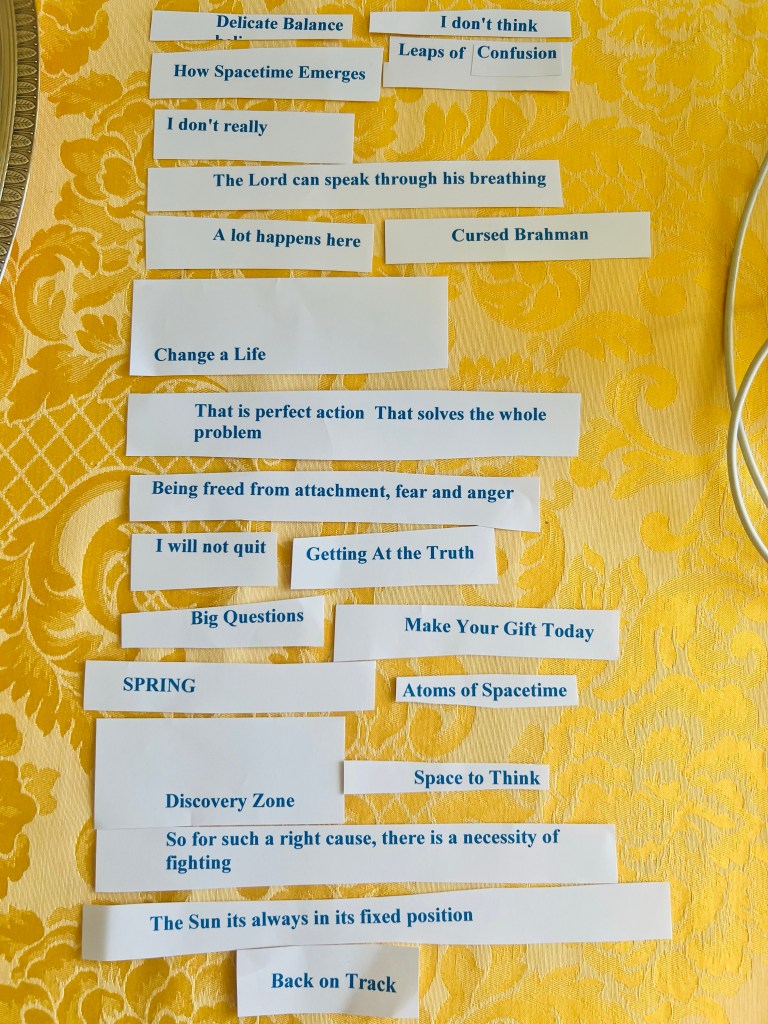
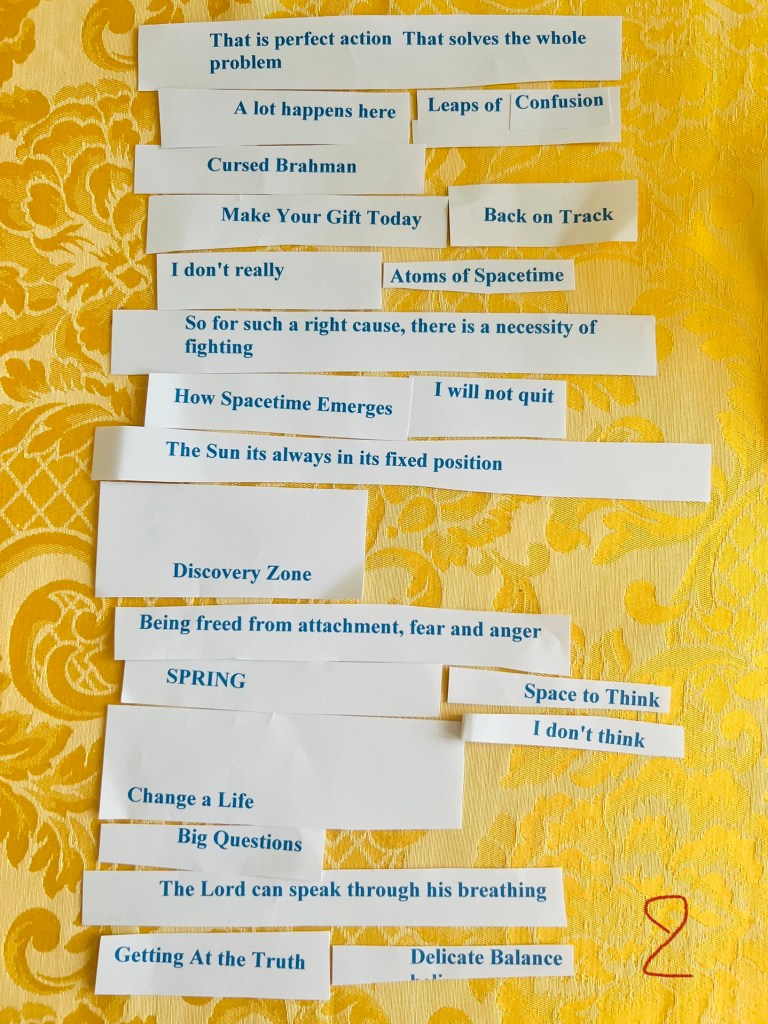
Round 1: Some of them did lay in a very sensible order, like the following:
I don’t think how the spacetime emerges, I don t really… (humour)
Change Life, That is a perfect action, That solves the whole problem (instruction)
That is a perfect action, That solves the whole problem -Being freed from attachment, fear and anger (manifesto)
Being freed from attachment, fear and anger? I will not quit! (manifesto)
I will not quit Big Questions (manifesto)
Help me getting at the Truth – Make Your Gift today! (instruction)
SPRING – Atoms of space time (poem)
SPRING is a Discovery Zone (poem)
Atoms of Spacetime – my Space to Think (poem)
The Sun is always in its fixed position – Back on Track!
Round 2: The new set of the phrases below, which randomly appeared in sensible way:
Leaps of Confusion are Back on Track!
I will not quit my Discovery Zone
My Discovery Zone – Being freed from attachment, fear and anger….
Getting at the Truth IS a Delicate balance
I don’t think because I don’t have a Space to Think
Here is my reflection on how these texts can be developed further in artwork, considering different mediums and genres. The change of medium would enhance their impact and/or broaden the audience.
I thought about how I could develop these phrases into an art project, what it would look like and what medium I would use. I was thinking about the following:
- Exposing them to the audience in neon lights. Especially the phrases: “I don’t think”, “I will not quit”;
- Building them in large letters made from painted cardboard paper or metal and creating an installation. I thought about ” A lot happens here” and “Big Questions”;
- I think I could do a T-shirt project with those phrases;
- I am fond of texts and letters. I love Japanese and Sanscrit language characters. Some of the later ones are pretty familiar to the international audience, and I can think about developing more art projects with them. I am always very inspired with mantra characters in Sanscrit like “Aum”;
- This exercise made me think about words as a powerful medium that can communicate with a viewer directly and openly in provocative or/and inspiring ways.
LINK 38, page 94, OCA Painting 2, Part 5 course book; “Cutting up the Cut up”, Ken Holling s examines the artistic device to create new meaning from existing recordings, 25.06.2015, BBC, online on http://www.bbb.co.uk; Ken Holling’s audio was a great introduction into the cut up technique. Below are my notes from the recording, which I found as interesting and worth to note here as potential inspiration for my future investigation and personal art projects:
- destroying of traditional literature structure;
- disrupting routines, creating chaos and disorder; “reordering the world”;
- cut up words require new way of listening. From me: may be a new way of watching and reading?;
- Bush’s speech in alphabetical order – new way to listen to it!, new dimension and new meaning appears.
LINK 39, page 94, OCA Painting 2, Part 5 course book; I watched the interview of David Bowie “David Bowie Documentary Alan Yentob 1998”, Billykarloff channel, Yotube;
I didn’t know that David Bowie used the “cut out technique” so extensively, even applying a specially designed software to be able to work with large massive of texts, searching for his inspiration and creating his songs’ lyrics.
Research: Sara Impey (LINK 40, page 95, OCA Painting 2, Part 5 course book);
Sara Impey is a British visual artist who creates artworks using textiles in traditional quilt making techniques. I could not find her birthdate. She created her first quilt in 1971, developing her artworks over the years into three-dimensional, well-reputed international museum walls display worth exhibition pieces. She lives in the UK, Essex. Sara Impey combines and mixes visual and tactile elements with texts. In her interview for textile curator.com she says: “I can’t conceive of working now without using text, though it’s hard to say which comes first: the visual and the verbal elements are inextricably linked. I’m very lucky that the inclusion of words seems to give them a broader appeal so that non-stitchers can find something in them.“
Sara Impey’s textile artworks inspired me to develop a project which would incorporate Qazaq ornament and some famous Qazaq wordings and sayings. I can also do that with English words, working on translation, to broaden the audience. I find combining and uniting an ornament with wording very engaging.
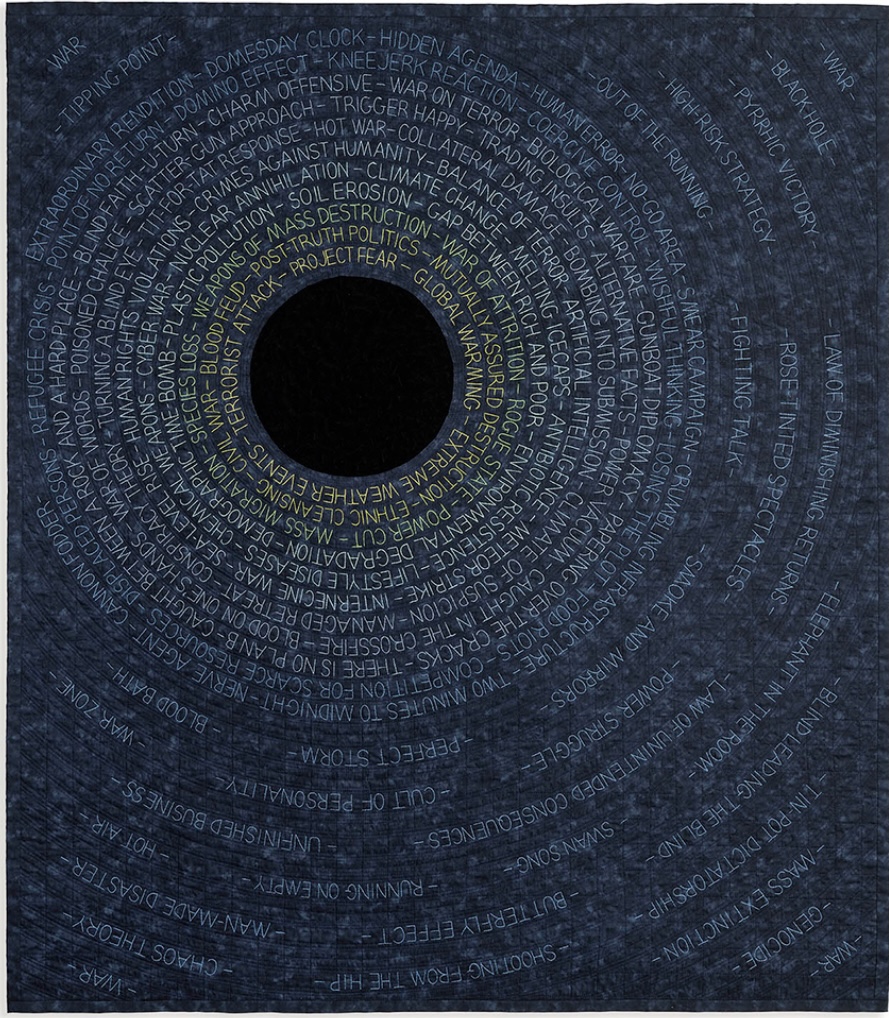
Below I put some of her works, from left to right: “War of Words”, Sara Impey, calico, whole cloth, free-motion machine, stitched, machine quilted; “Project Fear”, Sara Impey, cotton, velvet, free-motion machine stitched, hand and machine pinned and quilted;

Reading point. LINK 41,( page 95, OCA Painting 2, Part 5 course book).
Bibliography: “David Bowie Documentary Alan Yentob 1998”, Billykarloff channel, Youtube; [accessed on 21.05.2022]; “Sara Impey/Home/Gallery”, online on http://www.saraimpey.com, [accessed on 21.05.2022]; “Cutting up the Cut up”, Ken Holling examines the artistic device to create new meaning from existing recordings, 25.06.2015, BBC, online on http://www.bbb.co.uk; [accessed on 21.05.2022]; “Sara Impey’, interview, online on http://www.textilecurator.com; [accessed on 21.05.2022];
Research Points. We are suggested to make a research about at least two artists from the following list: Hugo Ball, Joseph Kosuth, Tracy Emin, Ed Ruscha, Fiona Banner, Bob and Roberta Smith, Lawrence Weiner, Jenny Holzer, Barbara Kruger, The Guerilla Girls, Emma Kay, Andrea Fraser. I looked through their artworks to understand which ones would inspire me. I found out that artworks of Fionna Banner and Emin Tracey are very appealing to me.
Tracey Emin (1963-)
I decided to research Tracey Emin because I was interested in her iconic and controversial artwork, the “My bed”, and placed the image in my previous course in my learning log. Tracey Emin is a notable British visual artist famous for her autobiographical and confessional artistic style. She employs various media, including painting, drawing, photography, video, sculpture, and neon text. She has received her formal art training at the Royal College of Art in London, where she is now a Royal Academician and Honorary Doctorate. Emin Tracey was nominated for the Turner Prize in 1999. She is very popular among art scholars as a panellist and speaker. Emin gave lectures at the Victoria and Albert Museum in London, the Art Gallery of New South Wales in Sydney, the Royal Academy of Arts, and the Tate Britain in London. She lectures about how artists can establish the links between creativity and their own life experience, building your narrative of personal stories in art. She was appointed Professor of Drawing at the Royal Academy in 2011.
I find Emin’s works appealing because of their personal emotional narrative. I always believed and shared a view that Art is an intimate personal experience and it should be revealed. We all reveal our deep-rooted, subconscious or recently attained old and new personal experiences. Doing so is what living life takes. It is inevitable for everyone. Those who can do that in a unique, not trivial and beautiful manner – are artists.
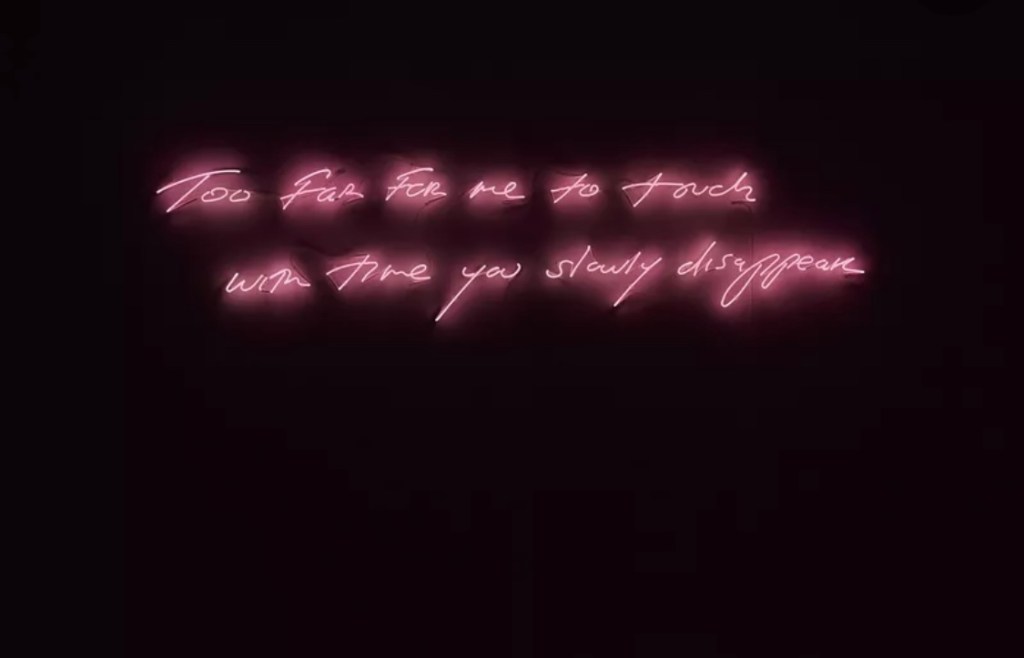
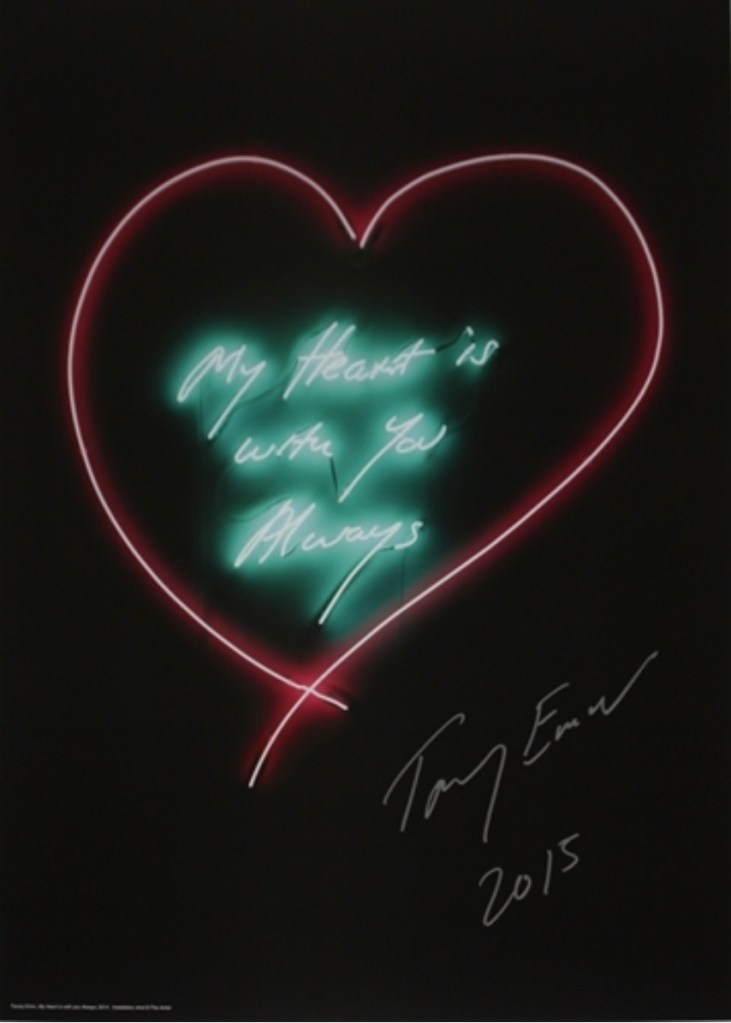
Below I put some of her notable artworks, which are focused on texts. From left to right: 1) “Too Far For me to touch with time slowly disappear”, Tracey Emin, 2019, neon, image via http://www.artsy.net; 2) “My Heart is With You Always, 2015”, Tracey Emin, offset lithograph, image via http://www.artsy.net; [both images accessed on May 25th,2022];
Fiona Banner (1966-)
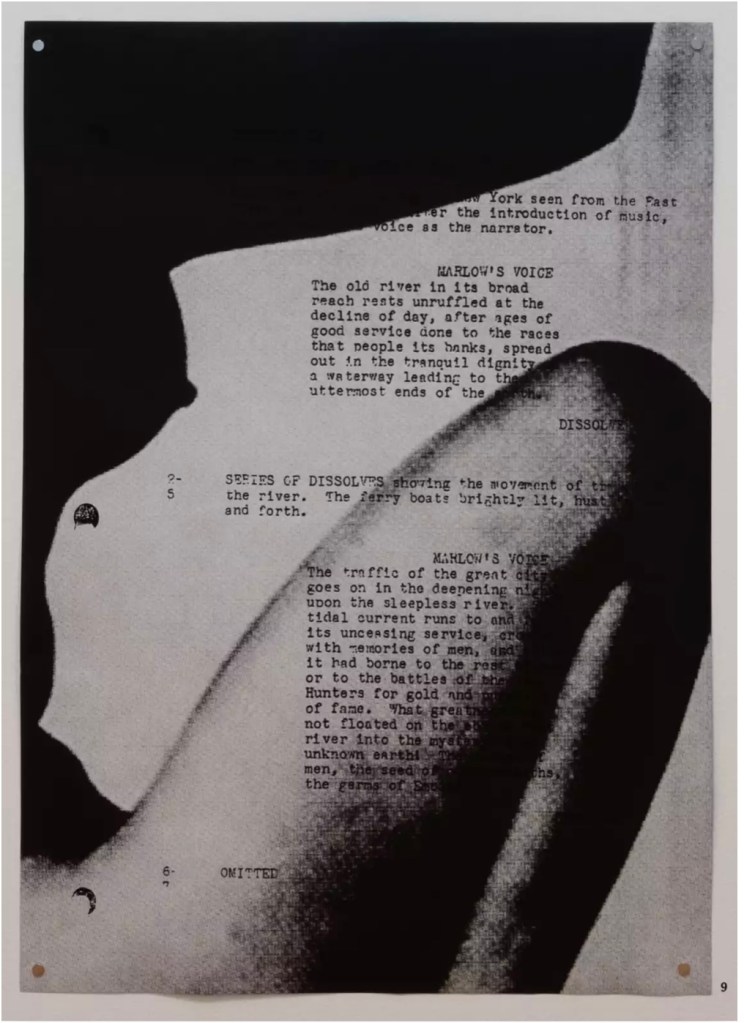
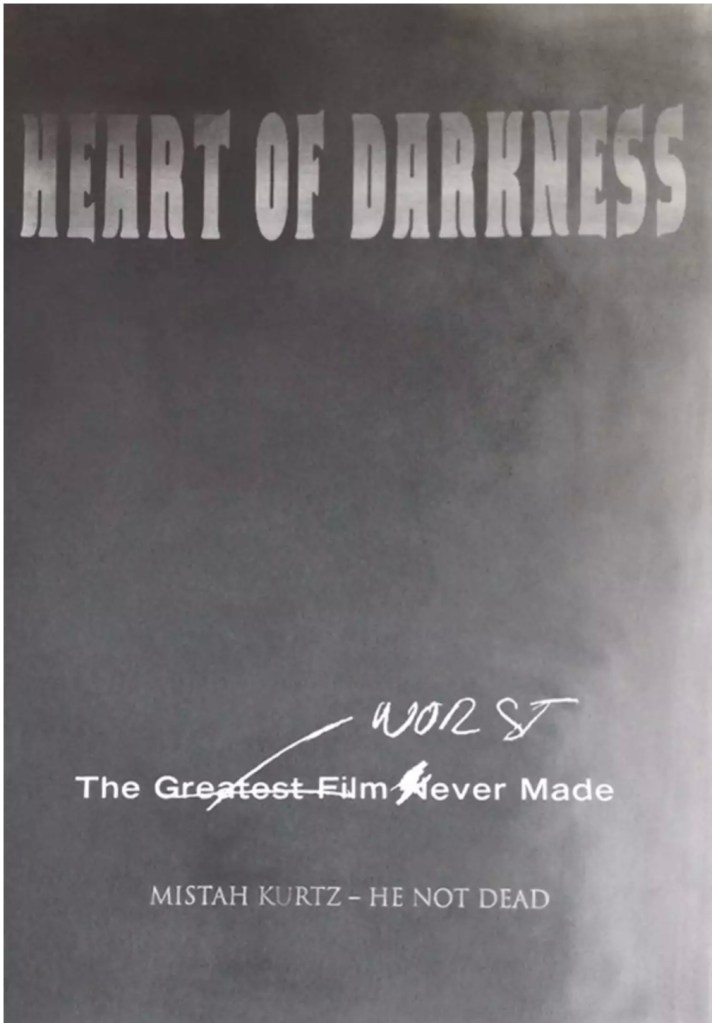
Fiona Banner is a British visual artist who lives and works in London. She creates sculptures and installations and drawings and paintings; she also writes books. Fiona Banner is very famous for her “wordscapes”, which represent her thoughts and emotions from various movies in her own words, which she puts artistically along with drawings and painting. Fiona’s works have been exhibited in prestigious international museums such as the Museum of Modern Art, New York and Hayward Gallery, London. Banner was shortlisted for the Turner Prize In 2002 she was short listed for the Turner Prize. She is a Professor of Perspective at Royal Academy.
The “wordscapes” are a very new approach to making art for me. It was a revelation because I do write as well. I am fascinated with languages and texts, I like to work with words and texts. Thus Fiona Banner’s success is inspiring. It is excellent news for me that this kind of art – personal, lengthy essays put into visual art format- is so much appreciated in the art world and has found a unique space for itself. I find her style very refined and elegant, truly artistic, which is very inviting to have a prolonged gaze.
Below I put some of her notable artworks, which are focused on texts. From left to right: 1) “Thames and Hudson nude”, Fiona Banner, 012, image via http://www.artsy.net; 2) “Heart of Darkness”, Fiona Banner, drawing, 2017, online on http://www.artsy.net; [accessed on May 25, 2022]; image via http://www.artsy.net;
Below is my additional research, as it was asked on the exercise to find our own examples of artists who incorporate texts and words into their artworks.
Bruce Nauman (1941-)
Bruce Nauman is a notable Americal conceptual artist who has been creating his versatile artworks in different genres: sculpture, drawings, paintings, films, and installations. He is famous for his saying, describing his artistic experience as: “…investigating the possibilities of what art maybe“. (Bruce Nauman, http://www.moma.org). Bruce Nauman originally studied mathematics and physics at the University of Wisconsin, and later, he worked on his Master’s degree in Fine Arts from the University of California in 1966. He started from painting and moved to sculpture, performance, installation, and video making. Besides his unique interdisciplinary approach to creating art, his contribution to Art history is his analytical self-reflection about what Art is and where is his place in art. He famously said: “If I was an artist and I was in the studio, then whatever I was doing in the studio must be art” (Bruce Nauman, http://www.artnet.org).
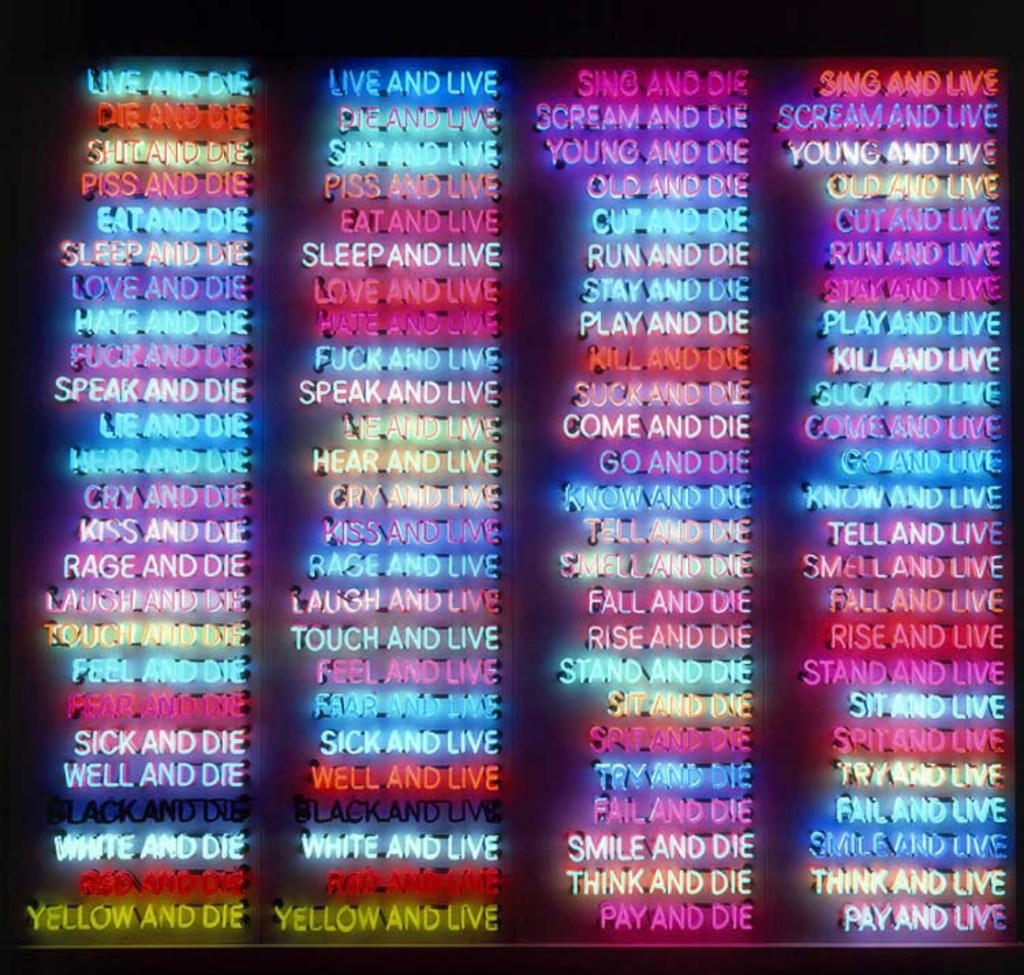
Below I put some of his works, which I found interesting and engaging for me, from left to right: 1) “One Hundred Live and Die”, 1984, Bruce Nauman, mediums: neon tubing mounted, four metal monoliths, image via http://www.thesketchline.com; 2) “Life, Death, Love, Hate, Pleasure, Pain“. 1983. Bruce Nauman, Neon, image via http://www.mcachicago.org;

Bibliography: “Tracey Emin, British, born 1963-“, online on http://www.artsy.net, [accessed on May 25 2022); “Tracey Emin, (British, born 1963), online on http://www.artnet.com, [accessed on May 25, 2022]; “Biography. Emin Tracey”, online on http://www.tate.org.uk, [accessed on May 25 2022]; “Fiona Banner”, online on http://www.tate.org.uk, [accessed on May 25 2022]; “Fiona Banner aka The Vanity Press”, Artist, online on http://www.royalacademy.org.uk, [accessed on May 26 2022]; “Art Now: Fiona Banner, 3 September -8 November 1998”, online on http://www.tate.ork.uk; [accessed on May 26 2022]; “8 Artists Who harness the Power of Words in Art’, by Jessica Stewart, June 29, 2017, online on http://www.mymodermet.com; [accessed on May 26, 2022]; “Bruce Nauman, American (born 1941-), MOMA, online on http://www.moma.org; [accessed on May 26, 2022]; “Exhibition. Bruce Nauman, from March 16 to June 21 2015” online on http://www.foundationcartier.com, [ accessed on May 26, 2022];
 JeanArt