
Research Point 2. We have to explore early Cubist works of Pablo Picasso and George Brague.
We should reflect on the following questions: What were the influences on Cubism? How did the Cubists seek to represent the three-dimensional reality of objects and space? What are the similarities in these works to the non-western approach?
Cubism. Cubism is one of the most well-known and influential art movements created to a large extent by Pablo Picasso and George Braque in Paris between 1907 and 1914. As editors of encyclopaedia Brittanica (2000) explain: the cubist style emphasised the fact, two-dimensional surface of the picture plane, rejecting the traditional techniques of perspectives, foreshortening, modelling, and chiaroscuro and refuting time-honoured theories that Art should imitate nature. The term was probably derived from a comment made by the art critic Louis Vauxelles who described the paintings he saw as, cited in Cubism on http://www.tate.org.uk [accessed on March 12,2021] when’ everything is reduced to geometric outlines and cubes”. Cubism became a platform for many art movements such as constructivism and Neoplasticism. The main feature of cubists’ paintings is their revolutionary break with the centuries-old classic European tradition of creating an illusion of natural space. Cubists broke their objects and figures down into distinct areas, fragments and planes, offering to a viewer different viewpoints at the same time. Cubism has developed in analytical and synthetic directions. Analytical Cubism is considered early Cubism and is characterized with a heavy, rugged look, different, interweaving planes and tones of black, greys and ochre. Synthetic Cubism is a latter stage of this art movement, having simpler shapes and brighter colours, collages from newspapers.
The following art very much influenced Cubism:
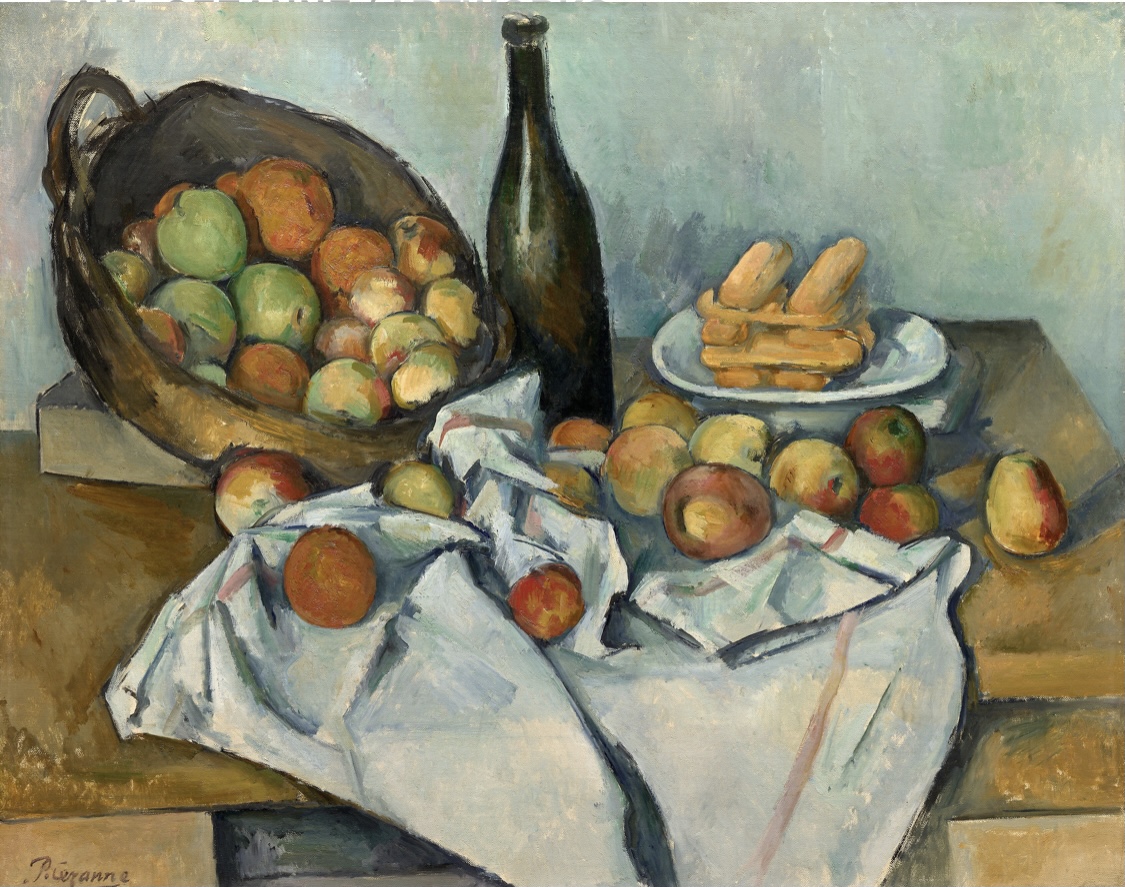
- Paul Cezanne’s concept of volume and space through abstract geometry;
- The “archaic sculpture of pre-Roman Spain’ (Early Cubist works of Picasso, visual-arts-cork.com)
- African Sculpture and African Masks;
It is interesting to look at these elements. I have picked up some and placed them below. From left to right.
The Basket of Apples, Paul Cezanne, 1895, oil on canvas; image via http://www.cezannepaintings.org;
Madame Cezanne in a Yellow Chair, Paul Cezanne, 1988-1890, oil paint, image via http://www.paulcezannepaintings.org;

Dama de Elche (Lady of Elche). Alcudia, Alicante, 5th-4th century BC, limestone, image: Museo Arquelogico Nationale, Madrid, http://www.past.com
Head of a Man, from the sanctuary Cerro de Los Santos, Albacete, 4th century BC, limestone. Image @ RMN- Grand Palais.


Traditional Dogon Mask, photo by @ Ferdinand Reus;
Chibinda Ilunga, African, Non-Eastern Angola, Chokwe people, mid 19th century, Kimbell Art Museum, image via www,the-past.com;


Cubists are famous for their revolutionary approach to work with space and dimensions. Contrary to traditional European of creating the illusion of depth, Cubists emphasised the flatness of the canvas, bringing several viewpoints at the same time instead of focusing viewer’s attention on one single viewpoint via breaking the object into different planes.
This kind of analytical cubists’ approach to the object within the space is very much in tune with tradition in Asian visual art. Asian art is characterised by a less factual and objective approach inherent to Western art. Asian visual artists focused more on the ‘interior’, meditative eye. That is why we see multiple viewpoints and simultaneously existing different planes on Japanese, Chinese or Korean visual artworks. In other words, I can say that Cubists are close to Asian visual art because they were more focused on the inner state of the object in a specific space rather than depicting an accurate external position of this object in space or area.
“Tender Buttons” by Gertrude Stein (1874-1946) are incredibly resonating with Cubists’ approach. For example, her lyrics in ‘Tender Buttons’ are focused on different planes of the existence of objects she describes. For example, she uses such words as “arrangement in a system’, “system” always implies the presence and play of multiple factors. Lets think about another description she gives: ” that is no colour chosen” and “the change of colour which is typical for cubists works when the object is broken to several planes/facets, and each part has its colour; thus there is “no colour chosen”. She also says, “There is no program”, which means there is nothing rigid and factual. The absence of a “program” also implies numerous possibilities, including multiple views. Other words in her “Tender Buttons” are: “Supposing that the case contained rosewood and a colour. Supposing that there was no reason for distress ….., supposing that there was no astonishment….” are in tune to analysis and multiple points of view.
Early Cubist works of Pablo Picasso (1881-1973):
Les Demoiselles D’Avignon, Pablo Picasso, 1907, oil on canvas, image via http://www.pablopicasso.com
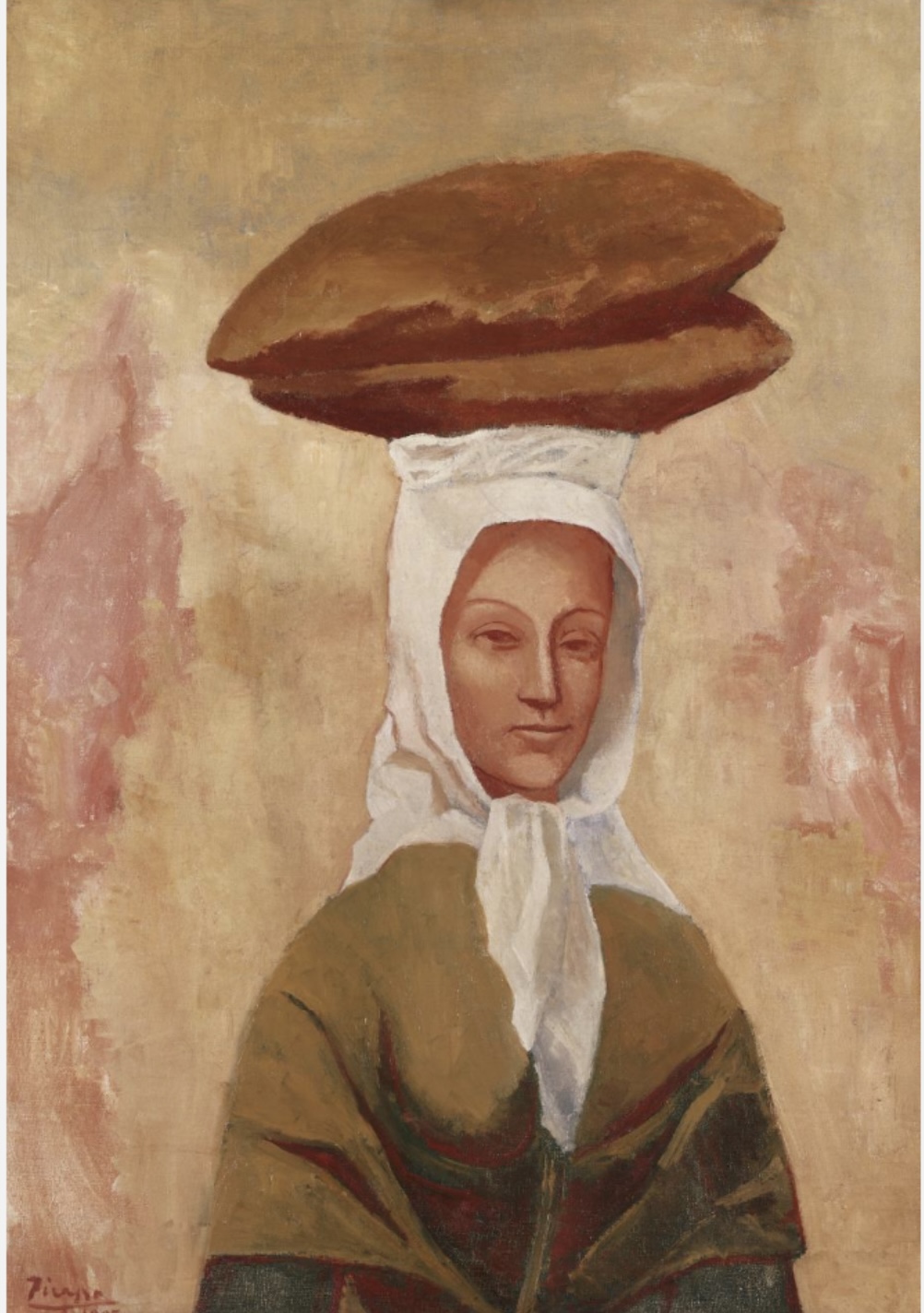
Woman with Loaves, Pablo Picasso, 1906, oil in canvas, @Estate of Pablo Picasso/Artists Rights Society (ARS), New York, image via http://www.philamuseum.org;
Self Portrait, Paris, Pablo Picasso, oil on canvas, 1906, image via http://www.the-past.com

Bibliography: List of art and design movements of the 20th century, written by the Editors of Encyclopaedia Britannica (eds), Naomi Bloomberg, 2014-2015, online on http://www.britannica.com, [accessed on March 10th, 2021]; Cubism, Editors of Tate Museum online, online on http://www.tate.org.uk [accessed on 12th March 2021]; Early Cubist Painting (c.1907-9), Editors of Visual Arts Cork, online on http://www.visual-arts-cork.com; [accessed on December 1st, 2021]; The Function of an African Mask, Editors of ArtyFactory, online on http://www.artyfactory.com; [accessed on December 1st, 2021]; “How Eastern Art Compares to Western Art’, Editors of Encyclopedia of East Asian Art, online on http://www.visual-arts-cork.com; ” Picasso: echoes of Iberia”, Cecile Godfroy, Helene Le Meaux, Minerva magazine, June 17, 2021, online on http://www.the-past.com;[accessed on December 2021];
Tender Buttons, Gertrude Stein, online on http://www.poets.org; [accessed on December 26th 2021];
 JeanArt