This post is in progress
Before starting Part Two, we have to prepare the place for developing the object (objects) to study. We have to consider certain factors to make sure the space will be efficient for our studies.
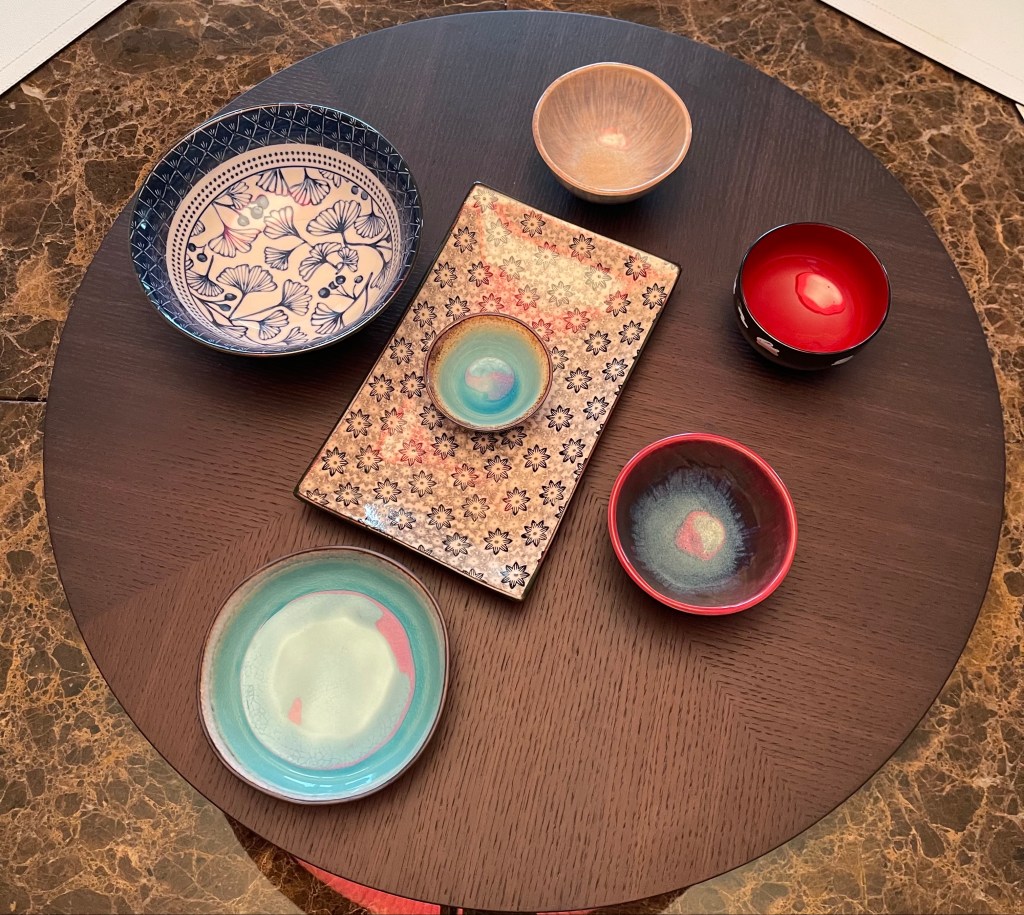
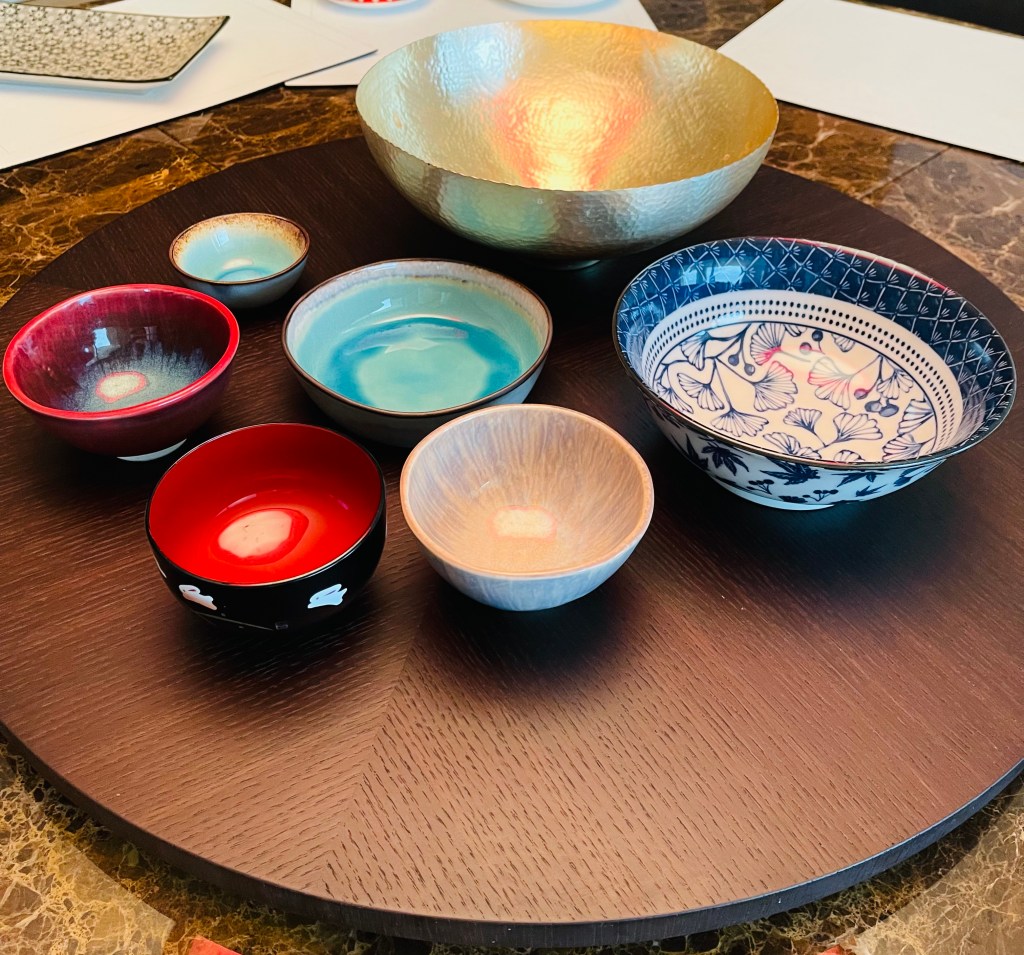
I have picked up two spaces, two tables at my place for arranging some objects for the first compositions. The photos are below. One table has a round part on it, large enough to accommodate large and small objects. It is lit from above and has a smooth, dark brown surface compatible with many different things/objects and works well as a background. I also can move freely around this table to see the composition from different angles. Another good thing is that I can turn off the upper light and use the floor standing lamp.
Another space for my work is a black lacquered console that stands near the wall under the standing lamp, which brings a good light from the right side. Console’s lacquered smooth surface gives great reflections for my objects. Also, the wall as a background has a smooth grey finish, which also works well with many objects.
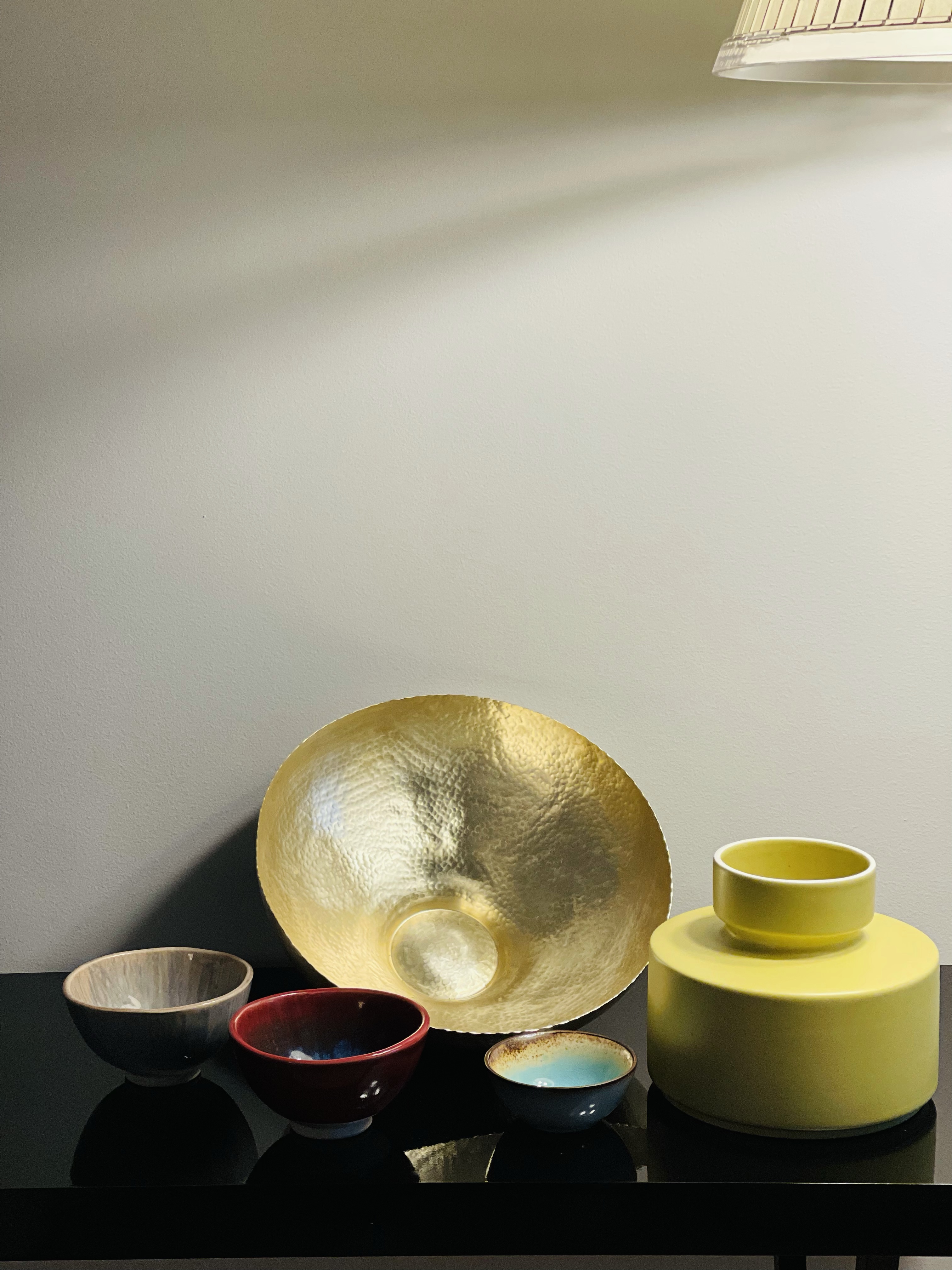


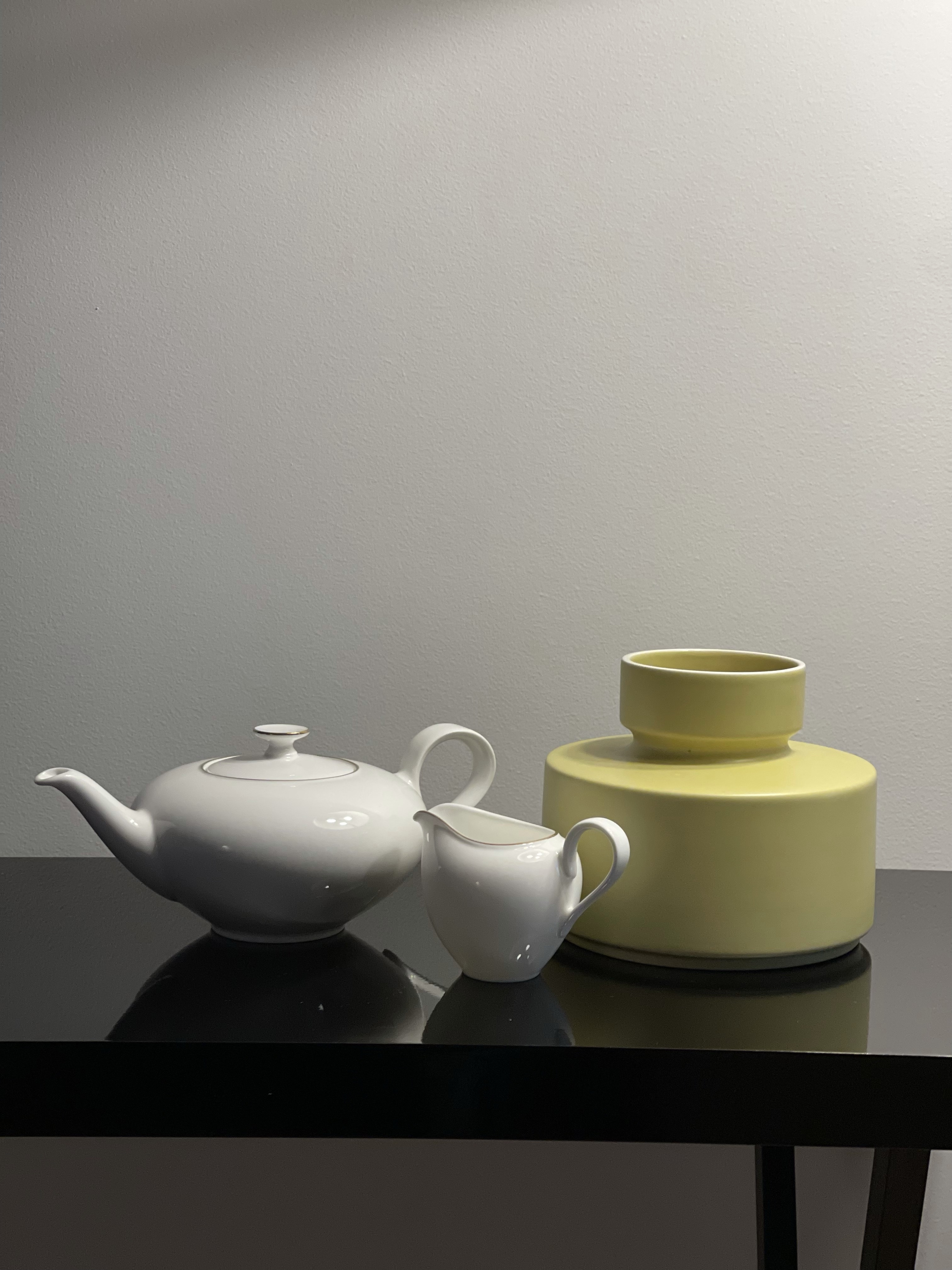

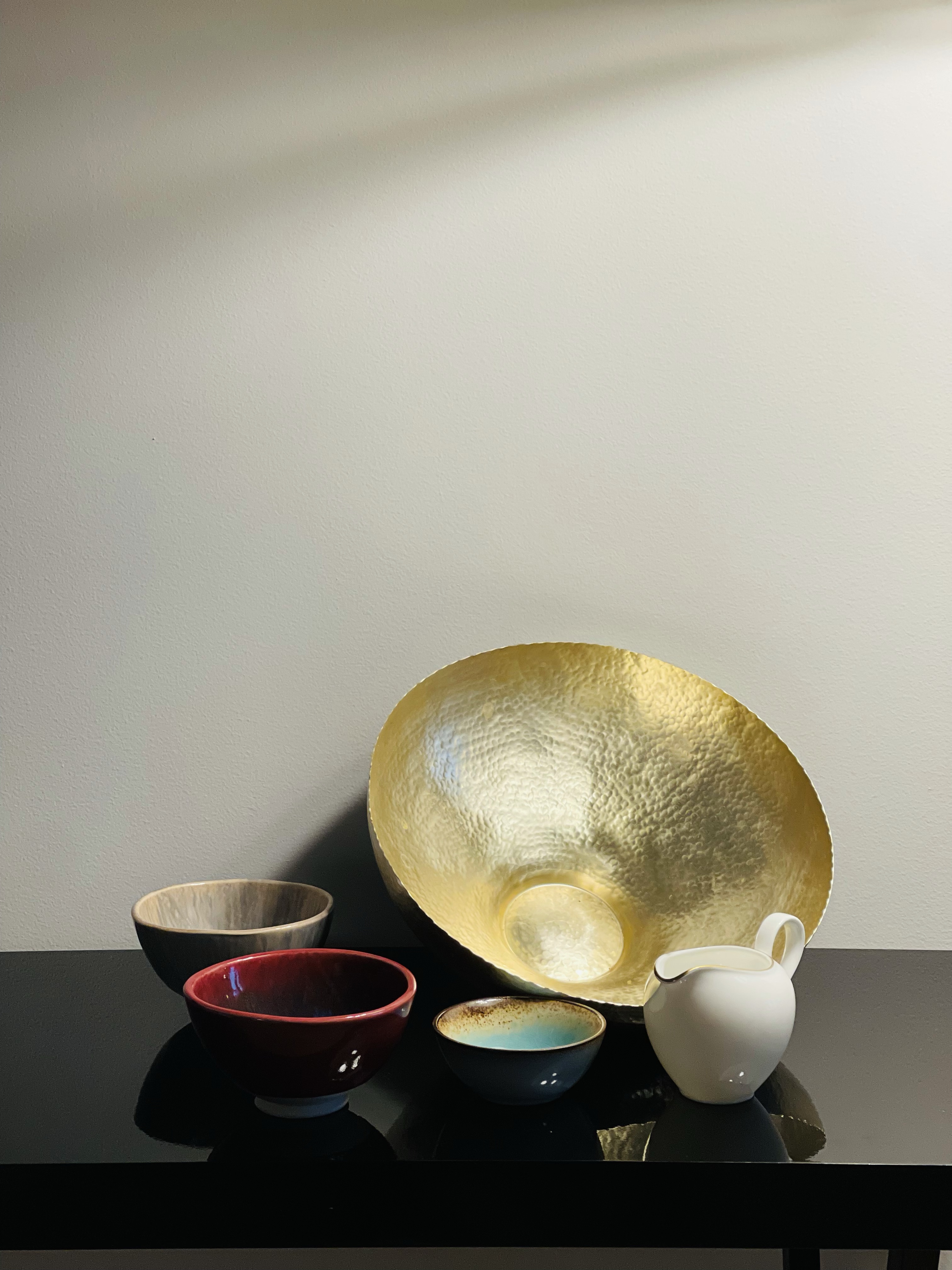


I have arranged these man-made objects on these surfaces because they all communicated well with each other. They all share a soft, round geometric shape and clean look. Colours also work well. The dark surfaces complement the white, pistachio, red, metal, and earthy colours of Japanese bows. I came up with these objects for my first arrangement because I like nice home objects, especially vases, dishes, teapots, cups, and mugs. I have lots of them, and that was the first that came to my
mind. I will search for other compositions using flowers, which I love, branches with leaves and green foliage, and fruits. I also think about an arrangement with toys.




Reading:
Richard Sierra: ‘
Serra described the list as a series of “actions to relate to oneself, material, place, and process,” and employed it as a kind of guide for his subsequent practice in multiple mediums.
Serra has talked at length, for example, about the central place this language-based drawing occupied in the development of his early sculpture. “When I first started, what was very, very important to me was dealing with the nature of process,” he said. “So what I had done is I’d written a verb list: to roll, to fold, to cut, to dangle, to twist…and I really just worked out pieces in relation to the verb list physically in a space.” A sort of linguistic laying out of possible artistic options, this work on paper functioned for the artist “as a way of applying various activities to unspecified materials.”
Exercise 1 Collect/make/arrange
 JeanArt