
Read Plato`s account of the Allegory of the Cave and say whether and why it is valid
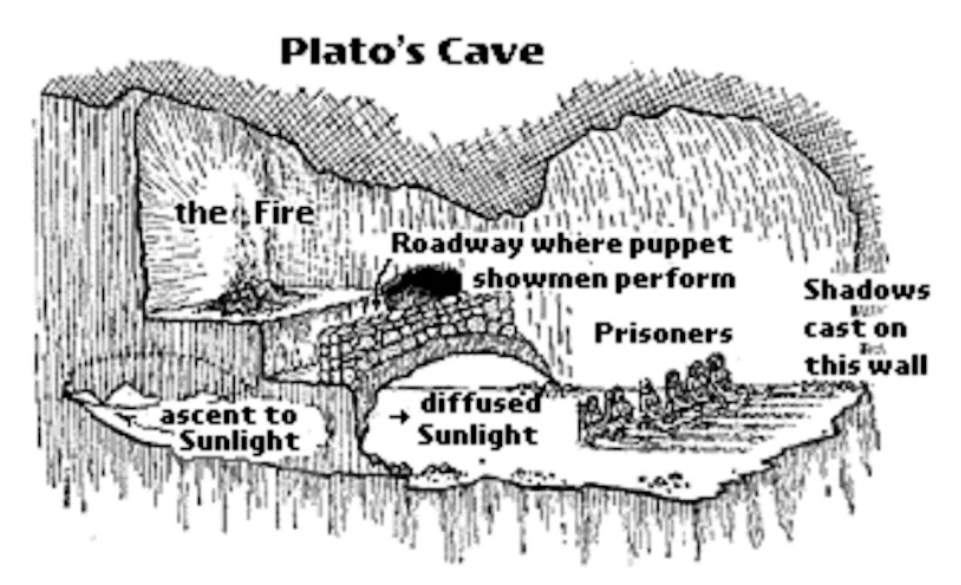
Plato’s cave. ( image via http://www.pholosophizer.com)

Read Plato`s account of the Allegory of the Cave and say whether and why it is valid
Plato’s cave. ( image via http://www.pholosophizer.com)
In this Assignment, we are required to write an essay of 1500 words about whether and why we think Plato’s Allegory of the Cave is still valid today.
I have read the fable, and besides the fact that I enjoyed it, I can undoubtedly say that Plato’s idea about our (humans’) perception of the world is still very valid: our judgment about the world around us is exclusively based on our empirical experience, which we get through our senses, what in its turn makes us their prisoners, limiting our view on things, creating very subjective opinions about the world which are very reductionistic and incomplete. Moreover, we tend to get very attached to our defective ‘knowledge’, being reluctant to broaden our understanding of the world and continue living in our own informational and opinionated bubble.
Below I want to reflect on elements of Plato’s allegory, they appear in the fable as several central block or pillars of his concept: the Cave, the Shadow Theater, the Truth.
The Cave.
Plato created a great play of symbols describing the situation: people living in the cave, disabled in a way preventing turning their heads. The symbolism of prisoners living in the cave represents human’s existential experience. Living in the cave means: a) we cannot experience the whole world and we are always severely limited physically and mentally in our ability to see, explore and understand the world; b) as a result, our ‘knowledge’ about the world is incomplete and dramatically reduced, we live in the ‘darkness of the cave’. ‘Prisoners’ means we are prisoners of our senses, which are very limited in their capacities. We can only get information about the world through the 5 senses, which have limited ability. Thus everything that we cannot sense – we cannot be aware of it, we cannot describe and understand. Therefore, we are hard-wired, uncompromisingly preprogrammed to deal only with that part of the Universe which we can sense via these five senses.
Prisoners’ inability to turn their heads and move around being chained is a significant characteristic of human psychology: we are very rigid in our thinking and behaviour. It is truly amazing how Plato had put this human quality in this play of symbols. Prisoners are feeling cosy and content in the cave, being prisoners. Only one dared to escape, which means Plato’s accent on the fact that only a few people dare to come out of their ‘cave’ to seek truth, for a different experience. Only a few people dare to abandon their old beliefs and grow, while others stay lazy and incurious in the ‘cave’.
Another Plato’s observation in human psychology is that people tend to be radicalized in their views and opinions, which is why family members quarrel over political issues, and religious terrorists engage in radical terroristic attacks. For example, one prisoner who escaped would get back to his crowd in the cave and attempt to share the truth he discovered outside the cave; the prisoners would kill him. ‘Men would say of him that up he went, and down he came without his eyes; and that it was better not even to think of ascending; and if anyone tried to loose another and lead him up to the light, let them only catch the offender, and they would put him to death.’
The Shadow Theater.
The symbolism of shadows on the wall, which are deliberately played FOR prisoners BY other people, is multi-layered, and nothing has changed since Plato’s lifetime. Moreover, I can say that things have got even worse. Plato’s shadow theatre means that our thinking is shaped by a specific system of beliefs, by society through social infrastructure and all sorts of social communication systems. Prisoners’ situation when they can see only ‘before them’, disabled to move their heads and move around, means that whoever created the situation wanted them to see just those shadows from the puppets carried behind their backs. We can recognize this as an accurate description of manipulation of somebody’s consciousness. Today we all know the phenomena of ‘fake news’ widely and instantly spread in social media with a clear purpose of manipulation of people’s thoughts.
Another layer of Plato’s symbolic play with shadows on the cave wall is the description of this process: ‘…human beings living in a underground den, which has a mouth open towards the light and reaching all along the den; here they have been from their childhood, and have their legs and necks chained so that they cannot move, and can only see before them, being prevented by the chains from turning round their heads. Above and behind them a fire is blazing at a distance, and between the fire and the prisoners there is a raised way; and you will see, if, andlook, a low wall built along the way, like the screen which marionette players have in front of them, over which they show the puppets. And do you see, I said, men passing along the wall carrying all sorts of vessels, and statues and figures of animals made of wood and stone and various materials, which appear over the wall? Some of them are talking, others silent.’ Plato gives a clear idea that someone carefully designs this shadow theater for prisoners. It is impressive how he did it. He describes what we have today, all this fake news carefully produced for mass consumption by particular infrastructure in all social networks, including anonymous ‘Telegram’ channels, which have been created as a weapon in informational wars.
Another layer is Plato’s hint on the anonymity of those who created this shadow theatre. Indeed, today we observe that manipulative information is always anonymous. It can be some sort of label, a ‘brand name’, a nickname. Still, it is hard to find a real name of real people who stand behind those manipulative informational attacks. Another layer I see in the symbolism of shadow theatre is that the prisoners willingly consume the shadow show. This could mean that people’s consciousness is easy to manipulate because of people’s natural hunger for the ‘show’, for the information. Whatever we see on the wall, we consume. In the broad sense that any information as a good to be produced will always find its consumer.
Plato’s idea ‘To them, I said, the truth would be literally nothing but the shadows of the images’ and his suggestion about the game prisoners would play, guessing the order of the shadows, is in a powerful parallel with Baudrillard’s concept of Simulation and simulacra when the simulation process goes through stages. At the same time, the information/signs are endlessly fragmented, creating a new reality consumed by masses who guess about the meaning of this information/signs when the simulacra are completely detached from the true meaning of the original idea. It does describe the modern experience of millions people who have immersed their conscience into social networks, especially in Instagram- which is a pure simulacrum. The images they observe are like Plato’s shadows – somebody’s followers perceive somebody’s images as truth. At the same time, those images have been carefully directed and amended with one single purpose of manipulation – to stimulate someone’s excitement about an artificial life which has less and less common with truth. One carefully edited fragment of somebody’s life is perceived by millions of people as a whole and true life of the subject they follow. Followers in Instagram are like prisoners in the cave – they can see only before them – into the screen, and they can see only those deliberately amended images. People’s conciseness, mindset, and world outlook are easily manipulated, and this has become even easier with technological progress such as the Internet and social networks.
Plato’s Allegory of the Cave fascinates me with its multilayers. Another aspect of ‘To them, I said, the truth would be literally nothing but the shadows of the images’ can be seen as how humans treat the information. We tend to perceive our empirical experience as truth, while it is just a tiny fragment of reality. We believe in what we see, and this is our most significant natural limitation, preventing a majority of people to grow, expanding their consciousness.
The shadows on the wall are signs which the prisoners interpret. This is a triadic concept of sign in Pierce’s theory of semiotics.
The Truth.
In Plato’s fable, I can see the ideas of Realism and Constructivism. Artificially created, the Shadow Theater can be seen as a socially constructed reality, and the world outside the cave is described as: ‘He will require to grow accustomed to the sight of the upper world. And first, he will see the shadows best, next the reflections of men and other objects in the water, and then the objects themselves. Then he will gaze upon the light of the moon and the stars and the spangled heaven; and he will see the sky and the stars by night better than the sun or the light of the sun by day?” is a reality which is independent of the human mind.
It was fascinating to find the final passage of the fable as: ‘This entire allegory, I said, you may now append, dear Glaucon, to the previous argument; the prison-house is the world of sight, the light of the fire is the sun, and you will not misapprehend me if you interpret the journey upwards to be the ascent of the soul into the intellectual world according to my poor belief, which, at your desire, I have expressed whether rightly or wrongly God knows. But, whether true or false, my opinion is that in the world of knowledge, the idea of good appears last of all and is seen only with an effort; and, when seen, is also inferred to be the universal author of all things beautiful and right, parent of light and of the lord of light in this visible world, and the immediate source of reason and truth in the intellectual; and that this is the power upon which he who would act rationally, either in public or private life must have his eye fixed.’ To me, this is clear evidence of Plato’s Transcendentalism, because he openly admits the existence of the ‘…universal author of all things beautiful and right, parent of light and the lord of the light in this visible world’. This conviction of Plato is very much in line with all ideas of spirituality and religious faith and a modern scientific theory of Grand Design. His appeal:’… and that this is the power upon which he who would act rationally, either in public or private life must have his eye fixed’ is what is said in all holy books beginning from Bhagavad Gita. Plato believed in the existence of a universal source of Life – God, which we cannot sense but must make an effort to understand and accept.
As a resume, I can say that I find Plato’s ideas in the Allegory of the Cave as still very valid today.
Bibliography: 1)The Allegory of the Cave, Plato, P.Shorey trans. from Plato: Collected dialogues, ed.Hamilton & Cairns Random House, 1963, online on http://www.yale.learningu.org;
Added after receiving my Tutor’s feedback. My comments on the feedback and my reflection on the Assignment.
Below is that part of her comments which I accept.
‘Your writing is clear overall but has an informal tone and numerous spelling and grammar errors (e.g. break up run-on sentences and long paragraphs, starting new sentences/ paras with each new idea), which could be easily rectified using Word processing software. I advise students not to write their assignments directly into their blogs as it encourages less formal writing and doesn’t allow you to edit thoroughly. You should also upload these as a Word or pdf document directly onto OCA Learn in future (not just links in a document). You can include relevant links to your blog within the document itself. ‘
I have edited all my posts with Grammarly and corrected all grammar mistakes and typos. I also accept her note about forgetting to add the bibliography for the last final exercise. So I added it up. For this exercise I have worked only with Plato’s essay, quoting only him. That is why I thought no bibliography needed, since I referred to him in every quote I used. But I agree that I should have added the formal part and I did it after receiving her note. However her comment below reveals her poor knowledge of Plato’s text I was working on.
‘You do incorporate a lot of quotes from the Allegory itself (some far too long), and presumably from other sources, but these are not cited, and should be (otherwise this is plagiarism).’
Please, check all my quotes I referred in my essay. They are Plato’s quotes and not anyone else. Why she thought that I have included quotes from other sources – I really don’t know.
The rest of her comments and her attitude she revealed in our email exchange I found very frustrating because she refused to comment in detail on whether I have grasped the concepts to learn.
I place her comments below, and I will explain why I find them shallow and incorrect.
‘I can see from some of your blog posts that you are doing some good research (i.e. Baudrillard’s Simulacra), but you don’t pull these through to the Assignment, which is a shame because his theory is very relevant to Plato’s Allegory. Your blog shows you clearly have a capacity for understanding critical, theorical and artistic developments (a key learning outcome of this course), but your Assignment doesn’t reflect this. It also doesn’t evidence a wide enough range of sources and your ability to identify appropriate source of information, which is something you should have a good grip on by the end of this course. There is ample opportunity here to delve into subjects such as aspects of human psychology or fake news and how it operates – I recommend using databases such as JSTOR and Google Scholar to find peer reviewed articles relevant to such topics. Then you’ll begin to ground your observations in research.”
If anyone would put her passage above in the editing tool, let’s say in Grammarly, they can find typos, as well as grammar mistakes. Her overall writing is clear; however, her writing is at the level of her students, it is not of superior quality.
She somehow missed a big part in my essay about Simulacra; noting it was a ‘shame’ I didn’t bring the Simulacra concept into my writing. I have replied to her feedback immediately as she posted it on the Virtual Learning Platform. To clear up any doubts if the whole paragraph about the Simulacra concept in 250 words was in my essay from the very beginning, someone can check the timing of our correspondence, my first message to her, and her posting the feedback on VL.
It is also clear that she writes new feedback on top of those she did earlier. Because my student number was wrong and the date of the feedback was wrong. It is indicated as created on June 21, while she posted it on July 21. I also provide the evidence that no activity happened on my website, downloading the screenshots from “Activity” search on my website for 21.07.21. it means my statement are truthful, and the state of my web site was the same as my Tutor supposed to check and read.
Her suggestions about readings I found very subjective and misleading. I did recommended readings which I found in the course book, I did additional research and readings from well reputed academic sources. The last final assignment about Plato’s Allegory of the Cave didn’t contain any recommendations to read additional material to build up our essay. We were supposed to read the Allegory of the Cave and reflect on it, not on any additional material. It was clear the final task required us to reflect on concepts we have covered and readings we did. Thus her recommendation here is very subjective.
This sentence of hers below I just don’t understand as well. I have copy-pasted it, so the spelling is original.
‘Your blog shows you clearly have a capacity for understanding critical, theorical and artistic developments (a key learning outcome of this course), but your assignment doesn’t reflect this’
Should I understand the above as I did the whole essay about Plato’s as wrong? Is everything I wrote misleading? Since my ‘Assignment doesn’t reflect my capacity for understanding”? I strongly disagree with this statement. I find it to be very general and not well thought. Especially because she doesn’t explain why she thinks so further in her feedback, I believe this statement is included for the ‘tutorship’ sake because she must fill the feedback form with some words. I insist that tutors carefully and thoughtfully approach the statements they include in the feedbacks because such strong statements as above delete students’ hard work and create an unfair impression about the student.
Another statement of her is also very general and ‘works for all feedbacks’ type. I copy-pasted her sentence, so the grammar is original.
‘It also doesn’t evidence a wide enough range of sources and your ability to identify appropriate source of information, which is something you should have a good grip on by the end of this course.‘
The Tutor must be specific; she should indicate what source she doesn’t recommend the student to use. I have to bring this again, but for this Assignment, including all my exercises within the Part III of the course, I used reliable academic and professional art sources and did my recommended reading. The following is the list of sources of information, which can be found in bibliographies for my exercises:
Oxford Dictionary, Encyclopedia Britannica, Stanford Encyclopedia of Philosophy.
I have read articles by Robert Storr, artist and critic, member of the faculty at Yale School of Art, Rhode Isle School of Design and Harvard University; Alina Cohen, art writer, staff writer on http://www.artsy.net, contributor for the Observer; Editors of Whitney Museum of American Art; interviews of artists (Jeff Koon) whose works I picked up for the exercises; Emma Brockes, a writer and contributor to the Guardian and The New York Times; Wilhelm Kemph, sociologist, PhD on psychology, philosophy and statistics at the University of Vienna, professor of psychology at the University of Erlangen-Nuremberg;
IIkka Maunu Niiniluoto, professor of mathematics and Professor of Theoretical Philosophy, Professor of Department of Philosophy, History and Art Studies, rector of the University of Helsinki; Professort John T. Sanders, Rochester Institute of Technology;
I did the recommended reading of Ralf Waldo Emerson (Essays, the First Series, Self-Reliance, 1841; The Selected Works, essays: Intellect, Nature; The Naturalist, 1934;), as well as Searle John R. (The Construction of Social Reality, 1993), including watching of his interview with Closer to Truth Youtube channel;
There is another evidence in her comments, which make me think this Tutor has not read my all exercises. However, I have a strong impression that she quickly looked through the last exercise about Plato. I copy-paste her comment below.
“Proper and consistent referencing (using Harvard style) is essential to this course and it’s your chance to show off all the reading you’ve done! I’d also like to see more evidence that you’ve read and understood Part 3 of the course handbook (this is clearer in your blogs).”
I don’t know why she wrote it. If she read my exercises, she would see the Harvard citing system after each text I wrote. So why she wrote that she needed more evidence of my readings and understanding of the concepts to learn? She didn’t read my work at all. All my texts are based on recommended readings, and all of them have been prioperly cited. I could not type in all bibliographies for each exercise in time between the moment she posted the feedback and my message to her where I indicated that I did proper citing. My additional evidence is the screenshots from Activity history on my website for 21.07.21. no activity was found by the search.
Below is another comment of hers that I cannot agree with. The spelling and grammar are original.
‘While you present some (perhaps too many) interesting ideas, they aren’t well organised around a central line of questioning or logic, or explored in sufficient depth. For example, your brief mention of ‘modern scientific theory of Grand design’ at the end leaves me wanting to know more, but there is no room left to explain or investigate this parallel. You would do well with making an essay plan in advance of each assignment, to organise and prioritise your ideas/ examples, and corresponding research. This way you can ensure you have enough space to go into depth with your stronger points, and begin to allow your critical voice to emerge, underpinned and bolstered by the thinking of others. This is a difficult skill, but structuring your essays is essential to letting ideas breathe and giving clarity and focus to your responses. You should also have a clear introduction that sets out what you are going to do (how you are going to answer the question), and conclusion that returns to this at the end, with any concluding thoughts or findings. ‘
I have re-read my essay about Plato’s Allegory of the Cave. It is well structured, and it is very clear. I have a clear introduction, I bring my arguments, reflecting on every metaphor and symbol Plato uses, showing in detail why they are still valid today, applying the concepts we have learned in this part of the course, and a resume.
My essay is not chaotic and poorly written, as she presented in her feedback. I didn’t develop the ideas of Bhagavat Gita and the Theory of Grand Design because they are not related to the concepts we studied, such as Construction of Social Reality and Simulacra. Why she writes that I present ‘too many ideas’ and at the same time asks for more information about the concepts Of Bhagavad Gita and the Theory of Grand Design – I don’t understand. Her approach is controversial and confusing. I didn’t present ‘too many ideas in my essay. I worked on every symbol Plato used in his Allegory of the Cave, and there were many.
As a resume, I can say that my experience with this Tutor was just unacceptable. I don’t bring here her wrong attitude to teaching and tutorship she revealed in our email exchange, but if anyone is interested, they can contact her or me for that.
The overall qualification of this Tutor is disappointing and poor. I don’t accept 90% of her feedback because she doesn’t deliver the good quality product she is supposed to.
In this Assignment, we are required to write an essay of 1500 words about whether and why we think Plato’s Allegory of the Cave is still valid today.
I have read the fable, and besides the fact that I enjoyed it, I can undoubtedly say that Plato’s idea about our (humans’) perception of the world is still very valid: our judgment about the world around us is exclusively based on our empirical experience, which we get through our senses, what in its turn makes us their prisoners, limiting our view on things, creating very subjective opinions about the world which are very reductionistic and incomplete. Moreover, we tend to get very attached to our defective ‘knowledge’, being reluctant to broaden our understanding of the world and continue living in our own informational and opinionated bubble.
Below I want to reflect on elements of Plato’s allegory, they appear in the fable as several central block or pillars of his concept: the Cave, the Shadow Theater, the Truth.
The Cave.
Plato created a great play of symbols describing the situation: people living in the cave, disabled in a way preventing turning their heads. The symbolism of prisoners living in the cave represents human’s existential experience. Living in the cave means: a) we cannot experience the whole world and we are always severely limited physically and mentally in our ability to see, explore and understand the world; b) as a result, our ‘knowledge’ about the world is incomplete and dramatically reduced, we live in the ‘darkness of the cave’. ‘Prisoners’ means we are prisoners of our senses, which are very limited in their capacities. We can only get information about the world through the 5 senses, which have limited ability. Thus everything that we cannot sense – we cannot be aware of it, we cannot describe and understand. Therefore, we are hard-wired, uncompromisingly preprogrammed to deal only with that part of the Universe which we can sense via these five senses.
Prisoners’ inability to turn their heads and move around being chained is a significant characteristic of human psychology: we are very rigid in our thinking and behaviour. It is truly amazing how Plato had put this human quality in this play of symbols. Prisoners are feeling cosy and content in the cave, being prisoners. Only one dared to escape, which means Plato’s accent on the fact that only a few people dare to come out of their ‘cave’ to seek truth, for a different experience. Only a few people dare to abandon their old beliefs and grow, while others stay lazy and incurious in the ‘cave’.
Another Plato’s observation in human psychology is that people tend to be radicalized in their views and opinions, which is why family members quarrel over political issues, and religious terrorists engage in radical terroristic attacks. For example, one prisoner who escaped would get back to his crowd in the cave and attempt to share the truth he discovered outside the cave; the prisoners would kill him. ‘Men would say of him that up he went, and down he came without his eyes; and that it was better not even to think of ascending; and if anyone tried to loose another and lead him up to the light, let them only catch the offender, and they would put him to death.’
The Shadow Theater.
The symbolism of shadows on the wall, which are deliberately played FOR prisoners BY other people, is multi-layered, and nothing has changed since Plato’s lifetime. Moreover, I can say that things have got even worse. Plato’s shadow theatre means that our thinking is shaped by a specific system of beliefs, by society through social infrastructure and all sorts of social communication systems. Prisoners’ situation when they can see only ‘before them’, disabled to move their heads and move around, means that whoever created the situation wanted them to see just those shadows from the puppets carried behind their backs. We can recognize this as an accurate description of manipulation of somebody’s consciousness. Today we all know the phenomena of ‘fake news’ widely and instantly spread in social media with a clear purpose of manipulation of people’s thoughts.
Another layer of Plato’s symbolic play with shadows on the cave wall is the description of this process: ‘…human beings living in a underground den, which has a mouth open towards the light and reaching all along the den; here they have been from their childhood, and have their legs and necks chained so that they cannot move, and can only see before them, being prevented by the chains from turning round their heads. Above and behind them a fire is blazing at a distance, and between the fire and the prisoners there is a raised way; and you will see, if, andlook, a low wall built along the way, like the screen which marionette players have in front of them, over which they show the puppets. And do you see, I said, men passing along the wall carrying all sorts of vessels, and statues and figures of animals made of wood and stone and various materials, which appear over the wall? Some of them are talking, others silent.’ Plato gives a clear idea that someone carefully designs this shadow theater for prisoners. It is impressive how he did it. He describes what we have today, all this fake news carefully produced for mass consumption by particular infrastructure in all social networks, including anonymous ‘Telegram’ channels, which have been created as a weapon in informational wars.
Another layer is Plato’s hint on the anonymity of those who created this shadow theatre. Indeed, today we observe that manipulative information is always anonymous. It can be some sort of label, a ‘brand name’, a nickname. Still, it is hard to find a real name of real people who stand behind those manipulative informational attacks. Another layer I see in the symbolism of shadow theatre is that the prisoners willingly consume the shadow show. This could mean that people’s consciousness is easy to manipulate because of people’s natural hunger for the ‘show’, for the information. Whatever we see on the wall, we consume. In the broad sense that any information as a good to be produced will always find its consumer.
Plato’s idea ‘To them, I said, the truth would be literally nothing but the shadows of the images’ and his suggestion about the game prisoners would play, guessing the order of the shadows, is in a powerful parallel with Baudrillard’s concept of Simulation and simulacra when the simulation process goes through stages. At the same time, the information/signs are endlessly fragmented, creating a new reality consumed by masses who guess about the meaning of this information/signs when the simulacra are completely detached from the true meaning of the original idea. It does describe the modern experience of millions people who have immersed their conscience into social networks, especially in Instagram- which is a pure simulacrum. The images they observe are like Plato’s shadows – somebody’s followers perceive somebody’s images as truth. At the same time, those images have been carefully directed and amended with one single purpose of manipulation – to stimulate someone’s excitement about an artificial life which has less and less common with truth. One carefully edited fragment of somebody’s life is perceived by millions of people as a whole and true life of the subject they follow. Followers in Instagram are like prisoners in the cave – they can see only before them – into the screen, and they can see only those deliberately amended images. People’s conciseness, mindset, and world outlook are easily manipulated, and this has become even easier with technological progress such as the Internet and social networks.
Plato’s Allegory of the Cave fascinates me with its multilayers. Another aspect of ‘To them, I said, the truth would be literally nothing but the shadows of the images’ can be seen as how humans treat the information. We tend to perceive our empirical experience as truth, while it is just a tiny fragment of reality. We believe in what we see, and this is our most significant natural limitation, preventing a majority of people to grow, expanding their consciousness.
The shadows on the wall are signs which the prisoners interpret. This is a triadic concept of sign in Pierce’s theory of semiotics.
The Truth.
In Plato’s fable, I can see the ideas of Realism and Constructivism. Artificially created, the Shadow Theater can be seen as a socially constructed reality, and the world outside the cave is described as: ‘He will require to grow accustomed to the sight of the upper world. And first, he will see the shadows best, next the reflections of men and other objects in the water, and then the objects themselves. Then he will gaze upon the light of the moon and the stars and the spangled heaven; and he will see the sky and the stars by night better than the sun or the light of the sun by day?” is a reality which is independent of the human mind.
It was fascinating to find the final passage of the fable as: ‘This entire allegory, I said, you may now append, dear Glaucon, to the previous argument; the prison-house is the world of sight, the light of the fire is the sun, and you will not misapprehend me if you interpret the journey upwards to be the ascent of the soul into the intellectual world according to my poor belief, which, at your desire, I have expressed whether rightly or wrongly God knows. But, whether true or false, my opinion is that in the world of knowledge, the idea of good appears last of all and is seen only with an effort; and, when seen, is also inferred to be the universal author of all things beautiful and right, parent of light and of the lord of light in this visible world, and the immediate source of reason and truth in the intellectual; and that this is the power upon which he who would act rationally, either in public or private life must have his eye fixed.’ To me, this is clear evidence of Plato’s Transcendentalism, because he openly admits the existence of the ‘…universal author of all things beautiful and right, parent of light and the lord of the light in this visible world’. This conviction of Plato is very much in line with all ideas of spirituality and religious faith and a modern scientific theory of Grand Design. His appeal:’… and that this is the power upon which he who would act rationally, either in public or private life must have his eye fixed’ is what is said in all holy books beginning from Bhagavad Gita. Plato believed in the existence of a universal source of Life – God, which we cannot sense but must make an effort to understand and accept.
As a resume, I can say that I find Plato’s ideas in the Allegory of the Cave as still very valid today.
Bibliography: 1)The Allegory of the Cave, Plato, P.Shorey trans. from Plato: Collected dialogues, ed.Hamilton & Cairns Random House, 1963, online on http://www.yale.learningu.org;
Added after receiving my Tutor’s feedback. My comments on the feedback and my reflection on the Assignment.
Below is that part of her comments which I accept.
‘Your writing is clear overall but has an informal tone and numerous spelling and grammar errors (e.g. break up run-on sentences and long paragraphs, starting new sentences/ paras with each new idea), which could be easily rectified using Word processing software. I advise students not to write their assignments directly into their blogs as it encourages less formal writing and doesn’t allow you to edit thoroughly. You should also upload these as a Word or pdf document directly onto OCA Learn in future (not just links in a document). You can include relevant links to your blog within the document itself. ‘
I have edited all my posts with Grammarly and corrected all grammar mistakes and typos. I also accept her note about forgetting to add the bibliography for the last final exercise. So I added it up. For this exercise I have worked only with Plato’s essay, quoting only him. That is why I thought no bibliography needed, since I referred to him in every quote I used. But I agree that I should have added the formal part and I did it after receiving her note. However her comment below reveals her poor knowledge of Plato’s text I was working on.
‘You do incorporate a lot of quotes from the Allegory itself (some far too long), and presumably from other sources, but these are not cited, and should be (otherwise this is plagiarism).’
Please, check all my quotes I referred in my essay. They are Plato’s quotes and not anyone else. Why she thought that I have included quotes from other sources – I really don’t know.
The rest of her comments and her attitude she revealed in our email exchange I found very frustrating because she refused to comment in detail on whether I have grasped the concepts to learn.
I place her comments below, and I will explain why I find them shallow and incorrect.
‘I can see from some of your blog posts that you are doing some good research (i.e. Baudrillard’s Simulacra), but you don’t pull these through to the Assignment, which is a shame because his theory is very relevant to Plato’s Allegory. Your blog shows you clearly have a capacity for understanding critical, theorical and artistic developments (a key learning outcome of this course), but your Assignment doesn’t reflect this. It also doesn’t evidence a wide enough range of sources and your ability to identify appropriate source of information, which is something you should have a good grip on by the end of this course. There is ample opportunity here to delve into subjects such as aspects of human psychology or fake news and how it operates – I recommend using databases such as JSTOR and Google Scholar to find peer reviewed articles relevant to such topics. Then you’ll begin to ground your observations in research.”
If anyone would put her passage above in the editing tool, let’s say in Grammarly, they can find typos, as well as grammar mistakes. Her overall writing is clear; however, her writing is at the level of her students, it is not of superior quality.
She somehow missed a big part in my essay about Simulacra; noting it was a ‘shame’ I didn’t bring the Simulacra concept into my writing. I have replied to her feedback immediately as she posted it on the Virtual Learning Platform. To clear up any doubts if the whole paragraph about the Simulacra concept in 250 words was in my essay from the very beginning, someone can check the timing of our correspondence, my first message to her, and her posting the feedback on VL.
It is also clear that she writes new feedback on top of those she did earlier. Because my student number was wrong and the date of the feedback was wrong. It is indicated as created on June 21, while she posted it on July 21. I also provide the evidence that no activity happened on my website, downloading the screenshots from “Activity” search on my website for 21.07.21. it means my statement are truthful, and the state of my web site was the same as my Tutor supposed to check and read.
Her suggestions about readings I found very subjective and misleading. I did recommended readings which I found in the course book, I did additional research and readings from well reputed academic sources. The last final assignment about Plato’s Allegory of the Cave didn’t contain any recommendations to read additional material to build up our essay. We were supposed to read the Allegory of the Cave and reflect on it, not on any additional material. It was clear the final task required us to reflect on concepts we have covered and readings we did. Thus her recommendation here is very subjective.
This sentence of hers below I just don’t understand as well. I have copy-pasted it, so the spelling is original.
‘Your blog shows you clearly have a capacity for understanding critical, theorical and artistic developments (a key learning outcome of this course), but your assignment doesn’t reflect this’
Should I understand the above as I did the whole essay about Plato’s as wrong? Is everything I wrote misleading? Since my ‘Assignment doesn’t reflect my capacity for understanding”? I strongly disagree with this statement. I find it to be very general and not well thought. Especially because she doesn’t explain why she thinks so further in her feedback, I believe this statement is included for the ‘tutorship’ sake because she must fill the feedback form with some words. I insist that tutors carefully and thoughtfully approach the statements they include in the feedbacks because such strong statements as above delete students’ hard work and create an unfair impression about the student.
Another statement of her is also very general and ‘works for all feedbacks’ type. I copy-pasted her sentence, so the grammar is original.
‘It also doesn’t evidence a wide enough range of sources and your ability to identify appropriate source of information, which is something you should have a good grip on by the end of this course.‘
The Tutor must be specific; she should indicate what source she doesn’t recommend the student to use. I have to bring this again, but for this Assignment, including all my exercises within the Part III of the course, I used reliable academic and professional art sources and did my recommended reading. The following is the list of sources of information, which can be found in bibliographies for my exercises:
Oxford Dictionary, Encyclopedia Britannica, Stanford Encyclopedia of Philosophy.
I have read articles by Robert Storr, artist and critic, member of the faculty at Yale School of Art, Rhode Isle School of Design and Harvard University; Alina Cohen, art writer, staff writer on http://www.artsy.net, contributor for the Observer; Editors of Whitney Museum of American Art; interviews of artists (Jeff Koon) whose works I picked up for the exercises; Emma Brockes, a writer and contributor to the Guardian and The New York Times; Wilhelm Kemph, sociologist, PhD on psychology, philosophy and statistics at the University of Vienna, professor of psychology at the University of Erlangen-Nuremberg;
IIkka Maunu Niiniluoto, professor of mathematics and Professor of Theoretical Philosophy, Professor of Department of Philosophy, History and Art Studies, rector of the University of Helsinki; Professort John T. Sanders, Rochester Institute of Technology;
I did the recommended reading of Ralf Waldo Emerson (Essays, the First Series, Self-Reliance, 1841; The Selected Works, essays: Intellect, Nature; The Naturalist, 1934;), as well as Searle John R. (The Construction of Social Reality, 1993), including watching of his interview with Closer to Truth Youtube channel;
There is another evidence in her comments, which make me think this Tutor has not read my all exercises. However, I have a strong impression that she quickly looked through the last exercise about Plato. I copy-paste her comment below.
“Proper and consistent referencing (using Harvard style) is essential to this course and it’s your chance to show off all the reading you’ve done! I’d also like to see more evidence that you’ve read and understood Part 3 of the course handbook (this is clearer in your blogs).”
I don’t know why she wrote it. If she read my exercises, she would see the Harvard citing system after each text I wrote. So why she wrote that she needed more evidence of my readings and understanding of the concepts to learn? She didn’t read my work at all. All my texts are based on recommended readings, and all of them have been prioperly cited. I could not type in all bibliographies for each exercise in time between the moment she posted the feedback and my message to her where I indicated that I did proper citing. My additional evidence is the screenshots from Activity history on my website for 21.07.21. no activity was found by the search.
Below is another comment of hers that I cannot agree with. The spelling and grammar are original.
‘While you present some (perhaps too many) interesting ideas, they aren’t well organised around a central line of questioning or logic, or explored in sufficient depth. For example, your brief mention of ‘modern scientific theory of Grand design’ at the end leaves me wanting to know more, but there is no room left to explain or investigate this parallel. You would do well with making an essay plan in advance of each assignment, to organise and prioritise your ideas/ examples, and corresponding research. This way you can ensure you have enough space to go into depth with your stronger points, and begin to allow your critical voice to emerge, underpinned and bolstered by the thinking of others. This is a difficult skill, but structuring your essays is essential to letting ideas breathe and giving clarity and focus to your responses. You should also have a clear introduction that sets out what you are going to do (how you are going to answer the question), and conclusion that returns to this at the end, with any concluding thoughts or findings. ‘
I have re-read my essay about Plato’s Allegory of the Cave. It is well structured, and it is very clear. I have a clear introduction, I bring my arguments, reflecting on every metaphor and symbol Plato uses, showing in detail why they are still valid today, applying the concepts we have learned in this part of the course, and a resume.
My essay is not chaotic and poorly written, as she presented in her feedback. I didn’t develop the ideas of Bhagavat Gita and the Theory of Grand Design because they are not related to the concepts we studied, such as Construction of Social Reality and Simulacra. Why she writes that I present ‘too many ideas’ and at the same time asks for more information about the concepts Of Bhagavad Gita and the Theory of Grand Design – I don’t understand. Her approach is controversial and confusing. I didn’t present ‘too many ideas in my essay. I worked on every symbol Plato used in his Allegory of the Cave, and there were many.
As a resume, I can say that my experience with this Tutor was just unacceptable. I don’t bring here her wrong attitude to teaching and tutorship she revealed in our email exchange, but if anyone is interested, they can contact her or me for that.
The overall qualification of this Tutor is disappointing and poor. I don’t accept 90% of her feedback because she doesn’t deliver the good quality product she is supposed to.
 JeanArt