
Exercise 3.2. Do you think art is and will remain a distinct category of at its best seen as a species of visual culture? List reason for and against a distinct category. How many ways could ‘best seen as’ be understood? Aesthetically, morally, socially?
Arguments for Art as a distinct category:
- The main argument to consider Art and Arts as a distinct category and not just a species of visual culture is that the latter one signifies only those things which can be sensed by our visual organs, by eyes, the visual culture limits the number of objects under it’s umbrella with what can be seen. Meanwhile Art is a much broader category which includes objects, creations which covers a whole complex of “Fine Arts’, “Liberal Arts’, Music, “Performing Arts” and etc.
- Art is a distinct self sufficient category and not just a part of Visual culture because art has been evolved into complex objects/artistic creations which employ our different senses, not just visual, but such senses as hearing and tactile. For example most various interactive installations of modern art era or opera stimulate our sense of hearing, seeing, and all our intellect.
For the second part of the exercise, the question: ‘How many ways could ‘best seen as’ be understood? Aesthetically, morally, socially? “, I have had a great help with a book of John Berger “The Way of Seeing” (1972). Before giving my answer, below I put some wonderful sayings of John Berger from his essay ‘The way of Seeing” (1972).
John Berger (1972):
‘THE RELATION BETWEEN WHAT WE SEE AND WHAT WE KNOW IS NEVER SETTLED’.
‘The way we see things is affected by what we know and what we believe’.
“We are always looking at the relation between things and ourselves’.
‘Every image embodies a way of seeing… The photographer’s way of seeing is reflected in his choice of subject’. The painter’s way of seeing is reconstituted by the marks he makes in canvas or paper. Yet, although every image embodies a way of seeing, our perception or appreciation of an image depends also upon our own way of seeing’.
“Yet when an image is presented as a work of art, the way people look at it is affected by a whole series of lent assumptions about art. Assumptions concerning: Beauty, Truth, Genius, Civilization, Form, Status, taste, etc”.
‘The invention of the camera changed the way man saw. The visible came to mean something different to them. This was immediately reflected in painting. For the Impressionists the visible no longer presented itself to man I. order to be seen. On the contrary, the visible, in continual flux, became fugitive. For the Cubists the visible was no longer what confronted the single eye, but the totally of possible views taken from all point all round the object (person) being depicted.’
______________________________________________________________________________________
My answer to the question: Usually the phrase “best seen as” is used when someone explains a certain idea which exists behind the artwork or action. We assume that any author, creator ‘sees things’ in his/her own unique way, so I think the ‘best seen as” can be understood in all senses: aesthetically, morally, socially because. As John Berger puts it above, we all see things, being under our own cultural assumptions, which include our moral, aesthetic and social values. Any artist creates his artwork showing us how he/she sees things and we see them in our turn in our own way and for each part the artwork can be ‘best seen as’ something in particular, taking into account our cultural heritage, values and particular context in time and space when we see, observe and gaze.
Bibliography:
- John Peter Berger, Ways of Seeing, 1972, Penguin Books;
- Editors of Encyclopaedia of Art, Definition of Art, Meaning, Classification of Visual and Fine Arts, Aesthetics, [online] on http://www.visual-arts-cork.com [accessed on May 3, 2021];
- Lauren Schleimer, Visual Culture, [online] on http://www.brown.edu [accessed on May 3, 2021];
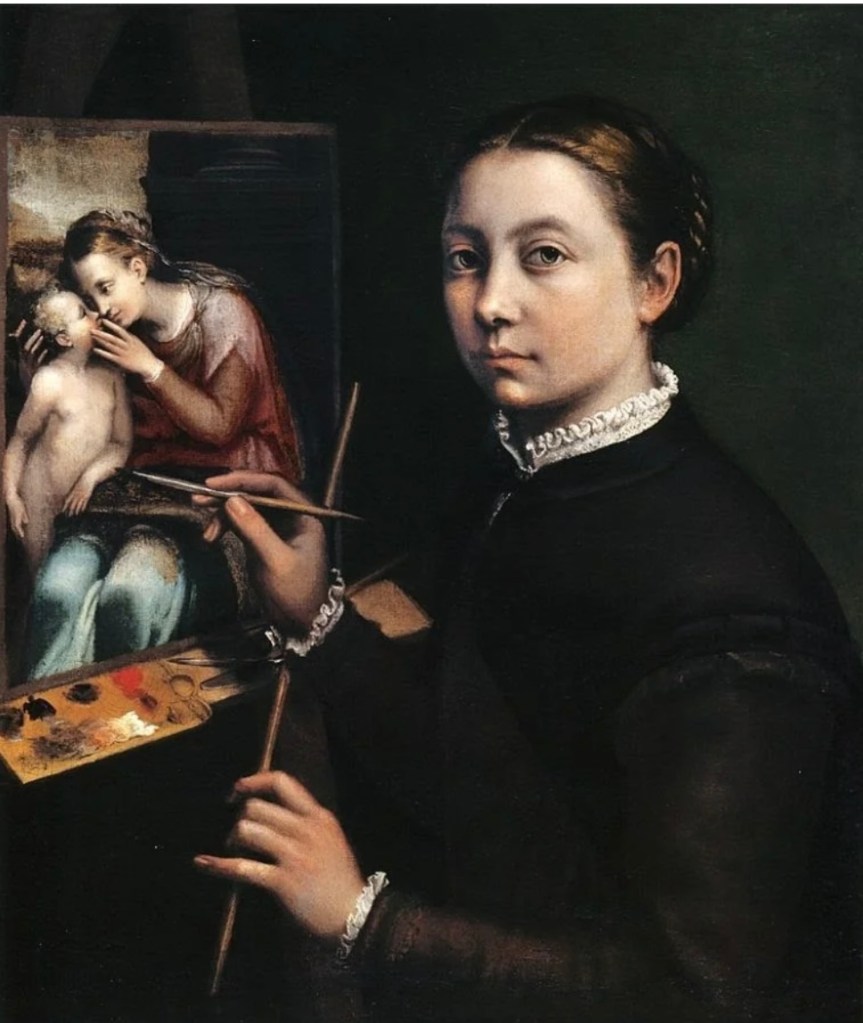
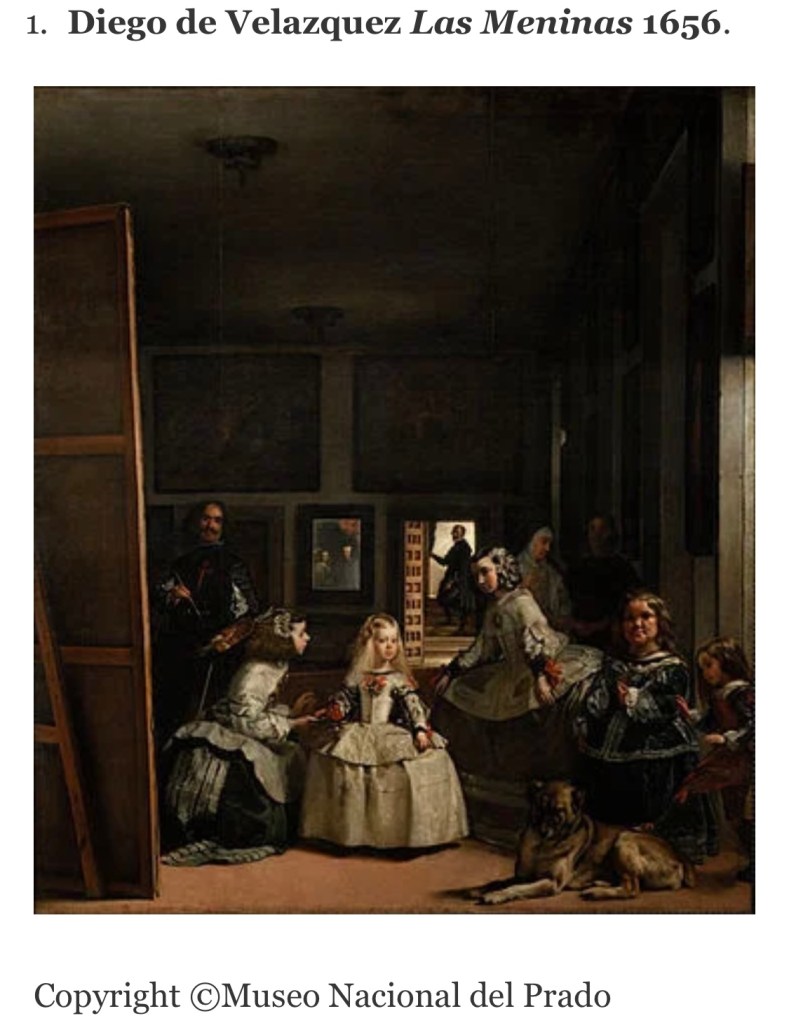
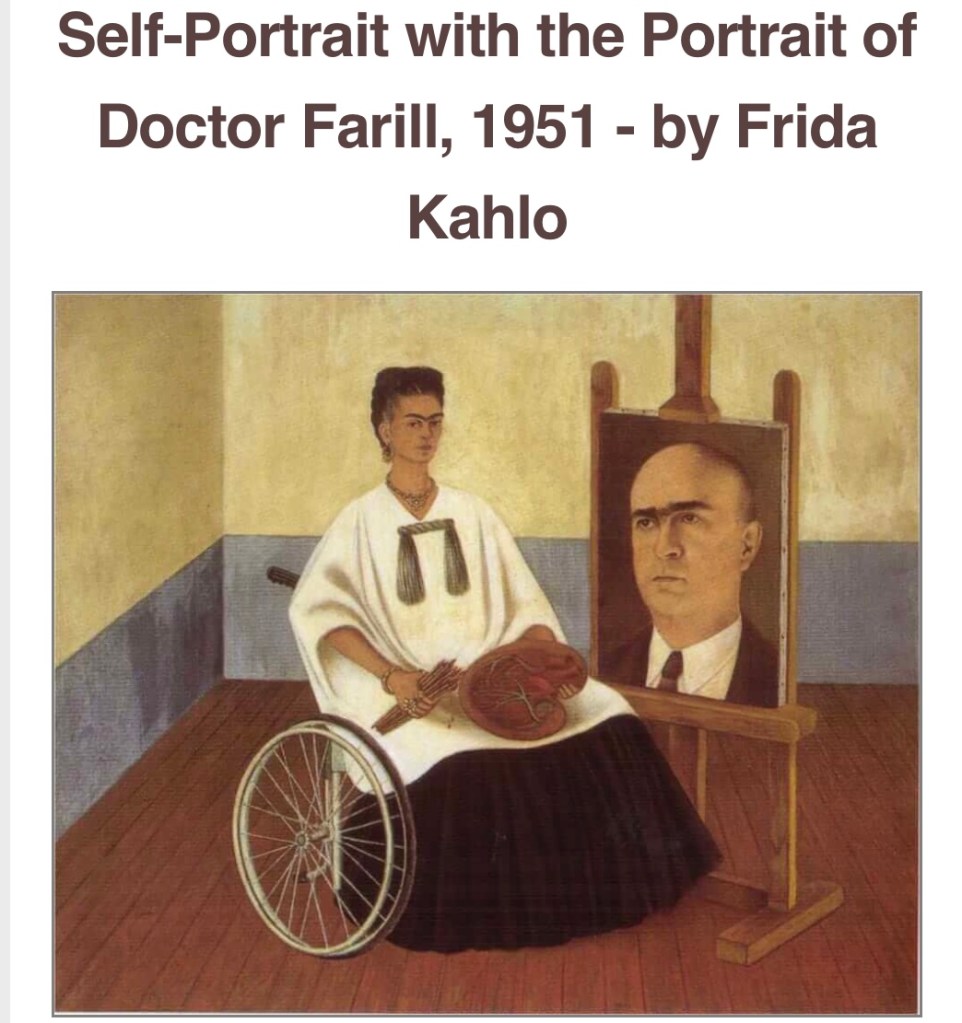
Exercise 3.3. Find and collate 10 diverse examples of meta painting from the 17th century to present.
Below are the paintings I have picked up for this exercise.
Self -portrait at Easel, 1556, Sofonisba Anguissola (1532-1625), oil on canvas, Lancut Museum, Poland, image via http://www.girl museum.org
L’as Meninas, Diego Velasquez (1599-1660), 1656, oil on canvas, Museo del Prado, image via http://www.museodelprado.es;
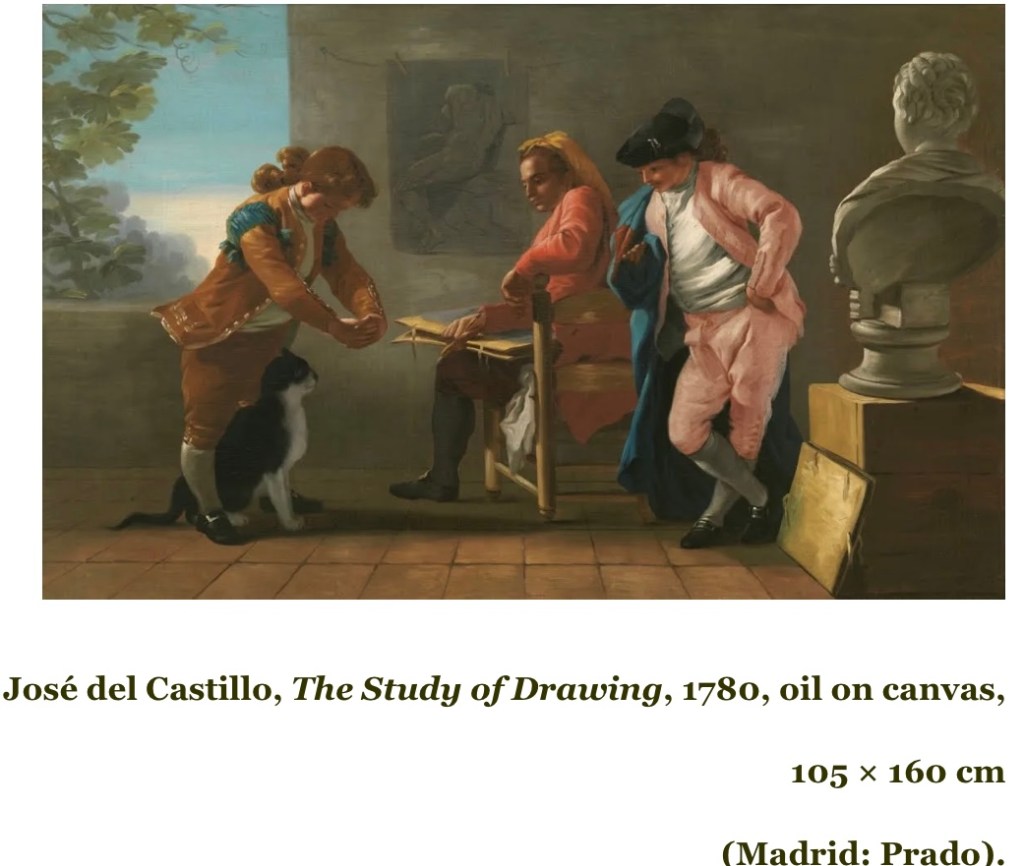
Above, to the right: Drawing Study,Boys playing.., Jose Del Castillo (1737-1793), 1780, oil on canvas, image via http://www.fineartamerica.com;
Below: In the Studio, 1881, Marie Bashkirtsev (1858-1884), oil on canvas; Denver Art Museum, image via http://www.artsy.net

Self Portrait, Vincent Van Gogh (1853-1890), September 1889, oil on canvas, Musée d`Orsay (Paris); image via http://www.vangoghmuseum.nl;

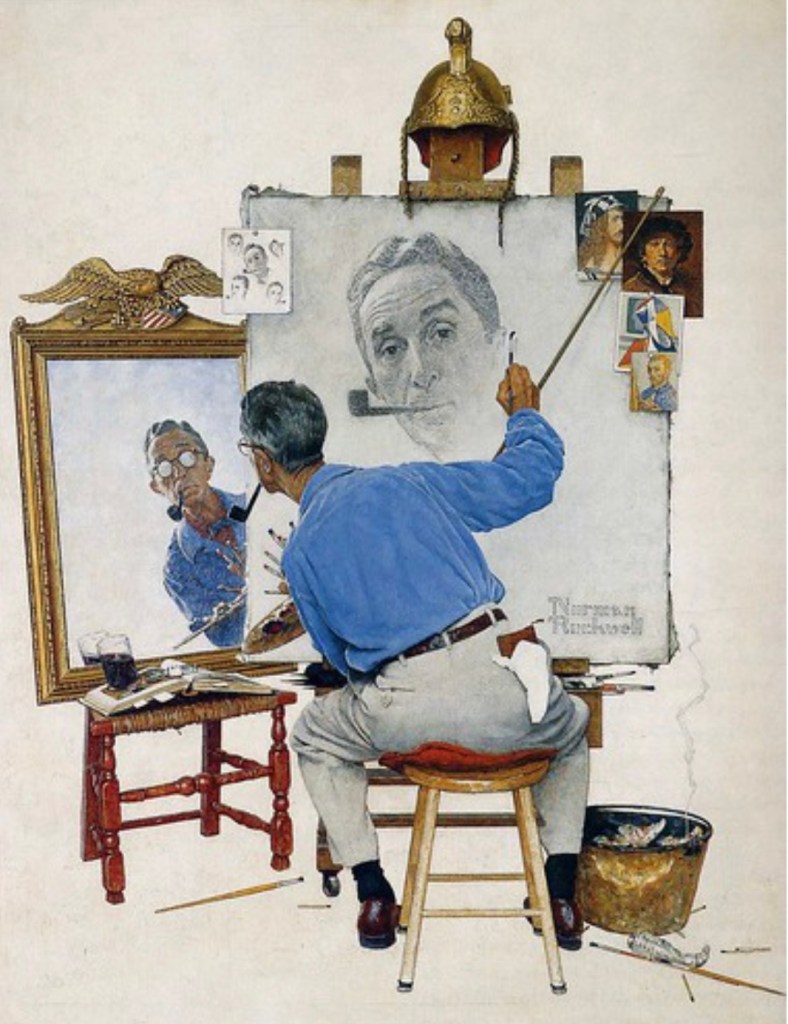
A Triple Self Portrait, Norman Rockwell, (1894-1978), 1960, image via http://www.nrm.org;
The Innocent Eye Test, Mark Tansey (1949-), 1981, oil on canvas, image via http://www.metmuseum.org

The Studio from Above painting, Phil Delisle, 2007, acrylic, image via http://www.saatchiart.com;

Drawing Hands, M.C. Escher, 1948, lithograph, image via http://www.moa.byu.edu;

Exercise 3.4. Write 10 sentences containing any of the following words: origin, original or originality. Is the meaning much the same in each example or are there significant differences? Briefly comment on your findings.
10 sentences with the words “origin”, ‘original’, ‘originality’;
- Darwin’s book “Origin of Species’ was published in 1871.
- A similar word to ‘origin’ is ‘beginning’;.
- An origin of this dish is Morocco.
- He posses a quality of being original.
- His idea is not so original
- A similar word to ‘original’ is ‘authentic’;
- Originality can be considered as an ability to create and innovate.
- Originality is usually associated with characteristics of an object as something new and unique.
- Originality can be understood as an ability to think independently and creatively.
- Originality is a quality of being unusual.
I find that the meaning of each word in different sentences is the same, it does not differ.
The word ‘origin” in all three cases signifies the beginning, a start, a pint where things become from.
The word ‘original’ in all three cases describe the object in a sense of its originality – uniqueness and being unusual;
The word ‘originality” in all three cases describe characteristics of different objects as being created or invented as being new/novel.
All three words in all sentences do signify the fact of being something first and new, not copied, not reproduced. We don’t use these words to signify objects which are copies, reproductions or derivatives. we use these words when we need to point to the fact of being created in a novice, new way for the first time. We value ‘original’ things much more than ‘copied’.
 JeanArt