
Exercise 1.4. “What do you understand by the phrase “digital art”? List the possible meanings and indicate the ones that you consider most viable”?
The term “Digital Art” has evolved from earlier terms such as “computer art,” “multimedia art,” “cyber-art.” Due to technological developments, these notions finally brought us to the new term “digital art” as something uniting all artworks created, stored, and used using digital technology, including photography, video, paintings, prints, and sculptures. There is another definition given in the article “The Philosophy of Digital Art”: “digital art” refers to Art that relies on computer-based digital encoding, or the electronic storage and processing of the information in different formats- texts, numbers, images, sounds- in a standard binary code.” It is essential to mention that the “Digital Art” phenomenon provoked many questions in Philosophy of Art. Because the complexity and versatility of digital Art have their relationship with the way, a certain object of digital Art is displayed. As it is described in the same article: “…Art
Work may be made on a computer-say a musical work composed with a Sibelius or a play written in Microsoft Word – and yet meant for apprehension in a non-digital format – say, performance on traditional instruments or enactment on stage. By contrast, works that are purely digital include a film made and projected digitally- for example, Avatar, a piece of music composed and played back electronically – for example, the electro-acoustic works of Gottfried Michael Koenig”. So this relationship is a way how this art object communicates with a viewer, and the way it does significantly, even dramatically influences the viewer’s perception of it;
About the distinction between “analog” and “digital” technology. I found a reasonable explanation for the Analog-Digital difference as follows: the “analog” technology was any technology when any information/data/material doesn’t require any electronic treatment of numbers, the information is stored on different mediums without any preliminary transformation of it with the aim of numbers; The “digital” technology is different: the data is originally transformed into numbers, and then it is represented, displayed and stored;
When we accept the “Digital Art” definitions above, we must understand that it describes only the technical part of this art movement, which has grown tremendously in its versatility over a short period (from the 1960s). This definition doesn’t cover it at all. Under the “Digital Art” umbrella today must be included the following: Mathematical Art, Science Art, Data Art, Pixel Art, Digital Photography, Immersive Art with Augmented Reality and Virtual Reality, Digital Illustration, Digital Painting, 3D Art, Video Games Art, Digital Music, Fan Art.
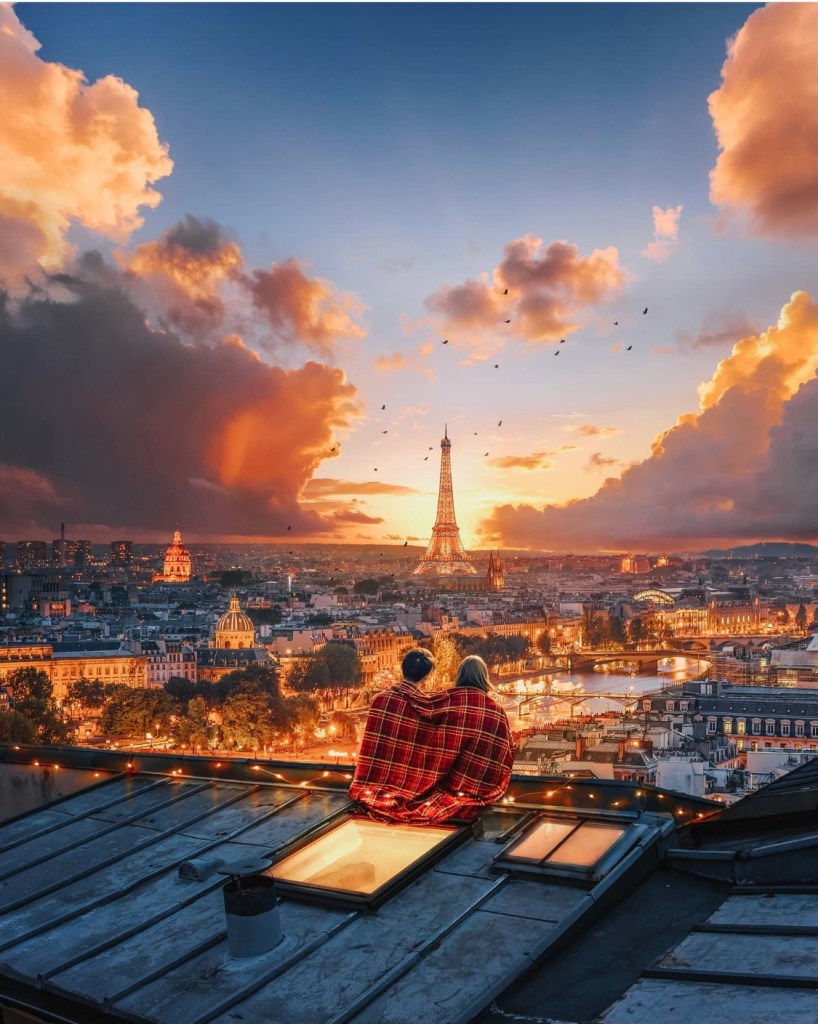
Below I put some examples of Digital Art I liked (from left to right):
Nik Ainley, image via http://www.shinybinary.com;

‘Planet Earth’ by Anna McNaught, image via @annamcnaughty ; ‘Floating through an infinite sea of the universe’ by Anna McNaught, image via @annamcnaughty;


‘I wanna spend the rest of my sunsets with you’ by Diego Hernandez, image via @j.diegoph; ‘The world of reality has its limits…” by Diego Hernadez, image via @j.diegoph;

Bibliography: 1) “Digital Art”, Art Term, http://www.tate.org.uk; 2) “What is Digital Art? Definition and Scope of the New Media” by Danae, Aug 31, 2018 on http://www.medium.com; 3) “The Philosophy of Digital Art” on http://www.plato.stanford.edu; 4)“What is Digital Art” by Natalya Rabchuk, Aug 26, 2019 on http://www.museumofdigital.art; 5) “Philosophical and Cultural Aspects of Sound and Image Ontics in the Digital Art Context” by Soloviev Alexander V. On http://www.mediamusic-journal.com; 6)
 JeanArt