
We were required to look at some paintings of figures in interiors from different periods and think about artists`intentions, technicals and creative solution employed; For this research I browsed a lot of accounts belonging to various contemporary artists in Instagram and looked through some different artworks of different times.
According the the article which I found at artistsandillustrators.com there are some practical approaches to draw and paint a figure in an interior:
1) Use resources creatively. This advice is basically about doing a proper homework before you start a your own project. The author advises to make an extensive research in internet aiming to analyse the different approaches of different artists of different times, comparing classic examples with modern works asking yourself relevant quartions about the difference and what would work best for your project.
2) Be clear of your aims. This advice is about well thinking about your own goals in your artwork. More precise questions should be asked to yourself such as: “What should it convey? Are the figures more important than the space and vice versa? What role does the interior play along with the figure? Are additional elements are needed of a room or symbols? Is the composition symmetrical or asymmetrical? Is it atmospheric or suggestive or very linear and clear? Is there any historical style that can be emulated?”.
3) Make studies of spaces. This advices encourage artists to explore the space which is planned for the artwork via lot of sketching and experimenting with cropping the photos of it, tracing the images of people in the space, constantly revising and and manipulating with the outcomes.
4) Develop colour and form. This advice is all about preliminary work through experimenting with photos, collages, colours and rearrangements.
I did my research trying to trace the evolution of “figure in interior drawing” as a genre. It is obvious and easy to notice that the interior painting finally became strong and distinctive at Old Masters time when Dutch artists aimed to show the opulent and rich interiors of their clinets ` houses. I must add that everything before that time didn’t emphasise the surrounding the object interiors as much as Old Masters started to do. On their paintings the interiors play the significant role as lunch as their objects. Below are some artworks of Old Masters where we can see that all details of the interiors are carefully depicted and painted. I picked some Johannesburg Vermeer ` s artworks because he can be considered as a pioneer And a greatest master of this Particular (and not only this) genre – of detailed Representation of the interior in the painting.
Johannnes Vermeer “A Lady and Two Gentelmen”, 1658-1659, Oil on canvas, image via Arthistory project.com;
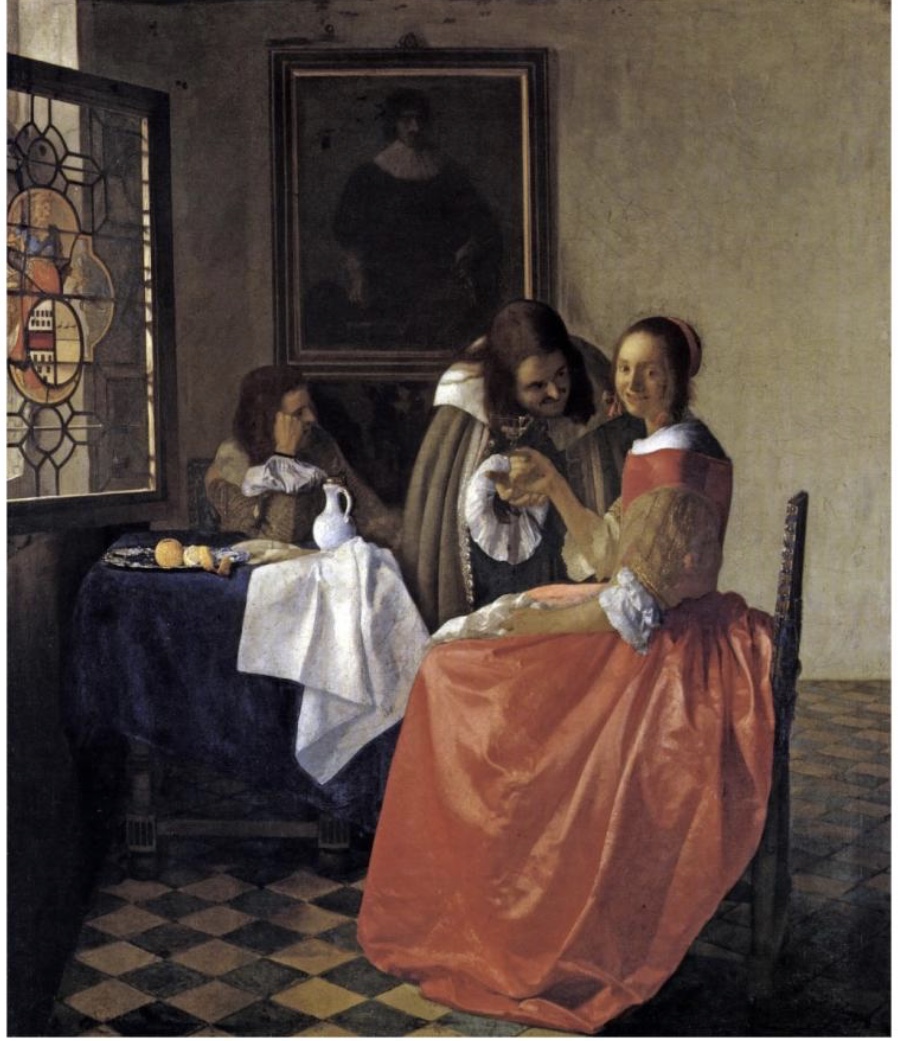
Johannes Vermeer “The Love Letter”, 1669-1670 oil on canvas, image via Arthistoryproject.com;

Among contemporary figurative artists who focus on drawing and painting figures in interiors I am very much attracted to Romanian artist Marius Bercea. He is doing very coloured large scale paintings and his style is influenced by 16th and 17th century Dutch Paintings. His works represent figures at leisure moment or “engaged in collective activity against dramatic architectural backdrops”.
Marius Bercea, Untitled, 2020, image via @marius.bercea

Marius Bercea,“ Thieves of Time”, 2020, image via @marius.bercea
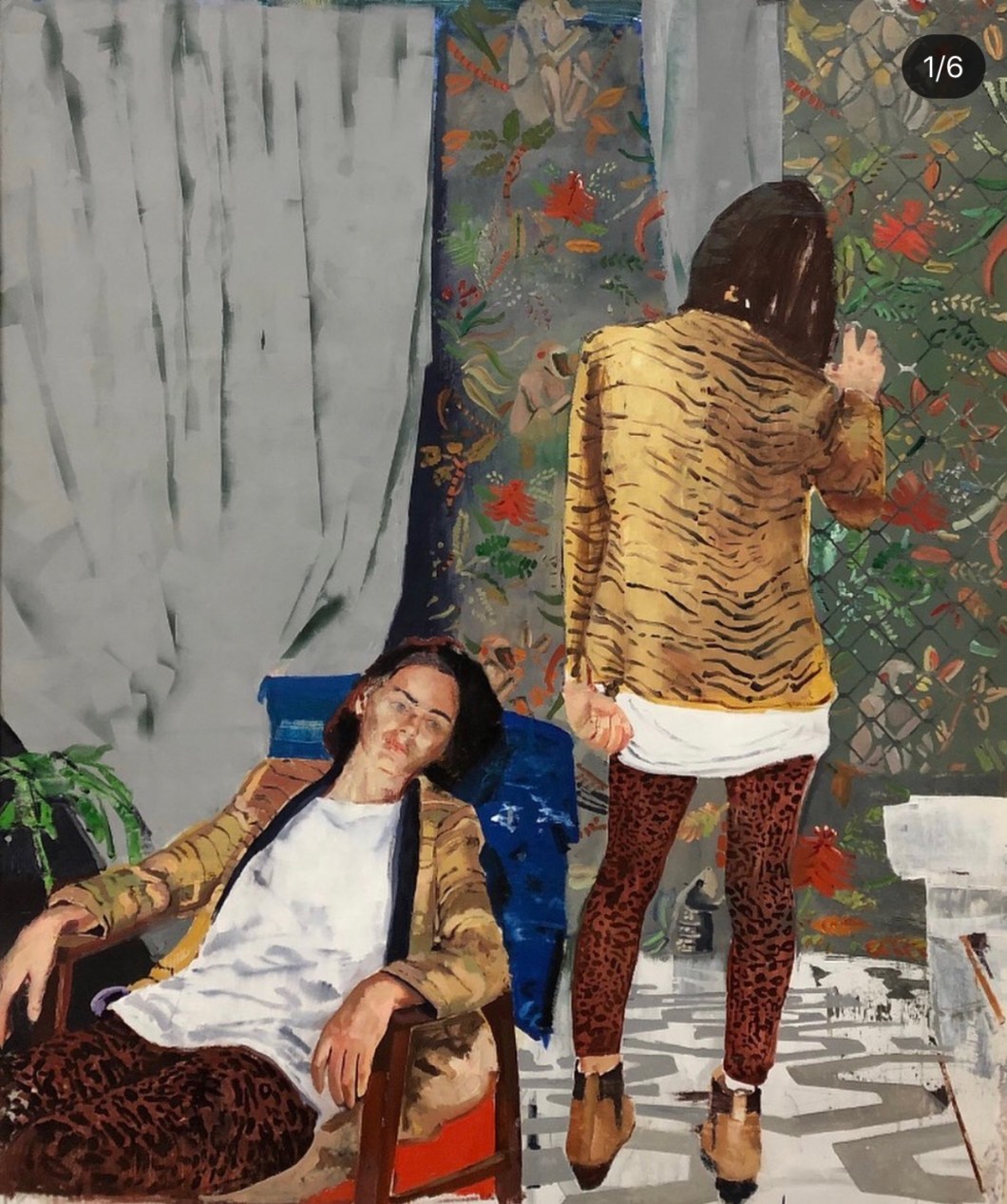
Marius Bercea, “Semantic Pair”, 2020, image via artsy.net;

Gail Wegodsky (contemporary artist, date of birth was not found)
Gail Wegosky is an American figurative painter. She was born in Charlotte, NC and now lives and works in Atlanta, USA. She received her Undergraduate art education at Maryland Institute College of Art and did her MFA at Tyler School of Art in Philadelphia. Her artworks are well represented In public and private collections throughout the United States. Gail has been a participant in over 100 juried art exhibitions and has been a winner or finalist in many of them. She has taught painting at the University of Rhode Island, Southern Illinois University and others.
Her artworks can be seen on her website:
http://gailwegodsky.com/gallery/figures-and-interiors/
I could not place the images of her artworks because she asks to get in touch with her and get the permission first, the reference about the source of the image wont be enough.
Edward Hopper (1882-1967).
Edward Hopper is an American realist painter and printmaker who is considered as one of the lost important realist painters on twentieth century in America. He was born in middle class family and received his art training at the NY School of Art. Between 1906 and 1910 he made 3 trips to Europe which transformed his as an artists. He was very much influenced by works of Impressionists he saw in Paris and critics say that his reaction to Impressionism is “directly reflected in his own art. ….. His Palette lit up and he began to paint with light and quick strokes”. His career in art and public recognition were not speedy. He is very much recognised and praised for his own “very distinct style” which is characterised with : “… strongly defined lines, cropped viewpoints, …. isolated figures and empty cityscapes, landscapes”. I would add from myself after watching a great video on the website http://www.edwardhopper.net that he was a great master of atmosphere, all his works are highly atmospherical, full of mood of solitude and melancholy, self reflection. His most success came to him in his later life. Today many art historians sand critics recognise him as the “most prominent American impressionist”.
Edward Hopper “Automat”, 1927, oil on canvas; image via Edwardhopper.net;

Edward Hopper “Summer Evening”, 1947, oil on canvas; image via Edwardhopper.net;


Edward Hopper “Chop Suey”, 1929, oil on canvas; image via edwardhopper.net; above
Reference list:
1) “Figures and Interiors”, 41 artworks curated by Courtney Miller Bellairs at saatchiart.com;
2) “Figures and Interiors” by Gail Wegodsky on gailwegodsky.com;
3) “Figure Drawing. Techniques, History” on visual-arts-cork.com;
4) “How to Paint Figures within Spaces-4 Top Tips” on artistandillustrators.co.uk;
5) “Human Figure Coursework Guide”, student resource, tate.org.uk;
6) “Marius Bercea”, artsy.net;
7) “Edward Hopper in 60 seconds” By Tim Marlow, RA Artistic Director, YouTube, Royal Academy of Arts channel;
8) “Edward Hopper and his paintings” on edwardhopper.net;
9) “40 most famous Edward Hopper Painting” on Edwardhopper.net;
10) “Old Master Houses” by unknown author on house-design-coffee-com;
 JeanArt