
Below is my extensive research about Old Masters `Technique; I picked up for my research some iconic Masters and their artworks to review.
Willem Claesz Heda (December 14, 1593/1594 – c. 1680/1682)
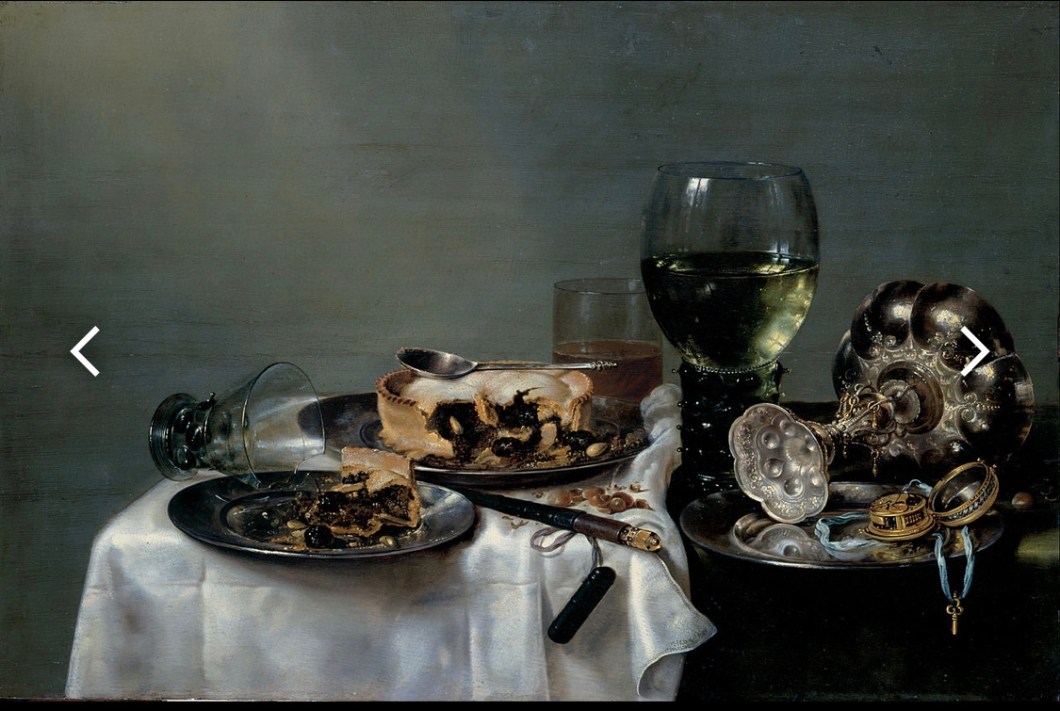
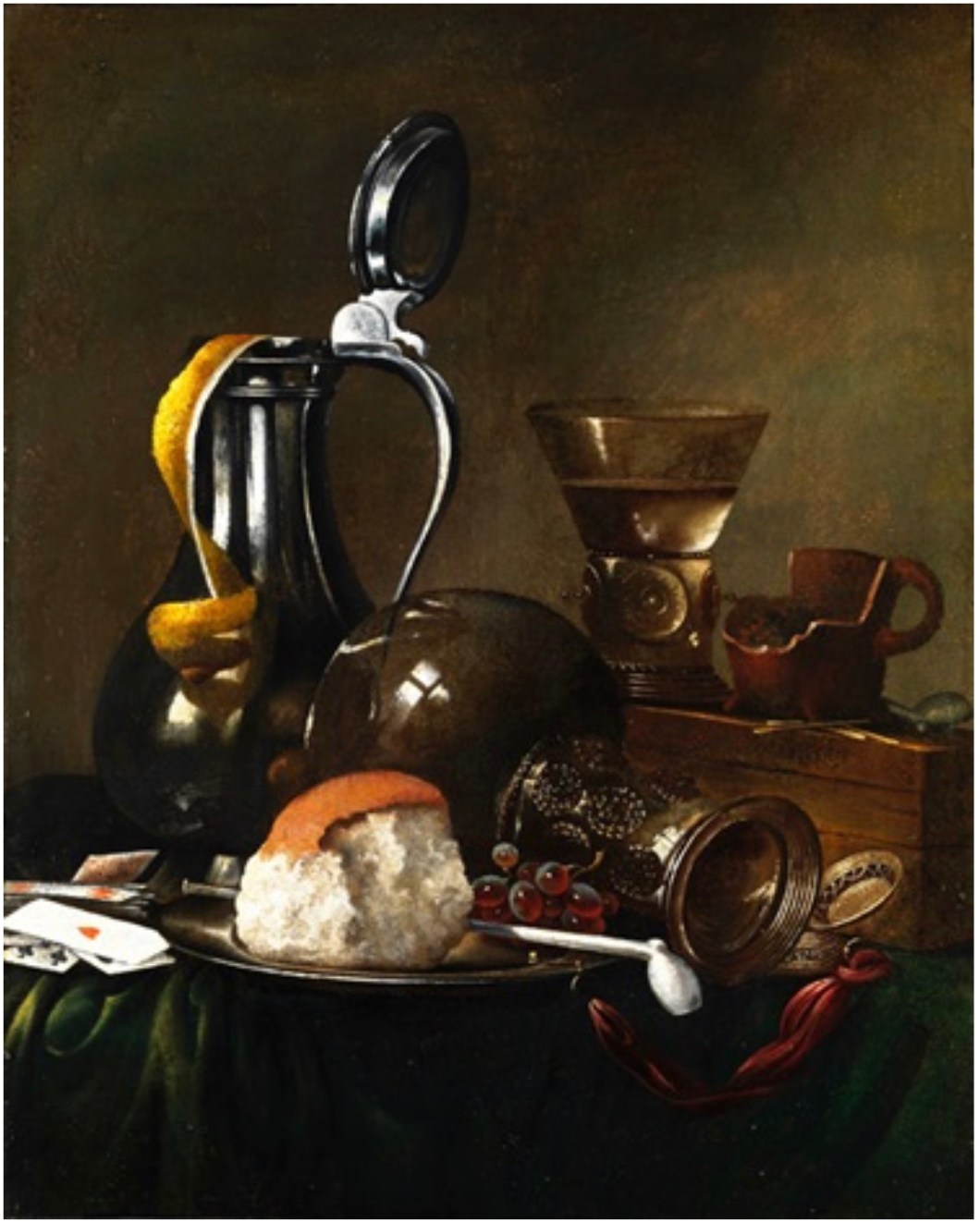
Willem Heda was one of the very famous Dutch realist still life painter. He was born in Harlem where he spend his entire life and pursued his artistic carreer. It is unclear where he had his training as a painter and his really carreer. His first known work is in genre of “Vanitas” composition. He specialised in still life pairing although he painted several portraits and figuras compositions. By many art experts, Willem Heda is recognised as a most unique and successful artists who could render a glitter of silver and glass in a best possible way. His works stand out and are very notable in terms of his use of the “monochromatic palette of greys and earthy brown sand for the virtuoso depiction of the textures of the objects depicted” as it is is stated in the article about him from Thyssen-Bornemisza Museum. Along with Pieter Claesz Heda introduced innovations and developed new themes in still life genre such as experimenting with a new tonal trend.
________________________________________________________________________________________
Vanitas° (from Latin vanitas, “vanity”) – a genre in art of still life painting, flourished in the Netherlands in the early XVII century. Vanitas paintings contained collections of objects of vanity and/or material achievements and pleasures with a hint through details to mortality of life.
Pronkstilleven – a style of ornate still life painting in Holland in the 17th century describing an ostentatious way of living;
Willem Claesz Heda, Breakfast Table with Blackberry Pie (1631), image via Gemäldegalerie Alte Meister
Wille Claesz Heda, “Still even mit Zinnkrug, Glasflasche, Trinkglas une zerbrochenem Becher” (oil on canvas); image via artnet.com
Floris Claesz Van Dijck (1575-1651)
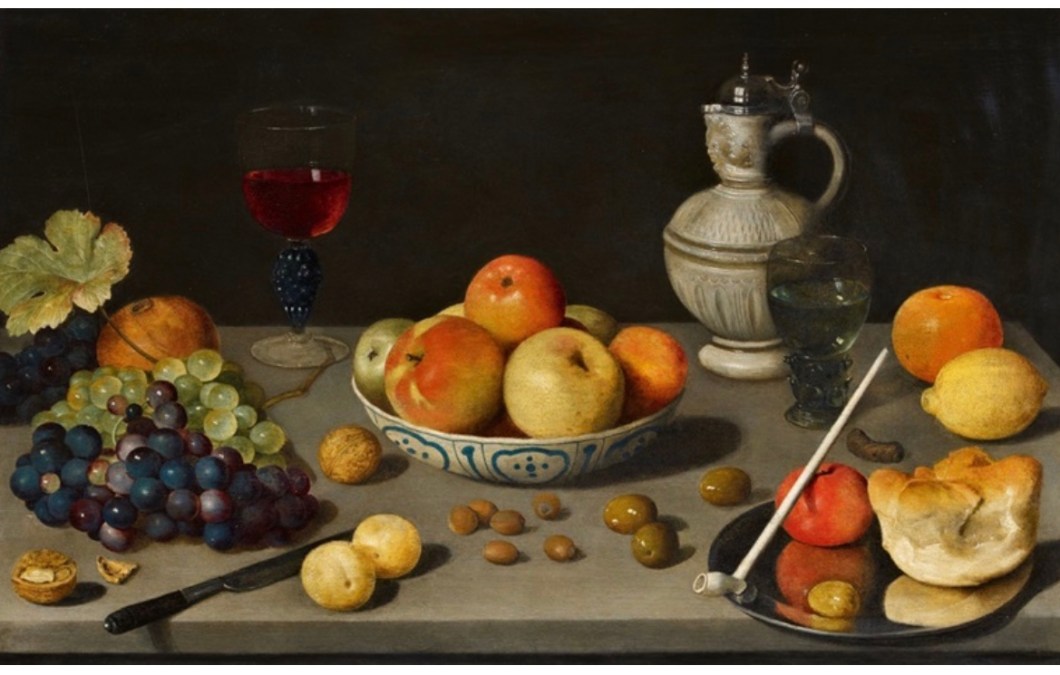
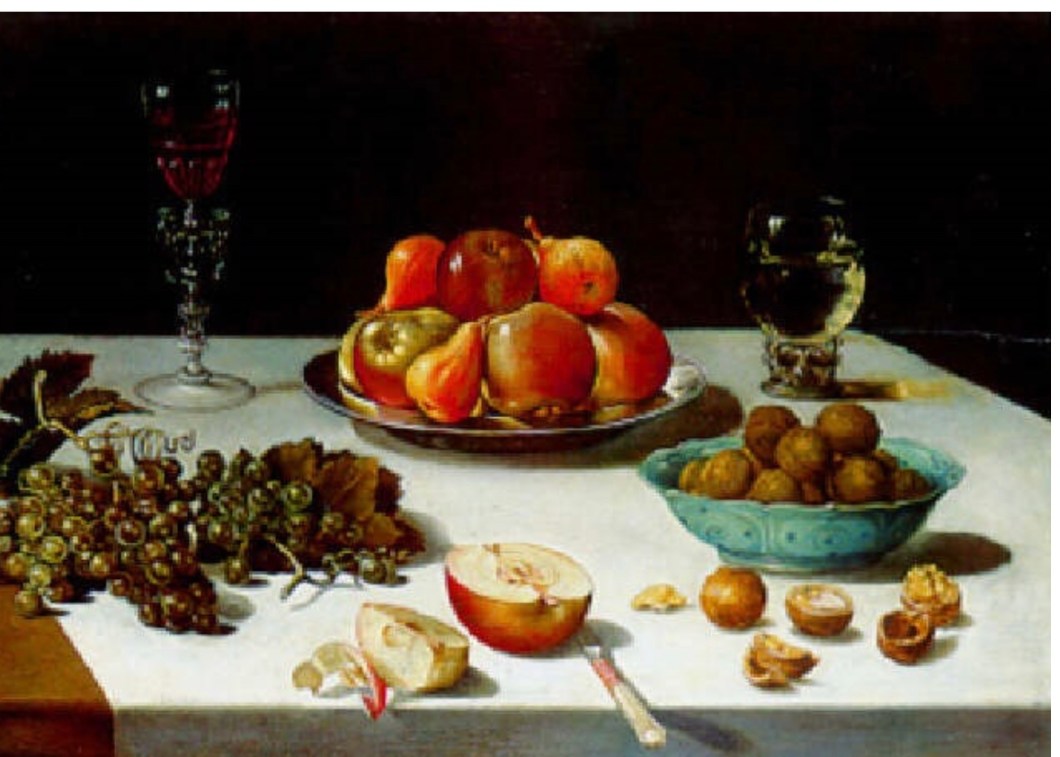
Floris van Dijck (Floris van Dyck) was another principal Dutch still life realist painter. He was born in a wealthy family in Delft but lived in Harlem for most of his life. He is recognised as an inventor of the “onbijtje” and “banketje” – still life genre artworks which contained breakfast pieces and luxury meal objects. He was very successful in his life time. In 1610 he became a member of Guild of Saint Luke and later appointed as it`s dean. His painting below is one of the most popular of his numerous artworks. The composition of the objects in this still life painting is very interesting, even one of the iconic ones and certainly deserves to be paid more attention. In the book “Painting Masterclass: Creative techniques of 100 Great Artists”by Susie Hodge it is well written the following: “…Fruit, bread and cheese are spread over two expensive damask tablecloth with sharply defined folds on the wooden table. Two mature half- cheeses are stacked on a pewter plate in the center, and a bread roll is on smaller pewter plate in the front, hanging over the edge of the table. Grapes, apples and nuts are clustered together, and one apple is already been eaten, peeled by a knife that was a device often included in such paintings to emphasize depth. Extra realism is added with a wormhole in the peel. A glass of white wine nestles between a plate of apples, balancing cheeses and a loaf of bread.…. Van Dyck depicted his objects from a high view point, in order to show the surface of the table and everything on it; he painted them with marked tonal contrats and illuminated with strong light, using fluid paint and practically invisible brushstrokes”.
Floris van Dijck, Still Life with fruits, nuts and cheese (1613); image via http://www.franshaulmuseum.nl

Floris van Dijck, “Still Life with Grapes, Apples, Nuts, Olives, Wine Glasses, and a Sieberg Pitcher”, (oil on wood); image via artnet.com
Floris van Dijck, “Natura morte a la coupe de fruits, assiette de noix et verres disposes sur un entablement” (1650), panel, image via artnet.com
Pieter Claesz (1597-1661)
Pieter Claesz or Pieter Claesz van Haarlem was born (probably) in Berchem, near Antwerp, the Netherlands, was a Dutch still life golden age era treatise painter. His paintings are very much noted for his “striking simplicity and atmospheric quality” (Britannica.com). It is unknown who was his early teacher. His early artworks were done in vivid colours but later, around 1630-1640, as other Dutch painters of still life genre of his time, he adopted a style of painting in monochrome palette or in closely related monochrome colours. His specialty was “ to catch the reflected light as accurately as possible” (rijksmuseum.nl). He was recognised by his peers, other Dutch painters such as Willem Heda for his innovative compositions and his “distinctive ability to recombine the same set of objects into a multitude of original and compelling arrangements” as says Arthur K. Wheelock Jr in his article “Pieter Claesz” on http://www.nga.gov. Today Pieter Claesz`s paintings are held in the collections of the Metropolitan Museum of Art in NYC, The National Gallery of Art in Washington D.C., the Rijksmuseum in Amsterdam and the Prado Museum in Madrid.
Pieter Claesz, “Still Life with Fruit and Roem” (1664) ; image via artsandculture.google.com
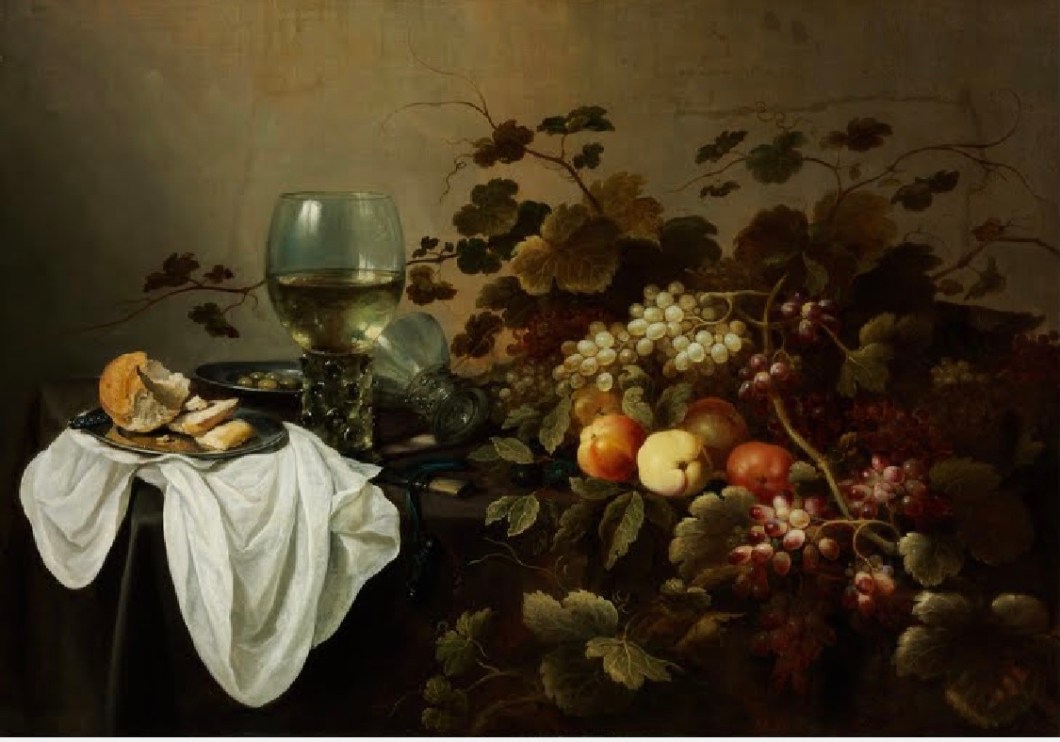
Pieter Claesz (attributed), “Natura morte con frutta e pernici”, oil on canvas, image via artnet.com

Rembrandt Harmensz van Rijn (1606-1669)
Rembrandt is one of the greatest artists, Dutch painter and printmaker. He is recognised as one of the most gifted “storytellers in art” and “rendering people in various moods”. Rembrandt was born in Leiden and he was one of the fourth of 6 surviving out of 10 children coming from a humble family of a miller, his mother came from a family of bakers. Nevertheless of his life`s humble beginning he was blessed with good artistic training. After attending his elementary school, he attended a Latin school where he was taken out prematurely by his own request to receive a training as for a painter. At the age of 14 he was enrolled at the University of Leiden. He was trained by Leiden painter Jacob Van Swanenburgh (1571-1638). It is believed that Van Swanenburgh taught him the basic skills along with a white sophisticated and complex skills such as skills of painting fire and its reflections on the surrounding objects what can explain his further strong interest in the effects of light. Rembrandt`s second teacher was Pieter Lastman (1583-1633) who was well known as a history painter what in turn probably helped Rembrandt to master the genre of historical painting. It should be mentioned about historical painting as a genre: it was extremely complex and had a great demand for details of complex historical, mythological, allegorical settings, requiring painting of landscape and architecture, still life, drapery, animals and human figure. It is still a most difficult genre for a painter requiring mastering of all theses skills. Rembrandt obviously was a prodigy, he mastered the painting techniques very quickly and by the age of 22 he returned to Leiden and took his first pupils. In 1631 he moved to Amsterdam where he had obtained a grace of wealthy patrons and a lot of successful commissions for portraits. His mythological and religious works were also under a big demand and had a great success. Rembrandt was very successful as a teacher, he had many pupils and some of them were already trained artists. Due to a large number of his pupils, attributing and identifying Rembrandt`s works is still an active area in history of art and art scholarship. In contrast to his successful professional life his personal life was full of misfortunes: he had lost his wife Saskia and many of his children. He also went through bankruptcy due to his habit for expensive living. He died on October 4th 1669 in Amsterdam.
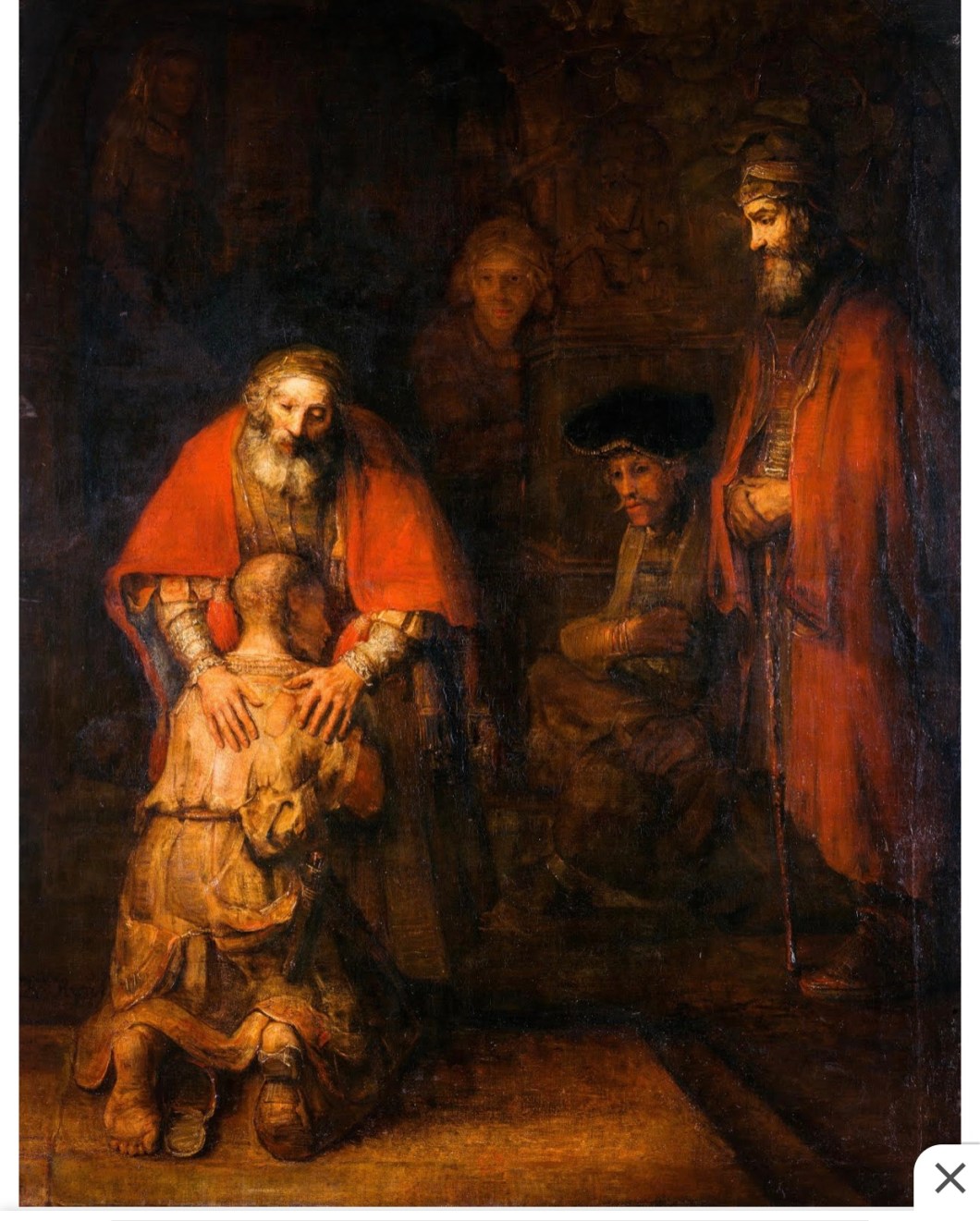
Rembrandt van Rijn, “Return of the Prodigal Son” (1669); image via artnet.com
Rembrandt van Rijn, “Self -Portrait with Beret and Turned Up Collar” (1659); image via artnet.com

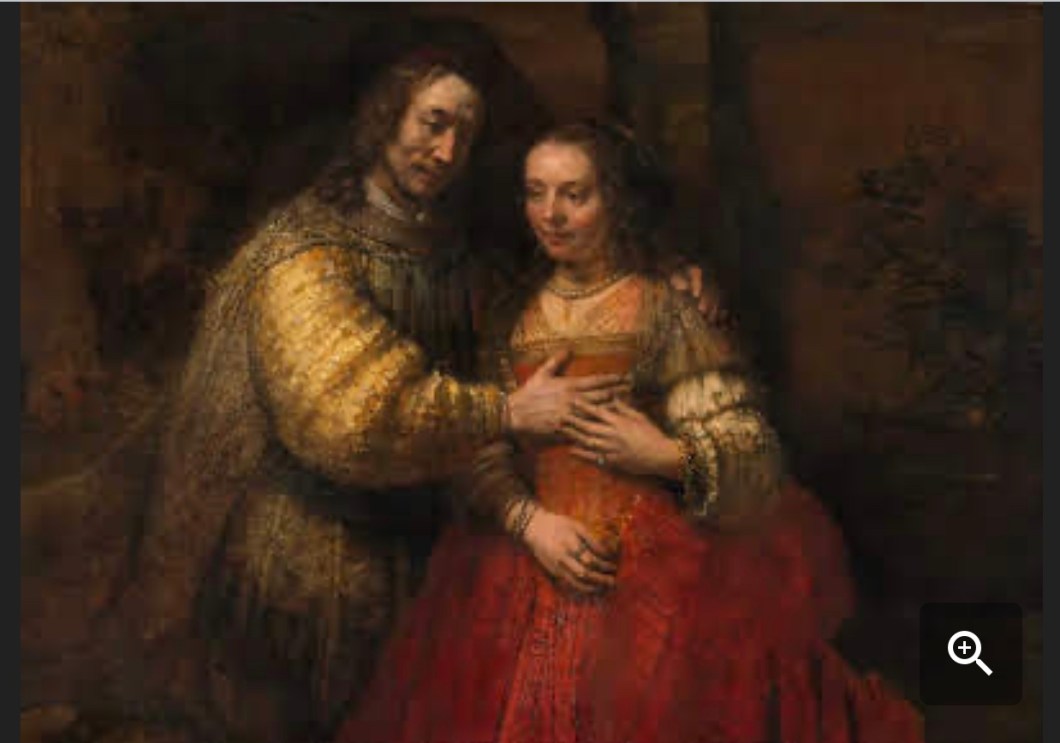
Rembrandt van Rijn, “Jewish Bride” (1667); image via artnet.com
There are some key points about Rembrandt`s technique:
1) Experts observe “a revolutionary change” in his style between 1627 and 1629 revealed in his understanding of the role of light. As it is indicated in the article written by Ernst Van de Wetering: “by concentrating the light and by exaggerating the diminuendo of the force of light in relation to a distance from the light source, Rembrandt arrived at what could crudely be termed as “spotlight” effects. In order to create convincing light effects, Rembrandt – like Caravaggio…- had to compensate by leaving large areas shrouded in shadow”.
2) Another, very worth to mention and describe, Rembrandt`s technique which in particular appears in his work “Peter and Paul disputing” is his method he implemented by grouping the lit elements in the painting in one area in a certain manner that “little shadow is needed to separate the various forms”. As the same expert Ernst van de Wetering explains: « By assembling light hues of yellow, blue, pink, green and other colours, he developed a system « bevriende kleuren » (kindered or related colours). This area of the painting was surrounded by coherent clusters of darker tones that occupaient the foreground and background, and especially the edges and corners of the work. Through this method Rembrandt not only created a concentrated, almost furnace like, intensity of the light, but he also obtained a strong unity enabled the viewer` s eye to grasp the image in one glance before focusing on the details ».
3) It was interesting to know that modern art historians do study painting techniques also in order to establish whether a painting is authentic. Infra red images of one of Rembrandt`s self portrait at young age established a lot of preparatory sketches under layers of paint while it has been known very well that Rembrandt didn’t do a lot of preparatory sketching for his paintings. There are number of cases when authenticity of “Rembrandt` s painting” was challenged and a fact of copying was proved;
4) Experts can observe large and over lapping brushstrokes, leaving unpainted greyish rough canvas for creating an old looking skin or eye, especially in his late paintings;
5) In regards to Rembrandt`s painting technique, a special Rembrandt Research Project (RRP) must be mentioned- an interdisciplinary collaboration research done by Dutch art historians and chemists which started in 1968. The project aimed to study Rembrandt` s paints` chemical composition in order to understand how he achieved all those amazing visual effects on his paintings.
- It was established that properties of paints of XVII century were different comparing to modern paints. The size of particles of the paint was bigger in ancient paints.
- he used to blur the contours of human figures on his paintings to create an effect of figure, emerging from the darkness.
- he is famous for creating a different texture effects with his paints to reach the realistic look of fabrics and other objects on his paintings. Rembrandt insisted his paintings should be gang in a spacious rooms and be viewed from a distance and not too close.
- Rembrandt, as all painters of his time, used to make his own paints. A microscope analysis of Paints’ sample taken from his painting “ Jewish Bride” revealed quartz participles. Rembrandt used to add quite fine quartz crystal particles into his paints;
- A special property of his paint, as it is mentioned in RRP documentary, is: “…..although it had been put in a long strokes it was quite thick” what means that his paints were of “low viscosity” which depends of oil quality -treatment and a size of pigment particles.
- During the RRP it was scientifically established that Rembrandt used fresh new small palettes for “every passage”, he used limited palettes for flesh, cloth and etc: scientists have discovered a completely different chemical binders in one, the same painting, “different passages have completely different structure”;
Dutch Old Masters common paintings techniques:
1) using Monochromatic “underpainting” with so called “dead colour”, “Grisaille painting” with several layers was a standard approach to outline the first details as well as to distribute the value of light and shadows; this technique assumes further implementing a “wet and dry” brush approach: the pigment should be put as wet and then mix the paint with a dry brush directly on the canvas; Later another technique evoked, so called “Flemish” Underpainting which is the Underpainting with brown- amber colour;
2) using glazing and scumbling were a very important and substantial part of their technique;
3) following a versatile approach to brush strokes such as vigorous brush strokes as well as invisible brushstrokes;
4) smoothing and dabbing over a paint with a piece of textile to achieve a detail and reduce paint;
5) using a dark and shadowy backgrounds so the objects from there, projecting themselves towards to viewers;
6) blurring the outlines in landscape paintings to create so called an “atmospheric effect” in “Tonal phase” of Dutch Art of that time, including a great accent on sky and painting human figures absent or small or distant;
7) using a strong contrasts of light and colour, retaining an atmospheric effect in the “classical phase”of landscape painting beginning from 1650s;
Reference list:
1) “Painting Master Class: Creative Techniques of 100 great Artists ” by Susie Hodge, published in 2019 by White Lion Publishing;
2) “Reputation and Rivalry. The still life painter Pieter Claesz and his competition in Harlem” by Adam Barker -Wyatt, MA Arts and Culture, Leiden University;
3) “Pieter Claesz” by the Editors of Encyclopaedia Britannica on www.britannica.com; and
”Rembrandt Van Rijn. Dutch Artists” by Ernst van de Wetering on brittanica.com;
4) video lesson “Rembrandt`s Still Lifes” on http://www.oldmasters.academy;
5) « Food for Thought: Pieter Claesz and Dutch Still Life », lecture by YouTube channel of Yale University Art Gallery;
6) “Painting Techniques: from Rembrandt to Vermeer”, lecture by Juergen Wadum, YouTube channel of Yale University Art Gallery;
7) “Rembrandt and his Paints” a documentary directed by Jeroen Visser on YouTube for Classdemos channel;
8) “In the studio with Dianne Mize”, “In light of Rembrandt”, YouTube;
9) “Old Masters Underpainting technique” by Jan Van Eyck, YouTube;
10) “Layered Flemish technique of the old masters” with Gabriel Barbu, YouTube;
11) “Grisaille Painting: Définition and Technique”, Chapter 5, Lesson 28 by instructor Stephanie Przybylek on study.com;
12) “Willem Claesz Heda, Dutch Painter” written by the Editors of Encyclopédia Brittanica; http://www.britannica.com;
13) “Willem Claesz. Heda” article on the web site of Thyssen-Bornemisza Museo Nacional, http://www.museothyssen.org;
14) rembrandtpaiting.net; “Rembrandt van Rijn. Biography and Chronology”.
15) book “Painting Masterclass: Creative techniques of 100 Great Artists”by Susie Hodge;
16) “The Dutch Painters” , The Baroque Period, on courses.lumenlearning.com
 JeanArt