
Pablo Picasso (1881-1973)
Spanish Artist
Pablo Picasso was born in Malaga, Spain in the family of an artist, his father also worked as a professor at the local school of the Fine Arts. Picasso received his first and rigorous artistic training from his father and at age 16 he made a year at Real Academia de Bellas Artes de San Fernando in Madrid which was his country’s best art school. In 1901 he moved to Paris where he practised new styles and experimented with new forms and mediums. Critics and art historians distinguish certain periods in his art career such as early work, Blue period, Rose period, African period, Cubism, Neoclassicism, Surrealism and later work. He did self -portraits in each of these periods. Picasso is recognised as a remarkable artist, a legend and a genius, who had pioneered many new styles and was able to create in any of them.
Pablo Picasso, besides being world widely recognised for his amazing artistic talent, is known for his numerous self-portraits which he did from age 15 till 90. It is fascinating to observe how different his self-portraits are: they are radically different in all terms, in terms of the total image, mediums used and technique applied. Indeed he was a most versatile artist working in a “spectacular arrays of styles”. It is really very interesting to follow his changing, evolving artistic views and endeavours and perception of himself. I post some of his portraits below which demonstrate very different aesthetic approach, including different styles such as Realism, Primitive influence, Cubist Stage, Neo Classicism, Surrealism. His career spanned almost for 80 years and he was the most fruitful artist ever, leaving 13,500 paintings, 100,000 prints and engravings, 34,000 illustrations, 300 sculptures and 350 pieces were stollen (by his estimation) during his lifetime. His early work, when he began his career, is characterised as realism, as it is called a ‘traditional academic approach’. In his Blue Period (1901-1904) he completely turned of realism, working more close to Expressionism and Post-Impressionism, his artworks of this period contain lot of blue pigment, cold and cool tones. In his Rose Period (1904-1906) he used warm tones and colors, he also started to experiment with Primitivism. His African Period (1906-1909) is known with his shift towards abstract forms, inspired by African and Oceanic art. Picasso is a pioneer of Cubism (1908-19140) and collage art ( which is a part of cubism, it’s ‘synthetic’ branch). In 1917 after visiting Italy and being inspired by Italian Renaissance he started to create in the genre of Neoclassicism and this period lasted untill 1925. Following Neoclassicism, Picasso worked as a Surrealist, creating artworks with disorganised facial features and twisted bodies. Indeed, studing Picasso’s life and artworks is a good chance to cover a great deal of art history and many genres.
His artworks are very complicated in all terms, to me they are so, especially in terms of of subjects and images, you must somehow decipher them to understand ( at least partially) what’s going on in there. I liked the system suggested by Evan Puschak, who dedicated a special video for this matter: how to understand Picasso. According to him we can apply the following ‘steps’ to Picasso’s artworks and to any art:
1. First reaction; 2) Content; 3) Form; 4) Historical context; 5) Personal context;
Pablo Picasso, Self -Portraits via wikiart.com


Lucian Freud (1922-2011)
British Painter
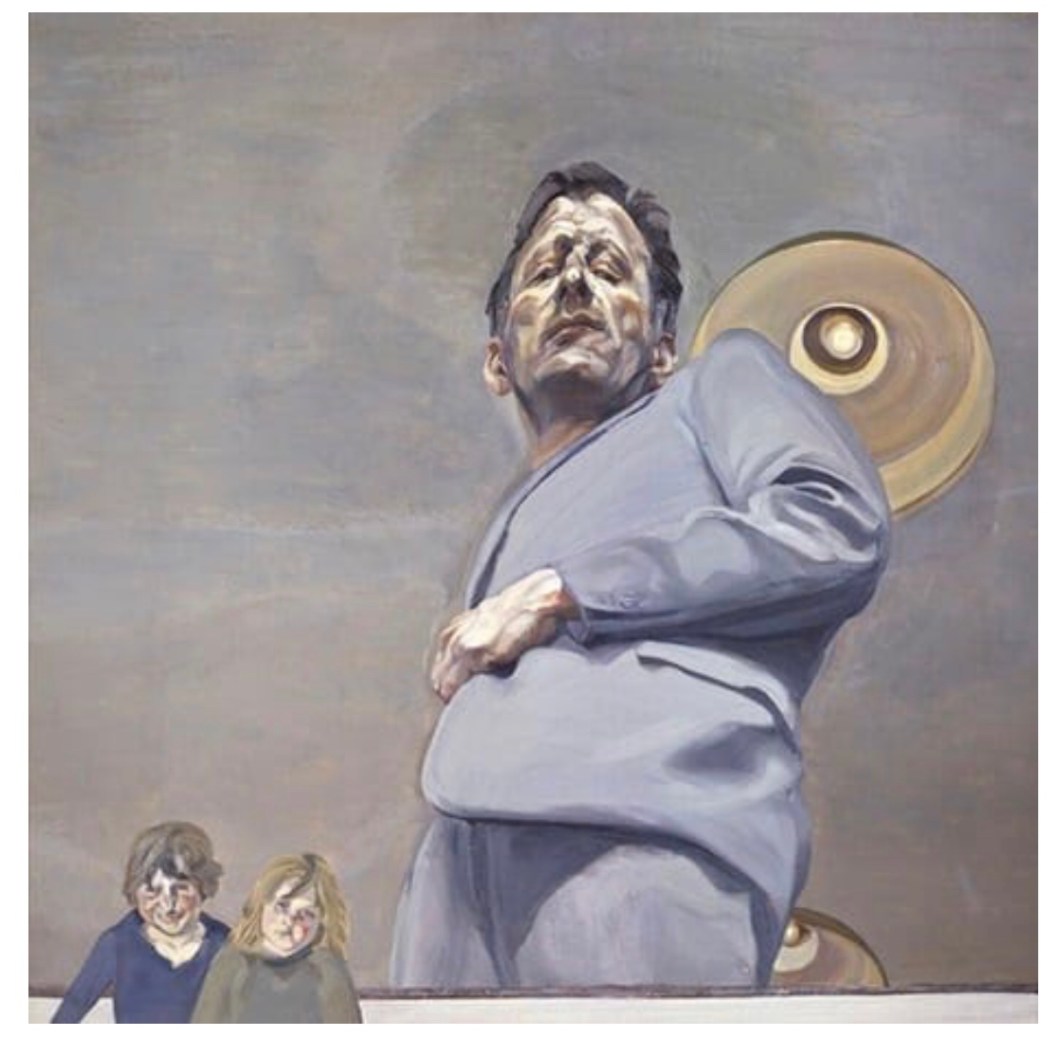
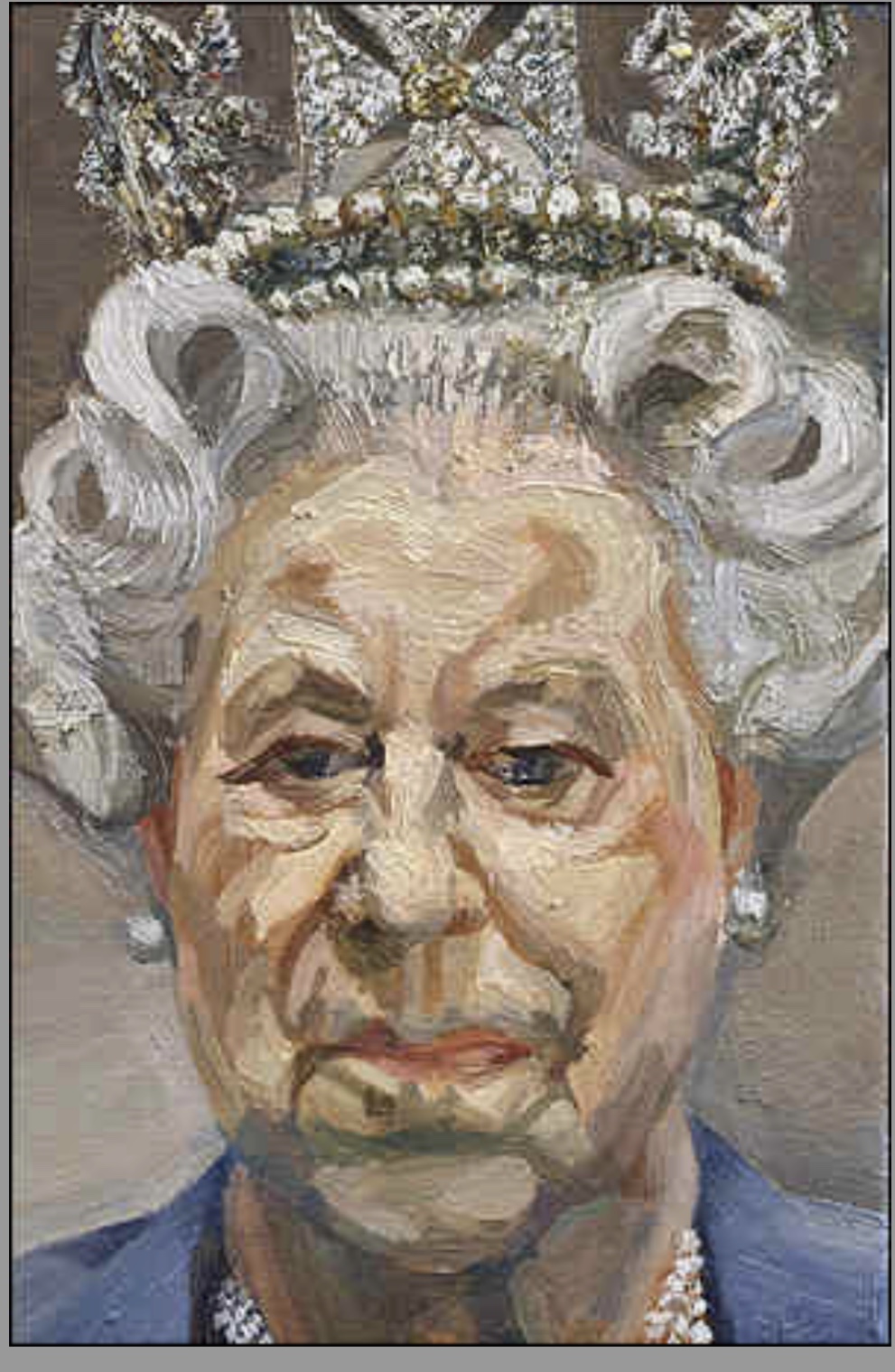
Lucian Freud is one of the most well known and influential expressionists of the 20th century. He was born in Berlin in 1922 and lived there until his family moved to London in 1933. He received his art education at Central School of Art in London and Cedric Morris`East Anglian School of Painting and Drawing, Dedham, Suffolk. Today he is mostly associated with his self-portraits and figure drawing/painting but he also painted plants, animals, interiors; city scapes and still lifes. He completed 22 self -portraits during his life time. On some self portraits he used a strong artificial light to create strong lines and shadows on his face. He worked with strong, expressive brush strokes, creating a style which some people call as “raw” and “border on cruelty”. It is interesting to note that at the latest stage I of his caree zhen he preferred to work on large canvas he stopped using sable brushes and worked with hogshair brushes. Her also painted with a knife, creating impasto effect. He is known for his versatile and experimental approach to his art: he used many materials including plywood, canvas, layout and Ingres paper, oil, charcoal, ink, watercolour, chalk, varnish and even oil based house paint. He worked a lot with drawings and used his line drawing skills, however lately his approach shifted to painting with brushes and strong accent on light and shades. Freud always painted from life demanding his models to pose for a long time. His style mostly refereed to realism but without addressing social issues and political motivation which was common for this genre.
Reflection (1985); via Wikiart

Reflection with two children (Self-Portrait) (1965)
Portrait of Queen Elizabeth II
Yayoi Kusama (1929)
Japanese Artist
Yayoi Kusama is know for her works with a unique distinctive style associated with Abstract Expressionism, Minimalism, Pop art, Feminist art and Institutional Critique. She was born in 1929 in Nagano, Japan. She studied a traditional Japanese painting in Kyoto which she left and moved to New York in 1958. Her artworks gained critical attention quickly and by the 1960s she has become a well known artists producing paintings, drawings and sculpture. She returned to Japan in 1973 and in 1975 she settled at Seiwa Hospital for mentally ill, where she lives and works to this day. Her artworks are famous with a liberal use of polka dots and dense, repeating patters which create a sense of infinity.
Yayoi Kusama’s Self-Portraits, 2010, via wiki.art


Reference list:
1) “Iconic Artists Who Have Immortalized themselves Through Famous Self Portraits” by Kelly Richman Abdou on May 1, 2017; mymodernmet.com
2) “Evolution of Picasso`s Iconic Self-Portraits From Age 15 to 90” by Kelly Richman Abdou on December 15, 2016; mymodernmet.com
3) “The Genius of Lucian Freud” by Amah-Rose Abrams on November 23, 2015 http://www.news.artnet.com
4) Lucian Freud; IMMA Collection; http://www.imma.ie
5) “The Top self-portraits in art” by Jonathan Jones on Sep.2014, The Guardian, http://www.theguardian.com
6) http://www.pablopicasso.org
7) ‘How to understand Picasso’ by Evan Puschak, aka The Nerdwriter; http://www.openculture.com
 JeanArt