
“Superflat” artists include: Chiho Aoshima, Mahomi Kunikata, Sayuri Michima, Yoshimoto Nara, Aya Takano and Takashi Murakami.
I have signed up for Mutuart.com resource which allows to browse lot of artworks of many artists, read articles and see auction prices for the artworks. I use this resource very extensively for my art education and research, for every artist I pick up the artworks which are most appealing to me and I post them here below.
About a founder – Takashi Murakami
As it is stated in the article at Mutualart.com: “Takashi Murakami is one of a handful of artists that has transformed the lanndscape of contemporary art through his engagement with ideas surrounding production and market place”. One of the well known contemporary artists working today, Murakami is represented by a powerhouse triumvirate of galleries with outposts around the globe including Gagosian, Galerie Perrotin and Blum & Poe”. He has solo exhibitions at well known world class museums over the globe. He is noted by his ( and not only by this) invention of conceptual style of painting which he termed as “Superflat”.
Below are some examples of Takashi Murakami artworks which I particularly like:
Jellyfish eyes – black 4, mutualart.com

“Fuji”, mutualart.com
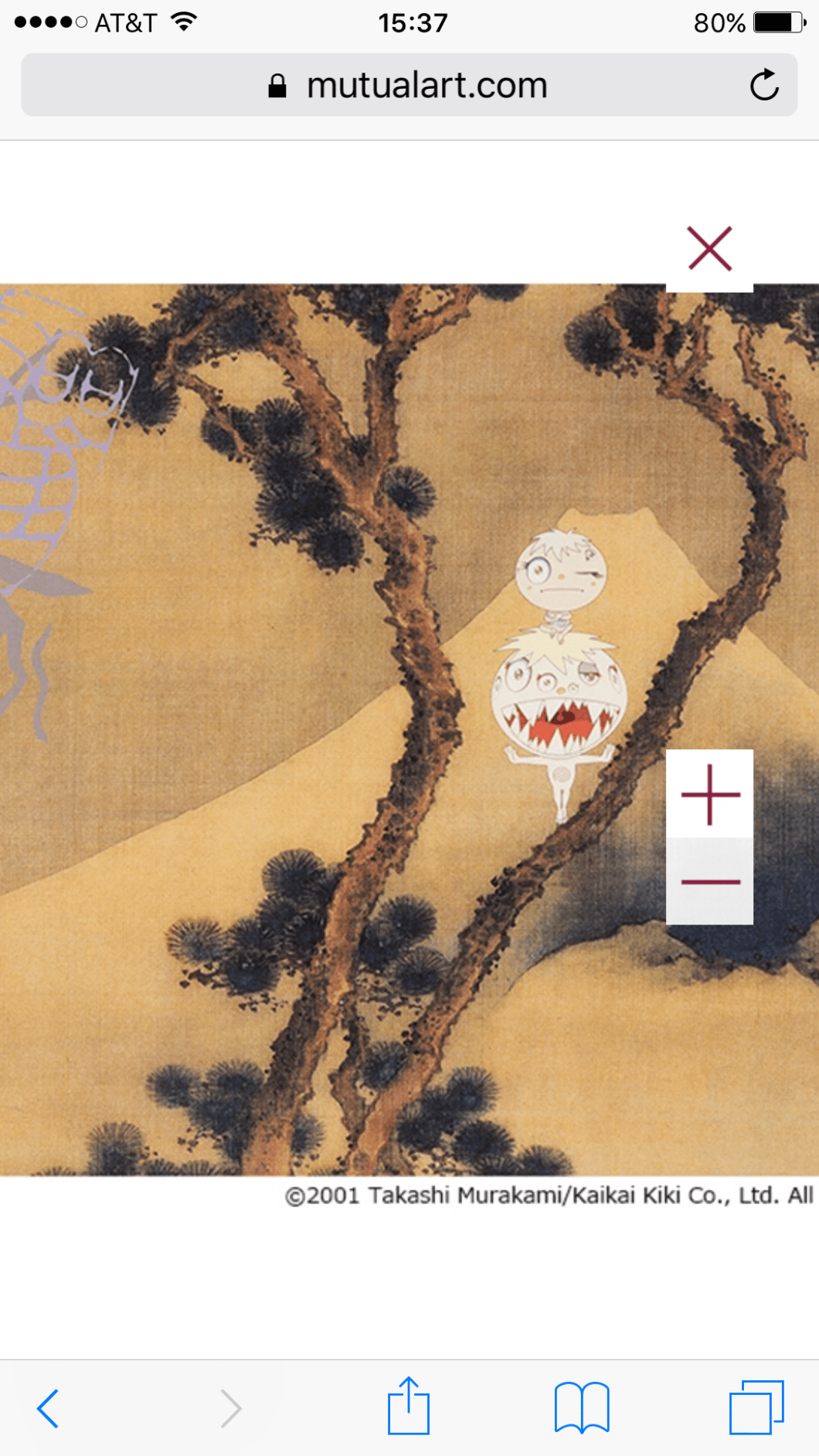
“Azura River”, mutualart.com

For better understanding of “Superflat” movement, I am checking artworks of other painters mentioned above.
Artowrks by Chiho Aoshima.
“Strawberry fields ”, mutualart.com

“The fountain of skull”, mutualart.com

“City glow”, mutualart.com

“Japanese apricot”, mutualart.com

Artworks by Mahomi Kunikata:
“A row of azaleas, road of the whale”, mutualart.com

“I am a bad girl, big brother is a good boy”, mutualart.com

Artworks by Yoshimoto Nara:
”Melting moon”, mutualart.com
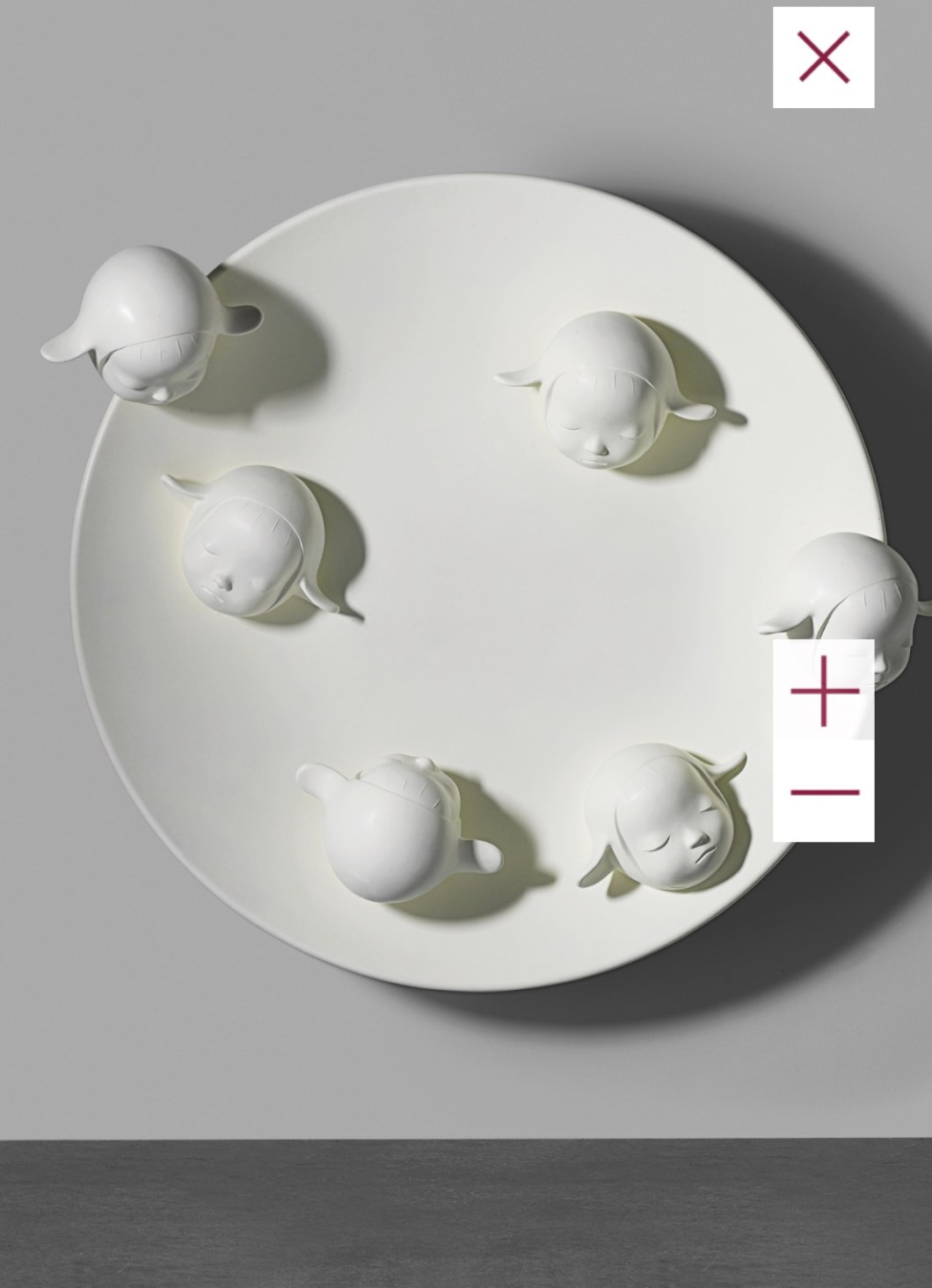
“Untitled”, Mutualart.com

“After the acid rain”, mutualart.com

“Dream time”, mutualart.com

“Star Island”, mutualart.com
My thoughts about Superflat.
Styding this art movement was very and unexpectedly interesting. Getting acquainted with Superflat was like peeling an onion: you take one layer and you see another 2 at least. Studying one thing leads you to read about other: To understand Superflat I had to check what is Anime and Magna, not mentioning some very completely new terms for me such as “otaku” ( above). I have checked the artworks of 5 well known and well mentioned Superflat artists ( above) and I can say the following:
1) Indeed all the artworks do contain Anime elements – which are characters from and for cartoons/animation.
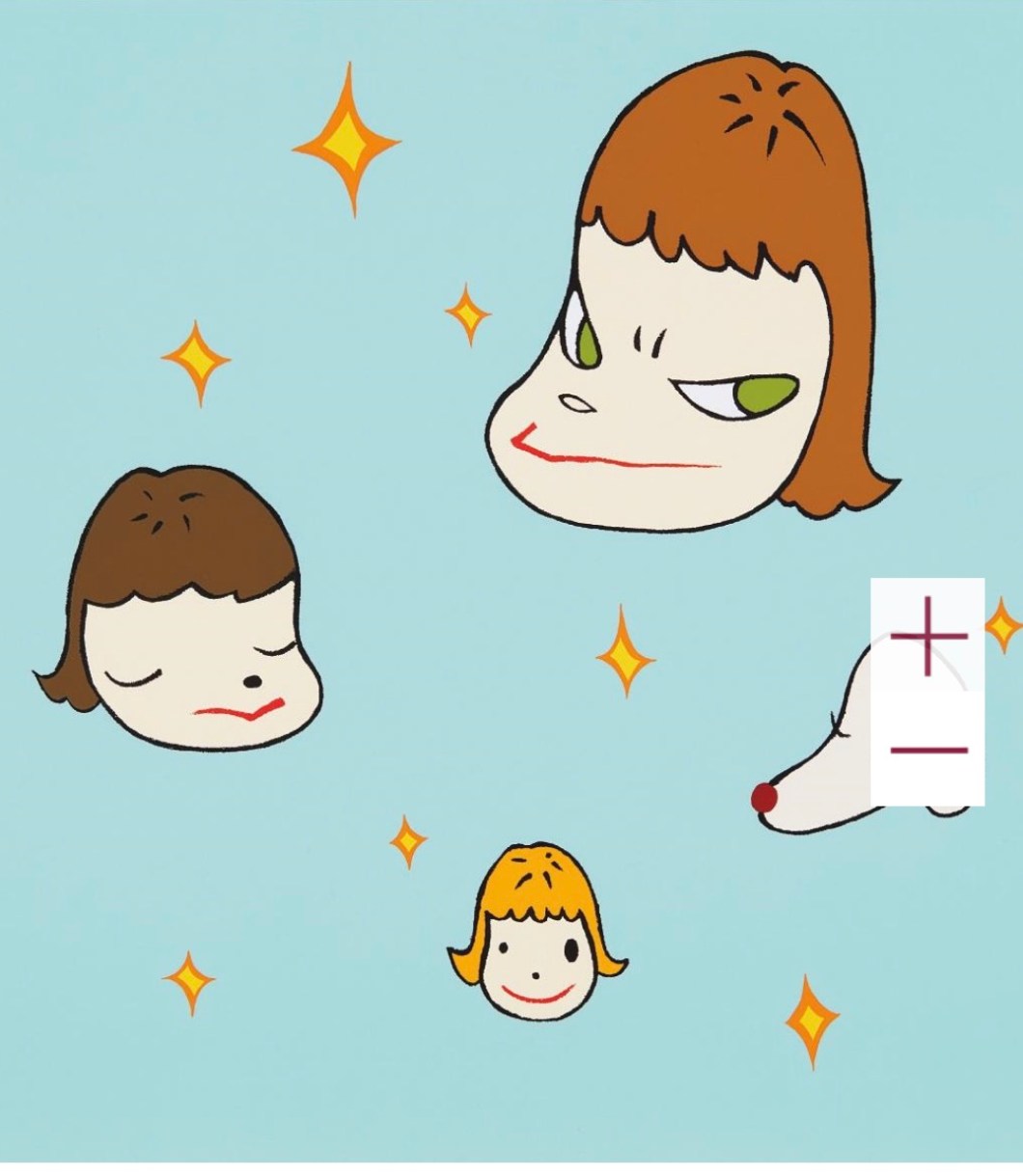
2) Most artists draw the same characters for many of their artworks. For example Yoshimoto Nara – lot of his artworks are devoted to a a special character – a Girl with a big head and big eyes, Takashi Murakami – a creature, resembling Mickey Mouse- a round head with big ears and distinctive smile, Panda, “ Magical Princesses”- long legged, big eyed pretty girls, or like Chiho Ayshima – naked long legged girl.
3) Some artists like Takashi Murakami and Chiho Ayshimo do incorporate elements of traditional Japanese paintings when they draw water, clouds, trees and flowers – waves, leaves, stems and flower petals have same shape as they are drawn on old japanese paintings. But some artists don’t follow traditions of authentic Japanese drawings – like Yoshimoto Nara. Mahomi Kunikata.
4) All artists do CREATE a special, imaginary, sort of magical WORLD – a SPECIAL PLACE, I would say. All drawings have a distinctive MOOD. They reach this effect by incorporating lot of small details and elements into their drawings, carefully working on each of them. The best examples are “Citiglow” and “Strawberry fields” by Chiho Ayshima and “Red Demon and Blue Demon” ( below) by Takashi Murakami ( above and below).
5) Even though I read some articles about Superflat movement, none of them actually explains why “flat’? Most of them explain social, psychological and historical aspects of the movement and its origin. Authors do suggest different meanings of the term “flat”, including the observation and pointing to ultra consumerism of Japanese society, which makes it “flat”. So it took a while for me to get what does really mean “Superflat”. I think that the term relates also to a techical aspect of drawing: I have noticed that colours in most artworks are drawn and painted without complicated transitions/conversions between shades, what makes objects to look kind of flat. Look at the sky’s or water on most paintings – the do look very flat comparing to traditional painting techniques.
Reference list:
1) Mutualart.com
2) “Takashi Murakami Artist Overview and Analysis”. [Internet]. 2018. TheArtStory.org
Content compiled and written by Jiete Li
Edited and revised, with Synopsis and Key Ideas added by Allison Harbin
Available from: http://www.theartstory.org/artist-murakami-takashi-artworks.htm
[Accessed 25 Mar 2018]
 JeanArt